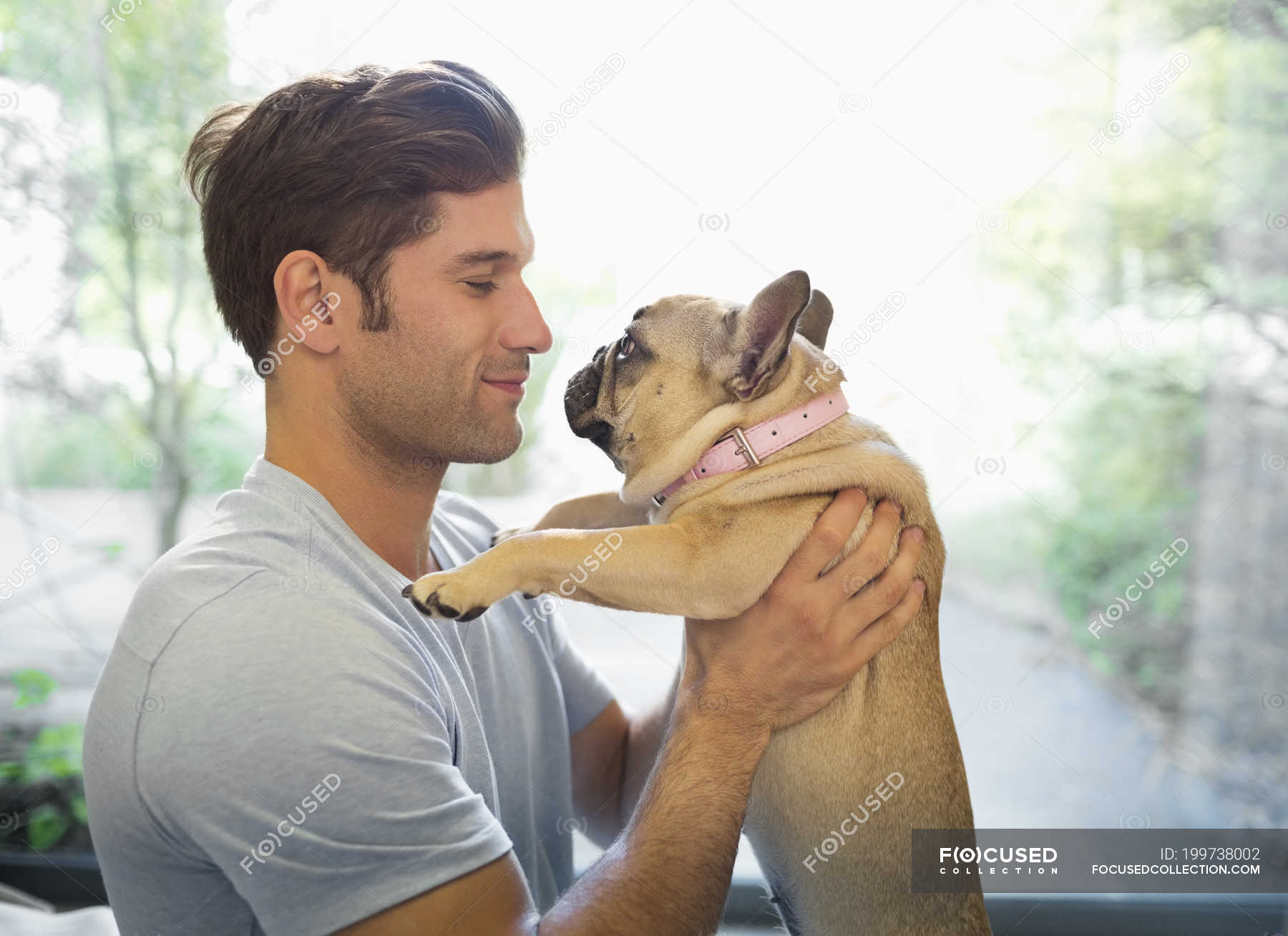
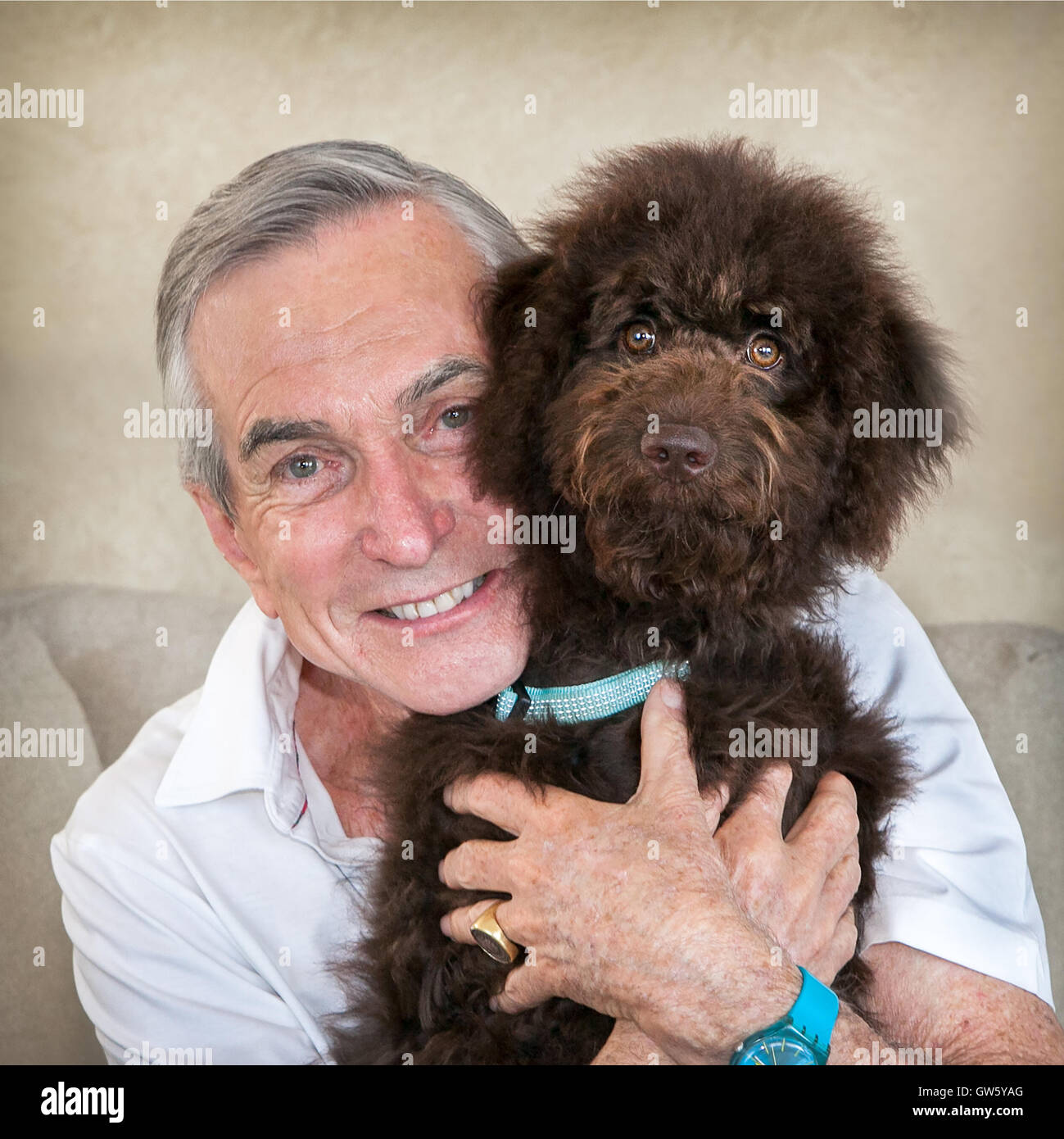
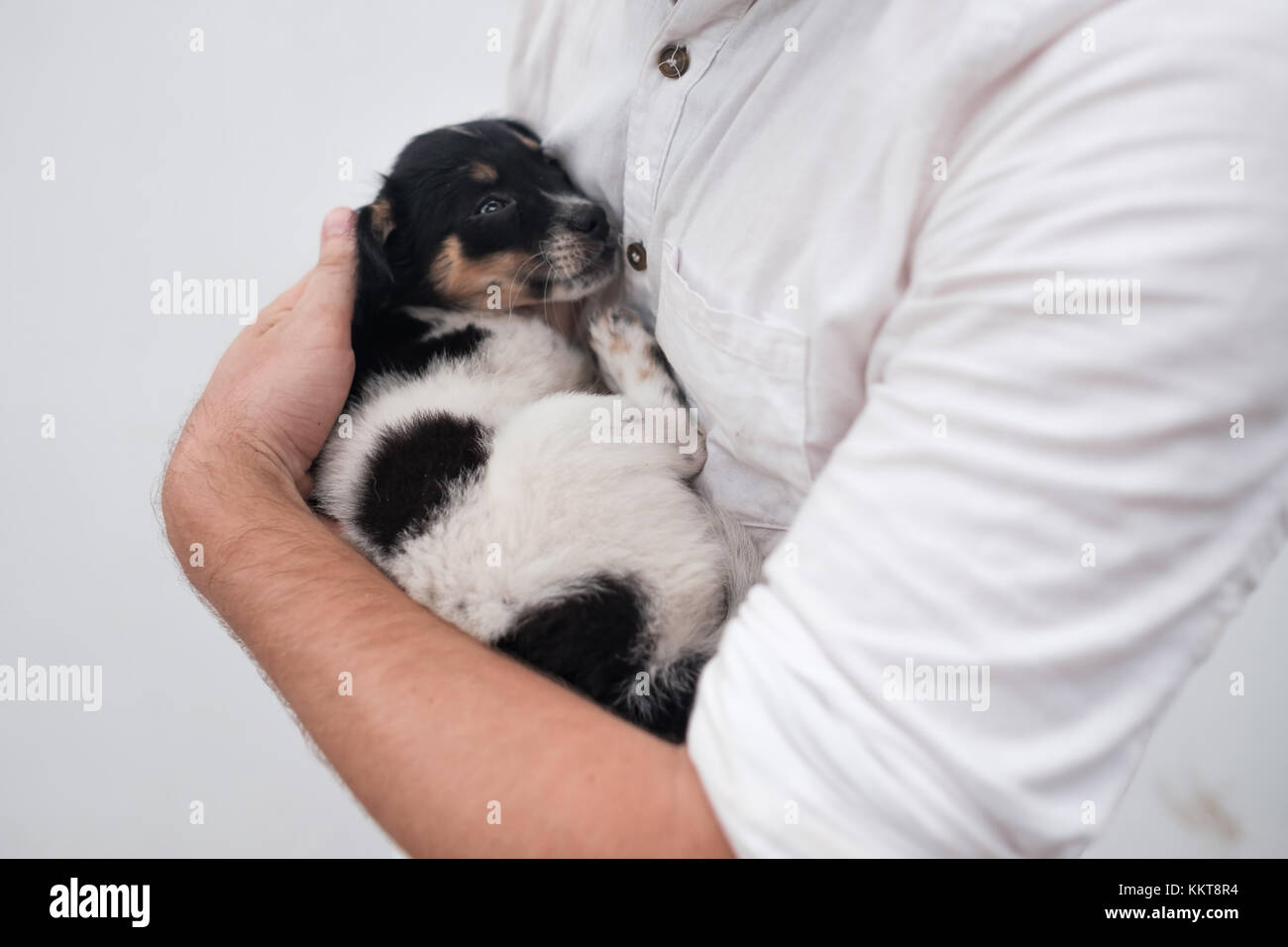
To properly hold a puppy, a man should place one hand under the puppy’s chest (between the front legs) and the other hand securely under the hindquarters. This "cradle" method supports the puppy’s entire spine and prevents internal injury or accidental drops. Maintaining a firm yet gentle grip ensures the animal feels secure, fostering a vital bond of trust between the owner and the developing canine.
The Biomechanics of Supporting a Developing Puppy
When a man holds a puppy, he is interacting with a creature whose skeletal system is in a state of rapid flux. As of 2026, veterinary guidelines emphasize that a puppy’s growth plates—the areas of developing cartilage near the ends of the bones—are exceptionally soft and susceptible to fracture or displacement. Improper handling during these formative months can lead to chronic orthopedic issues, such as hip dysplasia or luxating patellas, later in life.
The primary objective of holding a puppy is the equal distribution of weight. Puppies lack the muscular core strength to stay rigid when lifted. If a man lifts a puppy only by its front legs or under its armpits (the axilla), he risks straining the ligaments in the shoulders and putting undue pressure on the ribcage. The ribcage of a young puppy is flexible and does not yet provide the rigid protection for the heart and lungs that an adult dog’s chest offers.
To execute a safe lift, start by squatting down to the puppy’s level rather than bending over from the waist. This reduces the distance the puppy would fall if it were to squirm out of your hands. Place your dominant hand under the puppy’s rump, creating a "seat." Your other hand should slide under the chest, just behind the front legs. As you lift, bring the puppy close to your chest. This "third point of contact" provides additional stability and warmth, which calms the puppy’s nervous system.
The Psychological Impact on the Human-Canine Bond
The act of a man holding a puppy triggers a powerful biochemical cascade in both parties. Research into the human-animal bond has consistently shown that sustained physical contact leads to a significant release of oxytocin, often referred to as the "bonding hormone." For men, who may traditionally be socialized to limit physical displays of affection, holding a puppy provides a socially acceptable and emotionally rewarding outlet for nurturance.
In 2026, the psychological benefits of this interaction are well-documented in the field of anthrozoology. When a man holds a puppy close to his heart, the puppy can hear and feel the human’s heartbeat. This mimicry of the litter environment—where puppies huddle together for warmth and security—lowers the puppy’s cortisol levels. For the man, the rhythmic breathing of the puppy and the tactile sensation of soft fur act as a natural stress reducer, lowering blood pressure and heart rate.
This physical closeness is the foundation of "attachment theory" as applied to canines. A puppy that is held frequently and safely during its socialization window (typically 3 to 16 weeks of age) learns that humans are a source of comfort rather than a threat. This sets the stage for a lifetime of easier handling during veterinary exams, grooming sessions, and social interactions with strangers.
Developmental Stages and Handling Requirements
Not all puppies should be held the same way. The age and size of the puppy dictate the specific technical approach a man should take. As puppies grow, their center of gravity shifts, and their tolerance for being restrained changes.
The Neonatal and Transitional Stages (0–4 Weeks)
During the first month, puppies should be held sparingly and only for essential tasks like weighing or health checks. Their thermoregulation is poor, so they should be held with both hands cupped together to form a warm "nest." It is crucial to keep them horizontal; vertical positioning can be disorienting and stressful for a neonatal pup.
The Socialization Period (8–16 Weeks)
This is the peak "holding" age. This is when most men bring a new puppy home. At this stage, puppies are curious but easily startled. The "football carry" is often effective here: tuck the puppy’s body along your forearm with its head near your elbow and your hand supporting its rear. This keeps one of your hands free to pet or steady the puppy while ensuring its body is fully supported against your side.
The Juvenile Stage (4–6 Months)
By this age, many breeds are becoming too large or heavy for comfortable long-term holding. The focus shifts from "cradling" to "supported standing." If you must lift a medium-to-large breed juvenile, you must be mindful of your own back health. Use your legs to lift and keep the puppy’s weight centered over your own center of gravity.
Common Mistakes to Avoid When Handling a Puppy
Even well-intentioned men can make mistakes that lead to injury or behavioral setbacks. Avoiding these common pitfalls is essential for maintaining the safety of the animal.
- The Scruff Lift: Lifting a puppy by the skin of its neck (the scruff) is an outdated practice. While mother dogs do this to move very young pups, a human cannot replicate the exact pressure and timing. It is painful and can cause bruising or skin separation.
- Dangling Hindquarters: Never let a puppy’s rear end hang unsupported. This puts immense strain on the lower spine and can cause the puppy to panic and kick, leading to a fall.
- The "Hug" Reflex: Men with larger frames may accidentally apply too much pressure during a hug. A puppy’s skeletal structure cannot withstand the same compression as a human’s. Ensure the hold is "secure" rather than "tight."
- Forced Restraint: If a puppy is struggling violently, it is often safer to gently lower them to the ground rather than fighting to keep them in the air. Forcing a hold on a terrified puppy can lead to a permanent fear of being picked up.
Recommended Handling Techniques by Breed Category
| Puppy Category | Recommended Hold | Key Benefit | Potential Risk |
|---|---|---|---|
| Toy Breeds (e.g., Yorkie, Pomeranian) | Two-handed cup or "nesting" | High security; mimics natural warmth. | Fragile ribs; easily dropped from height. |
| Medium Breeds (e.g., Beagle, Bulldog) | Side-chest cradle (Football carry) | Stability during movement; frees one hand. | Weight can shift quickly if the pup squirms. |
| Large Breeds (e.g., Lab, German Shepherd) | Wrap-around scoop (Legs/Chest) | Distributes heavy weight across the lifter's torso. | Strain on the lifter's lower back; puppy outgrows hold fast. |
| Deep-Chested Breeds (e.g., Greyhound, Boxer) | Horizontal abdominal support | Protects the sensitive chest cavity. | Difficulty in maintaining a level spine. |
Social Perception and the "Puppy Effect"
The image of a man holding a puppy carries significant social weight. Sociological studies, including those referenced in 2026 behavioral journals, indicate that men seen with puppies are perceived as more approachable, trustworthy, and empathetic. This is often referred to in popular culture as the "puppy effect."
Beyond the aesthetic or social benefits, this interaction serves as a signal of responsibility. A man who holds a puppy correctly demonstrates attention to detail and a capacity for gentle care. This perception extends into professional and personal spheres, often acting as a "social lubricant" that facilitates conversation and community building in public spaces like parks or pet-friendly urban areas.
Training the Puppy to Enjoy Being Held
Holding should not just be a means of transport; it should be a trained behavior. To ensure a puppy remains calm when lifted, men should use positive reinforcement.
- Preparation: Touch the puppy’s belly and paws while it is on the ground, rewarding it with small treats for staying calm.
- The "Pre-Lift": Apply gentle upward pressure without actually lifting the puppy off the ground. Treat and praise.
- The Lift: Lift the puppy only a few inches off the floor for two seconds, then immediately set it down and reward.
- Duration: Gradually increase the time the puppy is held, ensuring every experience ends before the puppy becomes restless.
By associating being held with rewards, you prevent the "struggle-and-drop" cycle that leads to many puppy injuries. In 2026, many professional trainers advocate for "cooperative care," where the animal is an active, willing participant in the handling process.
Frequently Asked Questions
Why does my puppy cry when I pick him up?
If a puppy cries, it is usually due to one of three things: physical pain, fear of heights, or a lack of support. Ensure you are not squeezing the ribs and that the hindquarters are fully supported. If the crying persists even with proper form, consult a veterinarian to rule out underlying issues like a hernia or joint sensitivity.
How long can I hold a puppy at one time?
Puppies have high energy and short attention spans. Most puppies prefer to be held for short bursts of 1–5 minutes. Forcing a puppy to stay in your arms for longer than they are comfortable with can lead to "touch sensitivity" or "handling aversion." Watch for signs of restlessness, such as licking your hands excessively, squirming, or pinning their ears back.
Is it safe to hold a puppy while walking?
While it is a great way to socialize a puppy that hasn't finished its vaccinations, you must be extremely careful. Use a dedicated puppy sling or a very secure two-handed hold. A man's stride can be bouncy, so ensure the puppy's body is braced against your chest to minimize jarring movements.
Can holding a puppy too much spoil it?
In 2026, the consensus among animal behaviorists is that you cannot "spoil" a puppy with affection and proper handling. However, a puppy must also learn to be confident on its own four feet. Balance holding time with "floor time" where the puppy explores the environment independently to prevent separation anxiety.
What should I do if I drop my puppy?
If a drop occurs, stay calm. Immediately observe the puppy for limping, yelping, or lethargy. Even if there are no visible signs of injury, a fall from a man's chest height is significant for a small puppy. It is highly recommended to contact a vet for a quick exam to check for internal bruising or "silent" fractures.
Professional Advice Limitation
The information provided here is for educational purposes regarding general canine handling and behavioral trends in 2026. It is not a substitute for professional veterinary medicine or certified animal behaviorist consultation. Always consult with a veterinarian regarding specific health concerns or orthopedic issues in your puppy.
Practical Recommendation for New Owners
For any man who has recently acquired a puppy, the most practical next step is to practice the "Ground-to-Chest" transition daily. Start in a carpeted area to minimize the risk of injury from a potential slip. Consistently using the two-handed support method—hand under the rump and hand under the chest—will build "muscle memory" for both the man and the puppy. This consistency creates a safe environment that encourages the puppy to view the man as a secure "base" from which to explore the world.