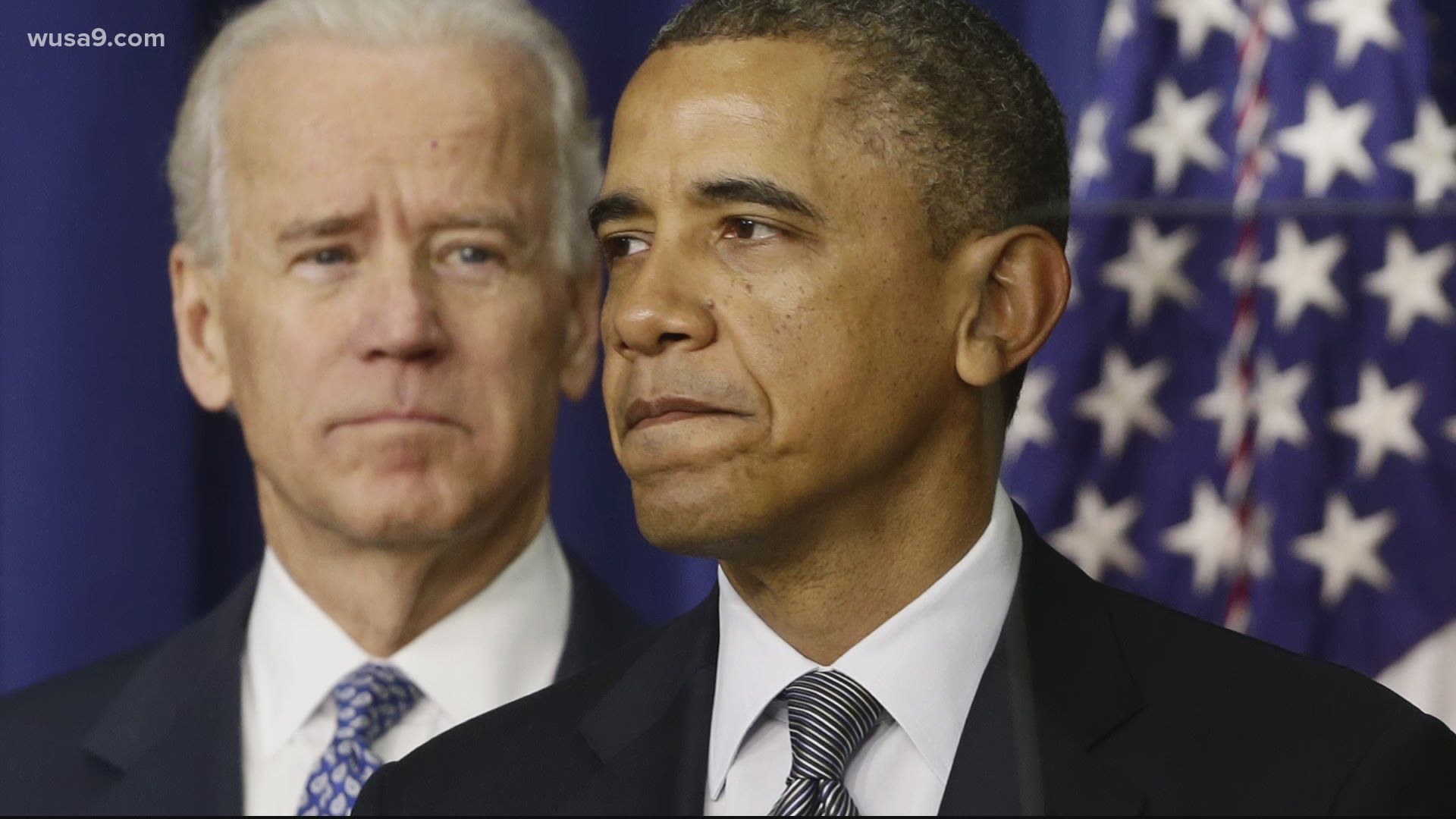
Whether a former two-term president can serve as vice president remains one of the most debated "legal loopholes" in American constitutional law. While the 22nd Amendment prohibits being elected to the presidency more than twice, the 12th Amendment’s eligibility requirements for the vice presidency focus on the "eligibility to the office" of the presidency, creating a complex tension between "electability" and "service" that has never been tested in court.
The question is not merely academic; it touches upon the core of executive power and the stability of the line of succession. As of 2026, the United States has several living former presidents who have served two terms, making the theoretical possibility of their return to the executive branch as a "second-in-command" a recurring topic of political and legal discourse. To understand the constitutional reality, one must parse the specific language of the 12th and 22nd Amendments, the Presidential Succession Act, and the competing theories of constitutional interpretation.
The Tension Between the 12th and 22nd Amendments
The primary conflict arises from the interaction between two separate parts of the U.S. Constitution. To determine if a former president can serve as vice president, legal scholars look first to these two amendments, which appear to speak to different aspects of eligibility and election.
The 12th Amendment: Eligibility to Hold Office
Ratified in 1804, the 12th Amendment primarily overhauled the Electoral College process to ensure that the president and vice president were elected on separate ballots. However, its final sentence carries the most weight for this discussion: "But no person constitutionally ineligible to the office of President shall be eligible to that of Vice-President of the United States."
The critical phrase here is "constitutionally ineligible to the office." Historically, this has been interpreted to refer to the three requirements set forth in Article II, Section 1 of the Constitution:
- The person must be a natural-born citizen.
- The person must be at least 35 years of age.
- The person must have been a resident of the United States for at least 14 years.
Under this reading, if a former president meets these three criteria, they are "eligible to the office" and, by extension, eligible to be vice president.
The 22nd Amendment: The Restriction on Election
The 22nd Amendment, ratified in 1951 following Franklin D. Roosevelt’s four terms, introduced formal term limits. It states: "No person shall be elected to the office of the President more than twice..."
The pivot point of the legal debate is the word "elected." Proponents of the "loophole" theory argue that the 22nd Amendment restricts only the election of a president, not the service or tenure of a president who reaches the office through other means, such as the line of succession. If a person is not being "elected" to the presidency, but is instead "succeeding" to it from the vice presidency, they argue the 22nd Amendment does not apply.
The "Electability" vs. "Eligibility" Debate
The constitutional reality depends on whether "eligibility to the office" (12th Amendment) is synonymous with "eligibility to be elected" (22nd Amendment). There are two primary schools of thought regarding this distinction.
The Textualist Argument for Permissibility
Textualists argue that the Constitution must be interpreted based on the literal meaning of its words. Because the 22nd Amendment specifically uses the word "elected" rather than "serve," they contend that a former two-term president remains "eligible" to the office; they are simply barred from the specific process of being elected to it.
In this view, a former president could:
- Be selected as a vice-presidential running mate and be elected as Vice President.
- Be appointed as Vice President under the 25th Amendment to fill a vacancy.
- Succeed to the presidency if the sitting president dies, resigns, or is removed.
Since the 12th Amendment only bars those who are "ineligible to the office," and the 22nd Amendment does not change a person's inherent "eligibility" (their status as a 35-year-old natural-born citizen), the former president remains qualified to hold the vice presidency.
The Structuralist Argument Against Permissibility
Structuralist and "original intent" scholars argue that the 22nd Amendment was intended to prevent any individual from holding executive power for more than eight years (or ten, under certain succession scenarios). They argue that the 12th Amendment’s reference to being "ineligible to the office" should be read broadly to include any constitutional bar to holding the presidency.
If the 22nd Amendment makes it impossible for a person to be elected president, structuralists argue that the person is, for all practical purposes, "ineligible to the office." Allowing a former president to serve as vice president—and thus potentially serve as president again—would be a "backdoor" violation of the spirit and purpose of term limits.
The Presidential Succession Act and Alternative Routes
The debate extends beyond the vice presidency to other positions in the line of succession. The Presidential Succession Act of 1947 establishes the order of who takes over if both the president and vice president are unable to serve.
The order follows:
- Speaker of the House
- President Pro Tempore of the Senate
- Secretary of State
- Remaining Cabinet heads in order of department creation
If a former two-term president were to serve as Speaker of the House or Secretary of State, the same constitutional question arises. Could they succeed to the presidency? The Succession Act itself contains a clause stating that it only applies to those who are "constitutionally eligible to the office of President." This brings the argument back to the original 12th vs. 22nd Amendment dispute. If "eligible" means meeting the Article II requirements (age, citizenship, residency), then a former president could theoretically succeed from the Cabinet or the Speakership.
Practical Challenges and Judicial Review
Even if the legal "loophole" exists, the practical reality of a former president serving as vice president faces immense hurdles.
Political Risks
A presidential candidate choosing a two-term former president as a running mate would face immediate and intense legal challenges. The opposition party would likely file suit the moment the nomination was announced, leading to a period of extreme political instability. Furthermore, voters might perceive the move as an attempt to circumvent the Constitution, potentially backfiring at the polls.
The Role of the Supreme Court
The U.S. Supreme Court has never ruled on this issue because the scenario has never occurred. For the Court to take up the case, a plaintiff would need "standing"—meaning they would have to prove they were directly harmed by the former president’s presence on the ballot or in the office.
If the Court were to hear such a case, it would have to decide whether the 22nd Amendment’s "election" ban creates a general "ineligibility." In the absence of a ruling, the "constitutional reality" remains a state of unresolved ambiguity. Most modern constitutional scholars lean toward the idea that the Supreme Court would likely act to uphold the spirit of the 22nd Amendment to prevent a perceived constitutional crisis, though the strict textual evidence for doing so is surprisingly thin.
Summary of Constitutional Provisions
The following table compares the relevant constitutional and statutory provisions that inform the debate over a former president’s vice-presidential eligibility.
| Provision | Key Language | Impact on the Debate |
|---|---|---|
| Article II, Sec. 1 | "Natural born Citizen," "thirty-five Years," "fourteen Years a Resident." | Defines the baseline "eligibility" to hold the office of President. |
| 12th Amendment | "No person constitutionally ineligible to the office of President shall be eligible to that of Vice-President." | Links VP eligibility directly to the ability to hold the presidency. |
| 22nd Amendment | "No person shall be elected to the office of the President more than twice." | Limits the election process but does not explicitly mention service via succession. |
| 25th Amendment | Procedures for VP vacancy and presidential disability. | Allows for the appointment of a VP, which is not an "election" by the people. |
| Succession Act (1947) | "If... there is no President or Vice President... then the Speaker... shall act as President." | Requires those in the line of succession to be "constitutionally eligible." |
The Impact of the 25th Amendment
The 25th Amendment adds another layer of complexity. Section 2 states: "Whenever there is a vacancy in the office of the Vice President, the President shall nominate a Vice President who shall take office upon confirmation by a majority vote of both Houses of Congress."
Because this process involves nomination and confirmation rather than a general election, the argument that the 22nd Amendment does not apply is even stronger here. If a sitting president were to nominate a former two-term president to fill a mid-term VP vacancy, the former president would not be "elected" in the sense described by the 22nd Amendment. In this specific scenario, the textualist argument—that the person is merely serving, not being elected—reaches its strongest point. However, the political friction of such a move would likely prevent a majority of Congress from confirming the nominee.
Expert Opinions and Scholarly Consensus
While there is no judicial precedent, the consensus among academic legal circles is divided.
- Pro-Loophole: Some scholars, including Bruce Ackerman and others who prioritize strict textualism, have noted that the loophole is technically valid. They argue that the drafters of the 22nd Amendment were aware of the distinction between "election" and "succession" and chose their words carefully.
- Anti-Loophole: Other scholars, such as those focusing on "constitutional integrity," argue that the 12th Amendment’s "ineligibility" clause was intended to ensure that the Vice President is someone who could legally fulfill the duties of the President for a full term if necessary. They argue that a person who cannot be elected to the office is fundamentally "ineligible" for the office.
Ultimately, the "constitutional reality" is that the document is silent on the specific intersection of these two amendments. In American law, when the text is ambiguous and there is no precedent, the outcome is often determined by the prevailing legal philosophy of the Supreme Court at the time the issue is raised.
FAQ
Can a former president be Vice President?
There is no definitive constitutional prohibition, but it is legally contested. The 22nd Amendment prevents a person from being elected president more than twice, but the 12th Amendment only bars those "ineligible to the office" of president from being vice president. The debate centers on whether "ineligible to the office" includes the 22nd Amendment's restriction on being elected.
Has a former president ever served as Vice President?
No. In the history of the United States, no former president has ever sought or been appointed to the office of vice president. Some former presidents have served in other capacities; for example, John Quincy Adams served in the House of Representatives, and William Howard Taft served as Chief Justice of the Supreme Court.
Does the 22nd Amendment limit "service" or "election"?
The text of the 22nd Amendment specifically uses the word "elected." It does not explicitly say a person cannot serve as president for more than two terms if they ascend to the office through the line of succession. However, many legal experts believe the Supreme Court would interpret "elected" to imply a general limit on holding the office to prevent term-limit circumvention.
What happens if a two-term president is in the line of succession?
According to the Presidential Succession Act of 1947, any official in the line of succession (like the Speaker of the House) must be "constitutionally eligible" to hold the office of President. If a former president is deemed "ineligible" due to the 22nd Amendment, they would simply be skipped in the line of succession, and the next eligible officer would take the oath.
Could a former president be appointed Vice President under the 25th Amendment?
This is theoretically possible because the 25th Amendment involves presidential nomination and congressional confirmation rather than a popular or electoral college election. This bypasses the "elected" language of the 22nd Amendment, making it one of the most legally plausible—though politically unlikely—ways for a former president to return to the executive branch.
Final Practical Guidance
For those researching the feasibility of a former president serving as vice president, the "constitutional reality" is one of untested ambiguity. If you are analyzing this for legal or political purposes, you must distinguish between the literal text (which suggests a loophole) and the likely judicial outcome (which would likely close the loophole to preserve the intent of term limits).
The most practical next action for students of law or political science is to monitor scholarly articles from major constitutional law centers, as these institutions frequently simulate these scenarios. Unless a former president is actually nominated or appointed, the question will remain a fascinating, yet unresolved, part of the American "unwritten" constitution. Those looking for a definitive answer must wait for a "case or controversy" to reach the Supreme Court, as only they have the final authority to reconcile the 12th and 22nd Amendments.