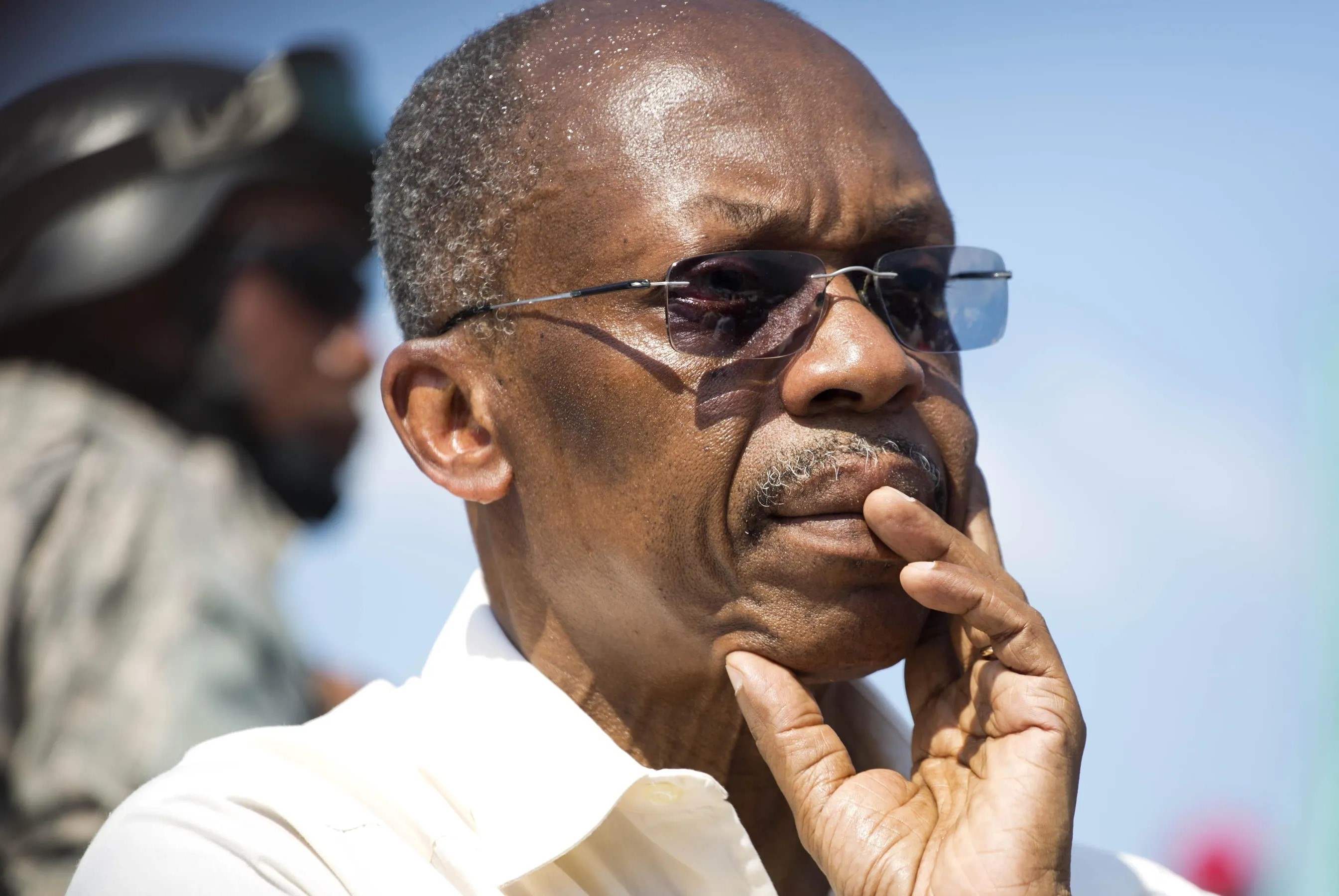
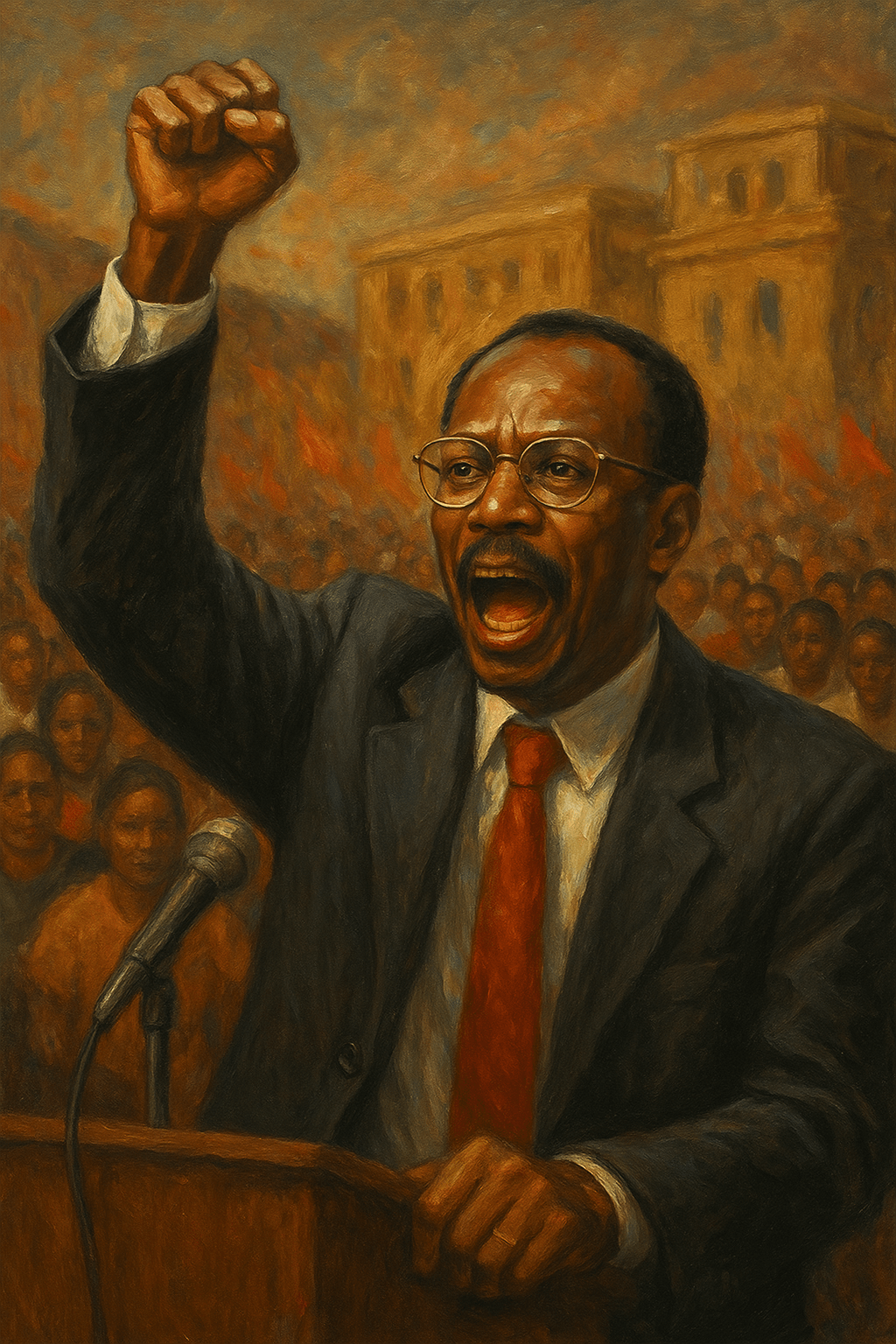
Jean-Bertrand Aristide is a central figure in modern Haitian history, serving as the nation’s first democratically elected president following the Duvalier dictatorship. A former Roman Catholic priest and proponent of liberation theology, his career was marked by populist reform, two separate presidential terms, and two forced removals from power.
The Early Life and Theological Roots of Jean-Bertrand Aristide
Born on July 15, 1953, in Port-Salut, Haiti, Jean-Bertrand Aristide was raised in a country gripped by the repressive regime of François "Papa Doc" Duvalier. His journey toward leadership began not in the political arena, but within the walls of the Roman Catholic Church. Aristide was educated by the Salesians of Don Bosco, an order focused on the education and care of the poor, which profoundly shaped his worldview.
After studying in Haiti, Italy, and Israel, Aristide was ordained a priest in 1982. He returned to a Haiti where the "Ti Legliz" (Little Church) movement was gaining momentum. This grassroots movement, rooted in liberation theology, argued that the church had a moral obligation to seek social and economic justice for the impoverished. Aristide quickly became its most resonant voice, using his pulpit at the St. Jean Bosco church in Port-au-Prince to denounce the Duvalier regime and the systemic inequality of Haitian society.
His rhetoric was radical and dangerous. He spoke the language of the masses, Kreyòl, and his sermons were broadcast over Radio Soleil, reaching the furthest corners of the country. This popularity made him a target. In 1988, he survived a bloody assassination attempt when armed thugs (Tontons Macoutes) attacked St. Jean Bosco during a Sunday Mass, killing over a dozen parishioners. Later that year, the Salesian order expelled him, citing his political activities as incompatible with his religious ministry. Aristide famously responded that he was a "priest of the poor," regardless of official titles.
The 1990 Election and the Birth of Lavalas
The fall of the Duvalier dynasty in 1986 left a power vacuum that the Haitian military struggled to fill. After several failed transitions and aborted elections, the national election of 1990 represented a turning point. Aristide entered the race late, backed by a coalition known as the National Front for Change and Democracy (FNCD).
His movement was called Lavalas, a Kreyòl word meaning "flood" or "avalanche." The metaphor was clear: the collective power of the poor would wash away the corruption and filth of the old regime. Aristide won a landslide victory with roughly 67% of the vote, a mandate that reflected his status as a near-messianic figure for the Haitian peasantry and urban poor.
His inauguration in February 1991 was a moment of unprecedented hope. However, his early policies—which included raising the minimum wage, purging the civil service of corrupt officials, and attempts to bring the military under civilian control—alarmed the Haitian elite and the armed forces. His tenure would last only seven months before a violent military coup, led by General Raoul Cédras, forced him into exile.
Exile and the 1994 Restoration of Democracy
Aristide spent three years in exile, primarily in the United States, lobbying for international intervention to restore democracy in Haiti. During this period, the Haitian military regime engaged in widespread human rights abuses against Lavalas supporters.
The situation reached a breaking point in 1994. Under the administration of U.S. President Bill Clinton, the United Nations authorized a multinational force to intervene. Operation Uphold Democracy saw thousands of U.S. troops land in Haiti, facilitating Aristide’s return to the National Palace in October 1994.
His return came with significant geopolitical strings attached. To secure U.S. support, Aristide agreed to implement structural adjustment programs and neoliberal economic reforms favored by the International Monetary Fund (IMF). This created a tension between his populist roots and the pragmatic requirements of international diplomacy. One of his most significant acts upon returning was the abolition of the Haitian Army, an institution he viewed as a perpetual engine of instability and oppression.
The Second Presidency and the 2004 Ouster
Because the Haitian Constitution prohibited consecutive terms, Aristide stepped down in 1996, handing power to his hand-picked successor, René Préval. He spent the intervening years building his own political party, Fanmi Lavalas. In 2000, he ran for president again and won, though the election was marred by low turnout and allegations of irregularities in legislative contests.
His second term was significantly more contentious than his first. The international community, led by the U.S. and the European Union, froze millions of dollars in aid, citing democratic deficiencies. This led to a deteriorating economy and increased social unrest. Domestically, Aristide was accused by critics of relying on "Chimères"—armed gangs in the slums—to intimidate political opponents.
By early 2004, an armed rebellion began in northern Haiti, led by former military and police officers. As the rebels marched toward the capital, Aristide was flown out of the country on a U.S.-provided plane on February 29, 2004. He later claimed he had been kidnapped in a "modern-day coup d'état" orchestrated by the U.S. and France, while the U.S. government maintained he had resigned voluntarily to avoid a bloodbath.
Life After Politics and Contemporary Status in 2026
Following his 2004 ouster, Aristide lived in exile in South Africa for seven years. He largely withdrew from the global media spotlight, focusing on his academic work and earning a doctorate in African languages. He returned to Haiti in March 2011, just days before a presidential runoff election, despite pressure from the international community to stay away.
Since his return, Aristide has maintained a relatively low profile, focusing on the University of the Aristide Foundation (UniFA). As of 2026, he remains a resident of the Tabarre neighborhood in Port-au-Prince. While he no longer seeks elective office, his influence over the Fanmi Lavalas party remains absolute.
In the current landscape of 2026, Aristide is viewed as an elder statesman by some and a cautionary tale by others. Haiti continues to grapple with the structural instability that plagued his presidencies—gang violence, political fragmentation, and economic hardship. UniFA has become one of the few stable institutions in the country, training doctors and nurses who are critical to Haiti’s fragile healthcare system.
Summary of Presidential Terms and Key Events
The following table outlines the major milestones of Jean-Bertrand Aristide’s political career.
| Period | Role | Key Actions / Events | Outcome |
|---|---|---|---|
| 1991 | President (1st Term) | Attempted military reform; minimum wage increase. | Ousted by military coup after 7 months. |
| 1994–1996 | President (Restored) | Abolition of the Haitian Armed Forces; return from exile. | Completed term; handed power to René Préval. |
| 2001–2004 | President (2nd Term) | Demand for reparations from France ($21B); social programs. | Forced into exile amid armed rebellion and international pressure. |
| 2011–2026 | Private Citizen | Foundation of UniFA; focus on medical and legal education. | Remains a polarizing but influential figure in Port-au-Prince. |
Analyzing the Impact: Aristide’s Social and Political Legacy
Aristide’s legacy is defined by a sharp divide in perception. For the impoverished masses of Haiti, he was the first leader who truly looked like them, spoke like them, and prioritized their dignity. He challenged the "MREs" (Morally Repugnant Elites) and brought the grievances of the poor to the forefront of national discourse.
However, critics point to the "decline" of his second term as evidence of populist authoritarianism. They argue that his reliance on paramilitary groups and his confrontational stance toward the international community contributed to the isolation that has hampered Haiti’s development for decades.
The Reparations Demand
One of the most enduring aspects of his second term was the formal demand that France repay the indemnity Haiti was forced to pay in 1825 for its independence. Aristide calculated the modern value at over $21 billion. While this demand resonated deeply with the Haitian public as an act of decolonial justice, it further alienated him from European powers.
The Abolition of the Military
By dissolving the army in 1995, Aristide sought to end the cycle of coups that had defined Haitian history. While this succeeded in removing a traditional threat to democracy, it also left a security vacuum. Critics argue that the lack of a formal military contributed to the rise of the armed gangs that currently dominate much of the Haitian landscape in 2026.
Frequently Asked Questions
Why was Jean-Bertrand Aristide removed from the priesthood?
Aristide was expelled from the Salesian order in 1988 because his political activism was deemed a violation of his religious duties. The Vatican and the Salesians found his promotion of liberation theology and his incitement to class struggle to be at odds with church doctrine. He eventually requested laicization in the 1990s and married Mildred Trouillot in 1996.
What is the University of the Aristide Foundation (UniFA)?
UniFA is a private university founded by Aristide in Port-au-Prince. Its primary mission is to provide higher education to students from poor backgrounds who would otherwise be excluded from professional fields. It is particularly noted for its medical school, which aims to train doctors who will remain in Haiti to serve rural and impoverished communities.
Is Jean-Bertrand Aristide still active in Haitian politics?
As of 2026, Aristide does not hold any official government position. However, he remains the symbolic leader of the Fanmi Lavalas party. Candidates for office often seek his endorsement, and his rare public statements still hold significant weight among his base of supporters.
Did Aristide really "incite violence" during his presidency?
This is a point of intense historical debate. Supporters argue that he merely empowered the poor to defend their democratic rights. Detractors point to the "Père Lebrun" speeches (referencing necklacing with burning tires) and the actions of the "Chimères" as evidence that he used the threat of mob violence as a political tool.
What was the "Lavalas" movement?
Lavalas was a broad-based social and political movement that emerged in the late 1980s. It focused on the empowerment of the poor, land reform, and the dismantling of the traditional power structures in Haiti. It eventually fractured into different political parties, the most prominent being Fanmi Lavalas.
Practical Considerations for Researchers and Observers
For those studying Haitian politics or the life of Jean-Bertrand Aristide in 2026, it is essential to consult a variety of sources to account for the deep polarization surrounding his figure.
- Academic Records: Look for his published works on theology and linguistics to understand his intellectual foundation.
- Human Rights Reports: Examine reports from the 1990s and early 2000s by organizations like Human Rights Watch and Amnesty International for a balanced view of the security situation during his terms.
- UniFA Updates: The university's official publications offer the best insight into his current activities and his vision for Haiti’s future through education.
- Historical Archives: Digital archives of the 1994 and 2004 interventions provide context on the role of international players like the U.S., France, and the UN.
The history of Jean-Bertrand Aristide is the history of Haiti’s struggle for self-determination. Whether viewed as a flawed populist or a persecuted visionary, his impact on the Caribbean's first independent republic remains undeniable.