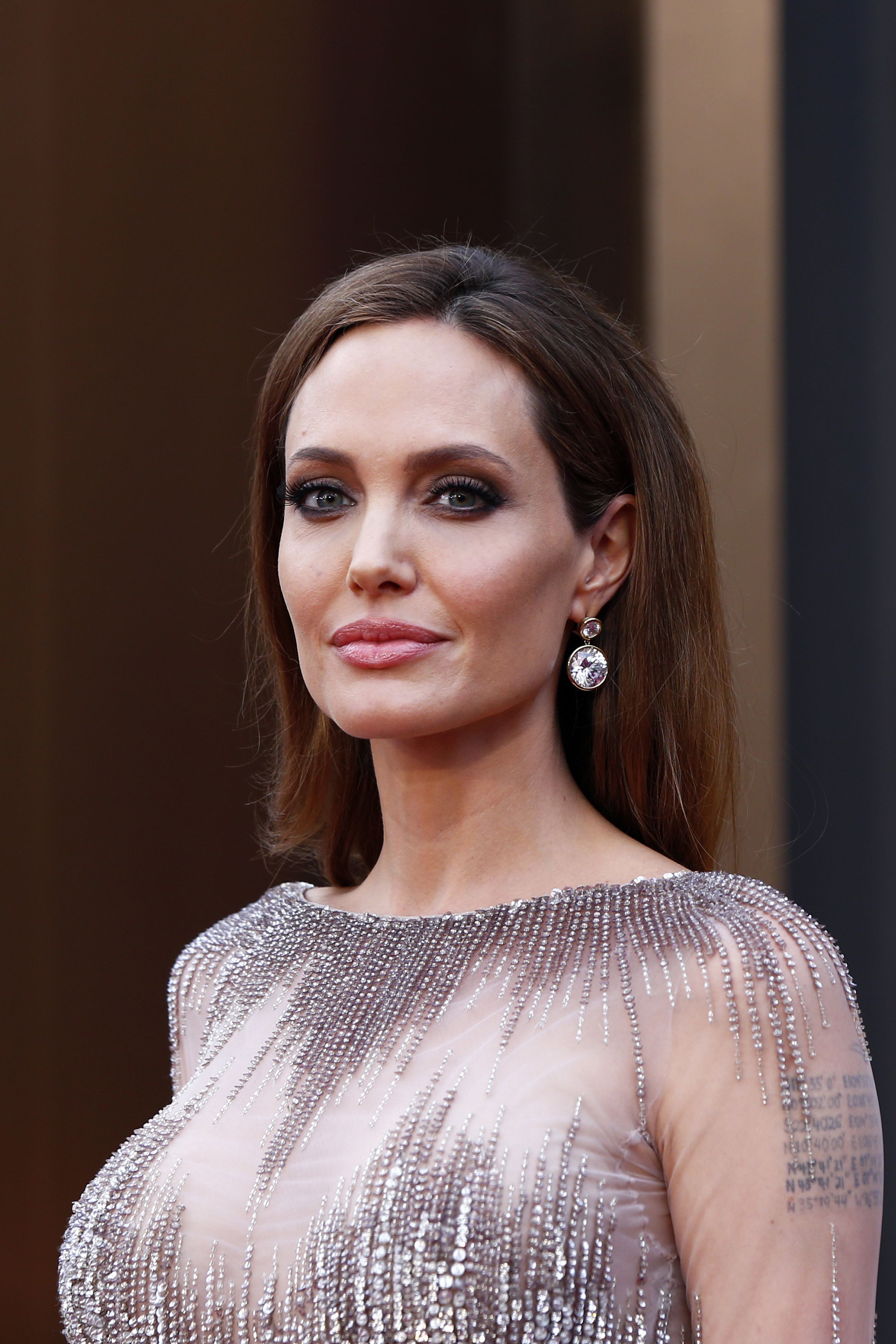
Long before the erotic drama Fifty Shades of Grey made it to the silver screen in 2015, Hollywood and literary circles engaged in intense speculation regarding who would bring E.L. James’s controversial literary characters to life. Among the most persistent and fiercely debated rumors was the potential involvement of Academy Award-winning actress and director Angelina Jolie. The intersection of Jolie's high-profile cinematic reputation, her directorial aspirations around that era, and the massive cultural phenomenon of the Fifty Shades trilogy sparked a multifaceted debate that captured public interest, fueled entertainment journalism, and ultimately shaped the modern conversation about high-profile literary adaptations.
To understand the core of this debate, one must separate verified industry developments from fan-driven speculation, examine the actual casting process that led to Dakota Johnson and Jamie Dornan, and evaluate why Angelina Jolie's name became so powerfully linked to a project that ultimately charted a vastly different artistic course.
The Origins of the Casting Rumors
The speculation surrounding Angelina Jolie and Fifty Shades of Grey did not emerge in a vacuum. When Vintage Books published E.L. James’s erotic romance novel in 2012, the publishing sensation immediately triggered a bidding war among major Hollywood studios. Universal Pictures and Focus Features secured the film rights for a reported $5 million, setting off a secondary frenzy over who would write, produce, and direct the adaptation, as well as star as Anastasia Steele and Christian Grey.
During the early stages of development in 2012 and 2013, industry insiders and fans alike began casting a wide net of hypothetical names. Angelina Jolie’s name surfaced prominently not necessarily as a contender for the lead role of the young, naive college student Anastasia Steele—given the significant age difference—but rather as a prospective director. At the time, Jolie had recently transitioned into filmmaking with her directorial debut, In the Land of Blood and Honey (2011), and possessed a reputation for handling intense, mature, and emotionally complex subject matter.
Entertainment media outlets frequently cited studio wishlists and industry chatter suggesting that Universal approached Jolie to helm the project. This rumor resonated with audiences because Jolie's distinct visual style, commanding industry presence, and history of bold artistic choices seemed, to many observers, like an ideal match for the dark, polished, and subversive world of Christian Grey.
Separating Fact from Fiction: Was Jolie Ever Attached?
Despite widespread media coverage and intense public debate, official records and subsequent statements from production teams clarified that Angelina Jolie was never formally attached to direct or star in Fifty Shades of Grey.
The directorial search eventually narrowed down to a select group of filmmakers before British director Sam Taylor-Johnson was officially announced as the director in June 2013. Taylor-Johnson, known for her work on the John Lennon biographical drama Nowhere Boy, brought a specific artistic vision to the table, aiming to balance the commercial demands of a blockbuster franchise with the delicate emotional and physical dynamics of the source material.
| Candidate / Rumored Figure | Proposed Role | Official Status in Production |
|---|---|---|
| Angelina Jolie | Director / Creative Consultant (Rumored) | Never formally attached; subject of industry speculation |
| Sam Taylor-Johnson | Director | Officially hired in June 2013 |
| Dakota Johnson | Anastasia Steele | Cast as the female lead in September 2013 |
| Charlie Hunnam | Christian Grey | Initially cast, later exited due to scheduling conflicts |
| Jamie Dornan | Christian Grey | Final casting choice following Hunnam's departure |
As detailed in industry reports from publications such as The Hollywood Reporter and Variety, while high-profile filmmakers like Jolie and Gus Van Sant were informally discussed or briefly considered by studio executives during early brainstorming sessions, formal negotiations never materialized. Jolie herself addressed her busy schedule and focus on her own directorial projects, such as Unbroken (2014), effectively dampening any realistic prospects of her stepping into the Fifty Shades universe.
The Broader Debate: Auteur Filmmaking vs. Studio Franchises
The intense discussion surrounding whether Angelina Jolie should direct or participate in Fifty Shades of Grey highlights a broader, recurring debate in modern Hollywood: the tension between auteur-driven cinema and commercial studio properties.
When major literary adaptations command global attention, public and critical debates often split into two distinct philosophical camps:
- The Prestige Auteur Approach: Fans of this school of thought argued that hiring a heavyweight, established auteur like Angelina Jolie would elevate the material, transforming what many dismissed as sensationalist pulp fiction into a sophisticated psychological drama. Proponents believed that a director with Jolie’s gravity could lend artistic legitimacy, artistic depth, and sharp nuance to the film's controversial themes.
- The Collaborative Studio Approach: Conversely, studio executives and industry veterans often favor directors who can navigate strict production timelines, studio interference, and massive fan expectations without imposing an overly dominant personal aesthetic that might alienate the core demographic. Sam Taylor-Johnson’s selection reflected a desire for a collaborative environment, though creative clashes during production ultimately became well-documented, leading to Taylor-Johnson's departure from the subsequent sequels.
This tension fueled the debate over Jolie. Commentators debated whether casting an established, uncompromising voice like Jolie would have resulted in a vastly superior cinematic product or if it would have created an inevitable clash of creative visions between a strong-willed filmmaker and risk-averse studio executives.
The Ultimate Casting Outcome and Franchise Legacy
While the Angelina Jolie rumors remained purely speculative, the actual casting process for Fifty Shades of Grey faced its own dramatic hurdles. Following the selection of Sam Taylor-Johnson, the search for Christian Grey and Anastasia Steele dominated entertainment headlines throughout the summer and fall of 2013.
Initially, Sons of Anarchy star Charlie Hunnam was cast as Christian Grey in September 2013. However, just weeks before principal photography was scheduled to begin, Hunnam withdrew from the project, citing an immersive television schedule and personal stress. Irish actor Jamie Dornan was rapidly brought in as his replacement, starring opposite Dakota Johnson.
The resulting film, released in February 2015, became a massive global box office success, grossing over $570 million worldwide despite polarized critical reviews. It spawned two sequels, Fifty Shades Darker (2017) and Fifty Shades Freed (2018), directed by James Foley rather than Sam Taylor-Johnson.
In retrospect, the casting debate involving figures like Angelina Jolie serves as a fascinating case study in pre-release film marketing and cultural anticipation. It demonstrated how public imagination often gravitates toward larger-than-life names when a cultural touchstone transitions from the page to the screen, reflecting what audiences wish a project could be versus the pragmatic realities of studio filmmaking.
Frequently Asked Questions
Was Angelina Jolie ever officially offered the job to direct Fifty Shades of Grey?
No official records or studio confirmations indicate that Angelina Jolie was formally offered the directing position. While her name circulated widely in early industry speculation and informal studio wishlists, formal negotiations never took place.
Why was Angelina Jolie's name linked to the Fifty Shades of Grey project?
Jolie's name gained traction because she had recently transitioned into directing with In the Land of Blood and Honey (2011) and was known for handling mature, complex, and emotionally intense themes. Observers felt her distinct directorial profile matched the ambitious scale of the adaptation.
Who actually directed the Fifty Shades of Grey film?
British director Sam Taylor-Johnson was officially hired by Universal Pictures in June 2013 to helm the first installment of the franchise. She directed the 2015 release but did not return for the subsequent sequels due to reported creative differences.
How did the actual casting differ from the early rumors?
While early rumors floated high-profile directors and established actors, the production ultimately cast relative rising stars for the lead roles—Dakota Johnson and Jamie Dornan—under the direction of Sam Taylor-Johnson, opting for a balance of fresh chemistry and manageable contractual commitments.
What is the lasting significance of these early casting debates?
The rumors highlight the intense media cycle surrounding major literary adaptations and illustrate the ongoing industry debate over whether prestige filmmakers can successfully elevate commercial, pulp-leaning franchise material.
Conclusion and Next Steps
The enduring chatter surrounding the Angelina Jolie and Fifty Shades of Grey actress and director debate remains a compelling chapter in modern Hollywood pop culture history. It underscores how audience anticipation, media speculation, and studio development strategies intersect long before cameras begin rolling. For film historians and enthusiasts analyzing contemporary adaptations, examining these unmaterialized casting rumors provides valuable insight into how Hollywood balances prestige, commercial viability, and fan expectations. To explore this topic further, review official studio production notes from Universal Pictures' 2012–2013 development archives or read retrospective interviews with director Sam Taylor-Johnson regarding the challenges of bringing the bestselling trilogy to the screen.