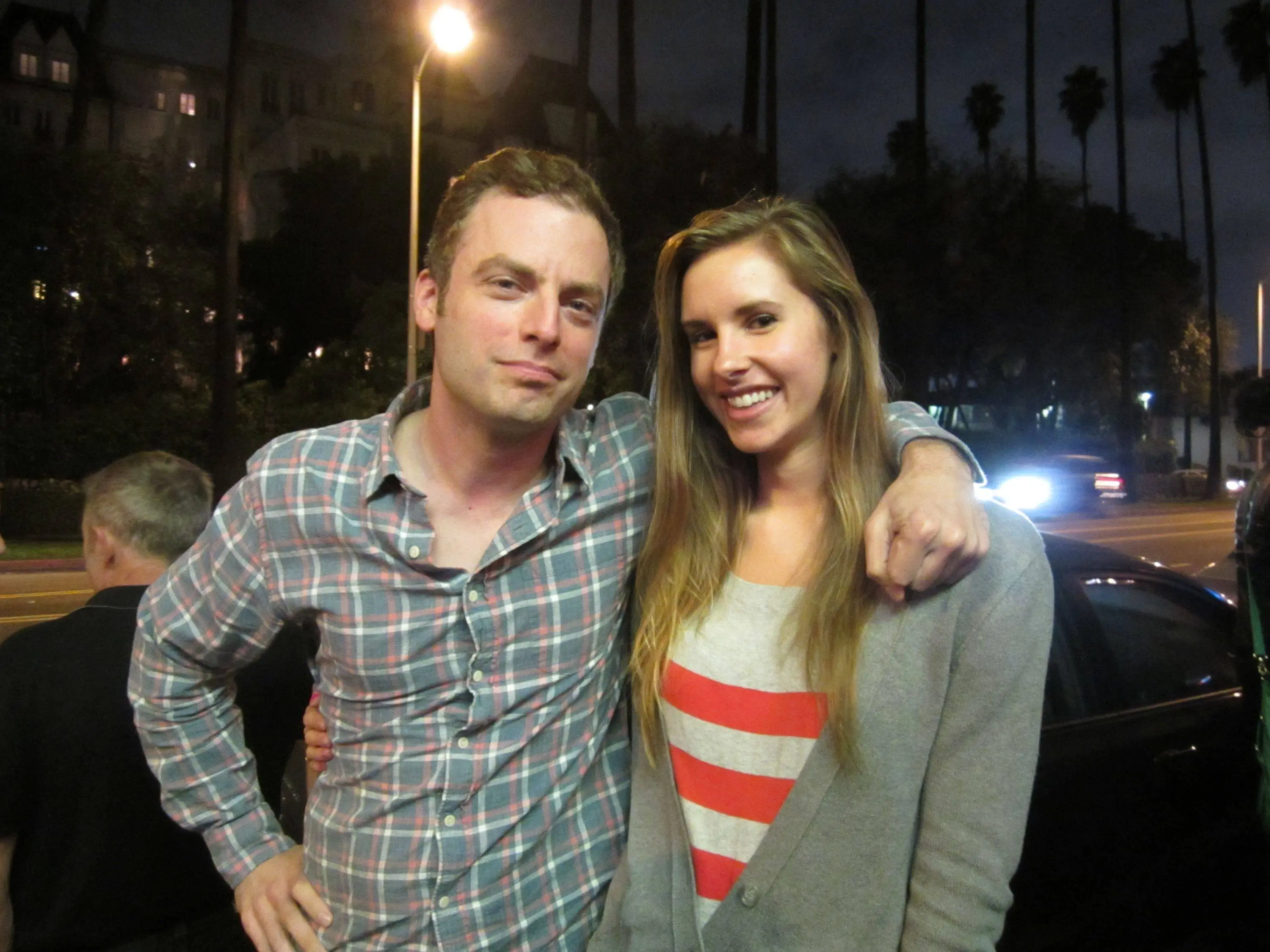
Andy Botwin, portrayed by Justin Kirk in Showtime’s dark comedy-drama Weeds (2005–2012), serves as the comedic heart, reluctant strategist, and emotional core of the series. Across eight seasons, Andy evolves from a leech-like slacker exploiting his sister-in-law’s illicit marijuana trade into a skilled operational accomplice, cross-border smuggler, and ultimate survivor of America's shifting cannabis landscape.
Introduction: The Arrival of Andy Botwin in Agrestic
When Weeds premiered in 2005, created by Jenji Kohan, it offered a satirical examination of American suburban discontent through the lens of the illegal marijuana trade. Following the sudden death of his brother Judah, Andy Botwin arrives in the fictional gated community of Agrestic, California. Initially presented as an irresponsible, sexually driven slacker seeking rent-free housing, Andy quickly discovers that his widowed sister-in-law, Nancy Botwin (Mary-Louise Parker), is funding her affluent lifestyle by dealing mid-grade cannabis.
Rather than exposing Nancy or distancing himself from the danger, Andy immediately inserts himself into the family enterprise. His initial motivation is purely self-serving: securing food, shelter, and easy access to free marijuana. However, as the illicit trade escalates from small-scale neighborhood dealing to multi-pound distribution, Andy becomes an indispensable business partner.
Andy’s character embodies a specific archetype within cannabis culture during the pre-legalization era of the mid-2000s: the casual consumer whose laid-back demeanor hides genuine resourcefulness. While Nancy approaches the drug trade with cold, increasingly reckless ambition, Andy acts as the pragmatic counterweight. He understands the social dynamics of drug dealing, recognizing that in the illicit trade, survival depends on adaptability, charm, and knowing when to walk away.
Tactical Roles: From Rabbinical School to Cross-Border Smuggling
Throughout the series, Andy Botwin’s involvement in the cannabis trade spans several distinct phases, each mirroring the expanding scale and danger of the Botwin family’s criminal enterprise.
- Agrestic Suburbs (Seasons 1-3)
- Local Retail & Front Business
- Ren Mar Smuggling (Seasons 4-5)
- Cartel Tunnels & Trafficking
- Fugitive Era (Seasons 6-7)
- Alternative Fronts & Hiding
- Legalization Era (Season 8)
- Legitimate Commercial Markets
1. The Rabbinical School Front and Domestic Grow Operations
In Season 2, faced with a military draft call-up for the Army Reserve during the Iraq War, Andy enrolls in a rabbinical school to secure a religious draft deferment. Recognizing an opportunity, Nancy and her master-cultivator partner, Conrad Shepard, use Andy’s institutional access to establish an undercover indoor grow house.
Andy's role rapidly expands from passive beneficiary to active co-conspirator. He assists in managing the logistics of "MILF weed"—the high-potency strain developed by Conrad—while acting as a buffer between Nancy’s illicit trade and the inquisitive suburban environment. His ability to disarm authority figures with erratic charm proves crucial when law enforcement or rivals threaten the operation.
2. The Ren Mar Smuggling Tunnels
After Agrestic burns down at the end of Season 3, the family relocates to the border town of Ren Mar, California. Here, the scale of the trade shifts dramatically from local suburban distribution to international drug trafficking linked to Mexican cartels.
Andy is thrust into cross-border operations alongside cartel leader Guillermo Gómez and later political figurehead/cartel boss Esteban Reyes. Andy helps manage a maternity clothing boutique that serves as a physical cover for a subterranean drug tunnel extending beneath the U.S.–Mexico border.
In this era, Andy’s responsibilities transition from casual dealing to high-stakes logistics:
- Tunnel Management: Overseeing the movement of large-scale cannabis shipments passing beneath the border wall.
- Front Operations: Running day-to-day retail fronts designed to launder cartel cash.
- Crisis Management: Negotiating live operational conflicts between independent operators and violent cartel enforcers.
Despite his constant complaints and expressed desire to leave the criminal lifestyle, Andy repeatedly steps up to handle dangerous operational tasks to protect his nephews, Silas and Shane.
Andy Botwin vs. Nancy Botwin: Two Visions of the Cannabis Trade
The core engine of Weeds is the complex, often codependent relationship between Andy and Nancy Botwin. Their contrasting approaches to the cannabis trade illustrate two fundamental philosophies regarding illegal enterprise.
| NANCY BOTWIN | ANDY BOTWIN |
|---|---|
| • High-risk escalation & cartel integration• Views cannabis as a ladder to power & luxury• Ignores collateral damage to family | • Risk-averse self-preservation• Views cannabis as a temporary means to financial freedom• Prioritizes family safety |
Nancy’s Reckless Ambition
Nancy is driven by an insatiable need for control, status, and adrenaline. She consistently climbs higher up the supply chain, moving from local dealer to independent distributor, then to cartel associate, and eventually marrying a cartel kingpin. Nancy frequently ignores the immediate safety of her family in pursuit of larger paydays and greater leverage, treating human lives—including Andy’s—as collateral in her business gambits.
Andy’s Pragmatic Self-Preservation
Conversely, Andy views the cannabis trade through a lens of pragmatic survival and social connection. He recognizes early on that the black market is inherently volatile and dangerous. While he enjoys the material benefits and lifestyle freedom that cannabis income provides, he consistently advocates for moderation, lower-profile operations, and clear exit strategies.
Andy’s recurring tragedy is his unrequited romantic longing for Nancy, which binds him to her dangerous orbit. Time and again, when Andy attempts to build a legitimate life—whether pursuing a career as a professional chef, opening a bicycle repair shop ("Cycleopaths"), or starting a coping-mechanism business—Nancy pulls him back into her illicit schemes.
Business Ventures and Operational Roles Across Weeds
Andy Botwin held numerous titles, operated various front businesses, and performed diverse operational roles throughout the show's eight seasons.
| Season(s) | Business Venture / Enterprise | Primary Operational Role | Business Type & Legality | Key Strategic Outcome |
|---|---|---|---|---|
| Seasons 1–3 | Agrestic Distribution & Grow Operation | Logistics assistant, local dealer, rabbinical school proxy | Illicit Black Market / Undercover Front | Helped establish distribution for "MILF Weed"; avoided military deployment. |
| Season 4 | Maternity Boutique ("Lucille's") | Front store manager, tunnel gatekeeper | Illicit Cartel Smuggling Front | Controlled U.S. side of cross-border smuggling tunnel; managed cartel inventory. |
| Season 5 | Sno-Cone Stand & Local Trade | Independent vendor, low-level distributor | Informal Black Market / Street Vending | Provided cash flow and local intelligence during height of cartel turmoil in Ren Mar. |
| Season 6 | Hotel / Motel Cleaning Service (Fugitive Era) | Operations lead, identity fabricator | Informal Economy / Fake Personas | Kept the Botwin family hidden from law enforcement and cartel hitmen while fleeing nationwide. |
| Season 7 | Manhattan Office / Discount Auto Front | Customer relations, operational support | Quasi-Legal / Money Laundering | Supported Nancy's attempt to establish dominance in New York's medical and street markets. |
| Season 8 | Copenhagen / Legal Enterprise & Bakery | Entrepreneur, legal business owner | Fully Legitimate Legal Market | Achieved financial independence away from Nancy; adapted to modern commercial cannabis. |
Mirroring the Evolution of the American Cannabis Industry
While Weeds is fundamentally a character drama and dark satire, Andy Botwin’s narrative arc closely tracks the historical transformation of the United States cannabis market from 2005 to 2012 (and into the flash-forward series finale).
1. The Pre-Legalization Underground (Mid-2000s)
In the early seasons, Andy operates in a traditional black-market environment. High-quality cannabis was expensive, illicit, and distributed primarily through word-of-mouth networks in suburban neighborhoods. Transactions were cash-only, and safety depended on discretion and personal relationships. Andy’s initial success relies on his interpersonal warmth and ability to normalized sales within suburban subculture.
2. Cartel Dominance and Violence (Late 2000s)
As the series moves to the California border, Weeds reflects the real-world escalation of cartel involvement in the North American cannabis supply chain during the late 2000s. Andy’s exposure to the violence of figures like Guillermo and Esteban highlights the human cost of prohibition. The illegal market becomes hyper-militarized, leaving middle-tier operators like Andy trapped between lethal criminal networks and aggressive federal law enforcement (DEA).
3. The Medical Era and Early Commercialization
During the middle-to-later seasons, the show introduces early dispensaries and compassionate-use medical frameworks in California. Silas Botwin (Andy's nephew) emerges as a talented grower who embraces the scientific and commercial future of cannabis. Andy, ever the opportunistic operator, adapts by supporting Silas's efforts to transition from street-level slinging to boutique, strain-specific cultivation.
4. Full Legalization and Corporate Normalization (Series Finale)
The series finale of Weeds features a 10-year time jump, placing the characters in a future where cannabis has been fully legalized at the state level (and federally normalized within the show's timeline).
In this legalized environment, the chaos of the black market is replaced by corporate regulation, licensing fees, branding, and commercial retail storefronts. Silas and Nancy become corporate cannabis executives.
Andy, however, chooses a different path. Having finally broken free from Nancy’s influence, he runs a successful, legal restaurant and bakery business in Copenhagen, Denmark, before returning for a family gathering. His arc demonstrates a profound truth about the cannabis trade: those who survived the violent prohibition era often had to leave the trade entirely, or fully pivot into legal, mainstream enterprise, to find true stability.
Justin Kirk’s Performance and Cultural Legacy
Justin Kirk’s portrayal of Andy Botwin earned widespread critical acclaim, earning him multiple nominations, including a Golden Globe nomination for Best Supporting Actor. Kirk brought a rare depth to a character who could easily have devolved into a superficial comic-relief stereotype.
- Season 1: Immature Parasite
- Seasons 2-3: Comedic Accomplice & Apprentice
- Seasons 4-5: Reluctant Smuggler & Family Protector
- Seasons 6-7: Exhausted Co-Fugitive
- Season 8: Autonomous, Fully Reformed Entrepreneur
Andy's appeal lies in his self-awareness. Unlike Nancy, who constantly rationalizes her criminal actions under the guise of protecting her children, Andy openly acknowledges his own flaws, cowardice, and moral compromises. His monologues—ranging from absurd philosophical rants about life and sex to raw, heartbreaking admissions of love for Nancy—provided Weeds with its most emotionally grounded moments.
In the broader context of television history, Andy Botwin stands alongside characters like Jesse Pinkman (Breaking Bad) as an accomplice who serves as the moral center of an antihero narrative. While the lead protagonist descends deeper into criminality and moral decay, the secondary partner retains humanity, empathy, and a desire for redemption.
Key Takeaways: Lessons from Andy Botwin’s Cannabis Journey
- Adaptability is Essential: Andy survived multiple law enforcement raids, cartel wars, and sudden relocations by remaining flexible and never tying his identity to a single location or market strategy.
- Charm Over Force: In an industry often characterized by intimidation, Andy used humor, diplomacy, and interpersonal charm to de-escalate lethal conflicts with enforcement figures and rivals.
- The Risk-Reward Threshold: Andy’s constant friction with Nancy highlights the danger of unchecked ambition in high-risk markets. Knowing when to cap growth is critical for long-term survival.
- Legitimacy Brings Freedom: The ultimate resolution of Andy’s story proves that true peace of mind cannot be achieved within the black market; long-term security required stepping into legal enterprise.
Frequently Asked Questions
How does Andy Botwin first get involved in Nancy's weed business?
Andy moves into Nancy's Agrestic home in Season 1 following the death of his brother, Judah. After discovering Nancy's illicit dealing, he initially demands free cannabis and financial support. Soon after, he begins assisting with sales, procurement, and front-business operations to justify staying in the household and generating personal income.
What was Andy Botwin's role in the Ren Mar tunnel smuggling operations?
In Seasons 4 and 5, set in the border town of Ren Mar, Andy was tasked with running "Lucille's," a maternity clothing boutique that served as a physical cover for a cross-border smuggling tunnel. Andy managed the store's retail front while assisting cartel leader Guillermo Gómez in overseeing the movement of large marijuana shipments through the tunnel.
Did Andy Botwin ever successfully run a legitimate business in Weeds?
Yes. Throughout the series, Andy made several attempts at legitimate enterprise, including starting a bicycle repair shop named "Cycleopaths" and working as a professional chef. In the series finale's 10-year flash-forward, Andy has successfully established a fully legal culinary and hospitality career in Copenhagen, separate from the family's cannabis enterprise.
How does Andy's character reflect real-world changes in the cannabis industry?
Andy’s trajectory mirrors the shift from the casual, high-risk suburban black market of the early 2000s to the violent, cartel-dominated trafficking networks of the mid-2000s, and finally to the post-prohibition legalized, regulated market. His evolution demonstrates how operators were forced to adapt as cannabis transitioned from an illegal street drug to a corporate commodity.
What happens to Andy Botwin in the series finale of Weeds?
In the series finale ("It's Time"), set years after full legalization, Andy lives in Copenhagen, Denmark, running a successful restaurant business and raising a daughter. He returns to Connecticut for a family event, where he finally sets firm boundaries with Nancy, rejecting her attempts to pull him back into her orbit and achieving personal independence.
Practical Conclusion and Next Steps
For media scholars, screenwriters, and fans analyzing the representation of illegal trades in modern media, Andy Botwin in Weeds offers an exceptional case study in character-driven storytelling. His arc demonstrates how comedic archetypes can be leveraged to explore complex real-world social issues, including drug prohibition, family codependency, and the transition into legal commercial markets.
To further analyze the historical and cultural themes presented in Weeds:
- Examine Pre- and Post-Legalization Narratives: Compare early seasons of Weeds (2005–2007) with post-legalization television shows to see how pop culture's portrayal of cannabis evolved alongside state laws.
- Study Character Dynamics: Contrast Nancy Botwin’s relentless escalation with Andy Botwin’s risk-averse survival instincts as a blueprint for writing operational tension in crime dramas.
- Review Industry History: Research the real-world timeline of California’s Prop 215 (medical) to full adult-use legalization (Prop 64) to see how accurately the Botwin family’s business shifts aligned with actual legislation.