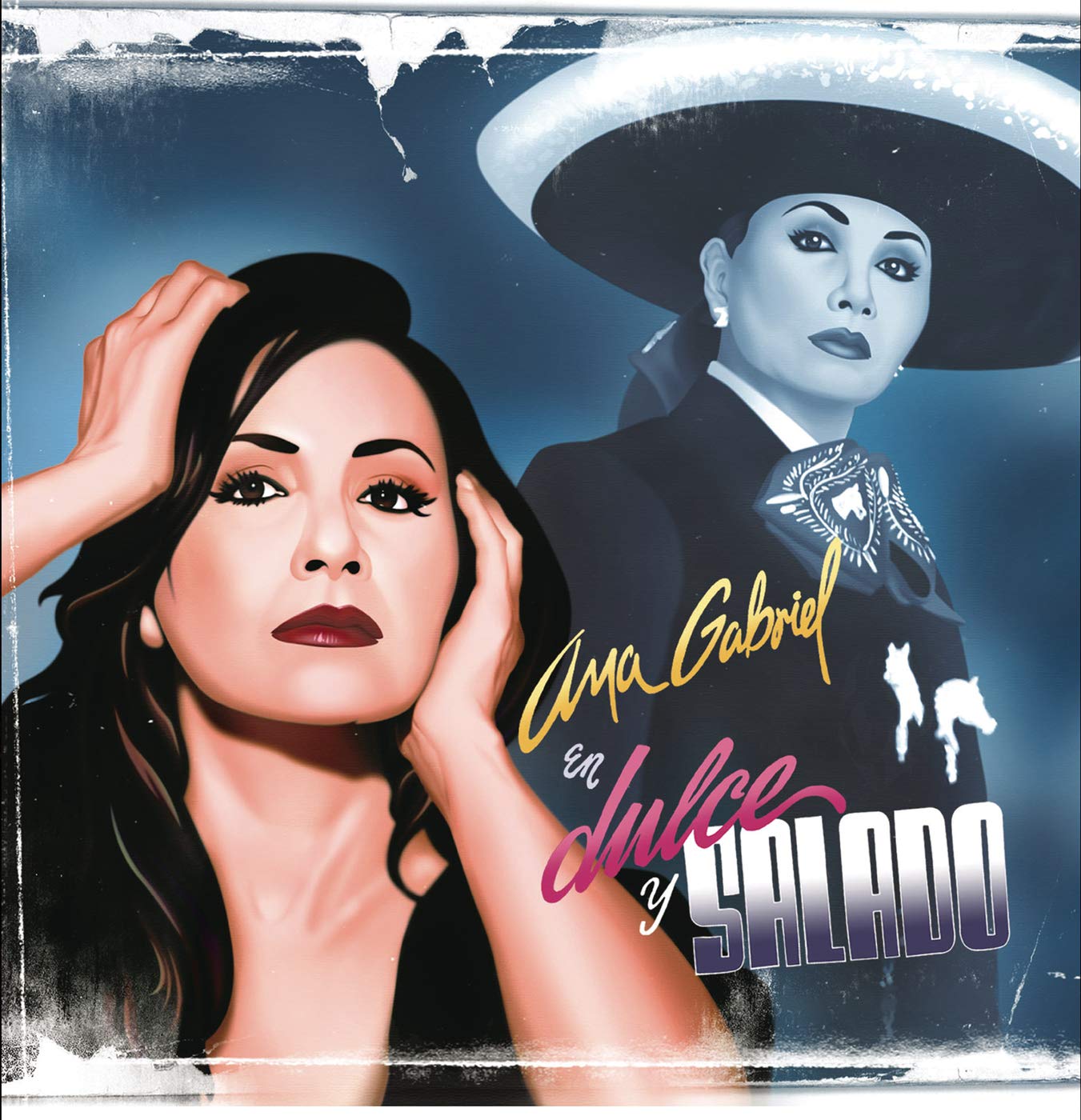
Ana Gabriel is a Mexican singer and songwriter, born María Guadalupe Araujo Young in Guamúchil, Sinaloa, Mexico. Her nationality is fundamentally Mexican, a fact that has served as the cornerstone of her five-decade career. While she is widely recognized for her Mexican identity, her heritage also includes Chinese ancestry through her maternal grandfather, contributing to her unique persona as "La Luna de América."
The Geographical and Cultural Origins of Ana Gabriel
To understand the music of Ana Gabriel, one must first look at the geography of her birth. Born on December 10, 1955, in the small city of Guamúchil in the state of Sinaloa, Ana Gabriel was raised in a region known for its fierce cultural pride and distinct musical traditions. Sinaloa is the birthplace of banda music, a genre characterized by heavy brass and percussion, which emphasizes raw emotion and vocal power.
Growing up in Guamúchil, Ana Gabriel was immersed in the "Mexicanidad" that would later define her discography. The state of Sinaloa is often described as a land of contrasts—stunning coastlines and rugged mountains—which is reflected in the dual nature of her music: the gentle, romantic ballads and the powerful, belting rancheras. Her nationality is not just a legal status; it is the sonic foundation of her work. She began singing at the age of six, performing "Regalo de Dios" by José Alfredo Jiménez, a legendary Mexican composer. This early exposure to the titans of Mexican music cemented her path as a representative of her nation’s artistic soul.
The Nuance of Heritage: Her Chinese-Mexican Ancestry
While her nationality is Mexican, Ana Gabriel’s ethnic background provides a fascinating layer to her public identity. Her maternal grandfather, Roberto Young, was of Chinese descent. This makes Ana Gabriel part of the significant but often overlooked Chinese-Mexican community that settled in northern Mexico, particularly in states like Sinaloa and Sonora, during the late 19th and early 20th centuries.
This heritage is important because it highlights the "mestizaje" (mixing) that defines modern Mexican identity. Ana Gabriel has often spoken with pride about her "Young" surname and the influence of her grandfather. This multicultural background has allowed her to resonate with a broader audience, bridging the gap between traditional Mexican nationalism and a more inclusive, cosmopolitan Latin identity. In her music, this is often expressed through a sense of being "from the world" while remaining deeply rooted in the soil of Sinaloa.
Nationality as a Genre: Mastering the Ranchera and the Bolero
In the world of Latin music, nationality is often inextricably linked to specific genres. For Ana Gabriel, being Mexican meant a natural inheritance of the Ranchera and the Bolero. However, her contribution to these genres was revolutionary because of her distinct vocal timbre.
The Power of the Ranchera
The Ranchera is the quintessential musical expression of Mexican nationality. Traditionally dominated by male voices (the "charro" archetype), the genre requires immense lung capacity and the ability to convey "sentimiento"—a deep, often painful emotional sincerity. Ana Gabriel’s raspy, husky voice (often compared to fine sandpaper or aged tequila) brought a new texture to the Ranchera. When she sings with a mariachi band, she isn't just performing; she is asserting her Mexican identity through the grit and passion of her delivery.
The Evolution of the Latin Pop Ballad
By the 1980s, Ana Gabriel’s nationality became a vehicle for international stardom. She successfully transitioned into Latin Pop, a move that allowed her to export Mexican romanticism to the rest of the world. Albums like Tierra de Nadie (1988) and Quién como tú (1989) showcased her ability to blend traditional Mexican vocal techniques with modern production. This era solidified her status as a global ambassador for Mexican music, proving that her national identity was a bridge rather than a barrier.
The "Moon of America": A Pan-Latin Identity
Though her nationality is Mexican, Ana Gabriel earned the title "La Luna de América" (The Moon of America). This moniker is significant because it reflects how her Mexican roots allowed her to transcend borders. During the 1980s and 1990s, she became one of the few artists who could sell out stadiums from Los Angeles to Buenos Aires.
Her Mexican nationality provided her with a "musical passport." Because Mexico has historically been the epicenter of the Spanish-language media industry, Ana Gabriel’s success in Mexico City acted as a springboard for the entire Western Hemisphere. She adopted the struggles and joys of the broader Latin American diaspora, often performing songs that touched on themes of exile, longing, and universal love. Her 1991 album Mi México, which was a tribute to her homeland, ironically became one of her biggest international successes, illustrating that the more specific she was about her nationality, the more universal her appeal became.
Comparative Impact of Mexican Musical Icons
To understand where Ana Gabriel stands in the hierarchy of Mexican music, it is helpful to compare her trajectory with other national icons. Her career has run parallel to legends like Vicente Fernández and Juan Gabriel, yet she carved out a unique space for the female voice in a male-dominated industry.
| Aspect | Ana Gabriel | Vicente Fernández | Juan Gabriel |
|---|---|---|---|
| Primary Region | Sinaloa | Jalisco | Michoacán / Juárez |
| Vocal Signature | Raspy, "Afónica" Contralto | Powerhouse Operatic Tenor | Flamboyant, Emotional Range |
| Genre Hybridity | High (Pop, Ranchera, Lambada) | Low (Pure Ranchera/Mariachi) | High (Pop, Ranchera, Disco) |
| Cultural Moniker | La Luna de América | El Rey de la Música Ranchera | El Divo de Juárez |
| International Peak | 1980s - Present | 1970s - 2010s | 1970s - 2016 |
This table illustrates that while Ana Gabriel shares the same nationality as these icons, her specific contribution lies in her genre hybridity and her ability to maintain a raspy, soulful vocal style that defied the traditional "clean" soprano expectations for female Mexican singers of her era.
Milestones of a National Icon in 2026
As of 2026, Ana Gabriel’s career has spanned over half a century. She remains a symbol of endurance for the Mexican music industry. Her recent tours, such as the "Un Deseo Más" world tour, have served as a retrospective of her life’s work, emphasizing her role as a living monument to Mexican culture.
Her impact is visible in the way she has navigated the changing landscape of the music industry. Even as streaming services and urban genres like Reggaeton and Corridos Tumbados have come to dominate the charts, Ana Gabriel’s catalog remains a staple. Her nationality provides a sense of "clásico" (classic) status. For younger generations of Mexican artists, she is the blueprint for how to maintain national identity while achieving global commercial success.
Technical Specifications of the "Ana Gabriel Sound"
The "nationality" in her music can also be analyzed through the technical aspects of her recordings. Her production often utilizes:
- Grito Mexicano: The traditional soulful cry found in Mexican music, which she integrates into both her pop and ranchera tracks.
- Instrumentation: Frequent use of the vihuela and guitarrón even in ballad arrangements, subtly nodding to her roots.
- Lyricism: Her songwriting often employs Mexican idioms and a dramatic narrative structure common in the "Cuento Mexicano" tradition.
Challenges and Resilience: Representing Mexico Abroad
Being a high-profile Mexican national on the global stage has not been without its challenges. Throughout her career, Ana Gabriel has faced the pressures of being a representative of her country during times of political and social upheaval. She has frequently used her platform to call for peace and unity within Latin America, particularly in countries like Venezuela and Cuba, where she has a massive following.
Her commitment to her nationality is also evident in her refusal to "Americanize" her sound for the English-language market. While many of her contemporaries in the 1990s sought "crossover" success by recording in English, Ana Gabriel remained steadfast in her Spanish-language repertoire. She proved that Mexican nationality, expressed through the Spanish language, was more than enough to capture the world's imagination.
Frequently Asked Questions
Is Ana Gabriel originally from China?
No, Ana Gabriel was born in Mexico and is of Mexican nationality. However, she has Chinese ancestry through her maternal grandfather, which she has frequently celebrated throughout her career.
What state in Mexico is Ana Gabriel from?
She is from Sinaloa, specifically the city of Guamúchil. This region is famous for its rich musical heritage and has significantly influenced her vocal style and choice of genres.
Why is she called "La Luna de América"?
This title was given to her to reflect her status as one of the most beloved and influential singers across the entire American continent. It signifies that while she is Mexican by birth, her music belongs to all of Latin America.
Does Ana Gabriel still perform in 2026?
Yes, Ana Gabriel continues to be active in the music industry. In 2026, she is celebrated as a legendary figure, continuing to perform her classic hits and engage with her multi-generational fan base through live concerts and special appearances.
What are her most famous "Mexican" songs?
Some of her songs that most strongly reflect her Mexican nationality include "Mi México," "Simplemente Amigos," and "Es Demasiado Tarde." These tracks showcase her mastery of the Ranchera and the Mexican ballad.
Has she won any major awards for her contribution to Mexican music?
Ana Gabriel has received numerous accolades, including Grammy nominations, Latin Grammy honors, and multiple Lo Nuestro Awards. She has also been inducted into the Latin Songwriters Hall of Fame, recognizing her role in shaping the identity of Mexican music.
Final Recommendation for Enthusiasts
For those looking to truly understand how nationality informs Ana Gabriel’s music, the best starting point is her 1991 album, Mi México. Unlike her pop-heavy hits of the late 80s, this album is a pure immersion into the Mariachi tradition. By listening to her interpret the works of classic Mexican composers alongside her own original compositions, listeners can hear the synthesis of her Sinaloan upbringing, her unique vocal heritage, and her unwavering pride in her Mexican identity. To follow her current journey in 2026, fans should look for her "Un Deseo Más" live recordings, which offer a modern perspective on a legendary national career.