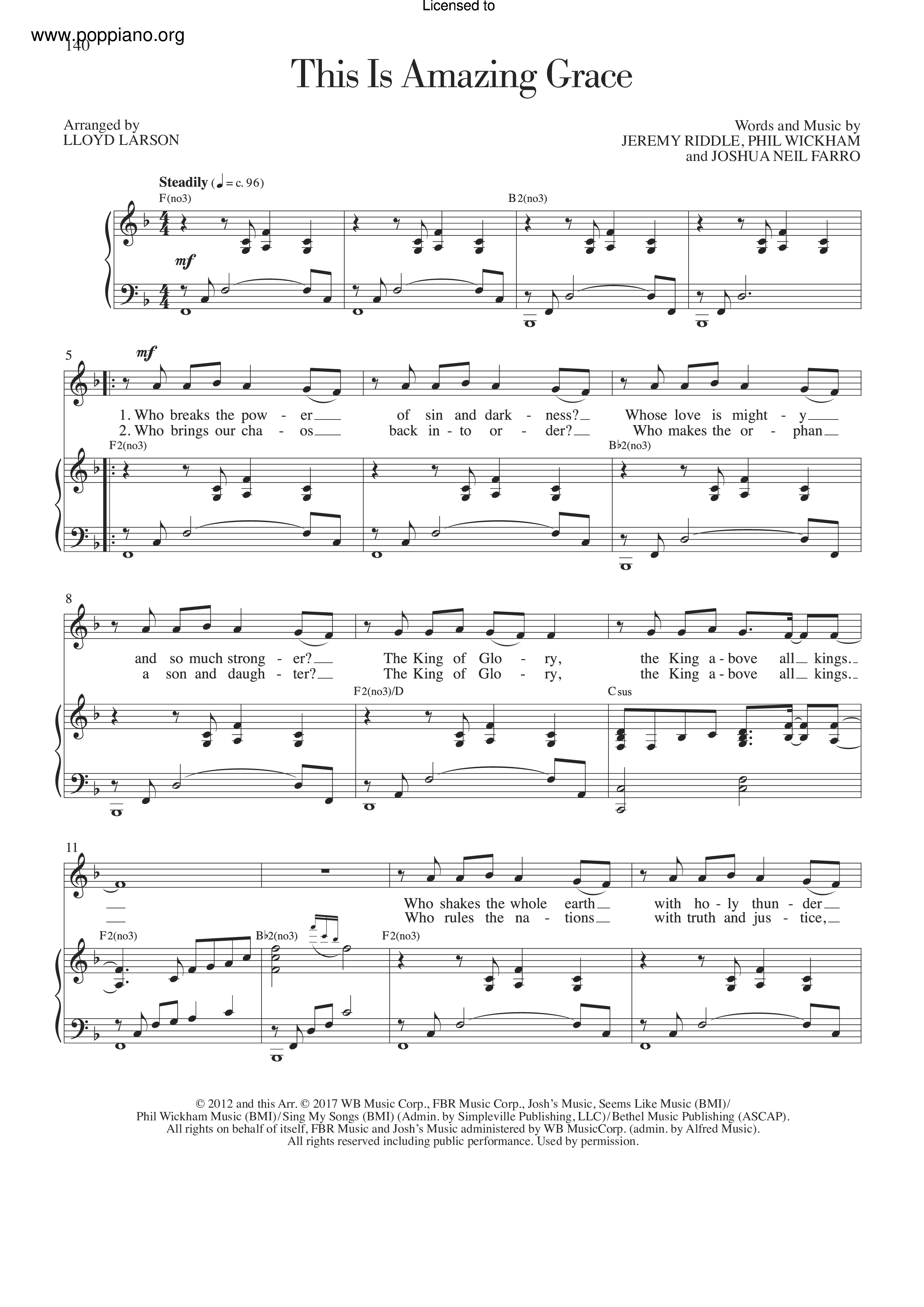
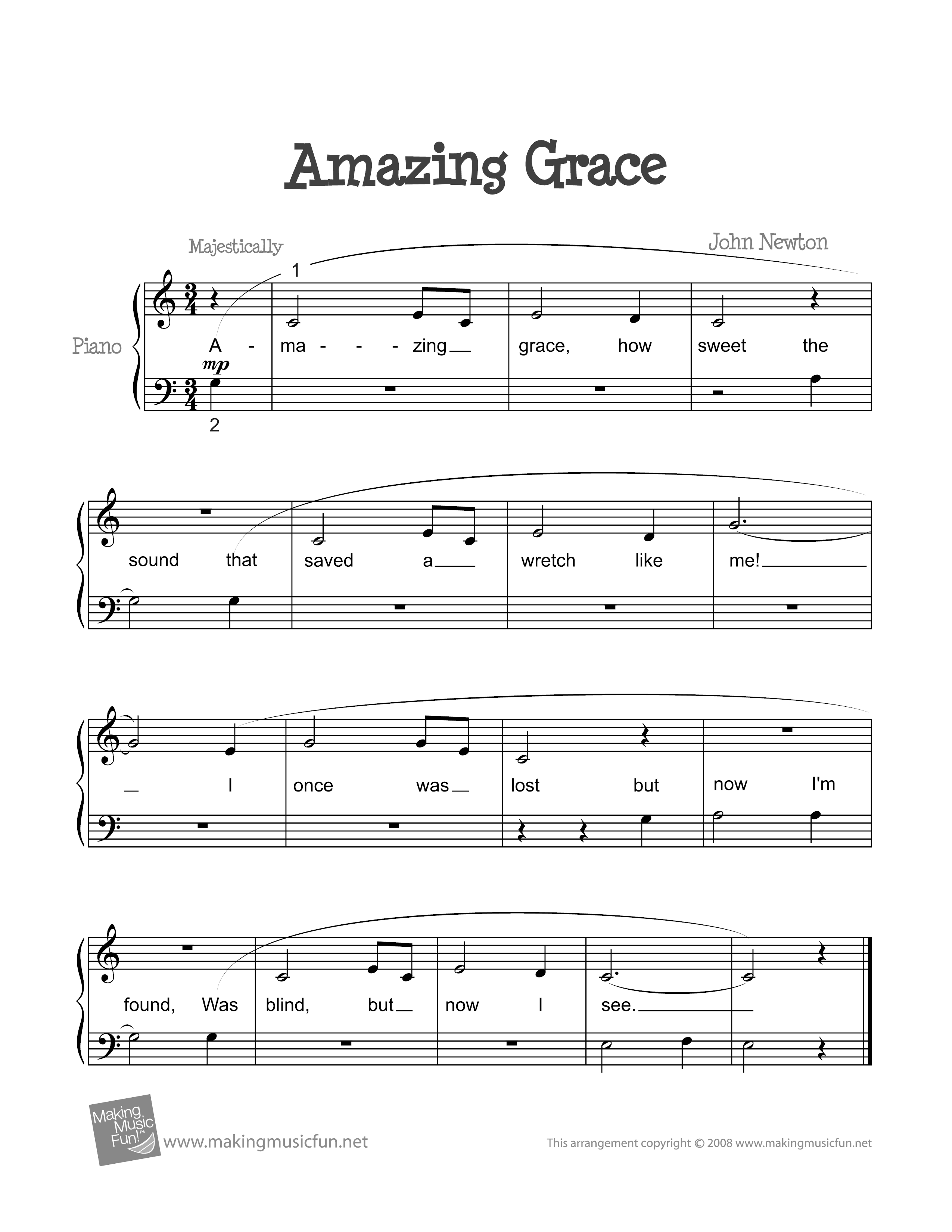
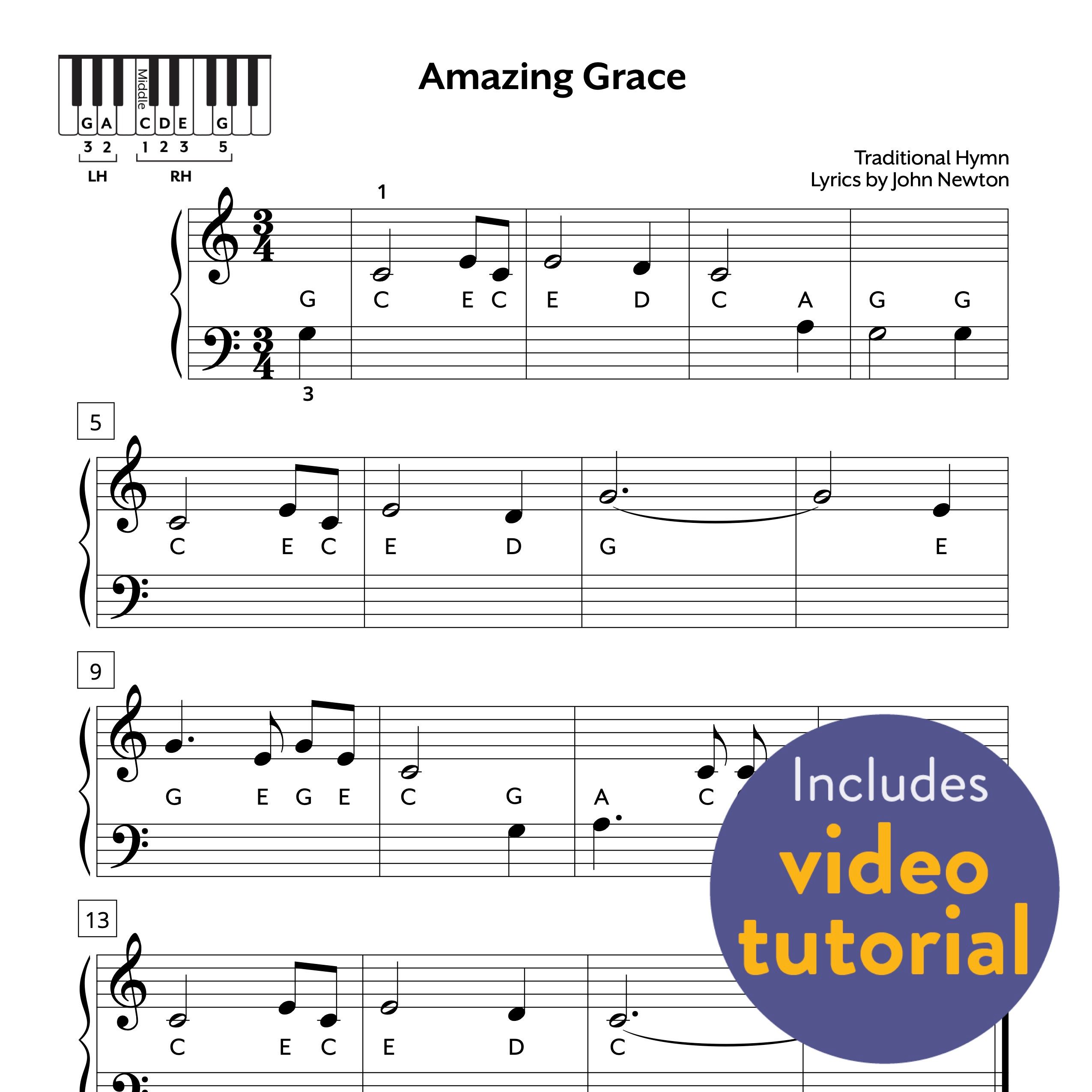
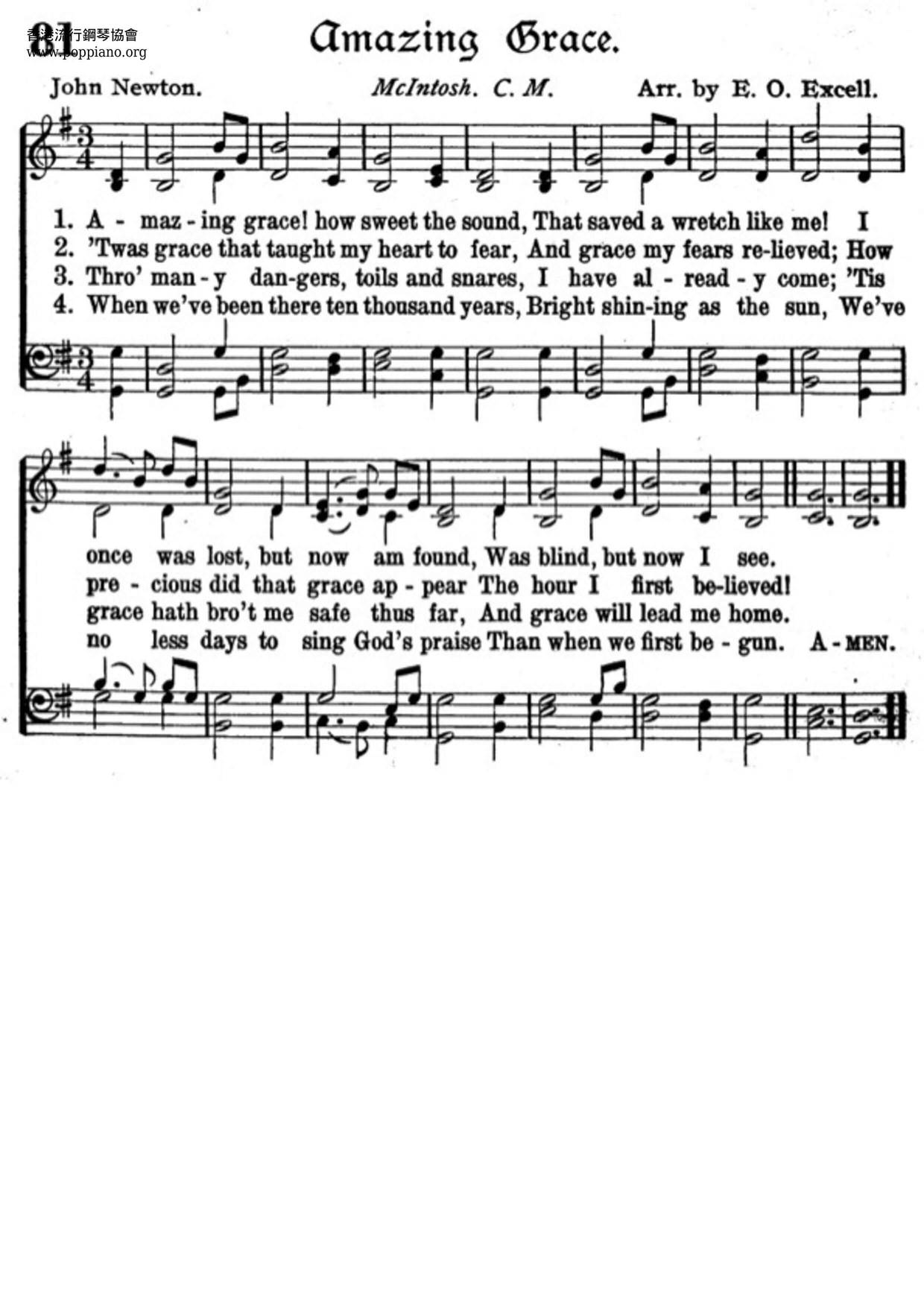
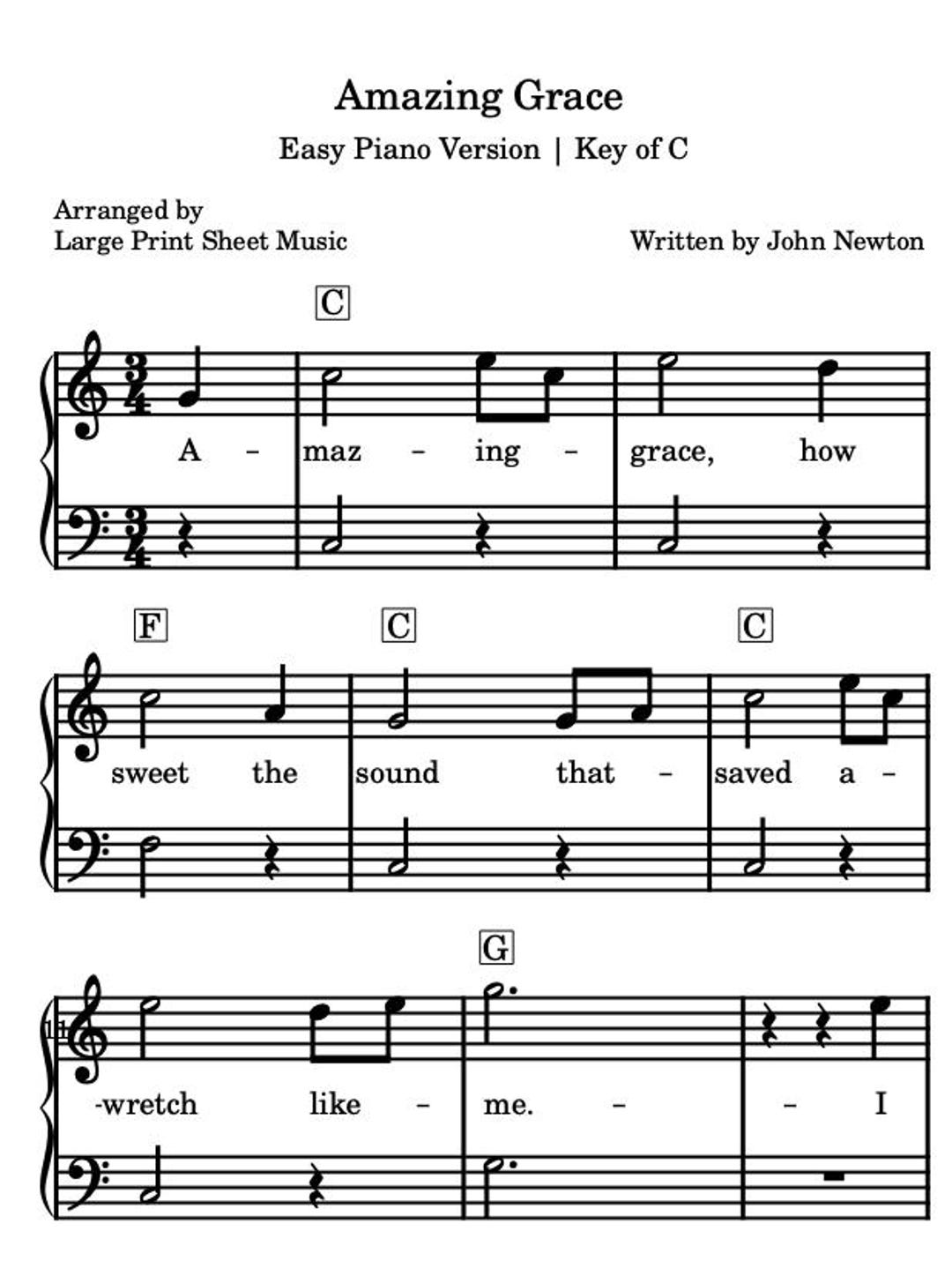
You can find free PDF sheet music for "Amazing Grace" through several reputable public domain repositories, including the Petrucci Music Library (IMSLP), 8notes, and MuseScore. Because the lyrics and the traditional "New Britain" melody are in the public domain, high-quality arrangements for piano, guitar, and vocal performance are legally available for download and printing at no cost.
"Amazing Grace" is perhaps the most recognized hymn in the English-speaking world. For musicians in 2026, the challenge isn't finding the music, but rather selecting the specific arrangement that matches their skill level and instrument. Whether you are a beginner looking for an easy piano version with letter names or a choir director seeking a complex four-part harmony, understanding the history, technical structure, and digital sourcing of this piece is essential for a successful performance.
The History and Legal Status of Amazing Grace
To understand why "Amazing Grace" sheet music is widely available for free as a PDF, one must look at its origins. The lyrics were written by John Newton, an English poet and clergyman, first published in 1779. The melody most associated with it today, known as "New Britain," is an anonymous tune that was first paired with Newton’s words in 1835 by William Walker in his songbook The Southern Harmony.
Under international copyright law, works published before the early 20th century are generally in the public domain. This means the core melody and lyrics of "Amazing Grace" belong to the public. However, a modern composer's specific arrangement or a newly added orchestral accompaniment may still be under copyright. When searching for a "free PDF," you are typically accessing these public domain versions or arrangements where the creator has explicitly waived their rights (Creative Commons).
The song’s enduring popularity stems from its pentatonic structure. The melody uses only five notes of the major scale, which makes it incredibly accessible for singers and instrumentalists alike. This simplicity allows for infinite variations, from traditional folk styles to gospel, jazz, and classical interpretations.
Choosing the Right Arrangement for Your Skill Level
Not all "Amazing Grace" sheet music is created equal. The arrangement you choose should reflect your technical proficiency and the setting in which you plan to perform.
Beginner Piano and Easy Keyboard
For students just starting their musical journey, a "Big Note" or "Easy Piano" version is ideal. These arrangements usually feature the melody in the right hand with very simple, single-note accompaniments in the left hand. Many free PDFs for beginners include fingerings (numbers 1-5) and occasionally the names of the notes written inside the note heads. In 2026, many educators prefer "Lead Sheets," which provide only the melody and the chord symbols (G, C, D7), allowing the student to improvise their own accompaniment.
Intermediate to Advanced Piano Solo
Intermediate versions introduce fuller harmonies, including octaves in the left hand and arpeggiated chords. An advanced arrangement might incorporate "Amazing Grace" into a theme-and-variations format, utilizing lush 7th chords or shifting the key signature to add emotional weight. These versions often require a firm grasp of pedal technique to maintain the "hymn-like" legato feel.
Vocal and Choral (SATB)
If you are leading a church choir or a small ensemble, you will likely look for an SATB (Soprano, Alto, Tenor, Bass) arrangement. These versions focus on vocal ranges and part-writing. The traditional harmony is often quite simple, but contemporary choral arrangements can be rhythmically complex or use a cappella textures to highlight the lyrics' spiritual depth.
Top Sources for Free Amazing Grace PDF Sheet Music
In 2026, several platforms stand out for their reliability, sheet music quality, and lack of predatory advertising. When downloading a PDF, ensure the site provides a preview so you can verify the arrangement matches your needs.
- IMSLP (Petrucci Music Library): This is the definitive source for historical editions. You can find scans of 19th-century hymnals here, which provide the most authentic "original" versions of the melody. Visit IMSLP for scholarly and historical PDFs.
- 8notes: This site is excellent for beginners and intermediate players. It categorizes "Amazing Grace" by instrument—violin, flute, guitar, and piano—and offers free PDF downloads. They also provide a MIDI playback feature so you can hear the arrangement before you print it. Explore 8notes.
- MuseScore: A community-driven platform where users upload their own arrangements. You can find thousands of versions here, from bagpipe transcriptions to heavy metal guitar tabs. While the PDF download sometimes requires a "Pro" account, many arrangements are available for free under certain license types. Search MuseScore.
- Cantorion: A smaller, cleaner database of free sheet music and recordings. It is particularly useful for finding straightforward, printable versions of classic hymns without excessive clutter. View Cantorion.
Technical Specifications of the Melody
Understanding the technical "DNA" of "Amazing Grace" helps in choosing the right PDF. Most versions of the song are written in the key of G Major or F Major. G Major is the standard for most hymnals because it keeps the melody within a comfortable range for the average singer (starting on a D below middle C and peaking at a D an octave above).
The time signature is almost always 3/4 (triple meter), giving the song its characteristic swaying, waltz-like rhythm. However, some gospel arrangements might use 4/4 or 6/8 time to allow for more rhythmic "swing" or syncopation.
| Arrangement Type | Skill Level | Best Key | Unique Feature |
|---|---|---|---|
| Lead Sheet | Beginner/Pro | G Major | Only melody and chords; great for improvisation. |
| Easy Piano | Beginner | C Major | Minimal sharps/flats; often includes note names. |
| SATB Choral | Intermediate | F or G Major | 4-part harmony for vocal ensembles. |
| Guitar Tab | Beginner | G Major | Uses standard open chords (G, C, D, Em). |
| Bagpipe Solo | Intermediate | D Major | Uses "Grace Notes" and specific ornamentation. |
Digital Management and Printing Tips
Once you have located your preferred "Amazing Grace" sheet music PDF, how you handle the file can impact your practice sessions. In 2026, digital sheet music readers like forScore or MobileSheets have become the standard for professional and amateur musicians alike.
Printing for Longevity
If you prefer physical paper, avoid printing directly from your web browser. Instead, download the PDF to your local drive first. This ensures all musical symbols, especially thin staff lines and small dynamic markings (like p or f), render correctly. Use a laser printer if possible, as inkjet prints can smudge if they get wet or if you use a highlighter to mark your music.
Digital Reading on Tablets
For those using an iPad or Android tablet, importing the PDF into a dedicated app allows for easy annotation. You can highlight difficult sections of "Amazing Grace," such as the jump to the high note on the word "shone" (in the "bright shining as the sun" verse), or add performance cues for tempo changes (ritardandos).
Common Mistakes to Avoid When Searching
Many users fall into traps when looking for "free" music. Be wary of sites that ask for credit card information for a "free trial" or those that deliver files in formats other than PDF (such as .exe or .zip files), which could contain malware.
Another common mistake is downloading a version that is in the wrong clef. For instance, a cellist might accidentally download a version written in treble clef meant for a violin. Always check that the PDF specifies your instrument or a "C Instrument" (like piano or flute) if you read treble clef, or "Bass Clef" for instruments like the trombone or bassoon.
Furthermore, pay attention to the "lyrics" included in the PDF. While the first verse is universal, some arrangements include all six or seven verses, while others only include the first three. If you are performing for a specific event like a funeral or a wedding, verify that the PDF contains the specific verses you intend to sing.
Frequently Asked Questions
Is it legal to download Amazing Grace sheet music for free?
Yes, it is entirely legal. Both the lyrics by John Newton and the "New Britain" melody are in the public domain. However, make sure you are downloading from a site that hosts public domain works or user-created arrangements that are marked for free distribution. Avoid "piracy" sites that host copyrighted arrangements by famous modern composers without permission.
What is the best key for a beginner to play Amazing Grace?
The key of C Major is often considered the best for absolute beginners because it uses only white keys on the piano. However, the key of G Major is the most "traditional" and is very easy for guitarists (using G, C, and D chords) and violinists.
Why does some sheet music look different from the version I know?
Because "Amazing Grace" has been around for over 200 years, hundreds of variations exist. Some versions use "dotted" rhythms (long-short), while others use "straight" quarter notes. Some arrangements might add a "flat seventh" chord to give it a bluesy or gospel feel, which differs significantly from a traditional 18th-century hymn style.
Can I use these free PDFs for a public performance?
Generally, yes. If the arrangement is in the public domain or under a Creative Commons license that allows for public performance, you are free to play it at church, concerts, or weddings. If you are recording the performance for a commercial release, you should double-check the specific license of the arrangement you downloaded.
Does the PDF include bagpipe notation?
Most standard piano or vocal PDFs will not work for bagpipes because bagpipes use a unique scale and specific ornaments called "gracings." You should specifically search for "Amazing Grace Bagpipe PDF" to get the correct notation for the Great Highland Bagpipe.
Next Steps for Your Practice
After downloading your "Amazing Grace" sheet music PDF, start by playing or singing the melody alone without any accompaniment. This helps you internalize the 3/4 rhythm and the pentatonic intervals. Once the melody feels natural, slowly introduce the left-hand chords or the vocal harmonies.
For those performing in a group, consider printing several versions—a lead sheet for the pianist and guitarists, and a full SATB score for the vocalists. This ensures everyone is in the same key and following the same structure. By utilizing these free resources responsibly, you can bring one of history's most powerful songs to life in your own musical practice.