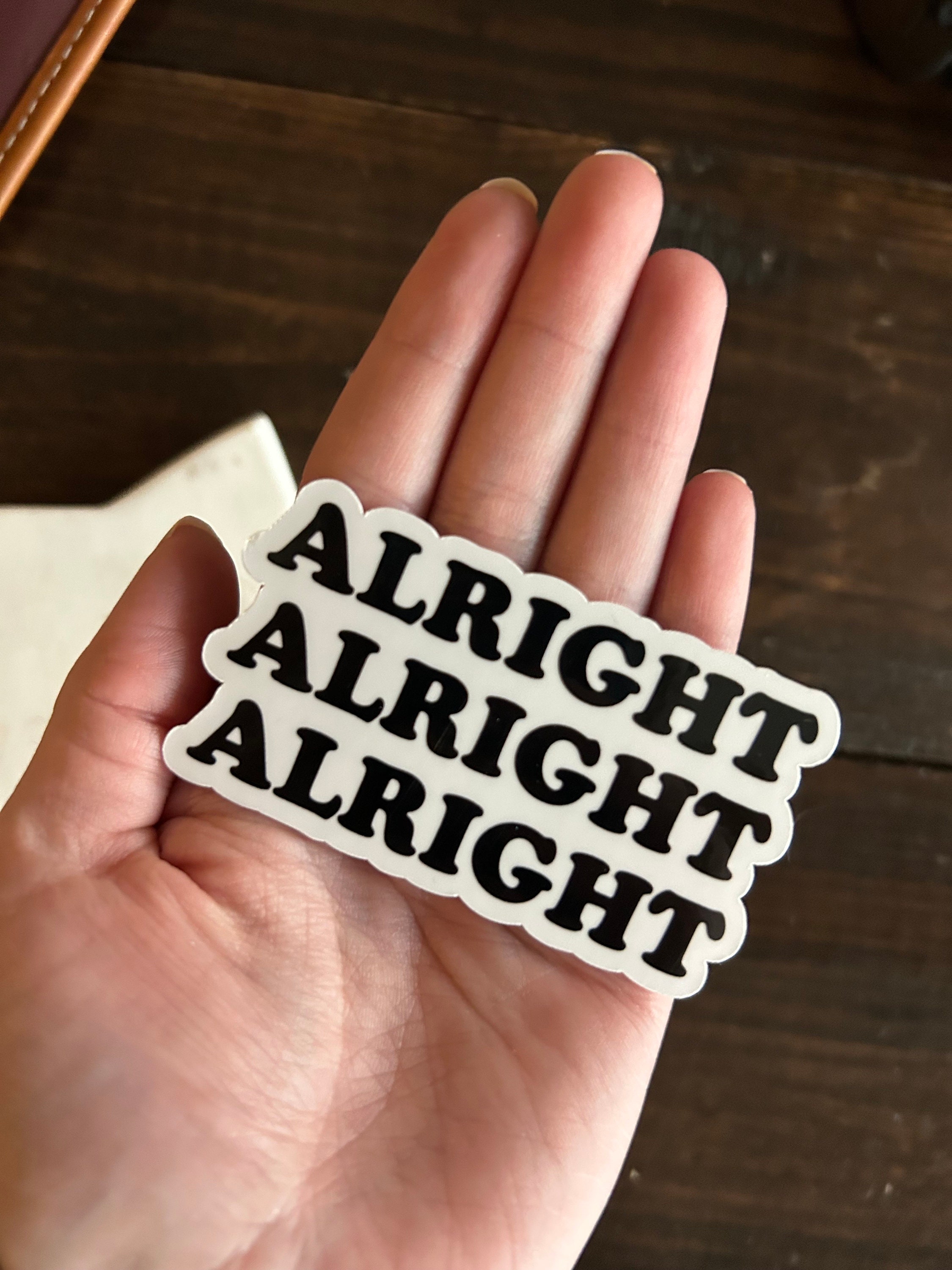
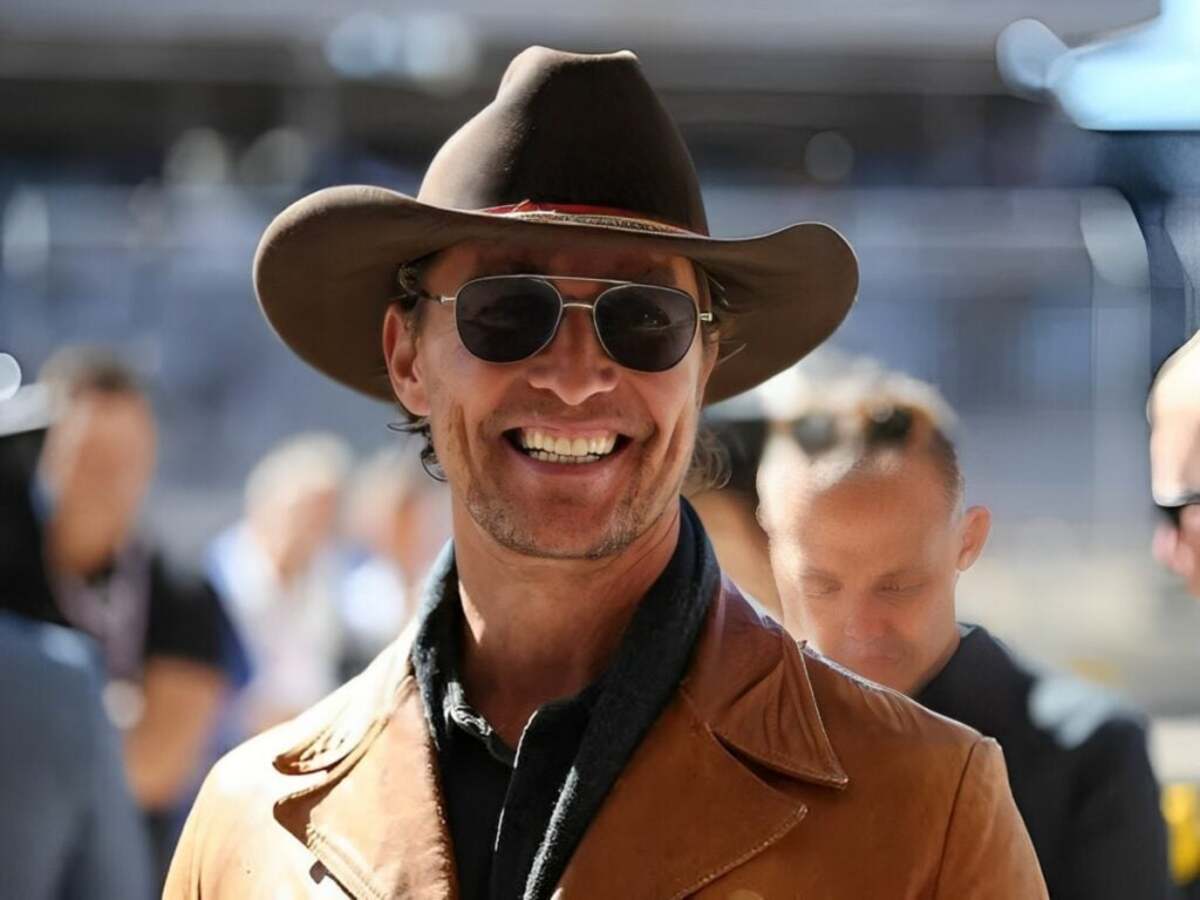
The phrase "alright, alright, alright" originates from the 1993 coming-of-age cult classic Dazed and Confused, directed by Richard Linklater. It serves as the introductory dialogue for the character David Wooderson, portrayed by Matthew McConaughey in his debut film role. Set on the final day of high school in 1976 Austin, Texas, the film provides a sprawling, ensemble-driven look at teenage life, hazing rituals, and the search for identity.
The Genesis of an Iconic Phrase and Character
While "alright, alright, alright" has become a global pop-culture shorthand for Matthew McConaughey’s persona, its presence in the film was almost accidental. McConaughey was not originally part of the lead cast; he was discovered in a hotel bar in Austin by casting director Don Phillips. Linklater initially worried McConaughey was too handsome to play the somewhat predatory, older "hanger-on" character of Wooderson, but the actor’s ability to transform into the character’s specific cadence secured him the role.
The "three alrights" were improvised during McConaughey's first-ever filmed scene. While sitting in his character's 1970 Chevrolet Chevelle, McConaughey was trying to find Wooderson's motivation. He identified four things Wooderson cared about: his car, getting high, rock and roll, and girls. Looking at the character of Cynthia (Marissa Ribisi) approaching the car, he realized he had three of the four boxes checked—he was in his car, he was high, and he had the music playing. As he reached for the fourth (the girl), he uttered the three "alrights."
This moment encapsulates the film’s "hangout" atmosphere. Rather than following a rigid three-act structure, the narrative prioritizes mood, character interaction, and the specific sensory details of the mid-1970s. As of 2026, the film remains a definitive example of the "day-in-the-life" subgenre, influencing decades of subsequent indie filmmaking.
Plot Architecture and Narrative Style
Dazed and Confused takes place over a roughly 18-hour period, beginning on the morning of May 28, 1976—the last day of school at Lee High School—and ending at dawn the following day. The film lacks a singular protagonist, instead weaving together the experiences of several overlapping social circles.
The Incoming Freshmen and the Hazing Rituals
A primary narrative thread involves the incoming freshmen, particularly Mitch Kramer (Wiley Wiggins). In the world of the film, the seniors participate in a traditional, albeit brutal, hazing ritual. The boys are hunted down and paddled with homemade wooden boards, while the girls are subjected to public humiliation, including being covered in flour and condiments. These scenes serve as a visceral introduction to the social hierarchy of the time, illustrating the cyclical nature of high school power dynamics.
The Seniors and the "Commitment" Conflict
The thematic heart of the film lies with Randall "Pink" Floyd (Jason London), the school's star quarterback. Pink faces a moral dilemma: his coaches demand he sign a "pledge" promising not to use drugs or alcohol during the summer to ensure a championship season. Pink's refusal to sign is not merely about wanting to party; it represents a resistance against adult authority and an insistence on personal autonomy. His internal conflict provides the closest thing the film has to a traditional character arc.
The Moon Tower Party
The film culminates in an impromptu party at a local "Moon Tower" after a planned kegger is busted by parents. This sequence brings the entire cast together, allowing for the cross-pollination of social groups. Intellectual "nerds" discuss the existential dread of the upcoming Bicentennial, athletes clash with stoners, and freshmen finally find acceptance among the older students.
The Ensemble Cast: A Launchpad for Hollywood Stars
One of the most remarkable aspects of Dazed and Confused is the sheer number of future A-list celebrities who populate its background and supporting roles. Linklater famously insisted on casting unknown actors to ensure the high school setting felt authentic.
| Actor | Character | Role Description | Notable 2026 Status/Legacy |
|---|---|---|---|
| Matthew McConaughey | David Wooderson | The charismatic older guy who graduated years ago but still hangs out with teens. | Oscar-winning actor and cultural icon. |
| Ben Affleck | Fred O'Bannion | The sadistic senior who failed his final year just to haze freshmen again. | Renowned director, screenwriter, and actor. |
| Parker Posey | Darla Marks | The "Queen Bee" senior girl who leads the freshman hazing. | Became the "Queen of the Indies" throughout the 90s and 2000s. |
| Milla Jovovich | Michelle Burroughs | The ethereal, guitar-playing stoner girlfriend of Pickford. | Action star known for the Resident Evil franchise. |
| Cole Hauser | Benny O'Donnell | A tough-guy football player and friend of Pink. | Gained massive later-career fame in Yellowstone. |
| Anthony Rapp | Tony Olson | One of the "intellectual" students navigating social anxiety. | Broadway legend and star of Star Trek: Discovery. |
| Adam Goldberg | Mike Newhouse | An neurotic, intellectual student who decides to "assert his dominance." | Established character actor and filmmaker. |
Production Background and Direction
Richard Linklater’s direction is characterized by a "fly-on-the-wall" perspective. He utilized a filming style that favored long takes and medium shots, allowing the actors to move naturally within their environment. This was a deliberate departure from the fast-paced, MTV-style editing that was becoming popular in the early 1990s.
The Austin Connection
The film was shot entirely on location in Austin, Texas. Many of the locations, such as Top Notch Hamburgers and the Toney Burger Activity Center, remain landmarks today. Linklater’s deep familiarity with the Austin landscape allowed him to capture a specific "Texas-suburban" aesthetic that felt universal yet grounded.
The Music: The Soul of the Film
The soundtrack is arguably as important as the script. Linklater spent approximately one-sixth of the film's $6.9 million budget on music licensing. He sought songs that weren't just hits, but songs that felt "organic" to the car stereos of 1976. The film features tracks by Aerosmith, Alice Cooper, ZZ Top, Black Sabbath, and Bob Dylan. Interestingly, the song "Dazed and Confused" by Led Zeppelin—which gives the film its name—does not appear in the movie because Jimmy Page refused to grant the rights.
Thematic Depth and Cultural Legacy
While often categorized as a "stoner comedy," Dazed and Confused functions as a sophisticated sociological study of the 1970s. It captures a specific moment in American history—post-Vietnam, post-Watergate—where the idealism of the 60s had curdled into a mix of apathy and hedonism.
The Concept of "The Hangout Movie"
Quentin Tarantino famously cited Dazed and Confused as one of the greatest "hangout movies" ever made. These are films where the audience’s primary enjoyment comes from simply spending time with the characters. There is no ticking clock or world-ending stakes; the stakes are whether or not someone will get a ticket to an Aerosmith concert or if they will get caught by their parents.
Accurate Representation of 1976
Unlike many period pieces that rely on caricatures or "disco fever" tropes, Dazed and Confused focuses on the mundane reality of the mid-70s. The fashion (bell-bottoms, ringer tees), the cars (GTOs, Chevelles), and the social attitudes reflect a painstaking attention to detail. It portrays the 70s not as a costume party, but as a lived-in reality for millions of teenagers.
Influence on Subsequent Media
The film’s influence is visible in later projects like That '70s Show, Superbad, and Everybody Wants Some!! (Linklater’s 2016 spiritual successor set in the 80s). It established a template for the "ensemble period comedy" that balances humor with genuine nostalgia and melancholy.
Critical and Commercial Reception
Upon its initial release in September 1993, Dazed and Confused was not a massive box-office success. It grossed just under $8 million during its theatrical run. However, it found a massive second life on home video and cable television.
Critics were quick to recognize its quality. Roger Ebert gave the film three out of four stars, praising Linklater's ability to capture the "structure of a teenage society." In the decades since, it has been consistently ranked on "Best High School Movie" and "Best Comedy" lists. The Criterion Collection eventually released a definitive edition, cementing its status as a work of cinematic significance.
Technical Specifications and Availability
For viewers looking to experience the film in 2026, it is widely available across multiple formats.
- Resolution: 4K Ultra HD (Restored by Criterion).
- Aspect Ratio: 1.85:1.
- Running Time: 103 minutes.
- Rating: R (for pervasive drug use, language, and teen partying).
- Streaming: Available on major platforms like Max, Amazon Prime, and Apple TV (availability varies by region).
Frequently Asked Questions
Is "alright, alright, alright" the first thing Matthew McConaughey ever said on screen?
Yes. During the filming of his first scene at the Top Notch drive-in, the script didn't have specific dialogue for him in that moment. He improvised the lines, making them the first words of his professional film career.
Was the hazing in the movie based on real events?
Richard Linklater has stated that the hazing depicted in the film—specifically the paddling—was a real tradition at his high school in Huntsville, Texas, during the 1970s. While some aspects were dramatized, the culture of seniors targeting freshmen was grounded in his personal experiences.
Why didn't Led Zeppelin allow their song to be used?
Despite the film being named after their song, Led Zeppelin (specifically Jimmy Page) declined the request. Linklater even wrote a personal letter to the band members explaining how much their music meant to the era, but the rights were not granted. The film instead uses "Sweet Emotion" by Aerosmith for its opening sequence, which has since become iconic in its own right.
Where was Dazed and Confused filmed?
The film was shot entirely in Austin, Texas. Notable locations include the Bedichek Middle School (interiors), the Toney Burger Activity Center (the parking lot scenes), and the Top Notch Hamburgers drive-in on Burnet Road.
Are there any sequels to the movie?
There is no direct sequel featuring the same characters. However, Richard Linklater’s 2016 film Everybody Wants Some!! is considered a "spiritual successor." It follows a group of college baseball players in 1980 and mirrors the ensemble, day-in-the-life structure of the original.
Final Recommendation
For those seeking a definitive look at the "alright, alright, alright" movie, the best course of action is to view the Criterion Collection 4K restoration. This version offers the highest visual fidelity, preserving the grainy, warm aesthetic of the original 35mm film stock. Whether you are a fan of 70s rock, a student of independent cinema, or simply looking for a nostalgic journey through the highs and lows of youth, Dazed and Confused remains a mandatory entry in the American film canon.