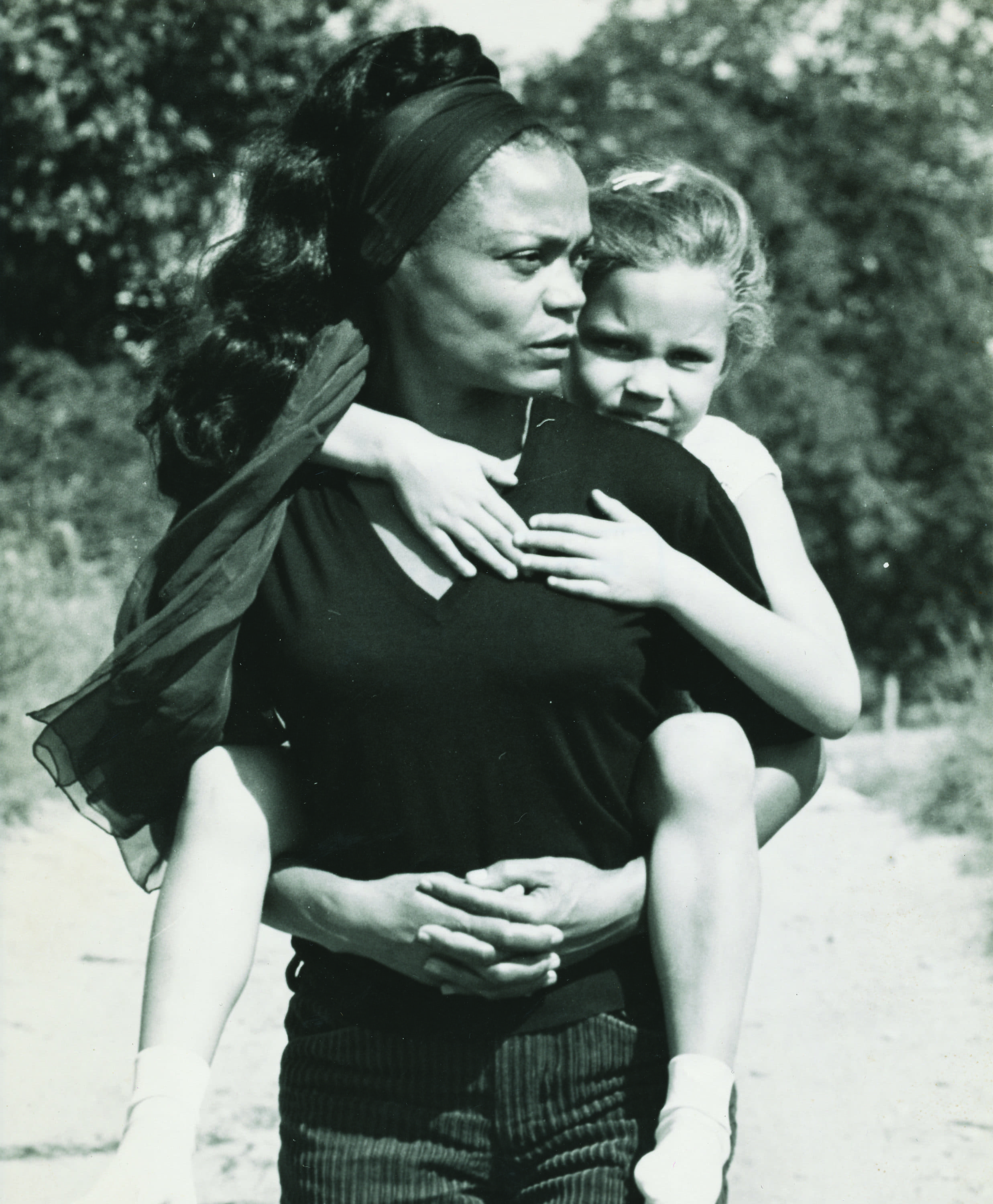
Eartha Kitt was a transformative American singer, actress, and activist whose life is most poignantly captured in the 1982 documentary All by Myself: The Eartha Kitt Story. Directed by Christian Blackwood, this film explores her journey from a childhood of extreme poverty and rejection in the Jim Crow South to international superstardom, her controversial political blacklisting in the United States, and her eventual triumphant return to the stage as a symbol of unapologetic independence.
The Genesis of an Icon: From Cotton Fields to Paris
Eartha Kitt's story begins with a narrative of survival. Born Eartha Mae Keith on January 17, 1927, on a cotton plantation in North, South Carolina, she was the product of a traumatic upbringing. Her mother was of African American and Cherokee descent, and her father was reportedly the son of the plantation owner. This mixed-race heritage led to her being ostracized by both the Black and white communities, a recurring theme of isolation that would later inform the title of her definitive documentary, All by Myself.
After being abandoned by her mother and suffering through various abusive households, Kitt was sent to Harlem at the age of eight to live with an aunt. It was in New York City that her artistic potential began to bloom. She eventually auditioned for the Katherine Dunham Company, the first African American modern dance troupe. Dunham became a surrogate mother figure, and under her tutelage, Kitt traveled the world, eventually finding her voice—and her persona—in the nightclubs of Paris.
By the early 1950s, Kitt had become a global sensation. Orson Welles famously described her as the "most exciting woman in the world." Her unique vocal style, characterized by a distinctive "growl" and a multilingual repertoire (she eventually sang in ten languages), led to hits like "C'est Si Bon" and the perennial holiday classic "Santa Baby." However, the glamorous exterior of her career often masked the profound loneliness and self-reliance she had developed as a defense mechanism against her early trauma.
The 1968 White House Incident and the Great Blacklist
The central conflict of Eartha Kitt's life, and a primary focus of the All by Myself narrative, occurred in January 1968. While attending a luncheon at the White House hosted by Lady Bird Johnson to discuss juvenile delinquency, Kitt spoke out forcefully against the Vietnam War. She argued that the war was a primary cause of social unrest among American youth, famously stating, "You send the best of this country off to be shot and maimed. They rebel in the streets."
The reaction was swift and devastating. Lady Bird Johnson was reportedly moved to tears, and the Johnson administration viewed Kitt’s comments as an unforgivable breach of etiquette. Shortly thereafter, the CIA compiled a defamatory dossier on Kitt, labeling her a "sadistic nymphomaniac" and an "anti-American." This orchestrated character assassination resulted in a professional blacklist in the United States that lasted nearly a decade.
During this period of domestic exile, Kitt was forced to find work almost exclusively in Europe and Asia. This decade-long struggle solidified her "all by myself" ethos. She refused to apologize for her convictions, choosing instead to sustain her career on her own terms, away from the Hollywood and Broadway spotlights that had once championed her. Her resilience during this era is often cited by historians as a precursor to the modern intersection of celebrity and political activism.
Analyzing the Documentary "All by Myself: The Eartha Kitt Story" (1982)
The 1982 documentary All by Myself: The Eartha Kitt Story serves as an intimate character study rather than a standard chronological biography. Directed by Christian Blackwood, the film captures Kitt at a pivotal moment in her career—the early 1980s—when she was re-establishing her presence in the American consciousness following her successful return in the 1978 Broadway musical Timbuktu!.
Narrative Structure and Cinematic Style
The film eschews traditional "talking head" narration in favor of fly-on-the-wall footage and candid interviews. It alternates between high-energy performance clips and quiet, introspective moments at her home in Connecticut. Blackwood’s direction highlights the duality of Kitt’s life: the fierce, "feline" performer on stage versus the vulnerable, gardening-obsessed woman who cherished her solitude.
One of the most powerful sequences in the documentary involves Kitt discussing her daughter, Kitt Shapiro. Shapiro served as her mother's manager and confidante, and the film illustrates the deep bond between them—a bond that represented the family stability Eartha had never known as a child. The documentary also features raw footage of Kitt rehearsing, showing her relentless work ethic and her insistence on perfection, a trait she attributed to her need to prove her worth in a world that had initially rejected her.
Key Themes of the Film
- Self-Sovereignty: The documentary explores Kitt's refusal to be "owned" by any man, studio, or political party.
- The Price of Truth: It provides a firsthand account of the emotional toll the 1968 blacklist took on her, as well as her refusal to let it break her spirit.
- Racial Identity: Kitt speaks candidly about being "too light" for some and "too dark" for others, positioning her as a perpetual outsider.
Eartha Kitt’s Career Milestones and Historical Context
To understand the weight of the All by Myself narrative, one must view Kitt’s career across several decades. She was a pioneer who broke racial barriers in film, television, and theater long before the Civil Rights Movement reached its peak.
| Era | Key Achievement / Role | Cultural Impact |
|---|---|---|
| 1940s | Katherine Dunham Company | Pioneered African American modern dance internationally. |
| 1952 | New Faces of 1952 (Broadway) | Launched her as a top-tier Broadway star and recording artist. |
| 1953 | "Santa Baby" | Created one of the most enduring and subversive holiday hits in history. |
| 1967 | Catwoman (Batman TV Series) | First Black woman to play a major comic book villain on TV, replacing Julie Newmar. |
| 1968 | White House Confrontation | Became a symbol of anti-war sentiment and faced federal surveillance. |
| 1978 | Timbuktu! (Broadway) | Earned a Tony nomination and signaled her return from the blacklist. |
| 2000 | The Emperor's New Groove | Introduced her to a new generation as the voice of Yzma. |
The Enduring Legacy of "The Most Exciting Woman"
Eartha Kitt passed away on December 25, 2008, but as of 2026, her influence remains ubiquitous in popular culture. Her story is a blueprint for the "multi-hyphenate" artist. She was an Emmy winner, a Tony nominee, and a Grammy-nominated singer who never sacrificed her personal integrity for professional gain.
In recent years, archival interest in her life has surged. Modern audiences view her not just as a cabaret singer, but as a survivor of the "Red Scare" tactics used against Black activists in the 1960s. Her daughter, Kitt Shapiro, has continued to preserve this legacy through the brand Simply Eartha, ensuring that Kitt’s philosophy of self-love and resilience reaches new audiences.
The documentary All by Myself remains the most significant primary source for understanding her psyche. It captures the moment Kitt realized she no longer needed the approval of the establishment that had once cast her out. By 2026, the film has been remastered and is frequently studied in cinema and African American studies courses for its raw portrayal of a woman who was, in every sense, "all by herself" and entirely comfortable with that fact.
Accessing Eartha Kitt’s Story in 2026
For those looking to research or view All by Myself: The Eartha Kitt Story, the film is primarily available through specialized archival services and educational platforms.
- Digital Archives: The film is often hosted on platforms like the Criterion Channel or MUBI, which specialize in independent and documentary cinema.
- Physical Media: Rare DVD releases from the early 2000s exist, but high-definition digital restorations are now the standard for viewing the 1982 footage.
- Scholarly Resources: Libraries such as the Schomburg Center for Research in Black Culture in New York City hold extensive records regarding Kitt’s career and the production of her biographical materials.
Frequently Asked Questions
Why was Eartha Kitt blacklisted?
Eartha Kitt was blacklisted in the U.S. after she spoke out against the Vietnam War during a 1968 luncheon at the White House. Her comments offended Lady Bird Johnson, leading the LBJ administration to request a CIA investigation into her life. The resulting defamatory file made it nearly impossible for her to find work in America for the next decade.
Is the documentary "All by Myself" a concert film?
No, while it features performance footage, All by Myself: The Eartha Kitt Story is a character-driven documentary. It focuses on her personal history, her philosophy of life, and her daily routines, providing a much deeper look at her personality than a standard concert film would.
Who directed "All by Myself: The Eartha Kitt Story"?
The film was directed by Christian Blackwood. He was known for his intimate documentary style, often focusing on unique personalities and artists. His approach allowed Kitt to speak directly to the camera, creating a sense of intimacy with the audience.
What is Eartha Kitt’s most famous role?
While she had many hits, she is perhaps most famous for her role as Catwoman in the 1960s Batman television series and for her recording of "Santa Baby." In her later years, she gained massive popularity for voicing Yzma in Disney’s The Emperor’s New Groove.
How did Eartha Kitt’s childhood influence the documentary's title?
The title "All by Myself" refers to Kitt’s lifelong experience of isolation. Having been rejected by her family and society due to her mixed-race heritage and later by her country due to her political views, she learned to rely solely on herself. The title celebrates her independence and the strength she found in solitude.
Final Recommendation
To truly understand the depth of Eartha Kitt, one should pair a viewing of All by Myself: The Eartha Kitt Story with a reading of her autobiographies, specifically I'm Still Here: Confessions of a Sex Kitten. The documentary provides the visual and emotional context of her resilience, while her writings offer a more granular look at the systemic obstacles she overcame. Her life serves as a powerful reminder that professional success is hollow without the courage to speak one's truth.