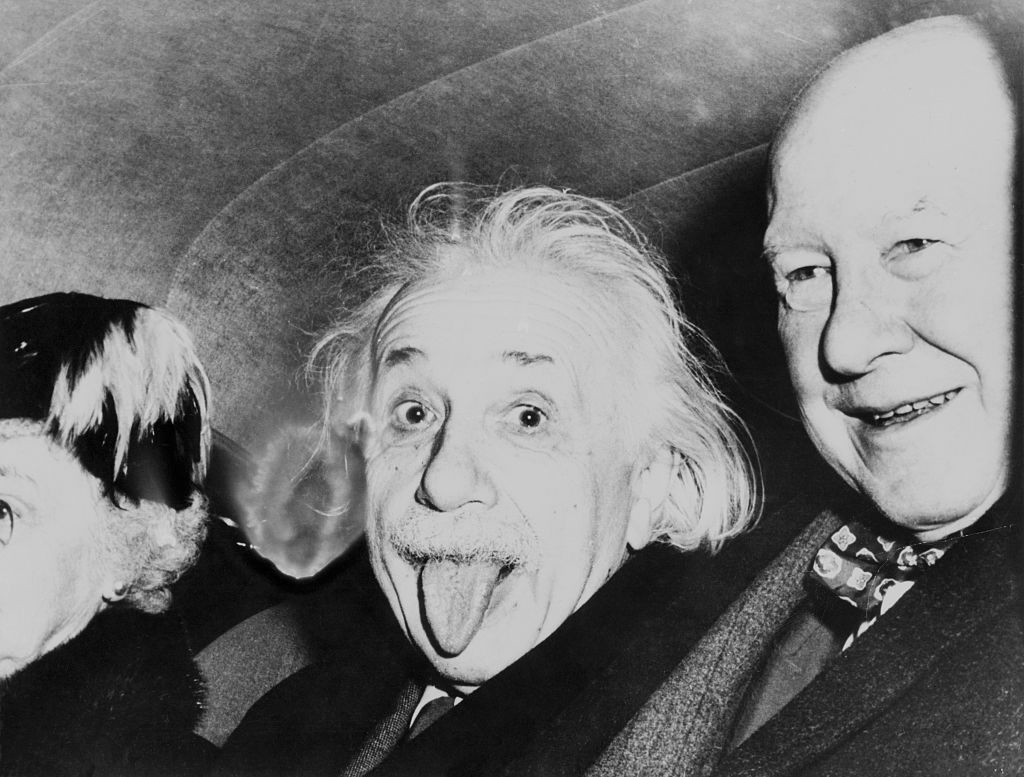
At the time of his death in 1955, Albert Einstein’s personal net worth was approximately $65,000, which adjusts to roughly $750,000 to $800,000 in 2026 currency. However, his posthumous intellectual property, managed by the Hebrew University of Jerusalem, generates an estimated $10 million to $20 million annually in licensing revenue, making his name one of the most valuable "dead celebrity" brands in existence.
The Financial Reality of a Theoretical Physicist
When discussing the "net worth" of Albert Einstein, it is necessary to distinguish between his liquid assets during his lifetime and the astronomical commercial value of his persona after his death. Einstein was famously indifferent to material wealth, prioritizing academic freedom and humanitarian efforts over financial accumulation.
Academic Salaries and the Princeton Years
After fleeing Nazi Germany in 1933, Einstein joined the newly formed Institute for Advanced Study (IAS) in Princeton, New Jersey. His starting salary was approximately $10,000 per year, which was a substantial sum during the Great Depression but far from the earnings of contemporary captains of industry or Hollywood stars. By the 1950s, his salary had risen to roughly $16,000.
Einstein lived a famously modest lifestyle. He did not own a car—preferring to walk to work—and resided in a simple, two-story frame house at 112 Mercer Street. His primary expenses were his family, his modest hobbies (such as sailing and playing the violin), and various charitable donations. Unlike modern "celebrity scientists," Einstein frequently turned down lucrative endorsement deals and commercial appearances that he felt would compromise his integrity as a scholar.
Assets at the Time of Death
Upon his passing on April 18, 1955, Einstein’s estate was valued at approximately $65,000. This portfolio consisted primarily of:
- The Mercer Street Home: Which he left to his secretary, Helen Dukas, for the duration of her life.
- Life Insurance Policies: Standard for a man of his professional standing.
- A Modest Savings Account: Accumulated from his IAS salary and occasional royalties from his scientific publications.
While these figures suggest a middle-class existence, they do not account for his most valuable asset: his massive collection of manuscripts, personal papers, and the "right of publicity" associated with his name and likeness.
The Estate of Albert Einstein: A Legal and Financial Powerhouse
Einstein’s will was a pivotal document that transformed his modest personal wealth into a multi-million-dollar perpetual endowment. He bequeathed his entire literary estate and personal papers to the Hebrew University of Jerusalem, an institution he helped co-found and for which he served as a dedicated fundraiser throughout his life.
The Role of the Albert Einstein Archives
The Hebrew University of Jerusalem manages the Albert Einstein Archives, which contain over 80,000 documents, including the original manuscripts of his groundbreaking theories. For decades, the university has exercised its rights over his intellectual property with a dual mandate: to preserve his scientific legacy and to protect his name from "undignified" commercial exploitation.
Licensing and the Right of Publicity
In the decades following his death, the legal concept of the "right of publicity" evolved significantly. The estate began aggressively managing the use of Einstein’s image. Today, the name "Einstein" and his iconic wild-haired likeness are licensed for a wide range of products, including:
- Educational software and toys (most notably the "Baby Einstein" brand, once owned by Disney).
- Consumer electronics and high-tech hardware.
- Advertising campaigns for blue-chip companies like Toyota, Salesforce, and Montblanc.
As of 2026, Einstein consistently ranks on the Forbes list of the highest-earning deceased celebrities. The revenue generated by these deals supports the Hebrew University’s research and academic missions, ensuring that his financial "worth" continues to fund the very type of scientific inquiry he championed.
The Scientific Legacy: Beyond Monetary Value
While his estate is worth millions, Einstein’s intellectual legacy is essentially priceless, as it forms the bedrock of modern physics. Without his contributions, the technological landscape of 2026 would be unrecognizable.
Special and General Relativity
In 1905, often called his Annus Mirabilis (Miracle Year), Einstein published four papers that changed the course of science. The most famous, the Special Theory of Relativity, introduced $E=mc^2$, demonstrating the equivalence of mass and energy. This provided the theoretical basis for nuclear power and the understanding of stellar processes.
His General Theory of Relativity (1915) redefined gravity not as a force, but as a curvature of spacetime caused by mass and energy. This theory is not merely academic; it is a practical requirement for the Global Positioning System (GPS). Satellites move fast enough and are far enough from Earth's gravity that their clocks run differently than those on the ground. Without Einstein’s relativistic corrections, GPS coordinates would drift by several kilometers every day.
The Photoelectric Effect and Quantum Mechanics
Although Relativity is his most famous work, Einstein received the Nobel Prize in Physics in 1921 for his explanation of the photoelectric effect. This work proved that light acts as both a wave and a particle (quanta/photons). This discovery is the foundation for:
- Solar panels and photovoltaic cells.
- Digital camera sensors.
- Fiber-optic communications.
- Modern laser technology.
Comparison of Lifetime vs. Posthumous Economic Impact
| Category | Lifetime Value (1955) | Posthumous Brand Value (2026) | Global Economic Impact |
|---|---|---|---|
| Personal Net Worth | ~$65,000 | N/A (Personal estate dissolved) | Negligible |
| Annual Income | ~$16,000 salary | $10M - $20M (Licensing) | Significant for Research |
| Intellectual Property | Modest Book Royalties | Multi-billion dollar brand | Trillions (Enabled Industries) |
| Primary Residence | Modest Home ($20k value) | Historical Landmark | Tourism/Academic History |
The Humanitarian and Political Legacy
Einstein’s legacy extends far beyond the laboratory. He was a deeply political and social figure, using his global fame to advocate for civil rights, pacifism, and international cooperation.
Civil Rights Advocacy
Einstein was an outspoken opponent of racism in the United States. He famously called segregation "a disease of white people" and befriended activists like W.E.B. Du Bois and Paul Robeson. In 1946, he visited Lincoln University, the oldest historically Black university in the U.S., where he gave a speech and accepted an honorary degree, reinforcing his commitment to racial equality at a time when such stances were socially and politically risky.
The Atomic Age and Pacifism
Despite his Pacifist leanings, Einstein signed a letter to President Franklin D. Roosevelt in 1939 urging the U.S. to investigate the potential for nuclear weapons, fearing Nazi Germany would develop them first. This led to the Manhattan Project. Einstein later regretted this involvement and spent the rest of his life advocating for nuclear disarmament and the creation of a world government to prevent future wars.
His final act of public advocacy was signing the Russell-Einstein Manifesto in 1955, which highlighted the dangers of nuclear weapons and called for world leaders to seek peaceful resolutions to international conflict.
Managing the Brand: Legal and Ethical Considerations
The Hebrew University of Jerusalem takes its role as the custodian of Einstein's legacy very seriously. This involves frequent legal battles to prevent his image from being used in ways that contradict his values.
Right of Publicity Lawsuits
One of the most significant legal precedents regarding Einstein was the 2012 case involving General Motors (GM). The company used Einstein’s face on the body of a muscular man in an advertisement. The courts eventually ruled on the duration of the right of publicity, highlighting the complexities of managing a celebrity's brand decades after their death. In 2026, the estate remains vigilant against unauthorized AI-generated likenesses and deepfakes that attempt to use Einstein's voice or image to sell products or spread misinformation.
The "Genius" Trademark
The word "Einstein" has become a synonym for "genius" in the English language. This linguistic evolution provides both a marketing advantage and a legal challenge. The estate must balance the widespread, generic use of the term with its need to protect its trademarks. They generally allow for educational and scientific uses while restricting commercial ventures that would "cheapen" the Einstein brand.
Frequently Asked Questions
Did Albert Einstein die rich?
No, by the standards of his fame, Einstein did not die wealthy. His net worth of $65,000 was equivalent to a comfortable upper-middle-class professional's estate in the 1950s. Most of his value resided in his papers and manuscripts, which he gave away to the Hebrew University rather than selling.
Who receives the money from Einstein’s image licensing?
The primary beneficiary is the Hebrew University of Jerusalem. The funds are used to support academic research, maintain the archives, and provide scholarships. A professional licensing agency, such as Greenlight, often manages the day-to-day commercial requests.
Did Einstein receive royalties for $E=mc^2$?
Scientific formulas cannot be copyrighted or patented. Einstein received royalties for his books (like The Meaning of Relativity) and his published papers, but he did not profit directly from the commercial or industrial applications of his theories by other parties.
Why did Einstein leave his estate to a university in Israel?
Einstein was a lifelong supporter of the Zionist movement and believed in the importance of a Jewish homeland that prioritized intellectual and cultural excellence. He saw the Hebrew University as a vital center for global scholarship and wanted his life's work to support its long-term survival.
Is Einstein's home in Princeton a museum?
No. Per his specific request, Einstein’s home at 112 Mercer Street was never turned into a museum. He wanted to avoid a "shrine" being built to his memory. The house remains a private residence, though it is a designated National Historic Landmark and is currently owned by the Institute for Advanced Study.
Conclusion and Final Recommendation
Albert Einstein’s net worth was a reflection of his priorities: a modest personal life dedicated to monumental intellectual pursuit. While his bank account in 1955 showed a man of comfortable but limited means, his true estate—the mathematical laws he discovered and the global brand he became—continues to generate billions in economic value and millions in direct revenue for educational institutions in 2026.
Practical Next Action: For those interested in the authentic history of Einstein’s estate and his scientific papers, the most authoritative resource is the Digital Einstein Papers, a collaborative project between the Einstein Papers Project at Caltech and the Hebrew University of Jerusalem. This open-access platform allows users to explore the actual documents that comprise his immense intellectual legacy without the filters of commercial licensing.