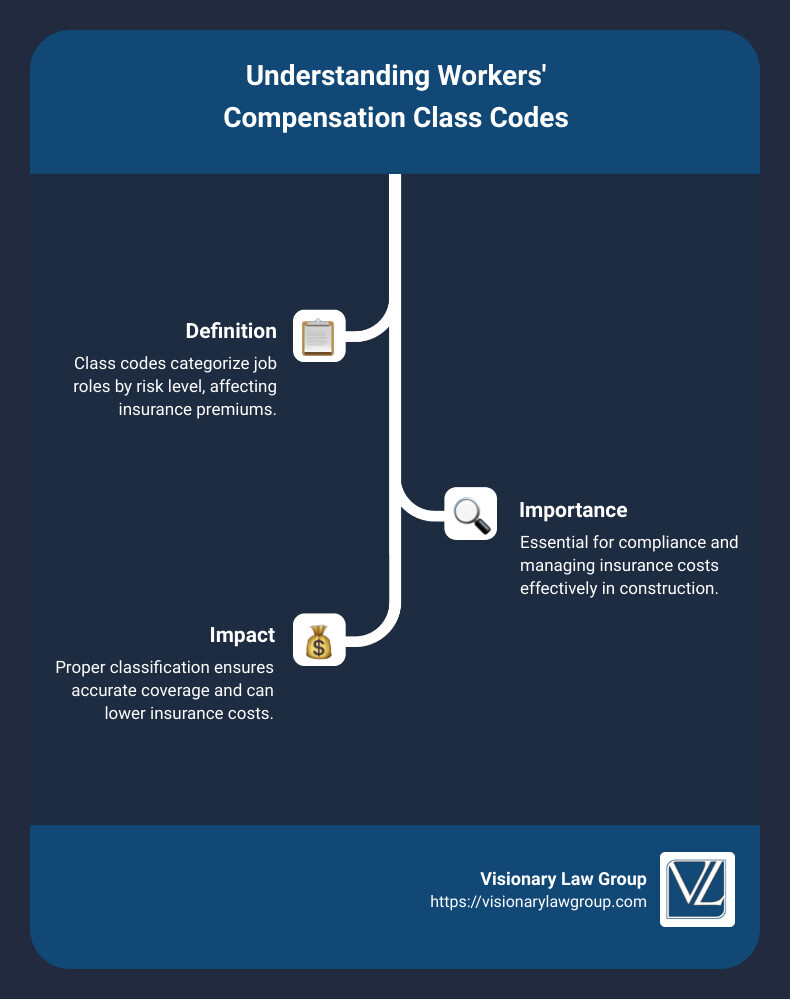
Alaska workers' compensation codes are four-digit identifiers assigned by the National Council on Compensation Insurance (NCCI) to categorize employees based on the specific risks associated with their job duties. In 2026, these codes remain the fundamental building blocks of insurance premiums, as they dictate the base rate an employer pays per $100 of payroll. Accurate classification is essential for Alaska businesses to avoid overpayment, pass annual audits, and maintain legal compliance with the Alaska Workers' Compensation Act.
The Role of NCCI and Alaska Regulatory Framework
Alaska operates as an NCCI state, meaning it utilizes the National Council on Compensation Insurance to manage its classification system, experience rating, and data collection. The Alaska Department of Labor and Workforce Development, specifically the Division of Workers' Compensation, oversees the broader legal framework, but the technical definitions of "what a job is" come from the NCCI Basic Manual.
As of 2026, the NCCI system remains the most widely recognized standard for workers' compensation in the United States. In Alaska, this uniformity allows insurers to use historical loss data to set "loss costs." Loss costs are the portion of the premium used to pay for claims and medical expenses. Individual insurance carriers then add their "loss cost multiplier" (LCM) to cover overhead, taxes, and profit.
The classification code is the first variable in this equation. If a business is classified under a high-risk code, such as Code 2702 (Logging), the base rate will be significantly higher than if they were classified under Code 8810 (Clerical Office Employees). Understanding the nuances of these codes is not just an administrative task; it is a critical financial strategy for any Alaskan enterprise, from North Slope oil operations to Juneau retail shops.
How Alaska Classification Codes are Assigned
The process of assigning codes is governed by the "Governing Classification" rule. This rule states that a business is generally assigned a single classification that best describes its entire operation. This classification is determined by the "scoping" of the business's primary activity, not necessarily the individual tasks of every employee.
The Governing Classification Rule
For example, if you run a furniture manufacturing plant in Anchorage, the governing classification might be Code 2883 (Furniture Manufacturing). Even if you have employees who spend some of their time cleaning the floor or moving boxes, their payroll is typically bundled into the governing code because those activities are "incidental" to the primary business of making furniture.
Standard Exceptions
However, the NCCI allows for "Standard Exceptions." These are specific job roles that are so common and possess such distinct risk profiles that they can be separated from the governing classification. The most common standard exceptions in 2026 include:
- Code 8810: Clerical Office Employees. This applies to workers who have no duties related to the operative or hazardous parts of the business.
- Code 8742: Salespersons, Collectors, or Messengers – Outside. This applies to employees who spend their time on the road making sales calls and do not handle the delivery of products.
- Code 8871: Clerical Telecommuter Employees. An increasingly relevant code in the post-pandemic landscape, specifically for workers who perform clerical duties entirely from a residence.
General Exclusions
It is important to distinguish between classification and "General Exclusions." Certain activities, such as aviation (if not part of the primary business), new construction, or sawmill operations, are often excluded from the governing class and must be rated separately regardless of the business's primary purpose.
The Financial Impact of Code Accuracy
The impact of classification codes on a business's bottom line in 2026 cannot be overstated. Because premiums are calculated as a percentage of payroll, even a slight error in classification can result in thousands of dollars in unnecessary costs or unexpected liabilities.
The Premium Formula
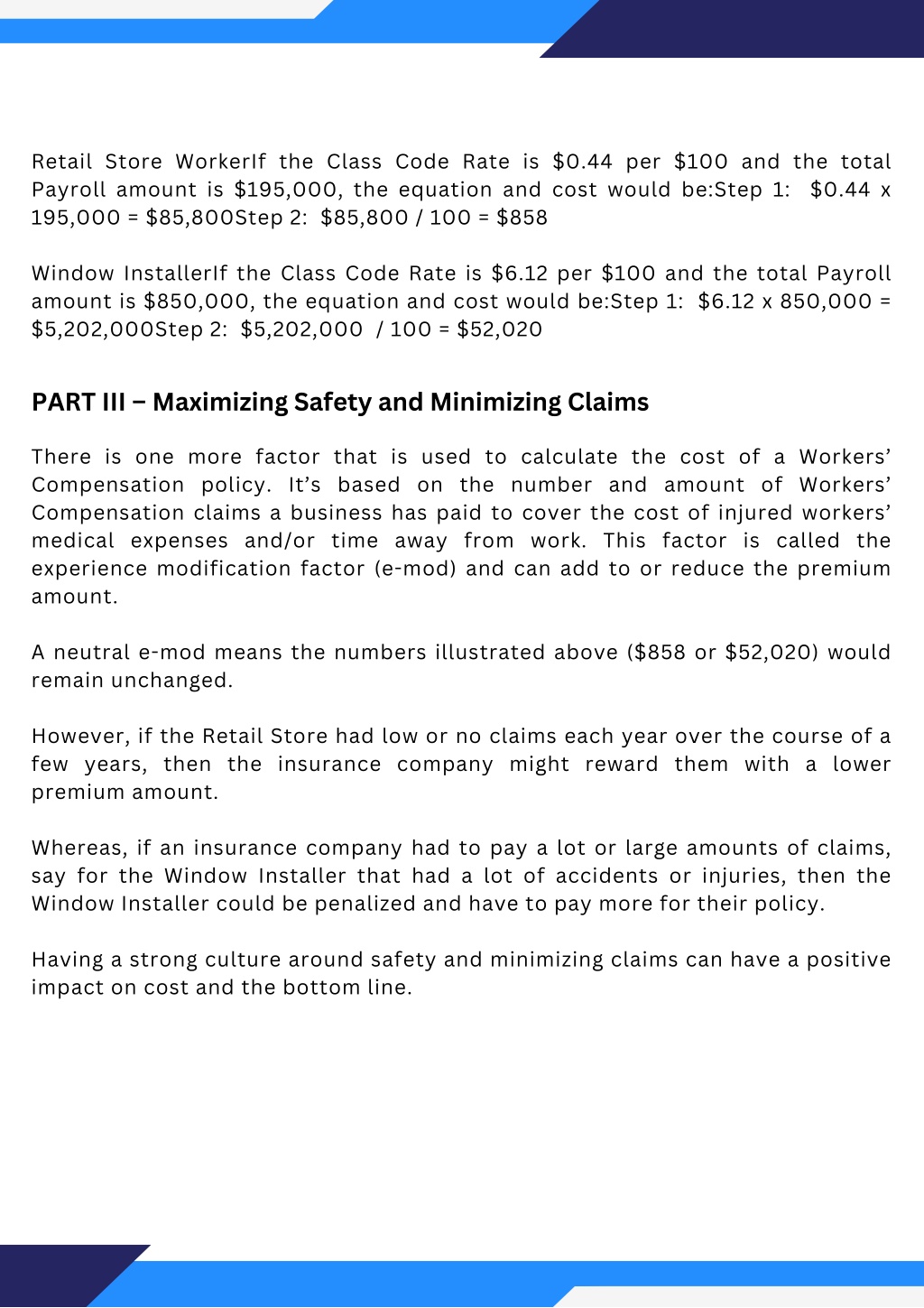
To understand the impact, one must look at the standard premium formula: ** (Payroll / 100) × Class Code Rate × Experience Modification Factor (E-Mod) = Total Premium**
If an employer mistakenly classifies a group of "Outside Sales" (Code 8742) workers as "General Laborers" (Code 5403), they might be paying a rate five to ten times higher than necessary. Conversely, if a business under-classifies workers—placing high-risk roofers into a low-risk carpentry code—they will face severe "audit additions" at the end of the year.
The Impact of the Experience Modification Factor (E-Mod)
The class code sets the baseline, but the E-Mod adjusts that baseline based on the business's specific claims history. However, the E-Mod itself is influenced by class codes. The NCCI calculates expected losses for each code. If your business is in a high-risk code, the "expected losses" are higher. Misclassification can distort these expectations, leading to an E-Mod that does not accurately reflect the safety performance of the company, further compounding financial inaccuracies.
Common Alaska-Specific Classification Challenges
Alaska’s unique economy presents specific challenges for workers' compensation classification. The state’s reliance on resource extraction, maritime industries, and remote work sites creates layers of complexity that are not always found in the Lower 48.
| Industry Sector | Common NCCI Codes | Risk Level | Key Considerations |
|---|---|---|---|
| Oil & Gas Support | 6202, 1320, 8107 | High | Impact of "North Slope" versus "Office" locations. |
| Construction | 5403, 5022, 5606 | Medium-High | Separation of payroll is critical for different trades. |
| Fishing/Maritime | 7016, 7024 | Very High | Conflict between State Act and USL&H/Jones Act. |
| Healthcare | 8832, 8833, 9040 | Low-Medium | Differentiating between professional and custodial staff. |
| Hospitality | 9079, 9052 | Medium | Restaurant vs. Hotel vs. Combined operations. |
| Clerical/Office | 8810, 8871 | Very Low | Strict adherence to "no hazardous duty" rules required. |
The "Separation of Payroll" Rule
In Alaska construction and certain other industries, employers are allowed to split an employee's payroll between different class codes if they perform multiple distinct types of work. However, this requires meticulous record-keeping. In 2026, the Alaska Division of Workers' Compensation and NCCI auditors demand contemporaneous records (daily logs or detailed timecards). If an employer fails to keep these records, the auditor is required to assign the entirety of that employee’s payroll to the highest-rated (most expensive) applicable classification.
Maritime and USL&H Intersections
Alaska businesses operating near water often struggle with the intersection of the Alaska Workers’ Compensation Act and federal statutes like the Longshore and Harbor Workers’ Compensation Act (USL&H) or the Jones Act. Class codes for maritime work (e.g., Code 6872N for Ship Repair) carry significantly higher rates because federal benefits are typically much more generous than state benefits. Misclassifying a state-act employee as a USL&H employee is a costly error, while the reverse can lead to massive uninsured claims.
Navigating the Annual Audit Process
Every workers' compensation policy in Alaska is "auditable." This means the premium you pay at the start of the year is merely an estimate. After the policy period ends, an auditor reviews your actual payroll and class codes to determine the final premium.
Preparing for the 2026 Audit
To ensure the audit reflects the true risk of the business, employers should:
- Reconcile Payroll to Class Codes: Ensure your accounting software (like QuickBooks or Sage) is configured to track payroll by NCCI code, not just by department.
- Maintain Certificates of Insurance (COIs): If you hire sub-contractors, you must prove they have their own workers' compensation insurance. If you cannot provide a COI for a sub-contractor, the auditor will add their entire contract cost to your payroll under your governing class code.
- Validate Standard Exceptions: Review the duties of everyone categorized under Code 8810. If a "clerical" worker occasionally helps in the warehouse or makes deliveries, the auditor will move their entire salary to the more expensive governing code.
- Review the Audit Workpapers: Once the audit is complete, you have the right to review the auditor's workpapers. Look for "reclassifications" where the auditor moved payroll from a low-rate code to a high-rate code and verify the justification.
Consequences of Misclassification and Non-Compliance
The Alaska Workers' Compensation Board (AWCB) takes misclassification seriously. While accidental errors are usually settled through premium adjustments during an audit, intentional misclassification to lower premiums is considered insurance fraud.
Penalties and Stop-Work Orders
Under AS 23.30.080, the state can issue "Stop-Work Orders" to businesses that fail to provide adequate coverage or misrepresent their payroll. Additionally, the Special Investigations Unit within the Division of Insurance monitors for patterns of "class-code stripping," where employers intentionally use lower-rated codes to gain a competitive advantage in bidding.
Uninsured Loss Exposure
The most devastating impact of misclassification occurs when a claim is denied or a policy is rescinded because the nature of the work was misrepresented. If an employee is injured while performing work that was not disclosed or was intentionally misclassified, the employer may be held personally liable for all medical costs and lost wages, which can easily reach hundreds of thousands of dollars in a state with high medical costs like Alaska.
Strategies for Optimization in 2026
To manage workers' compensation costs effectively, Alaska business owners should adopt a proactive approach to classification management:
- Conduct Mid-Year Reviews: Do not wait for the annual audit. Review your payroll and job descriptions every six months to ensure new hires or changed roles are correctly coded.
- Consult the NCCI Scoping: If you are unsure of a code, your agent can request a formal "Letter of Interpretation" or a "Scoping" from NCCI. This provides a definitive ruling that the auditor must follow.
- Utilize Telecommuter Codes: With the permanence of remote work in 2026, ensure that eligible office staff are moved to Code 8871 (Telecommuter) if they meet the state's criteria, as this can sometimes offer more favorable rates or cleaner audit trails than the traditional 8810.
- Safety Programs and E-Mods: While codes determine the base rate, safety programs reduce the multiplier. In Alaska, a strong safety culture is the only way to counteract the naturally higher base rates found in the state’s industrial sectors.
Frequently Asked Questions
Can I change my class code if I think it’s wrong?
Yes, but you must provide evidence to your insurance carrier or NCCI. This usually involves a "Classification Inspection" where an NCCI representative reviews your operations. If they agree the code is incorrect, they will issue a change that your insurer must apply, often resulting in a premium refund or credit.
Does every Alaskan employee need a code?
Every employee whose payroll is included in the premium calculation must be assigned a code. This includes full-time, part-time, seasonal, and temporary workers. In Alaska, even some corporate officers must be included unless they have formally filed an "Exclusion" (Form 07-6175) with the Division of Workers' Compensation.
What is the most expensive class code in Alaska?
Generally, codes related to Logging (2702), Roofing (5551), and Stevedoring (7309) are among the highest due to the frequency and severity of injuries in these fields. Rates can vary significantly by carrier, but these high-risk classifications consistently command the highest premiums per $100 of payroll.
How do "sub-contractors" affect my class codes?
In Alaska, if a sub-contractor does not have their own workers' comp insurance, the law considers them your "statutory employee." The auditor will assign their contract price (minus a portion for materials if documented) to the class code that most closely matches the work they performed for you.
Can an employee have more than one class code?
Only in specific industries (like construction) and only if you keep perfect, contemporaneous time records. For most other industries, the "Governing Classification" rule applies, and the employee must be assigned to a single code for the duration of the policy period.
Practical Recommendation
For business owners and HR managers in Alaska, the most effective next step is to request a "Premium Audit Worksheet" from your current insurer. Review the codes assigned to your highest-earning employees and compare them against the actual daily tasks performed. If you find that employees in low-risk roles are being "bundled" into high-risk governing codes without cause, contact a licensed insurance advisor or an NCCI consultant to initiate a classification review before your 2026 renewal.