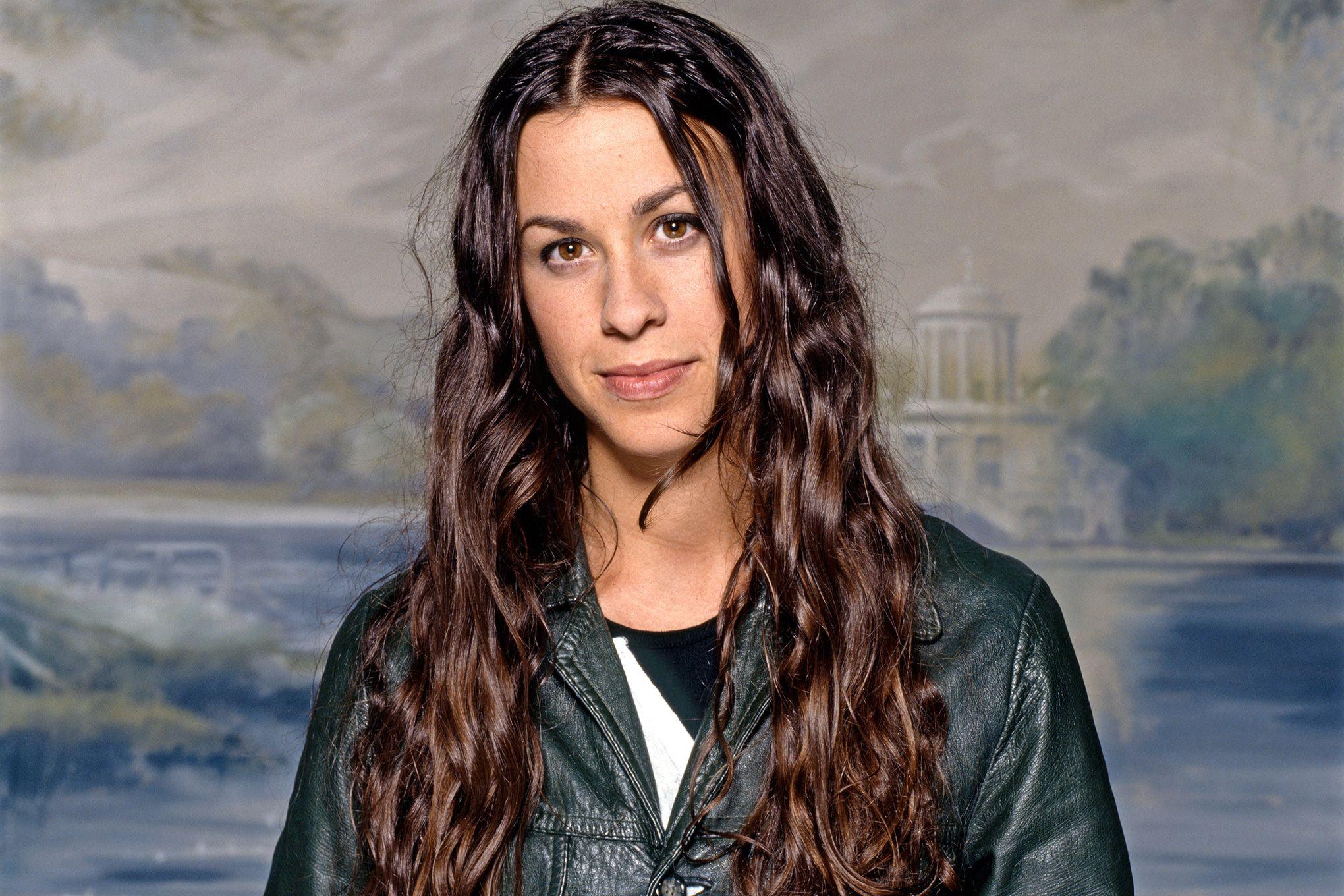
Alanis Morissette was raised in a devout Roman Catholic household but has since transitioned into a deeply personal, syncretic spiritual practice. As of 2026, she identifies as "spiritual but not religious," blending elements of Buddhism, mindfulness, and psychology with a belief in a non-binary, omnipresent divine energy that emphasizes internal healing over dogma.
The Foundations of Faith: Alanis Morissette’s Catholic Upbringing
To understand the spiritual evolution of Alanis Morissette, one must first examine the environment of her youth in Ottawa, Ontario. Born in 1974 to schoolteacher parents, Alanis and her brothers were immersed in the traditions of the Roman Catholic Church. This period of her life provided the moral and ritualistic framework that would later serve as a primary source of both comfort and creative friction.
During the late 1970s and 1980s, the Catholic experience in Canada often oscillated between traditional piety and the social changes following Vatican II. For Morissette, this meant a childhood filled with the aesthetics of the liturgy—incense, hymns, and the concept of a higher moral authority. However, as she entered her teenage years and her career in the Canadian pop industry began to take flight, the rigid structures of the Church began to feel increasingly restrictive.
In various retrospective interviews, Morissette has described the "Catholic guilt" that permeated her early life. This wasn't merely a fear of divine punishment, but a pervasive sense of needing to be "good" or "perfect" to maintain her standing within her community and the eyes of God. This pressure eventually became a catalyst for her later deconstruction of organized religion. She has often noted that while the Church provided a sense of community, it failed to provide the psychological tools necessary to navigate the complexities of fame and personal identity.
Religious Deconstruction through "Jagged Little Pill"
The 1995 release of Jagged Little Pill was not just a musical phenomenon; it was a public exorcism of Morissette’s religious and social conditioning. While the album is often categorized by its themes of heartbreak and anger, it is deeply rooted in a search for spiritual autonomy.
The track "Forgiven" stands as one of the most explicit critiques of religious institutionalism in 1990s popular music. In the lyrics, Morissette recounts the experience of the confessional and the paradoxical nature of seeking absolution from a system that she felt was inherently shaming. The lines "We all had our reasons to be there / We all had a thing or two to learn / We all needed something to cling to / So we did" reflect a mature understanding of why people seek out religion, even as she expresses her own need to break away from it.
This era marked her transition from a passive participant in her parents' faith to an active seeker. She began to question the patriarchal nature of the Catholic Church, a theme that would recur throughout her career. By challenging the idea that a middleman (the priest) was necessary to communicate with the divine, she laid the groundwork for the highly individualized spirituality she practices today.
The Indian Pilgrimage: A Turning Point in Eastern Philosophy
Following the overwhelming global success of Jagged Little Pill, Morissette experienced a profound sense of burnout and disillusionment. In 1996, seeking a respite from the "eye of the hurricane," she traveled to India. This journey is frequently cited by biographers and Morissette herself as the most significant pivot point in her spiritual life.
In India, she was exposed to the concepts of Buddhism and Hinduism, which offered a stark contrast to the linear, sin-focused narrative of her upbringing. She explored the ideas of:
- Mindfulness and Presence: The practice of being "in the moment" rather than dwelling on past transgressions or future salvations.
- The Dissolution of the Ego: Understanding that the "self" constructed by fame and society was an illusion.
- Detachment: Learning to observe her emotions without being consumed by them.
The musical result of this journey was the album Supposed Former Infatuation Junkie (1998). The lead single, "Thank U," serves as a mantra of gratitude for the very experiences—terror, disillusionment, and silence—that forced her to look inward. The song "Baba" further explores her experiences in India, specifically the dangers of replacing one religious authority figure (a priest) with another (a guru), emphasizing that true spiritual authority must come from within.
The Intersection of Spirituality and Psychology
By the 2010s and continuing into 2026, Morissette’s "religion" has become inextricably linked with depth psychology and trauma recovery. She has been a vocal advocate for the integration of spiritual practice with psychological therapy, particularly the Internal Family Systems (IFS) model.
For Morissette, the "soul" is not a theological abstraction but a psychological reality that can be healed through self-awareness. She often speaks about "parts work," where the different aspects of the psyche (the inner child, the critic, the protector) are treated with the same compassion one might traditionally reserve for a fellow parishioner.
This syncretic approach suggests that:
- Healing is Holy: The process of resolving personal trauma is a sacred act.
- God is Internal: The "Divine" is found in the "Self" (a capital-S Self in IFS terms) that remains calm, curious, and compassionate regardless of external circumstances.
- The Body is a Temple: Unlike the traditional dualism that often views the body as a vessel for sin, Morissette’s practice emphasizes somatic experiencing and listening to the body’s wisdom.
Portraying the Divine: Alanis as "God" in "Dogma"
No discussion of Alanis Morissette’s relationship with religion is complete without mentioning her role as God in Kevin Smith’s 1999 film Dogma. While a fictional portrayal, her casting was a cultural milestone that reflected her real-world spiritual evolution.
In the film, God is portrayed as a playful, non-verbal, and feminine presence. This resonated with Morissette’s own burgeoning belief in the Divine Feminine. By portraying a deity that transcended the "Old Testament" archetype of a punishing father, Morissette helped popularize a more inclusive, whimsical, and accessible version of the divine. This role solidified her image as a spiritual iconoclast—someone who respects the "idea" of God but rejects the rigid, often exclusionary, definitions provided by human institutions.
Summary of Spiritual Evolution
The following table outlines the key differences between the traditional faith Morissette was raised in and the spiritual framework she operates within in 2026.
| Feature | Roman Catholic Roots | Current Spiritual Framework (2026) |
|---|---|---|
| Source of Authority | The Bible, the Pope, and Tradition | Intuition, Personal Experience, and Somatic Wisdom |
| Concept of God | Paternal, Judge, External Deity | Gender-fluid, Omnipresent Energy, Internal "Self" |
| View of Human Nature | Inherently sinful (Original Sin) | Inherently whole but burdened by trauma |
| Primary Rituals | Mass, Sacraments, Confession | Meditation, IFS Therapy, Songwriting, Yoga |
| Goal of Practice | Salvation and Eternal Life | Integration, Wholeness, and Authenticity |
| Role of Women | Complementarian/Restricted | Central (Emphasis on the Divine Feminine) |
The Role of the Divine Feminine and Matriarchy
A cornerstone of Morissette’s current belief system is the restoration of the "Divine Feminine." She has frequently criticized the historical suppression of women’s voices within major world religions, particularly the Catholic Church. In her view, the "unbalanced" focus on patriarchal structures has led to many of the world's current crises, from environmental degradation to social inequity.
In her 2020s projects, including her podcast Conversation with Alanis Morissette, she frequently interviews spiritual leaders and psychologists who focus on "the return of the Mother." This is not necessarily a call for a new religion centered on a goddess, but rather a plea for the integration of "feminine" qualities—receptivity, nurturing, and emotional intelligence—into the global spiritual consciousness.
Is Alanis Morissette "Religious" Today?
If "religious" is defined as attending a specific house of worship and adhering to a set of dogmatic creeds, then Alanis Morissette is not religious. However, if "religious" is defined by a life dedicated to the exploration of the sacred, the practice of ritual, and the belief in a power greater than the individual, she is deeply so.
Her practice is highly eclectic. On any given day, she may use Buddhist chanting, engage in a session of Jungian shadow work, or reference a Christian parable that she finds metaphorically useful. She views religions as "languages"—different ways of describing the same fundamental human yearning for connection and meaning.
Frequently Asked Questions
Does Alanis Morissette believe in God?
Yes, but her definition of "God" is non-traditional. She views God as a universal intelligence or "Life Force" that exists within all things. In her writings and interviews, she often avoids using the word "God" to steer clear of the baggage associated with the term, preferring words like "The Divine," "Source," or "The Whole."
Is Alanis Morissette a Buddhist?
While she heavily incorporates Buddhist practices—such as mindfulness and Vipassana meditation—she does not officially identify as a Buddhist. She treats Buddhism more as a psychological and philosophical toolkit than a formal religion. Her 1996 trip to India remains the primary source of this influence.
What does "Thank U" mean in a spiritual context?
The song "Thank U" is a declaration of radical acceptance. It lists various uncomfortable or painful states (terror, disillusionment, frailty) and offers gratitude for them. Spiritually, this reflects the concept of "non-attachment" and the belief that every experience, no matter how difficult, is an opportunity for soul growth and "waking up."
How does her music function as a religious practice?
Morissette has often referred to songwriting as a "divine download" or a form of prayer. She views the creative process as a way to clear the "pipes" of the psyche, allowing a higher truth to flow through. For many of her fans, her concerts function as a secular liturgy where communal emotional release serves a purpose similar to traditional religious worship.
Does she still have a relationship with the Catholic Church?
She remains culturally connected to her roots but is not a practicing member of the Church. She has expressed appreciation for the "mysticism" of Catholicism while remaining critical of its hierarchy and stances on gender and sexuality. She has essentially "kept the art and the incense" while discarding the dogma.
Practical Recommendation for Seekers
For those interested in exploring a spiritual path similar to Alanis Morissette's, the best starting point is not a church, but the practice of radical self-inquiry. Morissette’s journey suggests that the most profound spiritual answers are found at the intersection of emotional honesty and quiet contemplation.
- Begin a Mindfulness Practice: Use tools like the Insight Timer or similar platforms to explore secular meditation.
- Explore Psychology as Spirituality: Read about Internal Family Systems (IFS) to understand how "healing the parts" can be a spiritual endeavor.
- Audit Your Conditioning: Reflect on the "guilt" or "shame" cycles inherited from your upbringing and question whether they serve your current growth.
- Embrace Creativity: Use an artistic medium—journaling, music, or painting—to communicate with your "inner self" without judgment.
By treating life as a series of "divine lessons" rather than a set of rules to be followed, one can achieve a sense of peace that Morissette herself describes as being "at the center of the storm."