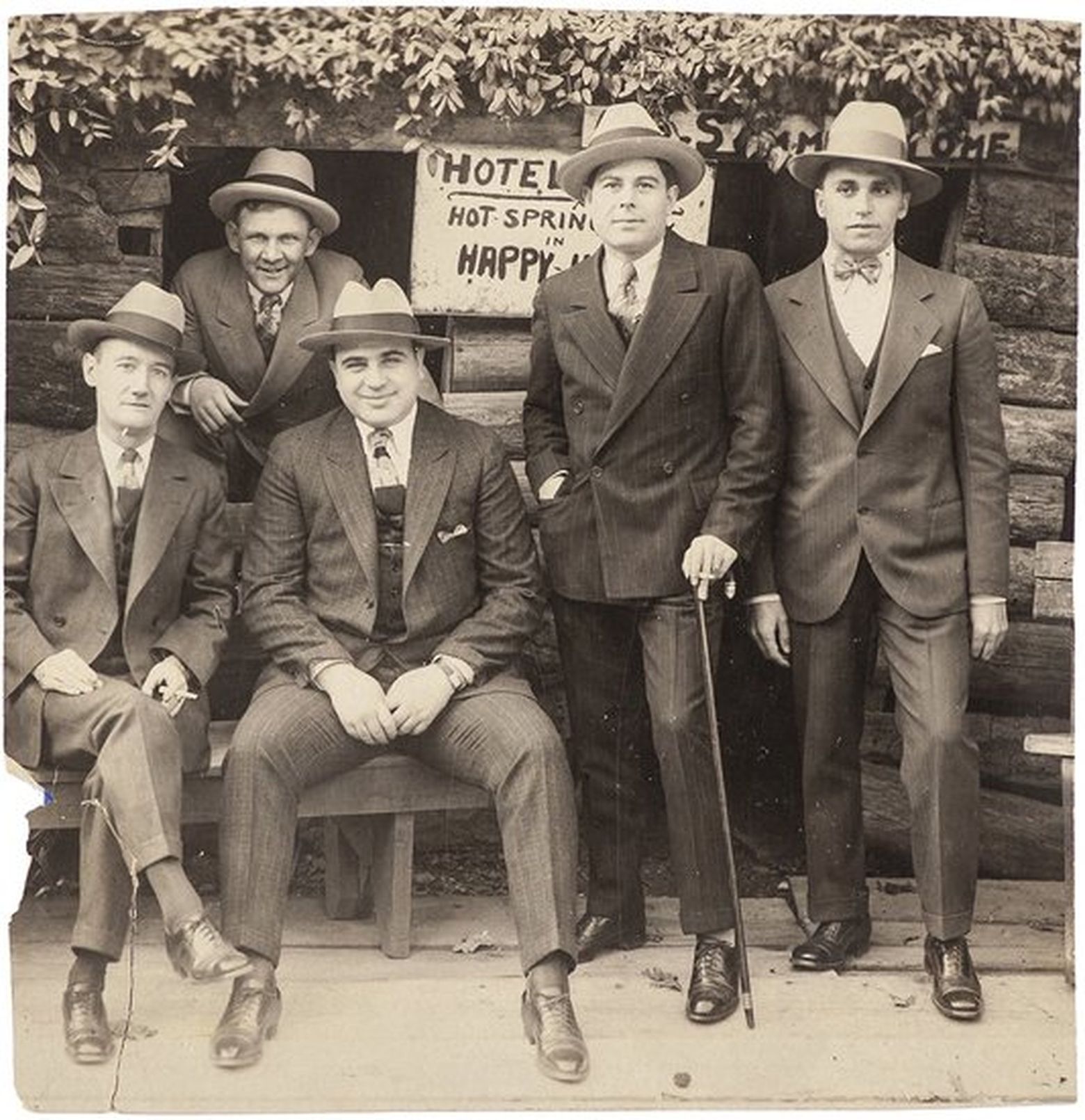
Al Capone’s parents were Gabriele Capone (1865–1920) and Teresina "Teresa" Raiola (1867–1952), Italian immigrants from the Campania region near Naples who settled in Brooklyn, New York, in 1893. Unlike their son who became America’s most famous mobster, Gabriele and Teresa were law-abiding, hard-working immigrants who built a respectable working-class life.
Italian Origins and Emigration to America
Gabriele Capone was born on December 12, 1865, in Castellammare di Stabia, a coastal town situated along the Bay of Naples in southern Italy. Teresina Raiola was born nearby on November 14, 1867, in the town of Angri, located in the province of Salerno. The two were married in Italy in the early 1890s, during a period of severe economic hardship across southern Italy. High agricultural taxes, poverty, and limited industrial growth prompted millions of Italians to seek economic security in North America.
In May 1893, Gabriele and Teresa embarked on an oceanic voyage to the United States. At the time of their departure, Teresa was pregnant with their second child, while their eldest son, Vincenzo (later known as James), accompanied them as an infant. Upon arriving at the port of New York, the young couple passed through immigration authorities and settled in the crowded Italian enclave of the Navy Yard neighborhood in Brooklyn.
Unlike many impoverished immigrants of the era who were illiterate, Gabriele Capone possessed a basic formal education. He was able to read and write in Italian, a distinction that provided him with economic advantages in the immigrant communities of New York City. Upon settling in New York, Gabriele anglicized his first name to "Gabriel," while Teresina became known predominantly as "Teresa."
Chronology of the Capone Family's Early Years:
- 1865: Gabriele Capone born in Castellammare di Stabia, Italy.
- 1867: Teresina Raiola born in Angri, Italy.
- 1891: Gabriele and Teresina marry in Italy.
- 1893: The family emigrates from Naples to New York City.
- 1899: Alphonse "Al" Capone is born in Brooklyn, New York.
- 1920: Gabriele Capone dies suddenly of heart disease in Brooklyn.
- 1952: Teresa Capone dies in Chicago, Illinois.
Gabriele and Teresa Capone: Profiles of the Matriarch and Patriarch
To understand the upbringing of Alphonse "Al" Capone, it is essential to examine the personal backgrounds, professions, and values of his parents. The Capone household was defined by traditional Italian values, strict Catholic religious observances, and a strong work ethic.
Gabriele Capone: The Literate Barber and Entrepreneur
Gabriele Capone began his working life in the United States as a laborer, taking any available job to provide food and shelter for his growing family. However, his literacy and ambition allowed him to transition quickly into a skilled trade. He served as an apprentice barber, mastering the craft before earning enough capital to open his own independent barbershop in Brooklyn.
By the early 1900s, Gabriele operated a successful barbershop located at 59 Park Avenue in Brooklyn. Owning a small business elevated the family’s socioeconomic status from destitute laborers to stable, self-employed urban tradespeople. Contemporaries and neighborhood public records described Gabriele as an upright, quiet, and law-abiding citizen. He had no history of criminal involvement, local gang affiliations, or ties to the Black Hand (La Mano Nera) extortion syndicates that preyed on Italian immigrants at the turn of the 20th century.
Gabriele prioritized civic integration and education for his children. He insisted that his household abide by American laws while maintaining traditional Italian family cohesion. His sudden death in 1920 marked a major turning point for the family dynamic, removing the dominant paternal figure just as his sons were entering young adulthood.
Teresina Raiola Capone: The Devout Matriarch
Teresina "Teresa" Raiola Capone was the emotional center of the household. As a skilled seamstress, she frequently contributed to the family income by taking in piecework sewing while managing the complex demands of a home that eventually housed nine children.
Teresa was a deeply religious Roman Catholic. She attended Mass regularly at local parish churches, including Saint Michael’s and Saint Mary Star of the Sea in Brooklyn. Throughout her life, she sought to instill traditional religious values in her children. Even as her sons—most notably Al, Ralph, and Frank—entered the illicit underworld of bootlegging and organized crime during Prohibition, Teresa maintained a close, protective relationship with them.
Neighbor accounts from Brooklyn describe Teresa as a quiet, generous woman devoted entirely to her domestic responsibilities. She avoided public attention, focused on her family's daily welfare, and remained a source of moral authority and emotional support for her children throughout their lives.
The Brooklyn Household: Life in the Immigrant Community
The Capone family moved several times within Brooklyn as their family size expanded and their financial situation improved. Their residential history illustrates a steady upward movement from cramped tenement housing to comfortable multi-family homes:
- 95 Navy Street (Navy Yard District): The initial residence of Gabriele and Teresa after arriving in Brooklyn. This area was densely populated, industrialized, and heavily populated by working-class European immigrants. Alphonse Capone was born in this tenement home on January 17, 1899.
- 59 Park Avenue: A mixed-use building where Gabriele established his barbershop on the ground floor while housing his family on the upper floor.
- 21 Garfield Place (Park Slope/Carroll Gardens): Around 1909, the Capones moved to a multi-story residence on Garfield Place. This neighborhood was cleaner, safer, and economically more stable than the waterfront tenements. It was here that Al Capone spent the remainder of his adolescent years and where the family established long-term roots.
- Gabriele Capone (1865–1920) and Teresina Raiola (1867–1952)
- James Vincenzo (1892–1952)
- Ralph Capone (1894–1974)
- Frank Capone (1895–1924)
- Alphonse "Al" (1899–1947)
- John Capone (1901–1985)
- Albert Capone (1905–1980)
- Matthew Capone (1908–1967)
- Rose Capone (1910–1910)
- Mafalda Capone (1912–1988)
In the Garfield Place neighborhood, Gabriele Capone achieved his goal of maintaining a respectable, middle-class standard of living. However, the surrounding streets of Brooklyn were also home to organized street gangs, such as the Five Points Gang and the Junior Forty Thieves. While Gabriele and Teresa maintained a strictly disciplined home environment, the outside social environment exposed their adolescent sons to urban youth gangs, protection rackets, and petty street crime.
The Children of Gabriele and Teresa Capone
Gabriele and Teresa Capone raised nine children. The paths taken by the Capone siblings varied dramatically, ranging from high-ranking mobsters to dedicated law enforcement officers and law-abiding private citizens.
| Child Name | Birth & Death Years | Primary Occupation / Identity | Key Historical Context |
|---|---|---|---|
| James Vincenzo Capone (Richard James Hart) | 1892–1952 | Prohibition Enforcement Agent / Town Marshal | Left home as a teenager, moved West, changed his name, and served as a lawman in Nebraska and South Dakota. |
| Raffaele "Ralph" Capone | 1894–1974 | Organized Crime Figure / Business Manager | Joined Al in Chicago; managed soft-drink bottling plants and mob venues; dubbed "Bottles" Capone by authorities. |
| Salvatore "Frank" Capone | 1895–1924 | Organized Crime Enforcer | Served as the primary political front-man for the Capone organization in Cicero, Illinois; killed in a shootout with police in 1924. |
| Alphonse "Al" Capone | 1899–1947 | Head of the Chicago Outfit | Known as "Scarface"; led the dominant Prohibition-era crime syndicate in Chicago from 1925 to 1931. |
| Erminio "John" Capone | 1901–1985 | Executive / Private Citizen | Held minor administrative roles within family businesses; largely kept a low profile and later changed his surname. |
| Umberto "Albert" Capone | 1905–1980 | Business Employee / Private Citizen | Worked in legitimate retail and manufacturing businesses; legally changed his surname to Ray to distance himself from mob associations. |
| Matthew Capone | 1908–1967 | Tavern Operator | Managed various hospitality businesses in the Chicago area; had minimal involvement in organized syndicate operations. |
| Rose Capone | 1910–1910 | Infancy | Died in early infancy in Brooklyn, New York. |
| Mafalda Capone | 1912–1988 | Homemaker / Private Citizen | The youngest child and only surviving daughter; married John Maritote and lived a quiet life in Illinois. |
The Contrast Between James and Al Capone
The extraordinary contrast between the oldest son, James Vincenzo, and the fourth son, Alphonse, highlights the unpredictable influences acting on the children of immigrants.
James Vincenzo Capone ran away from home around 1908 at approximately sixteen years of age. Joining a traveling circus, he migrated westward and eventually settled in Homer, Nebraska. To conceal his Italian origins, he adopted the pseudonym Richard James Hart, named after his favorite silent-film Western star, William S. Hart.
During the 1920s, while Al Capone was building the Chicago Outfit into an illicit empire generating tens of millions of dollars annually, his older brother Richard Hart was serving as a federal Prohibition agent and Indian Affairs officer. Armed with pair of custom revolvers that earned him the nickname "Two-Gun Hart," he raided illegal stills and prosecuted bootleggers across Nebraska and South Dakota, entirely unknown to the public as Al Capone's brother until a family reunion decades later.
The Death of Gabriele Capone (1920) and Its Impact
On November 14, 1920, Gabriele Capone died suddenly at his Brooklyn home from heart failure (classified in historic death records as apoplexy resulting from heart disease). He was 54 years old.
Gabriele’s untimely death removed the primary authority figure from the family home. At the time of Gabriele's death, 21-year-old Al Capone was working in New York under the mentorship of gangster Frankie Yale, having already sustained his famous facial scars in a night-club brawl at the Harvard Inn.
Without Gabriele’s steadying influence and financial leadership, the family dynamics shifted rapidly:
- Relocation to Chicago: Chicago mob boss Johnny Torrio invited Al Capone to move to Illinois to help manage his expanding prostitution, gambling, and bootlegging networks.
- Family Migration: Following Al’s rapid rise within Torrio’s organization, Al arranged for his mother Teresa, his younger siblings, and his brothers Ralph and Frank to relocate from Brooklyn to Chicago.
- Financial Support: Al Capone assumed the primary financial responsibility for supporting his widowed mother and younger brothers and sister, purchasing a grand home at 7244 South Prairie Avenue in Chicago for Teresa and the extended family.
Teresa Capone’s Later Years and Relationship with Al
Following the move to Chicago, Teresa Capone lived a comfortable life funded by her son Al's vast fortune, though she remained largely isolated from the violent details of his criminal operations. She resided at the Prairie Avenue home, cooking traditional Italian meals for her children and grandchildren, and attending daily mass.
Support During Al Capone's Conviction and Imprisonment
When Al Capone was convicted of federal income tax evasion in October 1931 and sentenced to eleven years in federal prison, Teresa stood by him publicly. She made regular long-distance visits to see her son during his incarceration at the U.S. Penitentiary in Atlanta, Georgia, and later traveled across the country to visit him at the high-security Alcatraz Federal Penitentiary in San Francisco Bay.
Reporters frequently photographed Teresa during her trips to Alcatraz. Despite her lack of English fluency and deep aversion to public media, she maintained to reporters that her son was a generous, loving child who cared deeply for his family.
Key Milestones of Teresa Capone's Later Life:
- 1920: Widowed after the death of her husband, Gabriele.
- 1923: Moves from Brooklyn to South Prairie Avenue in Chicago.
- 1931: Attends Al Capone's federal tax evasion trial in Chicago.
- 1934–1939: Travels to Alcatraz to visit Al during his imprisonment.
- 1947: Attends Al Capone's funeral following his death in Palm Island, Florida.
- 1952: Dies in Chicago at the age of 85.
Caring for Al in His Final Years
Following Al Capone's release from prison in late 1939, he suffered from severe cognitive and physical decline caused by tertiary neurosyphilis. He retired to his estate on Palm Island in Miami Beach, Florida.
Teresa spent considerable time in Florida during the 1940s, helping care for Al alongside his wife, Mae Capone. Al Capone died of stroke and pneumonia following cardiac arrest on January 25, 1947. Teresa survived her famous son by nearly six years.
Teresa Raiola Capone died on November 29, 1952, at the age of 85, in Chicago. She was initially buried beside her husband Gabriele and son Frank at Holy Cross Cemetery in Brooklyn. However, due to frequent vandalism and security concerns at the original plot, the family later reinterred the remains of Gabriele, Teresa, Frank, and Al Capone at Mount Carmel Catholic Cemetery in Hillside, Illinois, where they lie together in the Capone family plot.
Historical Misconceptions About Al Capone's Parents
Over the decades, popular culture, biographical films, and sensational journalism have created several enduring myths regarding Gabriele and Teresa Capone. Historical records clarify these common errors:
Myth 1: The Parents Had Ties to the Sicilian Mafia
- The Reality: Neither Gabriele nor Teresa had any connection to organized crime, the Mafia, or the Camorra in Italy. Furthermore, the Capones were not Sicilian; they were from the Campania region (mainland southern Italy). Gabriele was a law-abiding barber, and official police records in both Italy and the United States confirm he had no criminal record whatsoever.
Myth 2: The Family Lived in Abject Poverty in Brooklyn
- The Reality: While the Capones were not wealthy when they arrived in 1893, Gabriele’s literacy and trade skills enabled him to achieve stable working-class prosperity relatively quickly. By owning his own barbershop and moving his family to Garfield Place, Gabriele achieved a higher economic standing than the vast majority of Southern Italian immigrants residing in New York tenements at the turn of the century.
Myth 3: The Parents Encouraged Their Sons' Criminality
- The Reality: Primary accounts from surviving family members, neighbors, and historians indicate that Gabriele and Teresa were strict, traditional parents who emphasized school attendance, hard work, and Catholic religious practice. The descent of Al, Ralph, and Frank into gang life was largely driven by the environment of street gangs, corrupt municipal politics, and the lucrative opportunities created by the passage of National Prohibition in 1919.
Frequently Asked Questions
What were the names of Al Capone's parents?
Al Capone's father was named Gabriele Capone (later anglicized to Gabriel), and his mother was Teresina "Teresa" Raiola.
Where were Al Capone's parents born?
Gabriele Capone was born in Castellammare di Stabia, a coastal town near Naples, Italy. Teresa Raiola was born in the neighboring town of Angri, located in the province of Salerno, Italy.
Did Al Capone's father have a criminal record?
No. Gabriele Capone was a law-abiding citizen and small business owner who operated a barbershop in Brooklyn, New York. He had no criminal record or documented ties to organized crime syndicates.
What happened to Al Capone's older brother who became a lawman?
James Vincenzo Capone ran away from home as a teenager, moved to Nebraska, and changed his name to Richard James Hart. He became a town marshal, state law enforcement officer, and federal Prohibition agent, gaining fame as a sharpshooting officer known as "Two-Gun Hart."
When and where did Al Capone's parents die?
Gabriele Capone died of heart failure on November 14, 1920, in Brooklyn, New York, at the age of 54. Teresa Capone died on November 29, 1952, in Chicago, Illinois, at the age of 85.
Conclusion and Further Historical Research
The story of Gabriele and Teresa Capone represents a classical immigrant narrative that took an unexpected turn in the second generation. Far from being hardened criminals or underworld figures, Gabriele and Teresa were industrious, respectable immigrants who sought economic stability and civic integration in America. Their lives offer critical insight into the socioeconomic background from which Al Capone emerged, demonstrating that his rise to criminal power was driven by urban gang culture and Prohibition-era dynamics rather than a family tradition of crime.
For those conducting further historical research into early 20th-century immigration and organized crime biography, the following resources provide verified archival documents:
- National Archives and Records Administration (NARA): Retains original passenger arrival manifests (Ellis Island and Port of New York records) for Gabriele and Teresa Capone from 1893.
- New York City Municipal Archives: Contains historic birth certificates, death records, and business registration records for the Capone family in Brooklyn between 1893 and 1920.
- Cook County Clerk's Office & Historic Genealogies: Holds regional census data and death certificates for Teresa Capone and her surviving children in Illinois.