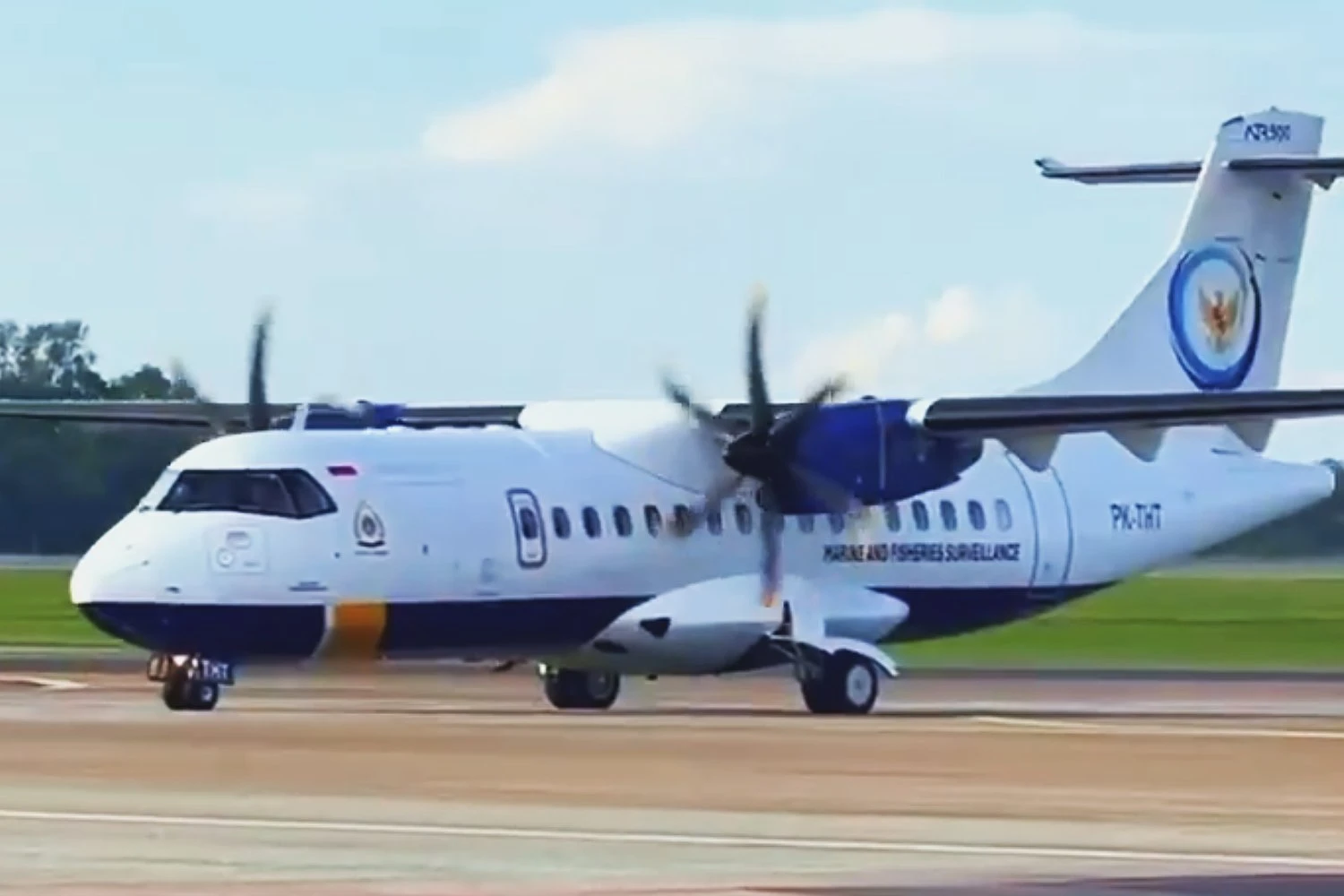
Whenever a civil air crash occurs in Indonesia, it triggers a mandatory, comprehensive safety investigation led by the National Transportation Safety Committee (NTSC), known locally as Komite Nasional Keselamatan Transportasi (KNKT). These investigations follow international standards set by ICAO Annex 13, focusing on identifying technical failures, human factors, and systemic weaknesses to prevent future occurrences rather than assigning legal blame or liability.
The Legal and Institutional Framework for Investigations
In the event of an aviation accident within Indonesian territory, the primary authority for investigation is the Komite Nasional Keselamatan Transportasi (KNKT). Established under the authority of the President of Indonesia, the KNKT is an independent body tasked with conducting objective safety inquiries. The legal basis for these actions is rooted in Indonesian Law No. 1 of 2009 on Aviation, which aligns domestic procedures with international requirements.
Indonesia is a signatory to the Chicago Convention, which established the International Civil Aviation Organization (ICAO). Under ICAO Annex 13, the state in which an accident occurs is responsible for the investigation. However, because modern aviation is a globalized industry, these investigations rarely happen in isolation. The KNKT typically collaborates with:
- The State of Design and Manufacture: Agencies like the U.S. National Transportation Safety Board (NTSB) for Boeing aircraft or the French Bureau d'Enquêtes et d'Analyses (BEA) for Airbus/ATR aircraft.
- The State of Registry/Operator: If the aircraft is registered outside Indonesia or operated by a foreign carrier.
- Technical Advisors: Representatives from engine manufacturers (e.g., CFM International, Rolls-Royce) and airframe manufacturers.
As of 2026, the investigation process has become increasingly digitized, utilizing advanced satellite data and real-time flight monitoring, though the physical recovery of wreckage remains the cornerstone of any inquiry in the Indonesian archipelago.
The Four Phases of an Air Crash Investigation
An air crash in Indonesia leads to an investigation that typically unfolds in four distinct stages. Each stage is designed to ensure that no evidence is contaminated and that the sequence of events is reconstructed with scientific precision.
1. The Notification and Field Phase
Immediately following a "loss of signal" or a confirmed crash, the search and rescue (SAR) operation, led by BASARNAS (the National Search and Rescue Agency), takes priority. Once the site is secured and life-saving efforts are concluded, the KNKT takes control of the "crash site."
In the Indonesian context, this often involves complex maritime salvage. Much of the country’s air traffic passes over the Java Sea or the mountainous terrain of Papua. If the aircraft is underwater, specialized vessels equipped with Side Scan Sonar and Remotely Operated Vehicles (ROVs) are deployed to locate the wreckage and the "pinger" signals from the flight recorders.
2. Recovery of the "Black Boxes"
The recovery of the Flight Data Recorder (FDR) and the Cockpit Voice Recorder (CVR) is the highest priority for investigators. These devices are designed to survive extreme impacts, fire, and deep-sea pressure.
- FDR: Records hundreds of parameters, including altitude, airspeed, heading, engine thrust, and control surface positions.
- CVR: Records all sounds in the cockpit, including pilot conversations, radio transmissions, and ambient noises (like cockpit alarms or mechanical thuds).
Once recovered, these are transported to the KNKT’s laboratory in Jakarta. If the recorders are heavily damaged, they may be sent to international facilities in Washington D.C. or Canberra for data extraction under the supervision of Indonesian investigators.
3. Data Analysis and Evidence Integration
With the data from the black boxes, investigators create a "flight animation" to visualize the aircraft's final moments. This is cross-referenced with:
- Air Traffic Control (ATC) Transcripts: To understand the communication between the pilot and the ground.
- Maintenance Logs: To check for recurring technical issues or "deferred" maintenance items.
- Pilot Records: To evaluate training, fatigue, and medical history.
- Weather Data: Provided by BMKG (the Meteorology, Climatology, and Geophysical Agency), focusing on phenomena like microbursts, volcanic ash, or severe turbulence.
4. Reporting and Safety Recommendations
The investigation culminates in two primary documents:
- Preliminary Report: Usually released within 30 days of the accident. It contains factual data but no analysis or conclusions.
- Final Report: Ideally released within 12 months. This document contains the "Probable Cause" and, most importantly, Safety Recommendations. These recommendations are sent to airlines, regulators (the Directorate General of Civil Aviation), and manufacturers to mandate changes in equipment or training.
Historical Context: Major Investigations and Their Lessons
To understand how a current air crash in Indonesia leads to an investigation, one must look at the landmark cases that shaped 2026 safety standards. Indonesia’s aviation history has been a catalyst for global changes in flight safety.
Lion Air Flight JT610 (2018)
The crash of JT610 into the Java Sea was one of the most significant investigations in modern history. The KNKT’s inquiry identified a flaw in the Maneuvering Characteristics Augmentation System (MCAS) of the Boeing 737 MAX. The investigation revealed that a single faulty Angle of Attack (AOA) sensor could trigger a repetitive nose-down command that the pilots could not override. This Indonesian-led investigation eventually led to the global grounding of the 737 MAX fleet and a fundamental redesign of the aircraft’s software.
Sriwijaya Air Flight SJ182 (2021)
This investigation focused on the aging fleet of Boeing 737-500 aircraft. The KNKT found that an asymmetric thrust condition, caused by a malfunctioning autothrottle system, led to a loss of control. The investigation highlighted the critical importance of "Upset Prevention and Recovery Training" (UPRT) for pilots, ensuring they can manually recover an aircraft when automation fails.
AirAsia Flight QZ8501 (2014)
The investigation into the QZ8501 crash in the Karimata Strait identified a cracked solder joint in the Rudder Travel Limiter Unit (RTLU). The repeated technical failure led the pilots to reset a circuit breaker, which inadvertently disabled the flight protection systems in a storm. This case underscored the dangers of "automation dependency" and the need for rigorous maintenance of minor electronic components.
Technical Analysis of Investigation Tools
Investigators in 2026 utilize a variety of technical tools to determine why a crash occurred. When an air crash in Indonesia leads to an investigation, the following technical evaluations are standard:
| Tool/Method | Purpose | Data Provided |
|---|---|---|
| Spectral Analysis | Analyzing CVR audio | Identifies the specific frequency of engine noises or structural snaps to determine timing of failures. |
| Metallurgical Testing | Examining wreckage metal | Determines if a part failed due to fatigue, fire damage, or high-energy impact. |
| Flight Simulator Re-enactment | Recreating the flight | Test whether a "normal" pilot could have reacted differently to the same emergency. |
| FMEA (Failure Mode and Effects Analysis) | System evaluation | A step-by-step approach to identifying all possible failures in a design or manufacturing process. |
| Satellite ADS-B Data | External tracking | Provides high-resolution GPS positioning and altitude data even if the aircraft's transponder fails. |
Challenges Unique to Indonesian Investigations
Indonesia presents a unique set of geographical and meteorological challenges that complicate aviation investigations.
The Intertropical Convergence Zone (ITCZ)
Indonesia sits within the ITCZ, a belt of low pressure near the equator where trade winds meet. This results in some of the world’s most intense thunderstorms. Investigators must often distinguish between "weather-caused" accidents and "weather-contributed" accidents. For example, icing at high altitudes can clog Pitot tubes (speed sensors), leading to a "cascading failure" where the aircraft’s computer receives conflicting data.
Maritime Recovery
With over 17,000 islands, many crashes occur at sea. The Java Sea is relatively shallow (approx. 40-50 meters), making wreckage recovery feasible. However, crashes in the deep waters off the coast of Sulawesi or in the Indian Ocean present extreme technical hurdles, requiring deep-sea submersibles that Indonesia often coordinates through international partnerships.
Rapid Industry Growth
The Indonesian domestic aviation market has grown exponentially. Investigations often look at whether the "safety culture" and regulatory oversight have kept pace with the number of planes in the sky. By 2026, Indonesia has made significant strides in this area, moving from a Category 2 to a Category 1 FAA safety rating, signifying compliance with ICAO standards.
The Human Factors and "No-Blame" Culture
A critical component of any air crash investigation in Indonesia is the study of Human Factors. This involves analyzing "Crew Resource Management" (CRM)—how the captain and first officer communicated and made decisions under pressure.
One of the greatest hurdles in aviation safety is the "fear of retribution." If pilots or mechanics fear they will be jailed for a mistake, they may hide evidence. Therefore, the KNKT operates under a "No-Blame" mandate. Their report cannot be used as evidence in a criminal court. This encourages witnesses to speak freely, ensuring that the actual cause is found and fixed for the entire industry.
Aviation Safety Progress in 2026
In 2026, the landscape of aviation in Indonesia is characterized by higher transparency and better technology. Following the investigations of the early 2020s, the Indonesian government has implemented:
- Integrated Flight Following (IFF): Mandatory real-time tracking for all commercial aircraft, even in remote areas like Papua.
- Enhanced Oversight: More frequent "ramp checks" and audits of airline maintenance facilities.
- Safety Management Systems (SMS): A requirement for airlines to have a proactive system for identifying hazards before they lead to an accident.
When an air crash in Indonesia leads to an investigation today, the global community looks to the KNKT as a seasoned authority, particularly in the realm of maritime aviation recovery and automation-human interface analysis.
Frequently Asked Questions
What is the difference between a preliminary and a final report?
A preliminary report is a factual summary released within 30 days to provide the public and the industry with the basic known facts (time, location, aircraft type). It does not contain analysis or a cause. The final report is a comprehensive analysis released months later, identifying the root cause and issuing binding safety recommendations to prevent recurrence.
Are Indonesian air crash investigations independent?
Yes. The KNKT is an independent government agency that reports directly to the President of Indonesia. This independence is crucial to ensure that the investigation is not influenced by the Ministry of Transportation, which regulates the airlines, or by the airlines themselves.
Can the findings of an investigation be used in a lawsuit?
Under ICAO Annex 13, the primary purpose of the investigation is safety, not the assignment of blame. While the facts revealed in a report (such as a confirmed engine failure) are public and can be used by legal teams, the KNKT’s specific conclusions and safety opinions are generally protected from being used as direct evidence in criminal proceedings to encourage honest reporting by those involved.
How do investigators find a black box in the deep ocean?
Black boxes are equipped with an Underwater Locator Beacon (ULB) or "pinger." When submerged in water, the ULB sends out an acoustic signal at 37.5 kHz once per second for at least 90 days (under 2026 standards). Investigators use "hydrophones" or "pinger locators" towed behind ships to listen for this specific frequency.
Why do some investigations take several years to complete?
Aviation investigations are incredibly complex. Analyzing thousands of hours of flight data, conducting metallurgical tests on microscopic fractures in the engine, and coordinating with international manufacturers take time. If the wreckage is in deep water or a remote jungle, the physical recovery alone can take months.
Practical Recommendation for Travelers and Industry Stakeholders
For travelers, it is important to understand that aviation investigations are the primary reason flying becomes safer over time. Every crash in Indonesia has led to changes in how pilots are trained and how planes are built. When reviewing airline safety, look for carriers that are IOSA (IATA Operational Safety Audit) certified, as this indicates they meet the highest international safety standards above and beyond local regulations.
For industry stakeholders, the primary takeaway from Indonesian investigations is the necessity of proactive maintenance. The KNKT reports consistently show that small, unaddressed mechanical "glitches" can combine with pilot stress to create catastrophic outcomes. Implementing a robust Safety Management System (SMS) that encourages "self-reporting" of errors without punishment is the most effective way to prevent the next investigation from ever needing to start.