Navigating AIG life insurance broker services requires understanding how independent insurance professionals interface with American International Group (AIG) or its life and retirement subsidiary, Corebridge Financial, to secure policy coverage for clients. These brokerage services allow licensed agents to access term, universal, and variable life insurance products, evaluate underwriting guidelines, and manage policy applications on behalf of consumers.
The landscape of life insurance brokerage has undergone substantial structural transitions over recent decades, particularly regarding corporate realignments. To secure the right coverage through AIG-backed products, consumers and financial professionals must understand the mechanics of independent distribution, the specific product lines available, underwriting criteria, and the precise steps required to transition from a preliminary quote to an active policy.
The Corporate Framework: AIG and Corebridge Financial
Before analyzing broker services, it is essential to contextualize the corporate entity issuing the policies. American International Group has historically been a dominant force in global insurance. However, the life insurance and retirement services operations of AIG were separated into a standalone entity named Corebridge Financial.
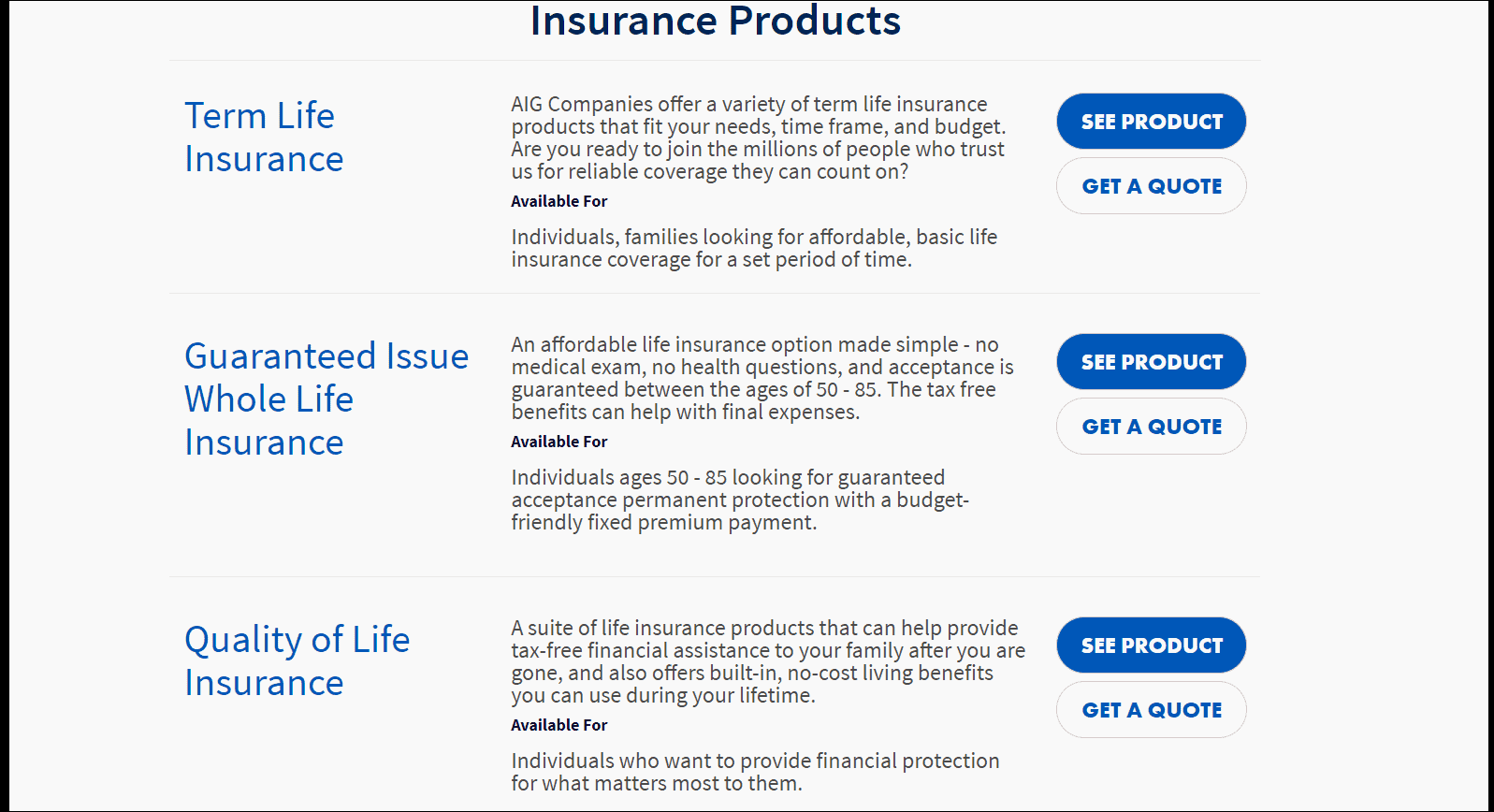
For brokers and consumers, this corporate evolution means that while the historical pedigree and product stability associated with AIG remain intact, applications, policy administration, and broker support portals now frequently operate under the Corebridge Financial infrastructure. Independent brokers act as intermediaries who maintain selling agreements with these entities, allowing them to offer clients policy options that were formerly branded strictly under the AIG umbrella, such as QoL (Quality of Life) term and permanent insurance products featuring Accelerated Benefit Riders.
Understanding this relationship prevents confusion when brokers reference different portals, illustration software, or underwriting guidelines that carry Corebridge branding while maintaining the familiar AIG product features.
Types of Life Insurance Available Through AIG Brokers
Independent brokers leverage AIG and Corebridge products to match specific consumer financial needs. Life insurance products generally fall into distinct categories, each serving different long-term objectives such as income replacement, estate planning, or wealth accumulation.
Term Life Insurance
Term life insurance provides coverage for a specified period (such as 10, 15, 20, 25, or 30 years) and pays a death benefit only if the insured passes away during that term. AIG’s term products are frequently utilized for straightforward income replacement, mortgage protection, and temporary liabilities. Many of these term policies include conversion privileges, allowing the policyholder to convert all or part of the term coverage into a permanent life insurance policy without undergoing a new medical exam.
Universal Life Insurance
Universal life insurance (UL) offers a death benefit combined with a tax-advantaged cash value component. Unlike whole life, universal life provides flexibility in premium payments and death benefit amounts, provided the cash value is sufficient to cover policy expenses. Brokers frequently recommend AIG universal life solutions for clients seeking lifetime protection alongside conservative cash accumulation potential tied to interest crediting strategies.
Indexed Universal Life (IUL)
Indexed universal life insurance links cash value growth to the performance of an external market index, such as the S&P 500, without directly investing in the stock market. AIG/Corebridge IUL products often feature downside floors (protecting the cash value from negative market returns) alongside caps on maximum growth. Brokers utilize these complex products for clients looking for supplemental retirement income strategies coupled with permanent death benefits.
The Role and Value Proposition of an AIG Life Insurance Broker
Consumers frequently debate whether to buy insurance directly through a captive agent or utilize an independent broker who offers AIG products. Independent brokers provide distinct structural advantages in the marketplace.
THE BROKERAGE ADVANTAGE
- Independent Broker: Access to Multiple Carriers
- Captive Agent: Exclusive to One Insurance Brand
- Broker Value Proposition: Objective Comparison & Advocacy
Market Independence
Unlike captive agents who represent only one insurance carrier, independent brokers maintain appointments with multiple insurance companies. This allows the broker to compare underwriting offers across different carriers if AIG's preliminary underwriting assessment is unfavorable for a specific health profile.
Customization and Advocacy
Brokers assist clients in structuring complex policies. This includes calculating the precise death benefit needed based on human life value methodology, selecting appropriate riders (such as waiver of premium or chronic illness riders), and structuring ownership via trusts for estate planning purposes.
Underwriting Navigation
Life insurance underwriting is an intricate evaluation of medical history, lifestyle, family genetics, and financial standing. An experienced broker pre-screens clients using informal inquiry tools to determine which carrier—including AIG—is most likely to offer the best health classification (e.g., Preferred Best, Standard, or Rated).
Underwriting Requirements and the Application Process
Securing a policy through AIG life insurance broker services involves a structured multi-step underwriting and application process. Knowing what to expect minimizes delays and ensures accurate risk assessment.
1. Needs Analysis and Preliminary Quotation
The process begins with the broker analyzing the client's financial situation. Using specialized illustration software provided by the carrier, the broker generates preliminary cost estimates based on age, gender, tobacco use, and desired coverage amount.
2. Formal Application Submission
Once the client selects a product, the broker submits a formal application. Modern applications are largely digital, utilizing electronic data signatures and tele-interview processes where a medical professional conducts a health history interview over the phone.
3. Medical Requirements and Parametrical Exams
Depending on the applicant's age and the face amount requested, AIG may require:
- A paramedical exam (blood draw, urine sample, height, weight, and blood pressure measurements).
- An electrocardiogram (EKG) for higher face amounts or older applicants.
- Attending Physician Statements (APS) requested directly from the applicant's primary care physician or specialists.
- Motor vehicle reports (MVR) and prescription database checks (MIB and Rx history).
4. Underwriting Decision and Policy Delivery
Underwriters evaluate the collected data against internal risk tables. Once approved, the broker reviews the final policy offer with the client, ensures the initial premium payment is processed, and delivers the active contract.
Comparison of Policy Delivery and Support Features
| Feature / Service | Captive Agent Channel | Independent AIG Broker Channel |
|---|---|---|
| Carrier Selection | Single carrier only | Access to AIG/Corebridge plus dozens of others |
| Underwriting Advocacy | Represents the carrier's interests | Advocates for the policyholder's approval |
| Product Customization | Limited to proprietary portfolio | Broad portfolio matching specific niche needs |
| Ongoing Service | Managed via corporate customer service | Direct broker assistance for policy changes and reviews |
Common Challenges and Solutions in AIG Brokerage
Navigating life insurance underwriting can present hurdles. Understanding common pitfalls helps applicants and brokers streamline the process.
- Undeclared Medical History: Failing to disclose past treatments or prescription drug history on the application invariably delays underwriting while medical records are pulled. Transparency from the outset prevents rescission risks and contract disputes.
- Avocation and Travel Risks: High-risk hobbies (such as private aviation, scuba diving, or rock climbing) or frequent travel to unstable international regions require specialized underwriting disclosures. Independent brokers know which carriers view specific avocations more favorably.
- Financial Underwriting Caps: Insurers limit the maximum death benefit a client can purchase based on earned income and net worth to prevent over-insurance. Brokers assist high-net-worth clients in justifying large face amounts through estate tax liabilities or business continuation agreements.
Frequently Asked Questions
What is the difference between AIG life insurance and Corebridge Financial?
Corebridge Financial is the rebranded entity that now houses the life insurance and retirement operations formerly operated directly under the American International Group name. The underlying policy contracts, financial ratings, and product availability remain backed by the same institutional stability, but administrative portals and broker services operate under the Corebridge brand.
Can I buy AIG life insurance directly without a broker?
While some basic products may feature direct-to-consumer digital channels, most comprehensive permanent, term, and indexed universal life policies require a licensed insurance broker or agent to structure the application, run illustrations, and navigate underwriting requirements.
How long does the AIG life insurance underwriting process take?
Underwriting timeframes vary significantly based on the complexity of the policy and medical requirements. Simple term policies utilizing accelerated underwriting programs can sometimes be approved in days, whereas permanent policies requiring medical exams and attending physician statements typically take four to eight weeks.
What are QoL (Quality of Life) policies offered through AIG brokers?
QoL policies are a suite of term and permanent life insurance products that incorporate Accelerated Benefit Riders. These riders allow the policyholder to access a portion of the death benefit while living if diagnosed with a qualifying critical, chronic, or terminal illness.
How do independent brokers get compensated?
Independent brokers do not typically charge clients an upfront advisory fee for life insurance placement. Instead, they are compensated via commissions paid directly by the insurance carrier (such as AIG/Corebridge) upon the successful issuance and funding of the policy.
Conclusion and Next Actions
Utilizing AIG life insurance broker services provides consumers with a bridge between sophisticated financial products and professional underwriting advocacy. To initiate coverage, prospective policyholders should first determine their specific financial protection goals—whether that involves short-term income replacement or long-term estate planning. Next, consult an independent broker authorized to offer Corebridge and AIG products to conduct a comprehensive needs analysis, run preliminary software illustrations, and pre-screen medical profiles to secure the most favorable policy terms available.