In 2024, Asia remains the world's most populous continent with approximately 4.78 billion people, accounting for nearly 59% of the global total. However, Africa, with 1.51 billion people, is the fastest-growing region, expanding at an annual rate of 2.4% compared to Asia's stabilizing growth of approximately 0.6%.
Understanding the 2024 Demographic Landscape
The demographic landscape of 2024 serves as a critical pivot point in human history. While Asia has long been the primary driver of global population growth, the momentum has shifted decisively toward the African continent. This comparison is not merely about raw numbers; it is about the structural composition of societies, the trajectory of urban development, and the future of the global labor market.
As of early 2024, the world population surpassed 8.1 billion people. To understand the scale of Asia and Africa, one must realize that these two continents combined house roughly 77% of all human beings. However, the internal dynamics of these regions are moving in opposite directions. Asia is entering a phase of maturity and, in many sub-regions, contraction, while Africa is in the midst of a massive youth-driven expansion that is expected to continue for the remainder of the century.
Asia: The Continent of Giants at a Crossroads
Asia's population story in 2024 is defined by the transition of leadership from China to India. For decades, China was the symbol of Asian demographic dominance. However, following India's official surpassing of China in 2023, the 2024 data confirms a widening gap. China’s population has entered a period of absolute decline, driven by low fertility rates and an aging workforce, while India continues to grow, albeit at a slower pace than in previous decades.
The complexity of Asia lies in its diversity. We cannot view the continent as a monolith. East Asia (Japan, South Korea, and China) faces a "demographic winter," where birth rates are well below replacement levels. In contrast, South Asia (India, Pakistan, Bangladesh) and Southeast Asia (Indonesia, Philippines, Vietnam) still possess significant growth potential, though even these regions are seeing a cooling of fertility rates.
Africa: The Global Engine of Growth
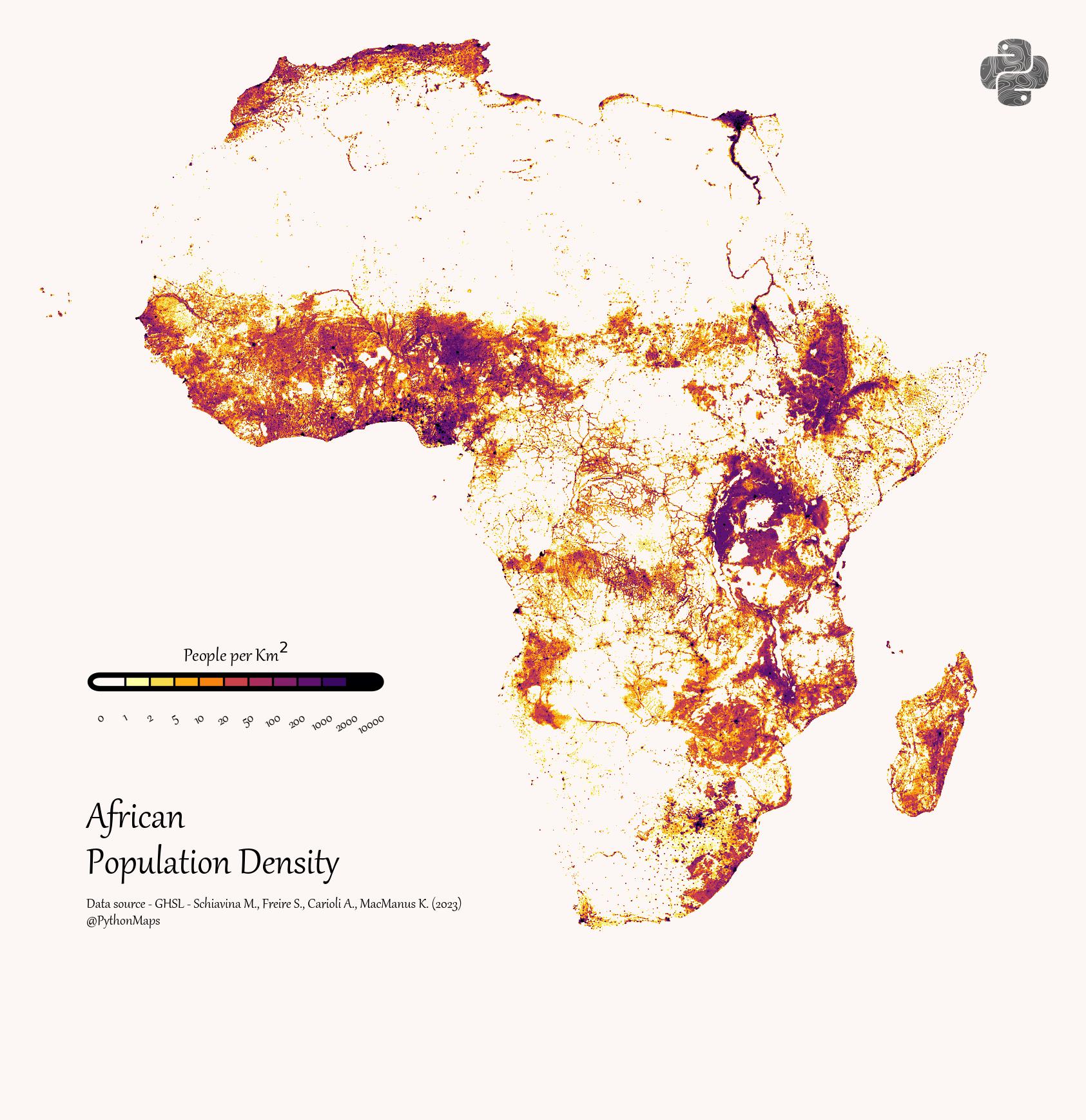
Africa in 2024 is the youngest continent on Earth. With a median age of approximately 19 years, its demographic profile is the inverse of Europe and East Asia. The population of Africa reached the 1.5 billion mark in late 2023 and has continued its upward trajectory into 2024. This growth is primarily concentrated in Sub-Saharan Africa, where countries like Nigeria, Ethiopia, and the Democratic Republic of the Congo are experiencing rapid natural increases.
The "why" behind Africa's growth is a combination of falling mortality rates and stubbornly high fertility rates. Improved access to basic healthcare and vaccinations has significantly reduced child mortality over the last two decades. While fertility rates are starting to decline in urban centers, rural areas still maintain high birth rates, ensuring that the continent's population will continue to swell for decades to come.
Key Statistical Comparison of 2024 Data
To visualize the disparity and similarities between these two regions, we must look at the specific indicators that define their demographic health. The following table provides a snapshot of the primary metrics recorded in 2024.
| Metric | Asia (2024) | Africa (2024) |
|---|---|---|
| Total Population | ~4.78 Billion | ~1.51 Billion |
| Share of Global Population | ~59.1% | ~18.6% |
| Annual Growth Rate | ~0.62% | ~2.38% |
| Median Age | 32.2 Years | 18.8 Years |
| Fertility Rate (Births per Woman) | 1.9 | 4.1 |
| Urbanization Rate | ~53% | ~45% |
| Projected 2050 Population | ~5.3 Billion | ~2.5 Billion |
The Youth Bulge vs. The Aging Pivot
The most significant divergence between Africa and Asia in 2024 is the age structure. This is often referred to by economists as the "demographic dividend" or the "demographic burden," depending on how a nation manages its population.
Africa’s Youth Dividend
In Africa, more than 40% of the population is under the age of 15. This "youth bulge" presents a massive opportunity for economic growth if these individuals can be educated and employed. By 2024, the African labor force has become one of the few in the world that is expanding rather than shrinking. This makes Africa an attractive destination for manufacturing and services that require a large, young workforce.
However, the challenge is infrastructure. To capitalize on this young population, African nations must invest heavily in schools, universities, and job creation. If the "dividend" is not met with opportunity, it can lead to social instability, high unemployment, and increased migration pressures.
Asia’s Aging Challenges
In contrast, large parts of Asia are dealing with an aging pivot. Japan has long been the world's "oldest" country, but in 2024, China and South Korea are following suit at an unprecedented speed. The working-age population in these nations is shrinking, which puts immense pressure on healthcare systems and pension funds.
South Asia remains the outlier in this Asian trend. India, for instance, still has a relatively young population with a median age of 28. In 2024, India is leveraging this to position itself as a global tech and manufacturing hub, essentially trying to capture the window of opportunity before its own population begins to age significantly in the 2040s.
Urbanization and the Rise of Megacities
Another critical area of comparison in 2024 is the rate and scale of urbanization. Both continents are shifting from agrarian societies to urban-centric economies, but the speed and nature of this shift differ.
Asian Urban Maturity
In 2024, Asia contains some of the world's most sophisticated megacities. Tokyo, Shanghai, Delhi, and Mumbai are not just population centers; they are global financial hubs. The urbanization rate in Asia is over 50%, with East Asia being significantly more urbanized than South Asia. The challenge for Asian cities in 2024 is sustainability—managing the environmental footprint of billions of urban dwellers and dealing with the housing crises that plague cities like Seoul or Hong Kong.
African Urban Explosion
Africa is currently the fastest-urbanizing region in the world. Cities like Lagos (Nigeria), Kinshasa (DRC), and Dar es Salaam (Tanzania) are growing at rates that defy traditional urban planning. In 2024, the challenge for Africa is "urbanization without industrialization." In many instances, people are moving to cities to escape rural poverty, but the manufacturing jobs that typically accompany urbanization in the Western or Asian models are not yet present in sufficient numbers. This leads to the expansion of informal settlements and places a strain on water, electricity, and transport infrastructure.
Fertility Rates and Cultural Shifts
The primary driver of the population gap between the two continents is the Total Fertility Rate (TFR). For a population to remain stable without migration, a TFR of 2.1 is required.
In Asia, the TFR has dropped significantly. By 2024, the average Asian TFR is approximately 1.9. However, this average masks extreme lows; South Korea’s TFR has plummeted below 0.8, the lowest in the world. China's TFR is hovering around 1.0 to 1.2, despite the government’s efforts to encourage larger families. These shifts are driven by high living costs, career prioritization among women, and changing cultural norms regarding marriage.
In Africa, the TFR remains high at 4.1. While this is a decrease from the 5.0+ levels seen in the 1990s, it still represents robust growth. The high TFR in Sub-Saharan Africa is influenced by cultural preferences for larger families, limited access to reproductive health education in rural areas, and the economic reality where children are often seen as a form of social security for parents.
Economic Implications of the 2024 Comparison
The demographic data of 2024 has profound economic consequences for the global order. Asia’s role as the "factory of the world" is being tested by its demographic decline. As labor costs rise in China due to a shrinking workforce, many companies are looking to relocate.
This is where the Africa-Asia comparison becomes competitive. In 2024, we see a "southward" shift in investment. While Southeast Asian nations like Vietnam and Thailand have been the immediate beneficiaries of the move away from China, African nations such as Ethiopia, Kenya, and Ghana are positioning themselves for the next wave of global manufacturing.
Furthermore, the 2024 population totals influence global consumption patterns. Asia is currently the largest consumer market in the world, with a massive middle class. Africa, however, represents the "frontier market." With 1.5 billion people and a rapidly growing urban class, Africa is where global brands are looking for long-term growth. The African Continental Free Trade Area (AfCFTA), which gained significant momentum by 2024, is an attempt to harmonize these 1.5 billion people into a single market, potentially rivaling the economic scale of the EU or China.
Environmental and Resource Management
We cannot compare these populations without addressing the environmental impact. The massive population of Asia has already placed extreme stress on resources. Water scarcity in Northern China and the Indian subcontinent is a major geopolitical and social concern in 2024.
Africa, while currently having a lower per-capita environmental footprint, faces different challenges. The rapid population growth coincides with the continent’s high vulnerability to climate change. In 2024, the intersection of population growth and environmental degradation—such as the desertification of the Sahel region—is driving internal displacement and migration. The ability of these two continents to manage their populations in a sustainable way will determine the success of global climate goals.
Summary of Regional Trends
- East Asia: Rapidly aging and shrinking. Focus is on automation and robotic integration to solve labor shortages.
- South Asia: Still growing but slowing. India is the dominant force, focusing on education and digital infrastructure.
- Sub-Saharan Africa: The global leader in growth. Focus is on basic infrastructure, healthcare, and integrating into the global supply chain.
- North Africa: More similar to the Middle East in demographic profile, seeing a more moderate growth rate and higher urbanization levels compared to the rest of the continent.
Frequently Asked Questions
Is Africa's population expected to surpass Asia's?
Not in the immediate future. While Africa is growing much faster, Asia’s head start of 4.78 billion vs. 1.51 billion is substantial. Most demographic models from 2024 suggest that while Africa will continue to close the gap, Asia will remain the most populous continent through at least the year 2100, though Africa will eventually reach a comparable scale.
Which country in Africa has the largest population in 2024?
Nigeria remains the most populous country in Africa in 2024, with a population estimated at over 226 million. It is followed by Ethiopia and Egypt. Nigeria’s population is projected to continue its explosive growth, potentially surpassing the United States by 2050.
Why is China’s population shrinking while India’s is growing?
The primary reason is the timing of their demographic transitions. China implemented strict population control measures (the One-Child Policy) in the late 20th century, which drastically accelerated its fertility decline. India, while also implementing family planning, did so with less coercion, resulting in a more gradual decline in fertility that has allowed for continued growth into the 2020s.
What is the median age in Asia compared to Africa?
In 2024, the median age in Asia is approximately 32 years, reflecting a mature and aging population. In Africa, the median age is roughly 19 years, making it the youngest continent in the world. This 13-year difference highlights the vastly different social and economic priorities of the two regions.
How does urbanization compare between the two?
Asia is currently more urbanized, with about 53-55% of its population living in cities. Africa is at approximately 45%. However, Africa is urbanizing at a faster rate, meaning it is catching up quickly. By 2040, it is expected that more than half of all Africans will live in urban areas.
Practical Recommendations for Analysts and Investors
When evaluating the population comparison between Africa and Asia in 2024, stakeholders should look beyond the total numbers and focus on age distribution and urbanization.
For investors, Asia offers a high-value consumer market with a sophisticated middle class, particularly in sectors like technology and luxury goods. However, Africa offers the highest long-term growth potential for essential services, infrastructure, and basic consumer goods.
For policymakers, the priority in Asia should be healthcare and pension sustainability for an aging population. In Africa, the focus must remain on education and job creation to harness the energy of its youth. Failure to address these specific demographic needs will lead to economic stagnation in Asia and social unrest in Africa.
Monitor the "Big Five" demographic movers of 2024: India, China, Nigeria, Pakistan, and Indonesia. These five nations will dictate the economic and migratory trends for the next two decades.