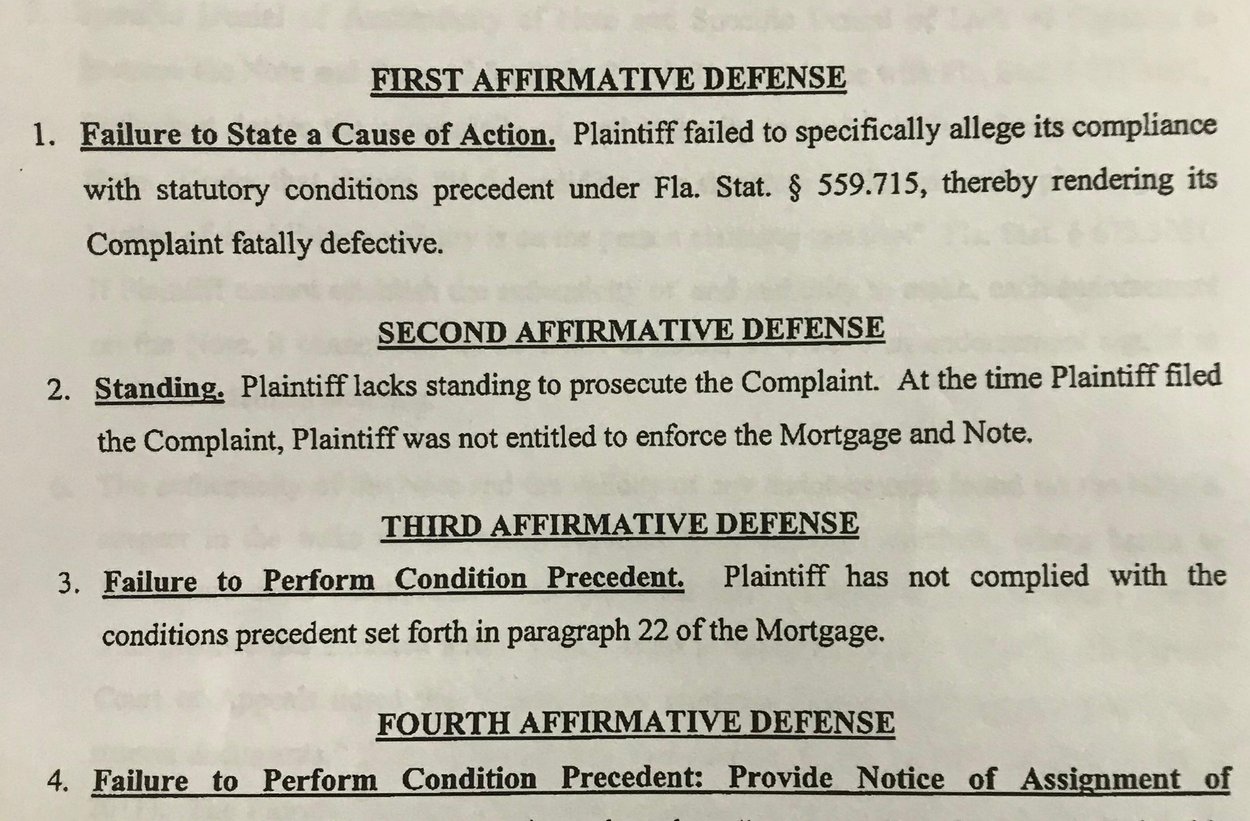
In Pennsylvania mortgage foreclosure actions, raising an affirmative defense based on life insurance typically occurs when a lender fails to credit proceeds from a credit life insurance policy, mismanages premium escrow payments, or breaches an agreement to maintain coverage upon a borrower's death. Asserted under Pennsylvania Rule of Civil Procedure 1030, these defenses can halt or defeat an in rem foreclosure action.
Legal Framework of Pennsylvania Foreclosure and Affirmative Defenses
Mortgage foreclosure actions in Pennsylvania are strictly governed by the Pennsylvania Rules of Civil Procedure (Pa.R.C.P. 1141 through 1150). Under Pa.R.C.P. 1141(a), a judicial mortgage foreclosure action is exclusively an in rem proceeding—meaning the action is against the property itself to satisfy a debt, rather than an in personam action seeking a personal monetary judgment against the borrower.
Because foreclosure actions are limited in scope, procedural rules tightly regulate how a defendant (whether the original borrower, a surviving spouse, or an executor of an estate) can respond to a complaint. When a dispute involves life insurance—such as credit life insurance purchased alongside the mortgage or optional mortgage protection insurance—the defense must be raised correctly within the responsive pleading.
Understanding Affirmative Defenses Under Pa.R.C.P. 1030
An affirmative defense does not merely deny the truth of the plaintiff’s allegations; instead, it asserts independent facts or legal grounds that, if proven, defeat or mitigate the lender's right to foreclose, even if the underlying mortgage default appears valid on its face. Under Pa.R.C.P. 1030, all affirmative defenses must be pleaded in a responsive pleading under the heading "New Matter."
Common affirmative defenses listed under Rule 1030 that frequently apply in life insurance foreclosure contexts include:
- Payment and Discharge: Asserting that the underlying mortgage debt was satisfied, or should have been satisfied, by the payout of a credit life insurance policy upon the co-borrower's or primary borrower's death.
- Estoppel and Promissory Estoppel: Demonstrating that the lender or servicer represented that life insurance coverage was active, accepted premiums, or promised to file a claim, leading the borrower to rely on that representation to their detriment.
- Fraud or Misrepresentation: Proving that the lender or its agent committed fraud in the sale, administration, or disclosures surrounding the life insurance policy tied to the loan.
- Failure of Consideration: Showing that premiums were collected for mortgage protection or credit life insurance, but no valid policy or coverage was actually provided by the lender or insurer.
- Illegality / Statutory Violations: Citing violations of state insurance laws, federal disclosure statutes, or pre-foreclosure notice laws.
Counterclaims vs. Affirmative Defenses (Pa.R.C.P. 1148)
A critical distinction in Pennsylvania foreclosure law is the restriction on counterclaims. Under Pa.R.C.P. 1148, a defendant may only assert a counterclaim in a mortgage foreclosure action if the claim arises from the same transaction or occurrence from which the plaintiff's cause of action arose (i.e., the creation of the mortgage contract itself).
If a servicer’s misconduct regarding a life insurance policy occurred years after loan origination during loan servicing, a judge might dismiss a counterclaim for monetary damages under Rule 1148. However, asserting the servicer’s failure to process insurance proceeds as an affirmative defense under Rule 1030 to prove the debt is paid or reduced remains legally viable.
Primary Life Insurance Defenses in Pennsylvania Foreclosure Actions
When a borrower dies and the lender initiates foreclosure despite the existence or promise of life insurance coverage, several affirmative defenses can be asserted under Pennsylvania law.
- Mortgage Default After Borrower Death
- Identify Life Insurance / Credit Life Defense
- Defense of Payment & Satisfaction
- Promissory Estoppel & Escrow Misconduct
- Statutory Violations (Act 6 / Act 91)
- Draft Answer & New Matter (Pa.R.C.P. 1030 / Pa.R.C.P. 1019)
1. Payment and Satisfaction via Credit Life Insurance
Credit life insurance is designed specifically to pay off or reduce a outstanding mortgage balance upon the death of an insured borrower. When a co-borrower dies and a credit life insurance policy was executed as part of the mortgage package:
- The obligation to pay the mortgage principle shifts to the insurer under the terms of the insurance contract.
- If the lender or loan servicer was designated as the primary beneficiary or policy administrator, the servicer has a legal duty to apply for and process those policy proceeds upon notice of the borrower's death.
- If the lender fails or refuses to submit the claim, or if the insurer pays the lender but the lender fails to credit the account, the surviving spouse or estate can assert Payment as an affirmative defense under Pa.R.C.P. 1030. Under Pennsylvania law, if the insurance proceeds equal or exceed the alleged default amount, the default is cured, eliminating the foundation of the foreclosure action.
2. Equitable Estoppel and Promissory Estoppel
In many mortgage servicing arrangements, lenders collect monthly insurance premiums as part of the total escrow amount. If a lender collects funds for a credit life or mortgage protection policy but fails to remit those premiums to the insurance carrier, causing the policy to lapse, the lender cannot profit from its own oversight by foreclosing on the home.
Under the doctrine of Equitable Estoppel, a lender is precluded from asserting a default if:
- The lender made a representation of fact (e.g., confirming that life insurance premiums were being collected and paid to maintain active coverage).
- The borrower reasonably relied on that representation.
- The borrower or their estate suffered detriment (e.g., loss of policy coverage resulting in foreclosure) due to that reliance.
Similarly, under Promissory Estoppel, if the loan servicer promised the surviving family members that foreclosure proceedings would be held in abeyance while the life insurance claim was being processed, but subsequently filed a foreclosure action anyway, this reliance can be pled in New Matter to bar the foreclosure.
3. Breach of Fiduciary Duty and Escrow Mismanagement
When a mortgage agreement places the duty of managing insurance escrow accounts on the lender or servicer, the servicer acts as an escrow agent. Under Pennsylvania law, an escrow agent owes a fiduciary duty to handle funds according to the escrow instructions.
If the servicer misapplies escrow funds meant for life insurance premiums, miscalculates monthly payments, or fails to notify the borrower of policy cancellation notices received from the insurer, the resulting default is directly attributable to the lender's breach. This breach can be asserted as an affirmative defense of Unclean Hands or Breach of Contract/Duty, preventing the lender from seeking equitable relief in foreclosure.
4. Violation of Pennsylvania Statutory Notice Requirements (Act 6 and Act 91)
Pennsylvania enforces mandatory pre-foreclosure notice laws designed to protect homeowners. Before a lender can file a foreclosure complaint on a residential mortgage, it must comply with two key statutes:
- Act 6 of 1974 (Loan Interest and Protection Law, 41 P.S. § 403): Requires a 30-day notice of intent to foreclose for residential mortgages, detailing the exact nature of the default and how to cure it.
- Act 91 of 1983 (Homeowners' Emergency Mortgage Assistance Act, 35 P.S. § 1680.401c): Requires lenders to issue an Act 91 Notice giving the homeowner notice of the right to apply for emergency mortgage assistance through the Pennsylvania Housing Finance Agency (PHFA).
If a default occurs following the death of an insured borrower because life insurance proceeds were delayed or mishandled, the lender must still strictly comply with Act 6 and Act 91 notice rules prior to suit. If the lender fails to issue proper notices to the personal representative of the estate or surviving co-owner, or fails to account for insurance credits in the itemized cure amount on the Act 91 notice, the defendant can raise Lack of Subject Matter Jurisdiction / Failure to Satisfy Statutory Conditions Precedent as an affirmative defense.
Procedural Rules: Pleading Under Pa.R.C.P. 1030 and 1019
Asserting an affirmative defense involving life insurance in Pennsylvania courts requires strict adherence to state pleading rules. Pennsylvania is a fact-pleading state, meaning generic legal conclusions are insufficient to survive legal challenge.
Specificity Requirements (Pa.R.C.P. 1019)
Under Pa.R.C.P. 1019(a), the material facts on which a defense is based must be stated in a concise and summary form. When pleading a life insurance defense in New Matter, the defendant must detail:
- The specific life insurance policy number, insurer name, and coverage amount.
- The date the policy was executed and how premiums were paid (e.g., line-item inclusion in monthly mortgage statements).
- The date of the insured's death and when notice/death certificates were provided to the lender or insurer.
- The specific actions or omissions of the lender (e.g., failure to submit claim forms, misapplication of insurance disbursements, or failure to maintain escrow).
Failure to plead specific facts can result in the court sustaining the lender's Preliminary Objections (under Pa.R.C.P. 1028) and striking the defense.
Risk of Waiver
Under Pa.R.C.P. 1032(a), a party waives all defenses and objections that are not presented in an Answer or an amended Answer under New Matter. If a surviving spouse or estate representative files an Answer that only admits or denies the paragraphs of the lender’s complaint, but fails to include a New Matter section asserting life insurance payment or estoppel, the affirmative defense is permanently waived.
- Pennsylvania Foreclosure Answer Timeline
- Day 0: Service of Foreclosure Summons & Complaint
- Day 1-20: Gather Mortgage Statements, Death Certificate, & Policy Documents
- Day 20: Deadline to File Answer with New Matter (Pa.R.C.P. 1030)
- Post-Day 20: Lender Files Motion for Summary Judgment if Defenses Not Pled
Key Evidentiary Requirements and Burden of Proof
In Pennsylvania civil litigation, the burden of proving an affirmative defense rests entirely on the party asserting it—the defendant.
To establish an affirmative defense based on life insurance in a foreclosure proceeding, the defendant must gather concrete documentary evidence during the discovery process governed by Pa.R.C.P. 4001 et seq.
Essential Documentary Evidence
- Policy Declarations Page and Master Agreement: Proof that a credit life, mortgage disability, or mortgage life policy was in force at the time of the borrower's death.
- Mortgage Closing Disclosures & HUD-1 Settlement Statements: Evidence showing that credit life insurance was selected, financed, or integrated into the initial loan terms.
- Monthly Servicing Escrow Statements: Statements reflecting recurring deductions for insurance premiums, establishing that the lender acted as the escrow collector.
- Proof of Notice of Loss: Written communication, certified mail receipts, or email records proving the lender or servicer was informed of the borrower’s death and provided with the death certificate.
- Claims Adjustment Correspondence: Letters from the insurance company indicating whether the claim was paid, denied, or never filed due to servicer inaction.
Comparative Analysis: Life Insurance Defenses in PA Foreclosure
The following table compares the primary life insurance affirmative defenses, their procedural grounds under Pennsylvania law, required evidence, and potential legal impact on foreclosure actions.
| Affirmative Defense | Governing Rule / Legal Basis | Primary Evidentiary Requirements | Legal Impact on Foreclosure Action |
|---|---|---|---|
| Payment & Satisfaction | Pa.R.C.P. 1030; Common Law Payment | Proof of policy payout, death certificate, notice of claim, mortgage ledger | Full dismissal of foreclosure if policy covers full balance; partial reduction of judgment if partial coverage. |
| Equitable Estoppel | Pa.R.C.P. 1030; Estoppel Case Law | Escrow statements showing premium collection, reliance communications | Bars lender from claiming default during period of reliance or servicer error. |
| Promissory Estoppel | Pa.R.C.P. 1030; Restatement (Second) of Contracts § 90 | Written/recorded promises by servicer to hold foreclosure during claim evaluation | Halts foreclosure proceedings until promised claim evaluation completes. |
| Failure of Consideration | Pa.R.C.P. 1030 | Closing docs showing fees paid for insurance, combined with lack of active coverage | Prevents lender from enforcing default derived from unprovided coverage terms. |
| Defective Act 6 / 91 Notice | 41 P.S. § 403; 35 P.S. § 1680.401c | Notice of Intent to Foreclose lacking accurate cure amounts or insurance credits | Dismissal of complaint without prejudice; forces lender to restart notice period. |
Step-by-Step Defense Guide for Surviving Spouses and Estates
When a sole borrower or co-borrower dies, surviving family members often face immediate financial and legal pressure. Follow these steps to preserve affirmative defenses if a lender initiates or threatens foreclosure in Pennsylvania.
Step 1: Secure All Insurance and Loan Records Immediately
Gather the original mortgage note, deed of trust, HUD-1 or Closing Disclosure, monthly mortgage statements, and all policy documents for life, credit life, or mortgage protection insurance. Confirm whether premiums were paid out-of-pocket or escrowed through the lender.
Step 2: Formally Notify the Servicer and Insurer in Writing
Send a written notification of the borrower’s death via certified mail with return receipt requested to both the mortgage servicer’s designated error resolution address (under RESPA 12 C.F.R. § 1024.35) and the life insurance company. Include a certified copy of the death certificate. Request formal claim paperwork immediately.
Step 3: Review Pre-Foreclosure Notices (Act 6 and Act 91 Notices)
If the lender issues an Act 91 Notice of Intent to Foreclose, check the stated default amount carefully. If the default total fails to reflect pending insurance claims or uncredited policy proceeds, document the discrepancy. Note that under Act 91 guidelines, homeowners have 33 days from the date of the notice to meet with a PHFA-approved credit counseling agency to stay foreclosure proceedings.
Step 4: File a Timely Responsive Pleading (Within 20 Days)
Under Pa.R.C.P. 1026, a defendant must file an Answer to the complaint within 20 days after service. Ensure that your defense attorney includes a robust New Matter section under Pa.R.C.P. 1030 detailing all factual grounds for payment, estoppel, escrow misconduct, or statutory notice defects.
Step 5: Conduct Targeted Discovery
Use Pennsylvania discovery tools (Interrogatories and Requests for Production of Documents under Pa.R.C.P. 4005 and 4009) to compel the lender to produce complete escrow accounting logs, insurance disbursement records, and internal notes regarding the life insurance claim administration.
Frequently Asked Questions
Can a lender in Pennsylvania foreclose while a credit life insurance claim is still pending?
If a credit life insurance policy is active and the claim is under active evaluation, foreclosing may violate servicing guidelines or contractual obligations. While some lenders attempt to proceed with judicial foreclosure, asserting Promissory Estoppel or Payment in New Matter allows the court to stay or dismiss the foreclosure action pending settlement of the insurance claim.
What happens if the lender collected life insurance premiums in escrow but let the policy lapse?
If the lender collected premiums via an escrow account but failed to remit payments to the insurer, the lender breached its fiduciary duty as an escrow agent. The homeowner or estate can raise Equitable Estoppel and Unclean Hands under Pa.R.C.P. 1030, preventing the lender from foreclosing on a default caused by its own failure to maintain coverage.
Is credit life insurance mandatory for residential mortgages in Pennsylvania?
No. Under federal and Pennsylvania law, credit life insurance cannot be required as a mandatory condition for loan approval. If a lender forced a borrower to purchase credit life insurance without proper TILA disclosures, the borrower may have affirmative defenses or counterclaims based on truth-in-lending violations.
What is the difference between an affirmative defense and a counterclaim in a PA foreclosure?
An affirmative defense (pled under Pa.R.C.P. 1030 New Matter) seeks to defeat or reduce the lender’s foreclosure claim. A counterclaim (pled under Pa.R.C.P. 1148) seeks affirmative monetary damages against the lender. Counterclaims in PA foreclosures are restricted to actions arising directly from the creation of the mortgage, whereas affirmative defenses can address ongoing servicing errors such as insurance claim handling.
How does Act 91 apply if the mortgage default occurred due to a borrower's death?
Act 91 requires lenders to provide written notice allowing homeowners to apply for emergency mortgage assistance through the PHFA before foreclosure can begin. If a surviving spouse or heir is entitled to assume the mortgage or is evaluating life insurance proceeds, the Act 91 notice provides a statutory window to seek assistance and challenge inaccurate default figures stated by the lender.
Practical Action Plan and Legal Recommendations
If you are facing a mortgage foreclosure in Pennsylvania involving life insurance or credit life insurance proceeds, immediate action is essential to preserve your rights:
- Do Not Ignore Court Papers: Pennsylvania foreclosure proceedings move quickly. Failing to respond to a complaint within 20 days can result in a default judgment against the property.
- Audit the Escrow and Claims Records: Request a complete loan transaction history from your servicer under RESPA (Qualified Written Request) to verify whether life insurance premiums were collected and credited accurately.
- Plead Defenses Specifically: Ensure all life insurance defenses are explicitly detailed in the New Matter section of your Answer under Pa.R.C.P. 1030 to prevent permanent waiver under Pa.R.C.P. 1032.
- Consult a Licensed Pennsylvania Attorney: Foreclosure defense, civil procedure, and insurance law intersect in complex ways. Work with an experienced Pennsylvania real estate litigation or foreclosure defense attorney to structure your pleadings correctly.
Disclaimer: This article provides general educational information regarding Pennsylvania civil procedure and foreclosure law. It does not constitute formal legal advice. Homeowners facing foreclosure should consult with a qualified attorney licensed in Pennsylvania to evaluate specific legal options.