Absolute liability in workers' compensation operates as a strict no-fault statutory framework where employers are financially responsible for workplace injuries and occupational illnesses regardless of whether they were negligent. This system prioritizes swift medical benefits and wage replacement for injured workers while trading away the employee's right to sue the employer for tort damages in standard negligence lawsuits.
Understanding the Foundation of Workers' Compensation
To fully grasp the concept of absolute liability—often referred to in administrative and legal contexts as strict liability or no-fault liability—one must examine the historic bargain that shaped modern labor law. Before the widespread adoption of workers' compensation statutes in the early 20th century, an injured employee seeking financial recovery had to file a civil lawsuit against their employer. This adversarial process required the worker to prove negligence, a monumental hurdle complicated by common-law defenses available to employers: contributory negligence, the fellow-servant rule, and assumption of risk.
Under these old doctrines, if a worker contributed even slightly to their own accident, if a coworker's carelessness played a role, or if the worker simply understood that the job was dangerous, the claim was routinely denied. Injured workers frequently received nothing, leading to severe financial destitution, while employers faced unpredictable and potentially catastrophic jury verdicts.
The legislative shift to workers' compensation introduced a compromise. Employers agreed to accept absolute financial responsibility for accidental injuries and illnesses arising out of and in the course of employment, stripping away the requirement to prove employer fault. In exchange, workers relinquished their right to sue their employers in court, accepting a predetermined, regulated schedule of benefits. This transformation replaced protracted litigation with an administrative system designed to deliver predictable, immediate relief.
The Mechanics of No-Fault Liability
The core principle distinguishing absolute or strict liability in workers' compensation from traditional tort law is the complete irrelevance of fault. In a standard personal injury case, such as a slip-and-fall in a grocery store, the plaintiff must prove that the property owner breached a duty of care. In the workers' compensation ecosystem, this burden of proof vanishes regarding employer negligence.
If an employee sustains an injury that meets statutory definitions—meaning it occurred while they were performing work duties, furthering the employer's business, or acting under the direction of management—the employer and their insurance carrier must pay, period. It does not matter if the employer followed every safety regulation, provided state-of-the-art equipment, and trained the employee meticulously. If the hazard materialized on the job, liability attaches.
Conversely, the worker's own ordinary carelessness, momentary lapses in judgment, or clumsiness do not bar them from receiving benefits. If a warehouse worker drops a box on their foot because they momentarily looked away, that simple human error is legally irrelevant to their right to compensation. The system recognizes that human beings are fallible and that the operational risks of enterprise should be borne by the business rather than the injured individual worker.
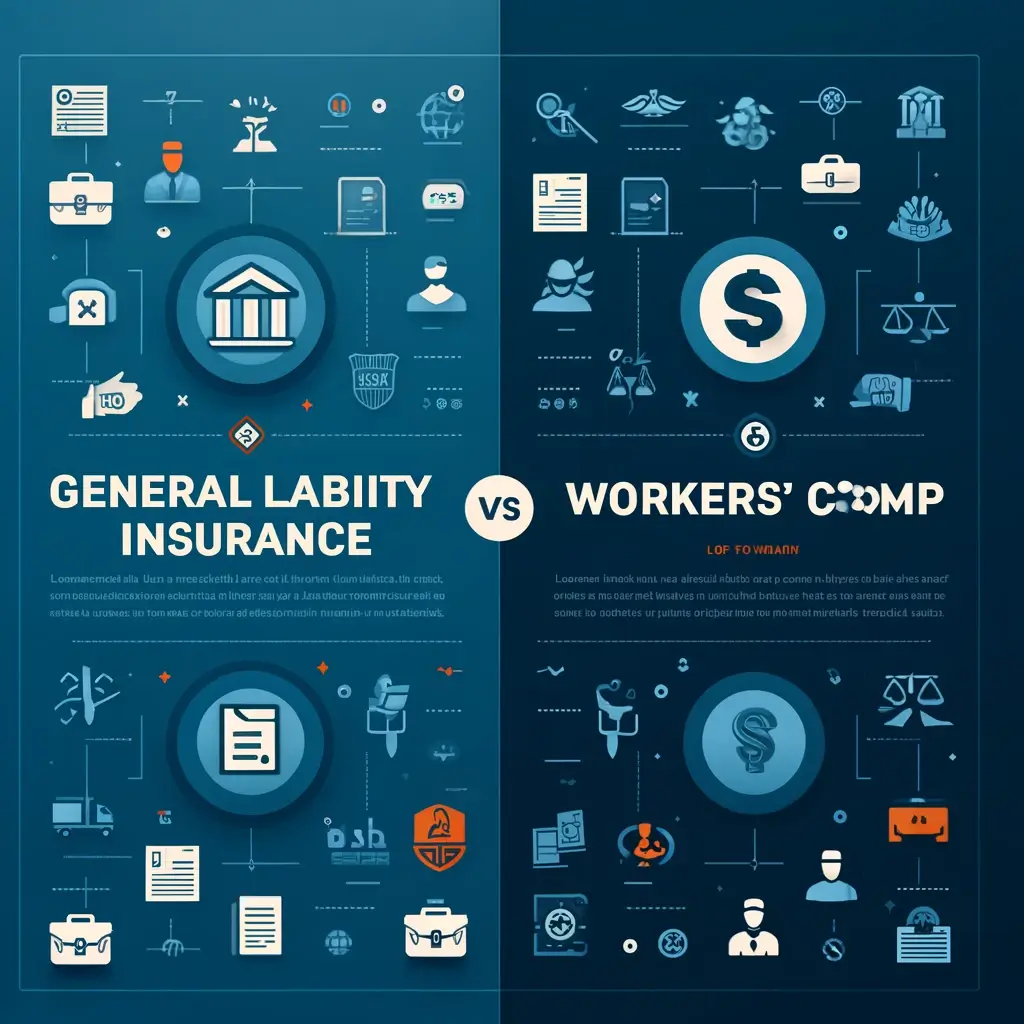
| Legal Dimension | Workers' Compensation (Strict Liability) | Traditional Tort Law (Negligence) |
|---|---|---|
| Burden of Proof | Proof of employment and injury causation | Proof of duty, breach, causation, and damages |
| Employer Fault | Irrelevant; no negligence required to establish claims | Central; plaintiff must prove negligence |
| Employee Negligence | Generally barred as a defense (ordinary negligence) | Reduces or bars recovery via comparative/contributory negligence |
| Available Remedies | Regulated statutory benefits (medical, wage replacement) | Unlimited damages (economic, noneconomic, punitive) |
| Resolution Venue | Administrative boards and specialized commissions | Civil court system before judges and juries |
Statutory Boundaries: Arising Out Of and In the Course of Employment
While absolute liability eliminates the need to prove employer negligence, it does not mean that every injury suffered by an employee while on a company's premises is automatically compensable. To trigger liability, claimants must satisfy the statutory threshold encapsulated in two interlocking phrases: "arising out of" and "in the course of" employment.
Arising Out Of Employment
This phrase addresses the origin and cause of the injury. There must be a direct causal link between the conditions or requirements of the employment and the resulting harm. Courts typically evaluate whether the risk was an inherent hazard of the job, an incidental risk, or a personal risk brought into the workplace by the employee. For example, if a machine operator's hand is caught in an unshielded press, the injury clearly arises out of the employment because operating the press is a core job duty.
In the Course of Employment
This phrase refers to the time, place, and circumstances under which the injury occurred. An injury is generally considered to have occurred in the course of employment if it happens while the worker is actively performing job duties during working hours, at the employer's workplace, or while engaging in an activity reasonably incidental to their employment.
- Premises Rule: Injuries occurring on company property during work hours or reasonable pre- and post-shift intervals usually satisfy this requirement.
- Traveling Employees: Workers whose jobs require travel, such as sales representatives or long-haul truckers, operate under extended course-of-employment rules.
- Deviations and Frolics: If an employee leaves the workplace or abandons their duties for personal reasons unrelated to work—such as running an unauthorized personal errand—injuries sustained during that deviation generally fall outside the scope of coverage.
Statutory Exceptions and Defenses to Strict Liability
Even within a strict no-fault framework, statutory boundaries exist. Employers and insurance carriers can and do deny claims when specific, narrowly defined exceptions apply. Because absolute liability is designed to cover operational risks, acts that fall entirely outside normal human behavior, intentional misconduct, or illegal activities are routinely excluded.
Intentional Self-Inflicted Injury
If an employee purposefully harms themselves to collect benefits, the claim is barred. Fraudulent intent destroys the foundational premise of an accidental workplace injury. However, proving an injury was intentionally self-inflicted rests heavily on the employer, and meeting this evidentiary standard is exceptionally difficult.
Intoxication and Substance Abuse
Most workers' compensation statutes contain strict provisions regarding drugs and alcohol. If an employee's intoxication—whether by alcohol or illegal drugs, or the abuse of prescription medication—is the proximate cause of the injury, benefits can be legally denied. Many jurisdictions employ statutory presumptions or require drug testing immediately following an industrial accident. If an injured worker tests positive above legal thresholds, the burden shifts to the employee to prove that the substance did not impair their faculties or cause the accident.
Violation of Safety Rules and Gross Misconduct
While ordinary negligence by an employee does not bar recovery, willful misconduct or intentional violation of known, established, and consistently enforced safety rules can sometimes defeat a claim or reduce benefits. For instance, if an employer mandates the use of a specific harness and explicitly forbids working at heights without it, and an employee consciously chooses to bypass the safety gear to save time, the employer may argue that the employee stepped outside the sphere of employment. However, courts interpret these defenses restrictively; mere disobedience of a work rule rarely constitutes a complete bar unless it amounts to abandonment of the job duties.
The Exclusive Remedy Doctrine
The concept of absolute liability is inextricably linked to the exclusive remedy doctrine. This legal principle serves as the legislative trade-off protecting businesses from crippling civil litigation. Under standard workers' compensation statutes, the remedies provided under the act are the exclusive remedy available to an employee against their employer for a workplace injury.
An injured worker cannot collect workers' compensation benefits and simultaneously file a personal injury lawsuit against their employer seeking pain and suffering damages, emotional distress awards, or punitive damages. This statutory shield protects employers from unpredictable jury awards, keeping insurance premiums stable and ensuring that businesses can budget for workforce risk.
Exceptions to the Exclusive Remedy Rule
Like most legal doctrines, the exclusive remedy rule features critical exceptions where an employee may pierce the shield and sue their employer in civil court:
- Intentional Torts: If an employer engages in intentional, deliberate conduct designed to cause harm to an employee—such as physically assaulting a worker or knowingly forcing an employee to work in conditions with a near-certainty of death or severe injury—courts may permit a civil lawsuit outside the workers' compensation system.
- Employer Dual Capacity: In rare instances, if an employer occupies a secondary relationship with the employee—such as acting as a medical product manufacturer whose defective device injured the worker on the assembly line—the dual-capacity doctrine may allow a civil suit against the employer in their secondary capacity.
- Failure to Secure Insurance: In many states, if an employer is legally required to carry workers' compensation insurance but intentionally fails to do so, the exclusive remedy protection is forfeited. The injured worker gains the right to sue the employer in civil tort with the added advantage of statutory presumptions favoring the plaintiff.
Third-Party Liability and Subrogation
While absolute liability bars tort lawsuits against direct employers, it does not prevent injured workers from pursuing claims against third parties whose negligence contributed to the workplace accident. These are commonly known as third-party liability claims.
Consider a delivery driver who is rear-ended by a distracted motorist while driving a company van on official business. The driver is entitled to absolute liability workers' compensation benefits from their employer's insurance carrier immediately, regardless of who caused the crash. However, the driver also holds a valid tort claim against the negligent third-party driver.
In such scenarios, the injured worker can pursue both avenues: collecting medical and wage benefits through workers' compensation while filing a civil lawsuit against the at-fault third party for full damages, including pain and suffering. If the worker recovers financial damages from the third party, the workers' compensation insurer typically holds a legal right known as subrogation. This allows the insurance carrier to recoup a portion of the benefits they paid out from the third-party settlement, preventing double recovery by the employee.
Financial and Operational Impact on Employers
Operating under a strict liability system requires employers to manage risk proactively through mandatory insurance mechanisms. Because employers cannot defend against claims by proving they were careful, financial planning hinges on risk mitigation, safety engineering, and insurance management.
- Insurance Premiums: Employers purchase workers' compensation insurance policies priced based on payroll size, industry classification risk codes, and their Experience Modification Rate (EMR). An EMR reflects the employer's past accident frequency and severity compared to industry averages.
- Safety Programs: Because absolute liability means accidents cost money regardless of fault, proactive employers invest heavily in ergonomic workplace design, continuous safety training, and rigorous equipment maintenance to reduce claim frequency and control long-term insurance costs.
- Return-to-Work Initiatives: Managing absolute liability efficiently involves establishing structured light-duty or transitional work programs. Bringing injured employees back to modified duties as soon as medically cleared minimizes indemnity (wage replacement) payouts and accelerates overall recovery.
Frequently Asked Questions
Does absolute liability mean an employer must pay for any injury happening at work?
No. While employer fault is not required, the injury must still "arise out of" and occur "in the course of" employment. Injuries resulting from personal escapades, illegal acts, severe intoxication, or intentional self-inflicted harm are excluded from coverage.
Can an employee sue their boss for negligence if the workplace was unsafe?
Generally, no. Under the exclusive remedy doctrine, workers' compensation is the sole legal remedy for workplace injuries caused by ordinary employer negligence. Employees cannot sue their employers for pain and suffering in civil court except under very narrow circumstances involving intentional torts or failure to carry mandated insurance.
What happens if an employee is injured due to their own clumsiness?
The employee is still fully covered. Ordinary negligence, clumsiness, or momentary inattention by the worker does not bar them from receiving workers' compensation benefits under a strict liability system.
How does strict liability affect independent contractors?
Workers' compensation laws typically apply only to legal employees, not independent contractors. However, determining whether a worker is an employee or an independent contractor involves complex legal tests examining control, supervision, and economic dependence. Misclassifying workers can expose businesses to severe penalties and uninsured liability.
Are occupational diseases covered under absolute liability?
Yes. Occupational illnesses—such as black lung disease in miners, carpal tunnel syndrome in administrative workers, or chemical-exposure cancers—are compensable under workers' compensation if medical evidence establishes that the condition was caused by workplace exposures.
Conclusion
Absolute liability in workers' compensation remains a foundational pillar of modern labor relations, balancing the immediate financial security of injured workers against the predictable liability exposure of employers. By removing fault from the equation, the system replaces costly, adversarial litigation with streamlined administrative relief. Navigating this framework requires a thorough understanding of statutory definitions, causal thresholds, exclusive remedies, and proactive safety management to protect both organizational solvency and worker well-being.