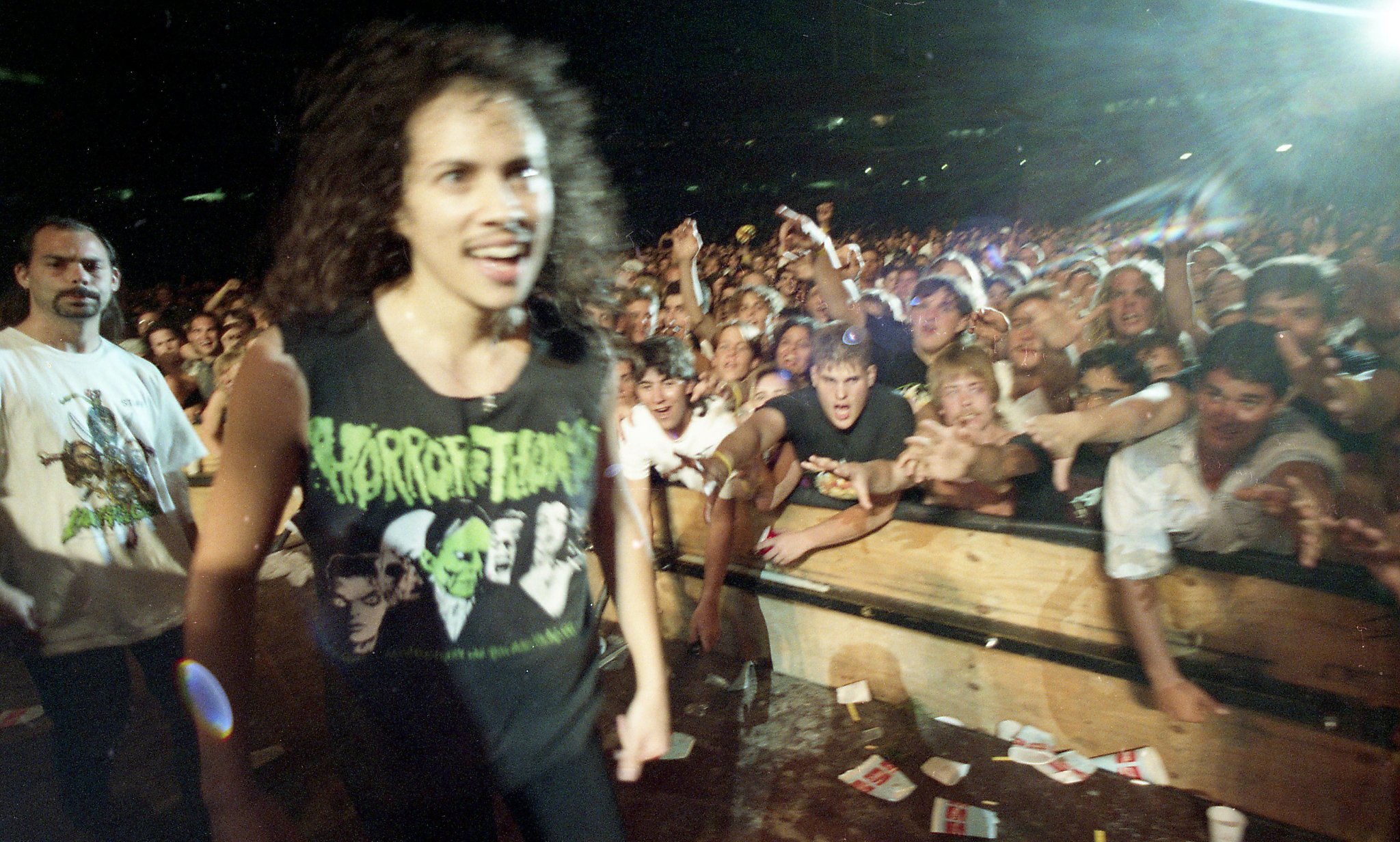
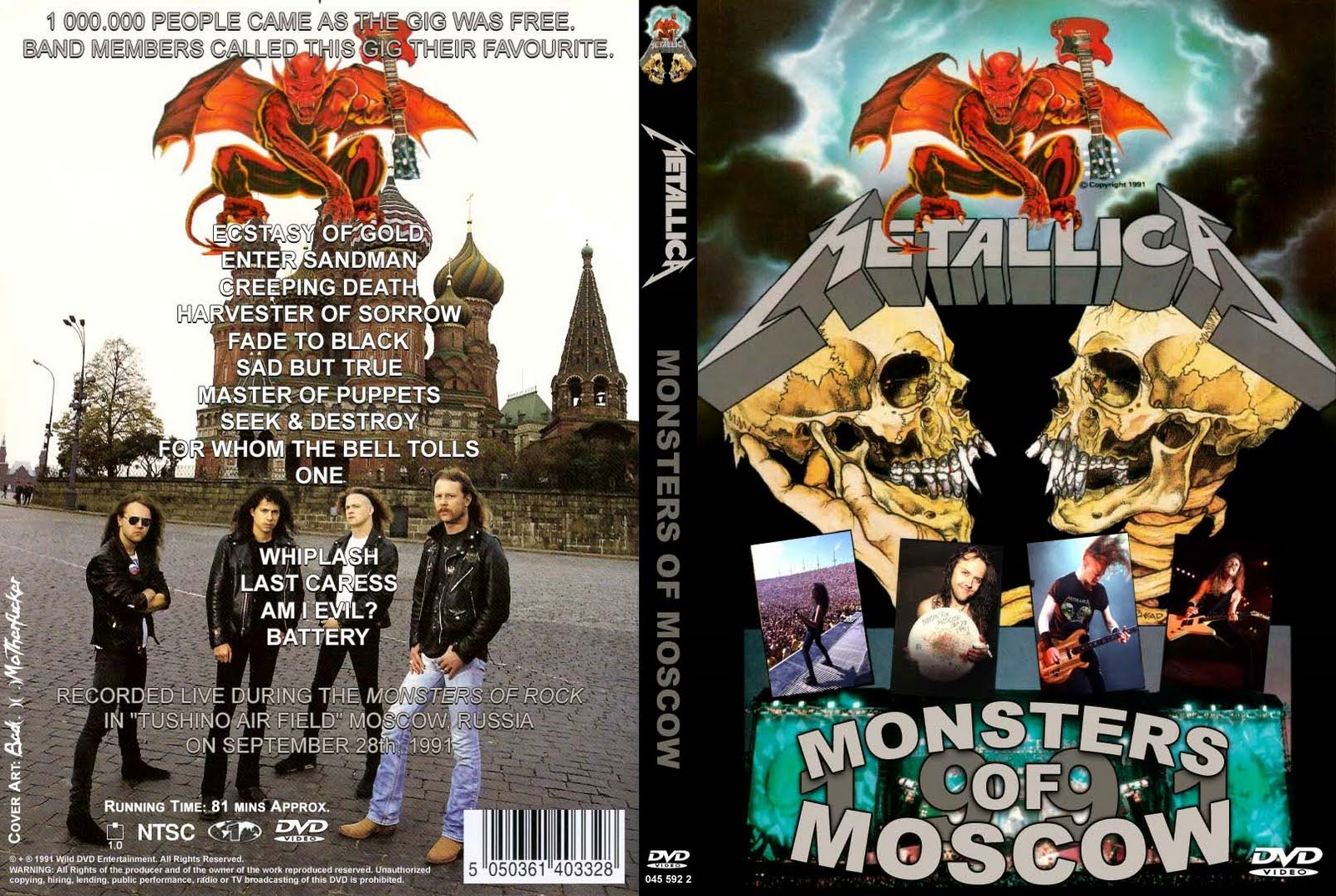
Metallica’s performance of "Enter Sandman" at the Monsters of Rock festival in Moscow on September 28, 1991, stands as one of the most culturally significant and massive live rock music events in history. Occurring just days after the failed August Coup and the impending collapse of the Soviet Union, the concert drew an estimated crowd of over 500,000 people, symbolizing the sudden influx of Western culture and personal freedom into a rapidly changing nation.
The Historical and Geopolitical Backdrop of September 1991
To truly understand the weight of Metallica playing "Enter Sandman" in Moscow, one must examine the extraordinary sociopolitical atmosphere of the Soviet Union in the autumn of 1991. Mikhail Gorbachev’s policies of glasnost (openness) and perestroika (restructuring) had dismantled decades of severe state censorship, opening the floodgates to Western media, ideology, and music that had previously been smuggled in on illicit cassette tapes.
However, the political landscape remained intensely volatile. Just weeks prior to the concert, hardline communists attempted a coup d'état against Gorbachev, which ultimately failed due to massive civilian resistance led by Boris Yeltsin. By late September, the USSR was in its death throes, dissolving into independent republics. Into this vacuum of institutional authority stepped Monsters of Rock, an open-air heavy metal festival staged at the Tushino Airfield. It was not merely a concert; it was a physical manifestation of a new era, offering Soviet youth a taste of Western counterculture on a scale they had never experienced.
The Scale of the Tushino Airfield Crowd
Estimating crowd sizes for massive historical events is notoriously difficult, but contemporary reports, promoter estimates, and military involvement suggest that the Tushino Airfield gathering was staggering. Estimates routinely range from 500,000 to over 1.6 million people, making it one of the largest concert attendances in human history.
The logistical nightmare of handling such a massive influx of people fell heavily on the Soviet military and militia forces, who were present in tens of thousands to maintain order. Unlike Western security forces, Soviet internal troops and OMON (special purpose militia) were accustomed to managing civil unrest rather than rock concert mosh pits. This created a stark visual contrast: thousands of Soviet soldiers standing shoulder-to-shoulder with long-haired headbangers, frequently joining in the celebration rather than suppressing it.
1. The Performance Happened Days After the Collapse of the Soviet State Apparatus
The timing of the Monsters of Rock tour could not have been more synchronized with global history. The festival took place roughly one month after the August 1991 coup attempt fractured the central government's control, and less than three months before the official dissolution of the Soviet Union in December 1991.
For the hundreds of thousands of young Soviet citizens in attendance, heavy metal music had long been treated as a subversive, dangerous Western import by the Brezhnev-era establishment. Under the old regime, listening to Metallica or Iron Maiden meant risking expulsion from university, loss of employment, or police harassment. By September 1991, the ideological walls had crumbled. When James Hetfield stepped up to the microphone to deliver the opening crunch of "Enter Sandman," he wasn't just playing a track from the newly released Black Album; he was soundtracking the final burial of the Iron Curtain.
2. It Marked the Live Live Debut Era of the "Black Album" in the Eastern Bloc
Released on August 12, 1991—just weeks before the Moscow concert—Metallica's self-titled fifth album (commonly known as the Black Album) represented a massive stylistic shift. The band moved away from the complex, sprawling thrash metal epics of ...And Justice for All toward a more streamlined, groove-oriented, and commercially accessible hard rock sound.
"Enter Sandman" served as the lead single and the ultimate catalyst for this global transformation. Bringing this brand-new, radio-friendly yet heavy anthem straight to the heart of Moscow meant that Soviet fans were experiencing Metallica's modern era in real-time alongside Western fans. The rapid global saturation of the Black Album collided head-on with a population hungry for contemporary Western culture, instantly cementing "Enter Sandman" as an anthem of liberation for a generation of Russian youth.
3. The Crowd Size Rivals the Largest Gatherings in Concert History
While exact numbers remain debated by historians and promoters, the Tushino Airfield audience is universally recognized as one of the largest ever assembled for a rock concert. Sharing the bill with AC/DC, Pantera, The Black Crowes, and Soviet band E.S.T., Metallica co-headlined an event that drew a sea of humanity stretching as far as the eye could see.
| Event / Concert | Location | Estimated Attendance | Year |
|---|---|---|---|
| Monsters of Rock (Tushino Airfield) | Moscow, USSR | 500,000 – 1,600,000 | 1991 |
| AC/DC (Monsters of Rock) | Moscow, USSR | 500,000 – 1,500,000 | 1991 |
| Rod Stewart (Copacabana Beach) | Rio de Janeiro, Brazil | 3,500,000 | 1994 |
| Jean-Michel Jarre (Moscow State University) | Moscow, Russia | 3,500,000 | 1997 |
| The Rolling Stones (Copacabana Beach) | Rio de Janeiro, Brazil | 1,500,000 | 2006 |
As illustrated in the table above, while coastal mega-concerts in Brazil later claimed higher peaks, Tushino Airfield remains the defining rock festival of the post-Cold War transition era, representing an unprecedented convergence of geopolitical upheaval and mass entertainment.
4. Security and Military Presence Created a Surreal Dynamic
One of the most defining visual elements of the Moscow 1991 concert was the heavy integration of Soviet armed forces into the event perimeter. Rather than private stadium security, the crowd was managed by vast phalanxes of Soviet soldiers, militsiya (police), and OMON riot police.
In archival footage of "Enter Sandman," young soldiers can be seen stationed facing the crowd, batons in hand, attempting to maintain barriers against a surging sea of humanity. Yet, as the energy of the performance escalated, many of these young conscripts—who were often close in age to the fans—began nodding their heads, smiling, and participating in the atmosphere. The concert became a rare space where the traditional instruments of state suppression and the symbols of Western capitalist youth culture harmonized, capturing the peaceful dissolution of hostilities.
5. The Event Catalyzed the Modern Russian Rock and Metal Infrastructure
Before 1991, rock music in the Soviet Union existed primarily underground, operating through the magnitizdat culture of home-taped cassette distribution and unsanctioned apartment concerts (kvartirniki). Large-scale Western stadium tours were non-existent.
The success of the Tushino Airfield festival proved that Russia possessed an immense, untapped commercial market for international rock and metal acts. It paved the way for subsequent major tours, transformed how state authorities permitted large public gatherings, and gave local promoters the blueprint for staging arena-scale rock events. For Russian musicians who had spent the 1980s hiding their instruments and playing for underground crowds, seeing Metallica command half a million people in broad daylight validated their entire artistic struggle.
Frequently Asked Questions
Who else performed at the Moscow 1991 Monsters of Rock festival?
The festival featured a powerhouse lineup designed to showcase the pinnacle of international hard rock alongside local talent. Metallica co-headlined alongside Australian rock legends AC/DC. The supporting bill included American groove metal pioneers Pantera, blues-rock outfit The Black Crowes, and Soviet heavy metal band E.S.T. (Er Sergei Timofeev).
How did Metallica manage to get permission to play in Moscow in 1991?
The tour was originally planned well before the August coup as part of the established Monsters of Rock festival franchise expanding into Eastern Europe. Despite the sudden political turmoil, the promoters, management, and local authorities decided to proceed with the event, viewing it as a celebration of newfound democratic freedoms and international cultural exchange.
What equipment and production challenges did the band face?
Staging a concert of that magnitude in a post-Soviet economy presented immense logistical hurdles. Transporting massive amounts of stage lighting, high-end amplification, and professional sound reinforcement equipment into Moscow required navigating complex customs regulations, deteriorating transportation infrastructure, and logistical coordination with local military personnel.
Why is the Tushino Airfield concert considered a turning point for music history?
It marked the definitive end of the cultural blockade imposed by the Iron Curtain. For decades, Soviet youth were denied access to Western counterculture. The sheer size of the Tushino audience proved that music could transcend ideological boundaries, serving as a cultural milestone that symbolized the final collapse of the Cold War divide.
Is there an official video recording of "Enter Sandman" from this concert?
Yes. Professional multi-camera footage of Metallica's entire set, including "Enter Sandman," was captured and later released on home video formats, as well as featured in documentaries and archival retrospectives. The footage remains one of the most widely viewed live performance clips in rock history.
Conclusion and Legacy
The performance of "Enter Sandman" at Tushino Airfield in Moscow on September 28, 1991, transcended the boundaries of a standard heavy metal concert. It captured a fleeting, monumental intersection of world history and popular culture, marking the exact moment the Soviet Union's youth stepped out of the ideological shadows and into the global rock community. For researchers, music historians, and fans alike, the event remains an enduring testament to the unifying power of music during times of radical societal transformation.