Term life insurance provides a dedicated, cost-effective financial safety net by paying a guaranteed tax-free death benefit to designated beneficiaries if the insured passes away during a specified period. It remains an essential cornerstone of personal financial planning, offering vital protection for families paying off mortgages, replacing lost employment income, and securing long-term educational milestones without locking the policyholder into expensive, permanent investments.
Understanding Term Life Insurance: Core Concepts and Mechanics
Before examining why term life insurance matters, it is vital to understand how the product operates within the broader insurance landscape. Unlike whole life or universal life policies, which combine a death benefit with an investment or cash-value component, term life insurance is pure risk protection. You purchase a policy for a specific duration—typically 10, 15, 20, 25, or 30 years—and pay a fixed monthly or annual premium for that duration.
If you pass away while the policy is active, your beneficiaries receive the face value of the policy tax-free. If you outlive the term, the coverage expires, and no payout is made unless you have a specialized rider, such as a return-of-premium rider. Because these policies do not accumulate cash value or require complex investment management, their administrative costs are low. This structural simplicity makes term insurance significantly more affordable than permanent insurance, allowing budget-conscious families to secure high coverage amounts precisely when their financial liabilities peak.
Reason 1: Income Replacement for Dependents
The most compelling justification for purchasing a policy involves safeguarding your family's daily standard of living through dependable income replacement. When an income earner dies unexpectedly, the surviving family members face immediate emotional distress compounded by severe financial vulnerability.
Calculating Your Family's Financial Dependency Window
Financial advisors frequently recommend coverage amounts equal to 10 to 12 times your annual gross income, though a more precise calculation requires analyzing your household's unique dependency window. This window represents the exact number of years until your youngest dependent becomes financially independent, or the duration until your surviving spouse reaches retirement age.
For example, if you have a toddler and a newborn, your financial exposure spans roughly two decades. A 20-year or 30-year term policy ensures that your annual salary—adjusted for inflation and future wage growth—will continue flowing into the household economy even if you are no longer there to earn it. This cash flow prevents families from facing catastrophic lifestyle disruptions, forced relocations, or the immediate necessity for a grieving partner to work multiple jobs while trying to raise young children.
Factoring in Hidden Domestic Contributions
Income replacement calculations must also account for non-wage contributions, such as childcare, home maintenance, and household management. If a stay-at-home parent passes away, the surviving partner must often pay out-of-pocket for professional daycare, cleaning services, and meal preparation. Term life insurance provides the liquidity required to absorb these sudden economic shocks, ensuring that surviving family members can maintain stability during a transition period.
Reason 2: Covering Major Long-Term Debts and Liabilities
Modern life often requires taking on significant long-term debt, most notably a residential mortgage, student loans, or small business obligations. These liabilities do not vanish upon a borrower's death; instead, they become legal burdens on the deceased person's estate, potentially forcing heirs to liquidate assets or sell the family home under distressed conditions.
Protecting the Family Homestead
Securing a mortgage is frequently the primary catalyst for buying a term life insurance policy. If a primary breadwinner dies prematurely with an outstanding 30-year mortgage balance, surviving relatives may struggle to service the monthly mortgage payments.
By aligning the duration of your term life insurance policy with the amortization schedule of your mortgage—such pairing a 30-year term policy with a 30-year home loan—you ensure that an untimely death triggers an immediate lump-sum payout. Beneficiaries can use these funds to clear the mortgage balance entirely, guaranteeing secure housing and eliminating a major monthly expense precisely when household income has plummeted.
Handling Unsecured and Business Debt
Beyond real estate, individuals often carry personal guarantees on small business loans, private student loans, or vehicle financing. Creditors can pursue an estate for these debts, depleting assets that would otherwise support surviving dependents.
Term life insurance creates an instant pool of liquidity specifically earmarked to extinguish these obligations. This protection prevents creditors from forcing a fire sale of family investments, retirement accounts, or business assets.
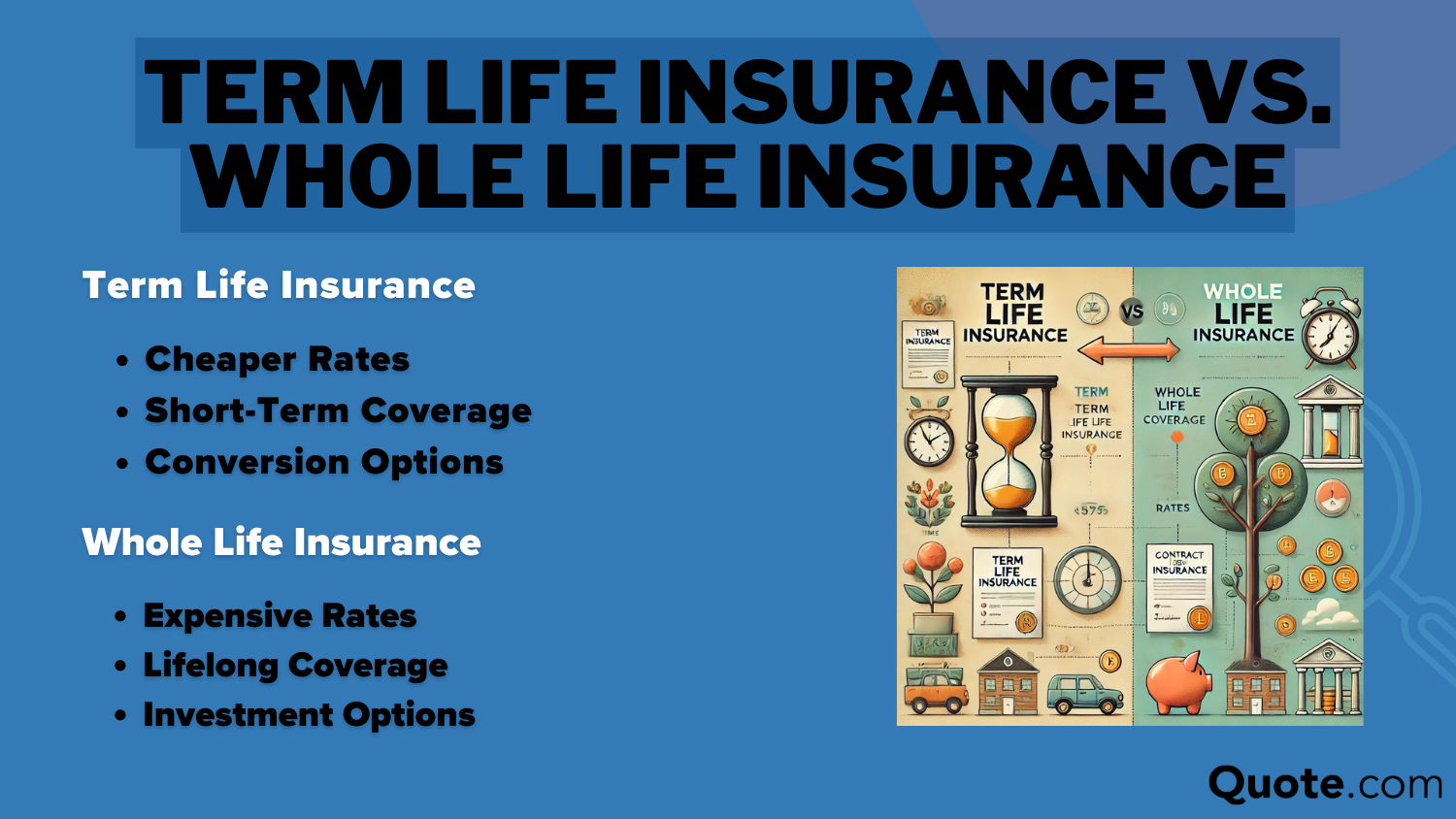
| Feature / Consideration | Term Life Insurance | Permanent Life Insurance (Whole/Universal) |
|---|---|---|
| Duration | Fixed periods (10 to 30 years) | Lifelong coverage (to age 100 or beyond) |
| Cash Value | None; pure risk protection | Builds cash value against which you can borrow |
| Cost | Highly affordable; lowest initial premiums | Significantly higher premiums due to investment features |
| Primary Use Case | Income replacement and debt protection during peak liability years | Estate planning, lifelong final expense coverage, permanent wealth transfer |
| Flexibility | High initial coverage for lower out-of-pocket cost | Lower initial coverage per dollar due to savings component |
Reason 3: Funding Future Educational Milestones and Major Goals
Beyond covering baseline survival costs and paying off debt, families must plan for long-term aspirations, such as higher education funding for children and grandchildren. The cost of attending college or university continues to rise, making advance financial planning critical.
Securing Guaranteed Tuition Funds
Higher education represents one of the largest discretionary investments a family will make. If an income earner dies before children reach college age, tuition savings plans like 529 accounts often stall due to depleted household contributions.
A well-structured term life insurance policy acts as a guaranteed backstop for educational goals. The death benefit can be placed into a trust or managed directly by a surviving guardian to fund tuition, room, board, and textbooks. This guarantees that children can pursue their academic and career aspirations without having to abandon their education due to financial hardship.
Affordability as a Strategic Advantage
The financial flexibility of term insurance allows younger adults to purchase substantial death benefits—such as $500,000 to $1,000,000—at a time when their cash flow is often constrained by mortgages, childcare, and early-career expenses.
By choosing term insurance over permanent options, consumers avoid paying steep premiums for investment features they may not need. This leaves more disposable income available for direct investments, retirement accounts, and everyday living expenses, maximizing overall financial health.
Evaluating Policy Types, Riders, and Underwriting Requirements
To maximize the effectiveness of a term life insurance policy, applicants must navigate several structural choices and underwriting variables. Understanding these components helps prevent costly coverage gaps.
Level Term vs. Decreasing Term
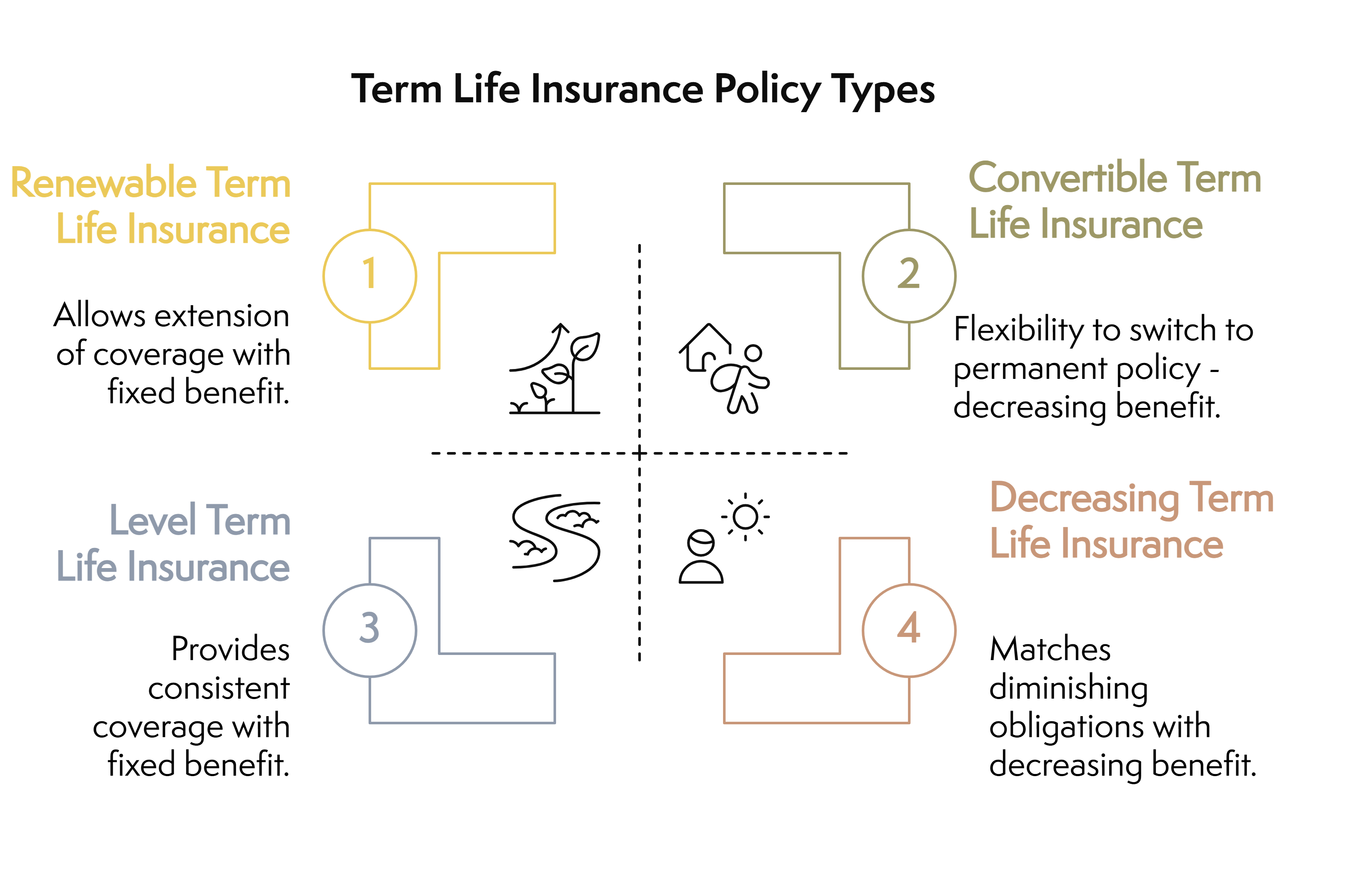
- Level Term: The most common form of term insurance, where both the premium payments and the death benefit remain constant throughout the duration of the policy. This provides predictable budgeting and stable protection.
- Decreasing Term: Often marketed alongside mortgages, the death benefit decreases annually while premiums typically remain flat. This structure aligns closely with amortizing loans but offers diminishing utility if your financial needs shift.
Essential Policy Riders to Consider
Insurance companies offer optional policy enhancements, known as riders, which customize the core contract:
- Conversion Rider: Permits the policyholder to convert all or part of their term policy into a permanent life insurance policy before a specific age or expiration date, without undergoing a new medical exam or proving insurability.
- Waiver of Premium: Waives future premium payments if the insured becomes totally and permanently disabled due to illness or injury.
- Accelerated Death Benefit: Allows the policyholder to access a portion of the death benefit early if diagnosed with a terminal illness, helping to cover mounting medical bills.
The Underwriting and Medical Examination Process
Securing a favorable premium rate depends heavily on underwriting. Insurers evaluate your mortality risk by examining:
- Age and Gender: Younger applicants receive lower rates because statistical life expectancy is higher.
- Health History: Medical records, prescription history, and family health background are rigorously reviewed.
- Lifestyle Factors: Tobacco use, hazardous hobbies (such as skydiving or private aviation), and driving records directly influence pricing tiers.
Applicants should complete policies while young and healthy to lock in the lowest possible rates, as premiums increase with every year of age.
Frequently Asked Questions
What happens when a term life insurance policy expires?
When the term expires, coverage terminates automatically, and premium payments cease. You will no longer have a death benefit unless you renew the policy (often at significantly higher annual rates based on your attained age), convert it to a permanent policy if you purchased a conversion rider, or apply for a brand-new policy based on your current age and health status.
Is term life insurance better than whole life insurance?
Neither product is universally superior; they serve completely different purposes. Term life insurance is ideal for temporary needs like income replacement and mortgage protection because it offers maximum coverage for minimal cost. Whole life insurance is designed for permanent needs, such as lifelong estate planning, final expenses, or building tax-advantaged cash value over decades.
Can I get term life insurance without a medical exam?
Yes, many insurance providers offer "no-exam" or accelerated underwriting policies. These products rely on digital databases, prescription history checks, and electronic medical records to approve coverage quickly. However, policies that require a physical paramedical exam often offer lower pricing tiers for individuals who are in excellent health.
How much term life insurance do I actually need?
A standard benchmark is multiplying your annual income by 10 to 12, then adding specific financial obligations such as remaining mortgage balances, estimated college tuition per child, and final expenses, while subtracting existing liquid savings and life insurance policies you already own.
Can I have multiple term life insurance policies at the same time?
Yes. This strategy, known as "laddering," involves purchasing multiple policies with different expiration dates and face values to match your declining financial obligations over time. For example, you might buy a 30-year policy for long-term mortgage protection, a 20-year policy for income replacement while children are young, and a 10-year policy for specific business debts.
Next Steps and Actionable Recommendations
Evaluating your family's financial vulnerabilities is the crucial first step toward securing appropriate protection. Start by tallying your outstanding debts, estimating your annual income replacement needs through the end of your dependency window, and factoring in future educational goals.
Request quotes from multiple reputable, highly-rated insurance carriers to compare premiums and underwriting criteria. Because rates increase with age and unexpected health developments, locking in a term life insurance policy sooner rather than later ensures your loved ones remain financially protected against unforeseen circumstances.