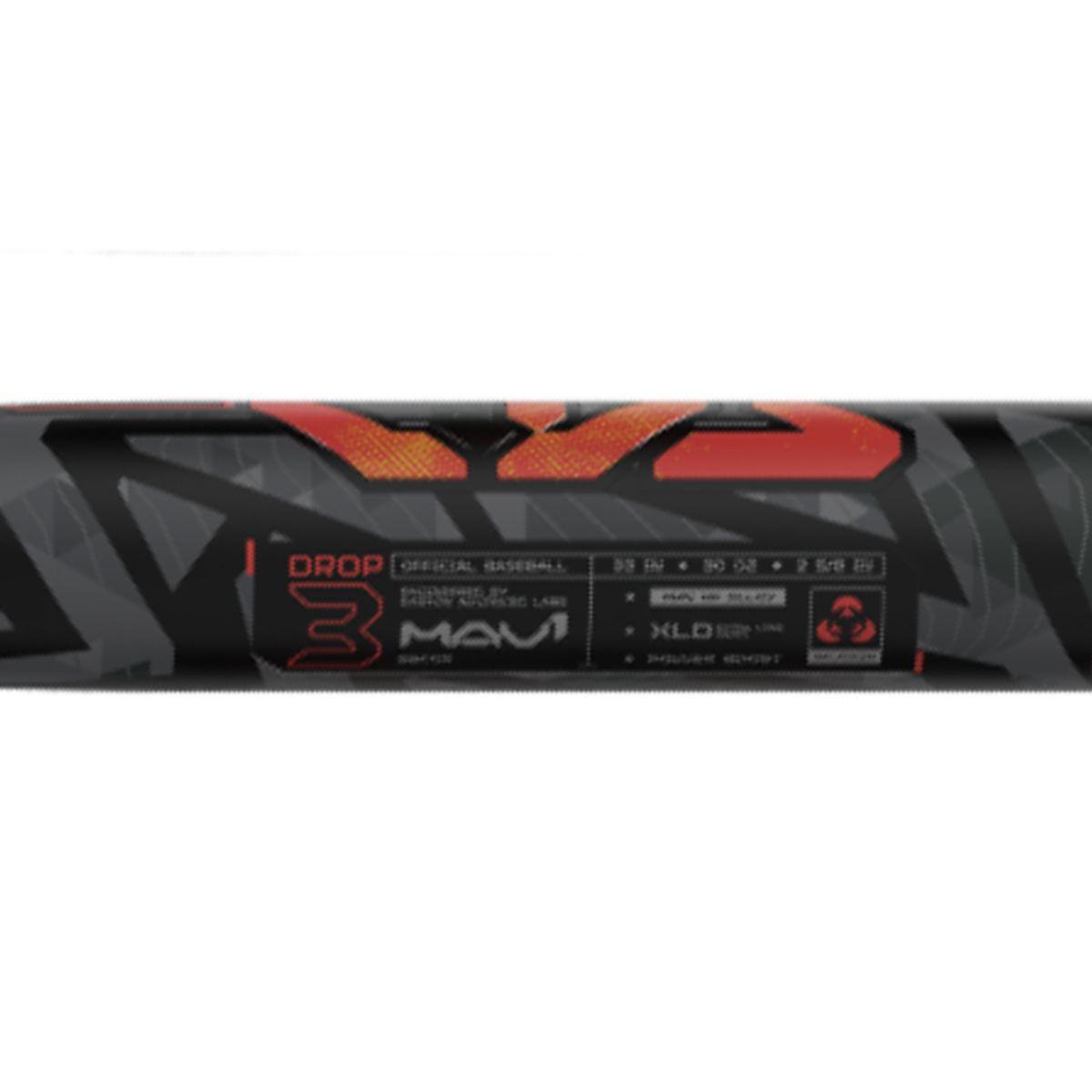
A "drop 3" baseball bat refers to a bat where the numerical difference between the length in inches and the weight in ounces is negative 3, meaning a 33-inch bat weighs 30 ounces. This specific weight-to-length ratio is the standard requirement for high school and collegiate play, bridges the transition from youth leagues to adult-sized equipment, and requires higher swing mechanics to generate power.
Understanding the Baseball Bat Drop Weight System
Before diving into the specifics of a drop 3 (-3) bat, it is vital to understand how the "drop" metric works across the baseball equipment industry. The "drop" is a mathematical expression calculated by subtracting the bat's weight in ounces from its length in inches. Because a longer bat naturally requires more material, a bat's weight usually scales upward with length. However, the drop weight isolates how heavy the bat feels relative to its physical size.
A larger drop number indicates a lighter, more manageable bat designed for younger or developing players who lack the upper-body strength to whip a heavier instrument through the strike zone. For instance, youth leagues often feature bats with a drop 10 (-10) or drop 8 (-8) specification. A 30-inch, drop 10 bat weighs just 20 ounces. Conversely, as players mature, leagues implement stricter weight standards to ensure a competitive balance between pitchers throwing velocity and hitters reacting with wood or BBCOR-certified (Bat-Ball Coefficient of Restitution) composite and alloy barrels.
The drop 3 designation sits at the heavier end of the modern bat spectrum. It represents a substantial jump in mass when a player transitions from youth travel ball or middle school leagues into high school play. Grasping this system prevents costly purchasing mistakes and ensures players step onto the diamond with equipment that aligns with their physical development and governing body regulations.
Fact 1: The Standard for High School and Collegiate Baseball
The single most consequential fact about a drop 3 baseball bat is its regulatory status: it is the mandatory standard for most competitive high school and college divisions across the United States. Governing bodies such as the National Federation of State High School Associations (NFHS) and the National Collegiate Athletic Association (NCAA) enforce strict rules regarding bat specifications to manage game safety, protect defensive players from dangerously high batted-ball speeds, and maintain the integrity of the sport.
At the high school level, bats must meet BBCOR certification standards, which inherently limits the trampoline effect of the barrel. Crucially, almost every bat bearing the BBCOR certification stamp is manufactured as a drop 3. This means that once a player enters high school baseball—typically around age 14 or 15—they must immediately adapt to using a drop 3 bat, regardless of whether they prefer a lighter feel.
| League / Division | Typical Age Range | Mandatory Bat Drop |
|---|---|---|
| Little League / Yth | 8 to 12 Years Old | -10 to -12 |
| Intermediate / Jr | 13 to 14 Years Old | -5 to -8 |
| High School (NFHS) | 14 to 18 Years Old | -3 (BBCOR Certified) |
| Collegiate (NCAA) | 18 to 22 Years Old | -3 (BBCOR Certified) |
In collegiate baseball, the regulations tighten further. While NCAA Division I, II, and III players are permitted to use certified BBCOR drop 3 metal or composite bats, many conferences and programs encourage or mandate wood bats, which are also naturally weighted at a drop 3 or heavier. Failing to use an approved drop 3 bat during a sanctioned high school or college game results in immediate penalties, including the batter being called out, the bat being confiscated, and potential game forfeitures or coaching ejections. Therefore, understanding this requirement is not just a matter of preference; it is a strict operational compliance rule for competitive play.
Fact 2: The Transition Challenge from Youth Leagues to BBCOR
Moving from a lightweight youth bat to a drop 3 bat presents a monumental physical and mechanical challenge for developing players. The difference is stark. A player who has spent years swinging a 31-inch, drop 10 bat weighing 21 ounces suddenly has to swing a 31-inch, drop 3 bat weighing 28 ounces. That is an immediate 7-pound increase in total dead weight distributed across the same physical lever.
This sudden jump frequently disrupts a hitter's timing, swing plane, and bat speed. Common mechanical breakdowns during this transition phase include:
- Dragging the Barrel: The increased weight makes it difficult to keep the hands inside the ball, causing the bat head to lag behind the wrists.
- Casting: Hitters compensate for the heavy load by pushing their hands away from their body rather than rotating compactly around their core.
- Loss of Bat Speed: Pitch velocity appears to increase dramatically because the hitter’s reaction time and swing velocity have slowed down under the heavier load.
- Early Fatigue: Muscles that were previously unburdened by a lighter bat tire quickly during batting practice and multi-game tournaments, leading to poor plate discipline later in games.
Overcoming this transition requires targeted physical training, including core strengthening, rotational medicine ball work, and grip exercises. Hitters often benefit from utilizing heavy-bat training aids during the off-season to build the specific muscle memory required to control a drop 3 bat without sacrificing swing mechanics.
Fact 3: Material Construction and Performance Limitations
Because drop 3 bats are heavily regulated—particularly by the BBCOR standard implemented in 2011—their internal construction is engineered to perform within strict safety limits rather than maximizing raw trampoline effect. Unlike older-generation youth bats that could launch balls at extreme velocities, modern drop 3 bats are designed to perform similarly to a high-grade wood bat, even when constructed from aerospace-grade aluminum alloys or complex composite materials.
The BBCOR standard measures the "Coefficient of Restitution" of a bat, ensuring that the ball does not rebound off the barrel faster than it would off a solid wood bat of identical dimensions. Manufacturers use several distinct construction methods to achieve compliance while optimizing the sweet spot and durability:
- One-Piece Alloy: Provides a stiff, traditional feel with zero flex upon impact, favored by power hitters who prefer direct feedback.
- Two-Piece Composite: Utilizes a composite handle and barrel connected by a dampening piece, reducing hand sting on miss-hits and offering a slight whip effect through the zone.
- Hybrid (Composite Handle, Alloy Barrel): Combines the vibration-reduction qualities of composite materials with the crisp, immediate responsiveness of a metal barrel.
Despite these advanced materials, a drop 3 bat cannot bail out poor swing mechanics. The physics of a heavier bat mean that contact must be precise. Hitting the ball outside the extended sweet spot on a drop 3 bat results in severe sting and a weak ground ball, reinforcing the need for sound plate coverage and disciplined hitting approaches.
Choosing and Maintaining Your Drop 3 Baseball Bat
Selecting the right drop 3 bat involves balancing physical measurements, league requirements, and personal hitting style. Players should carefully evaluate their height and weight to determine the correct length before locking in the drop 3 weight. Common sizing charts suggest that a player between 5'8" and 6'0" typically utilizes a 32-inch or 33-inch drop 3 bat, while taller players exceeding 6'1" often step up to a 34-inch model.
| Player Height | Recommended Length | Standard Drop 3 Weight |
|---|---|---|
| 5'4" - 5'6" | 30 Inches | 27 Ounces |
| 5'7" - 5'9" | 31 Inches | 28 Ounces |
| 5'10" - 6'0" | 32 Inches | 29 Ounces |
| 6'1" and Taller | 33 - 34 Inches | 30 - 31 Ounces |
Once purchased, proper maintenance extends the lifespan of a high-end drop 3 bat. Composite bats require a break-in period involving approximately 150 to 200 swings off a tee or soft-toss machine at 50% to 75% power, avoiding cold-weather usage below 55 degrees Fahrenheit, which can cause composite fibers to fracture. Alloy bats are generally more weather-resistant but should be regularly inspected for dents, cracks, or loose end-caps that violate league rules. Keeping the barrel clean of pine tar and dirt buildup ensures optimal friction against the baseball upon contact.
Frequently Asked Questions About Drop 3 Bats
Can younger players use a drop 3 bat in non-scholastic leagues?
Yes, players in younger divisions can legally swing a drop 3 bat if their league rules permit heavier equipment. However, it is rarely recommended for players under 13 years old because the excess weight can stunt swing development, cause poor mechanics, and lead to shoulder or wrist strain.
What does BBCOR certified mean on a drop 3 bat?
BBCOR stands for Bat-Ball Coefficient of Restitution. It is the certification standard adopted by the NCAA and NFHS to regulate performance levels of non-wood bats, ensuring player safety by limiting batted-ball speeds to mirror those of wooden bats.
Are all drop 3 bats legal for high school play?
No. While almost all high school legal bats are drop 3, they must specifically feature the embossed or printed BBCOR certified stamp. Bats lacking this stamp, or bats that have been altered, rolled, or shaved, are strictly illegal for high school and collegiate competition.
Why do elite high school players sometimes switch to wood drop 3 bats?
Many elite high school players preparing for NCAA baseball choose to swing wood drop 3 bats during summer showcases or practice. Doing so helps them adjust to the exact feel, balance point, and performance profile they will encounter in college baseball, where wood bat tournaments are increasingly common.
How do I know if my drop 3 bat is damaged or illegal?
Inspect the barrel for visible denting, spider-web cracking on composite models, or a rattling sound inside the barrel, which indicates a loose or detached inner component. If the BBCOR stamp has worn off or been scratched away, umpires may rule the bat illegal during pre-game equipment checks.