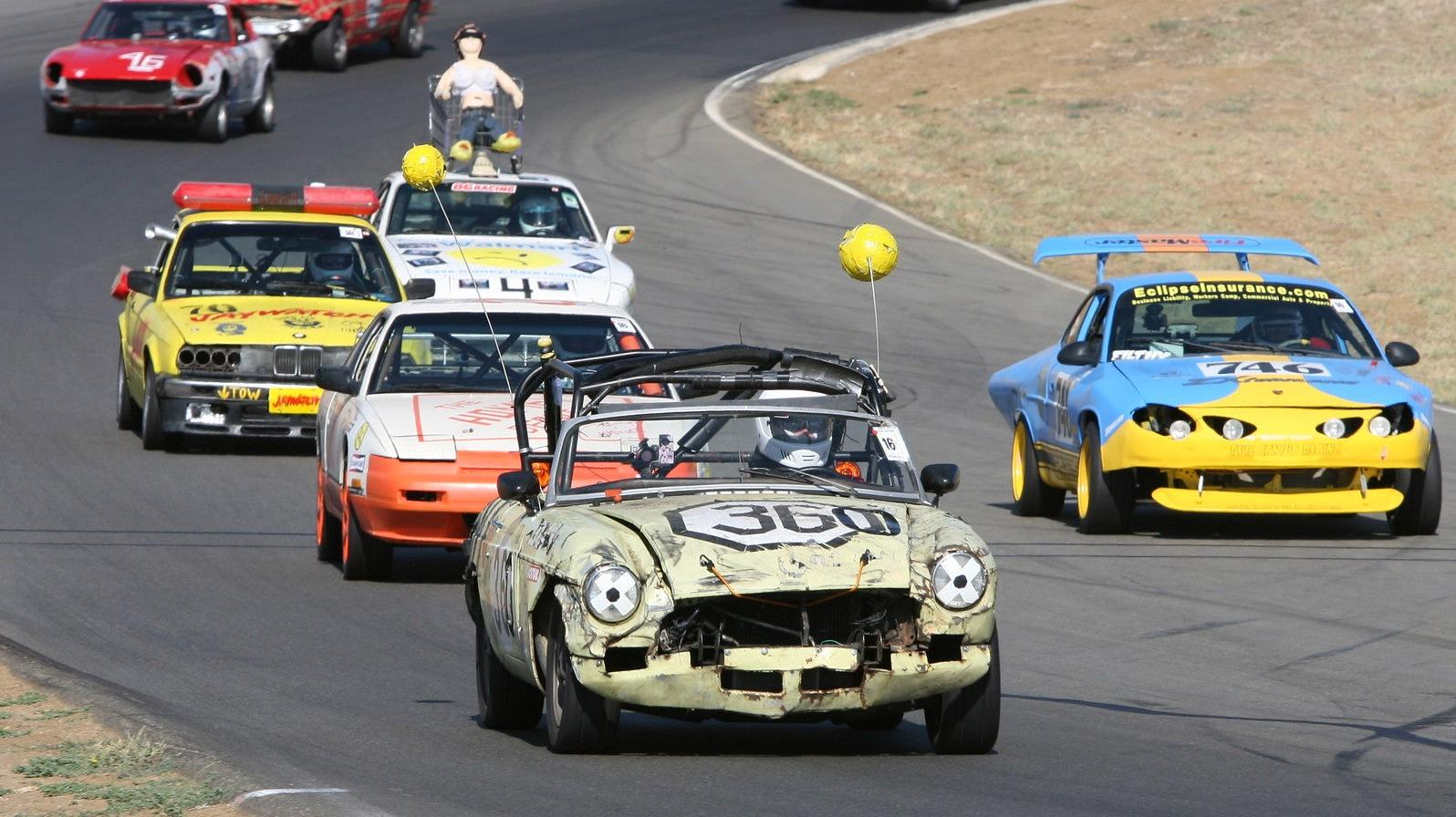
The "24 Hours of Lemons" is a competitive endurance racing series designed specifically for low-budget, street-legal vehicles that cost no more than $500 to acquire and prepare. Founded as a satirical take on professional sports car racing, it emphasizes accessibility, mechanical ingenuity, and safety over raw performance, providing a sanctioned, regulated environment for hobbyists to race clunkers on legitimate tracks.
Understanding the Philosophy of Lemons
The 24 Hours of Lemons is not merely a race; it is an organized subculture within the automotive hobbyist community. The premise is straightforward: take a vehicle that is essentially worthless—a "lemon"—and attempt to drive it for 24 hours (or a split-day equivalent) on a road course without the engine exploding or the car falling apart.
Unlike professional racing series where budgets can reach millions of dollars, Lemons operates under a strict "Crapcan" philosophy. The series was established to remove the financial barriers that prevent average people from experiencing wheel-to-wheel endurance racing. By capping the vehicle purchase and modification budget, the organizers ensure that the focus remains on reliability, strategy, and team cohesion rather than the sheer horsepower that money can buy.
Eligibility and Vehicle Acquisition
To participate, a team must source a vehicle that adheres to the series' strict budget rules. The $500 limit applies to the purchase price of the car and any performance-related modifications.
The Budget Rule Breakdown
The $500 budget is intentionally strict and excludes items that are strictly necessary for driver safety. This is a critical distinction for newcomers:
- Excluded from the $500 cap: Safety equipment (roll cages, fire extinguishers, kill switches, racing seats, window nets, and harnesses), braking system components (pads, rotors, fluid), tires, and wheels.
- Included in the $500 cap: The initial purchase price of the donor car, engine modifications, suspension parts, performance upgrades, and interior stripping.
Teams are required to provide a detailed, itemized budget spreadsheet during the registration process. Organizers, colloquially known as "The Judges," perform a technical inspection before the race starts. If the Judges determine that a car has exceeded the budget, they will assign penalty laps—a common occurrence in the series—where teams must sit out for a duration proportionate to the amount they overspent.
The Technical Inspection and Safety Requirements
Safety is the only aspect of a Lemons car where the rules are not only strict but non-negotiable. Because the vehicles are often decades old and structurally compromised by design, the safety requirements are rigorous and modeled after professional racing standards.
Core Safety Systems
- Roll Cage: The most critical component. It must be a multi-point steel structure welded to the vehicle frame to protect the driver in the event of a rollover or collision.
- Fire Suppression: Every car must carry an onboard fire extinguisher system, easily accessible by the driver.
- Driver Protection: A SFI-rated racing seat is mandatory. The driver must be secured with a five-point or six-point harness system to prevent movement during high-speed cornering and impacts.
- Kill Switch: An externally accessible master electrical kill switch is required to cut all power to the car, allowing track marshals to shut off the vehicle in an emergency.
If a vehicle fails the technical inspection, the team is prohibited from entering the track until the deficiencies are corrected. The inspection process is designed to be educational, but the safety standards are enforced with zero tolerance.
Preparing for the Race: Operational Reality
Participating in a 24-hour endurance event requires more than just a functioning engine. Success in Lemons is rarely about speed; it is about "seat time"—the amount of time the car stays on the track versus in the pits being repaired.
Strategic Considerations
- Spare Parts Logistics: Since the cars are old and prone to failure, a successful team arrives with an entire "spare car" worth of components. This includes extra alternators, starters, brake pads, belts, hoses, and fluids.
- Driver Rotation: With 24 hours of total race time, teams usually consist of 4 to 6 drivers. Fatigue management is essential; scheduling shifts ensures that the drivers behind the wheel remain alert and capable of handling the car safely.
- Communication: Teams use radio systems or hand signals to communicate with the pit crew. Monitoring fuel consumption and mechanical sounds through these channels is the primary way to avoid a DNF (Did Not Finish).
- Pit Strategy: Refueling and driver changes must be executed efficiently. Every minute spent in the pit lane is a minute lost to competitors. Mastering a quick pit stop is often the difference between a mid-pack finish and a podium spot.
Comparison of Racing Classes
While all cars must meet the $500 budget limit, the field is often categorized into classes based on the vehicle's relative capability. This prevents a high-performance sports sedan from competing directly against a 1980s economy hatchback in the same ranking category.
| Class | Primary Characteristics | Target Vehicle Types |
|---|---|---|
| Class A | High potential for speed and endurance. | V6/V8 sedans, sport coupes. |
| Class B | Moderate performance potential. | Standard mid-range sedans, wagons. |
| Class C | Low-power, high-novelty vehicles. | Economy cars, micro-cars, diesel haulers. |
The "Index of Effluency" is the most coveted trophy in the series. It is awarded to the team that accomplishes the most with the least capable, most ridiculous, or most historically unreliable machine. It is the ultimate badge of honor for those who truly embody the "Lemons" spirit.
Troubleshooting Common Failures
During a 24-hour race, things will break. Veteran teams approach every problem with a predefined troubleshooting protocol.
- Overheating: This is the most common cause of retirement. Ensure your cooling system is flushed, the radiator is clear of debris, and your fans are wired to run constantly while the ignition is on.
- Electrical Gremlins: Older wiring harnesses are notorious for failing under heat and vibration. Carry spare wiring, crimping tools, and zip ties to address loose connections immediately.
- Brake Fade: Heavy, under-braked cars will experience severe fade. Upgrade to high-temperature brake fluid and aggressive pad compounds designed for track use.
- Fuel Starvation: When fuel levels are low, cornering can cause fuel to slosh away from the pickup. Keep the tank topped off or install a surge tank if regulations permit.
Legal and Ethical Guidelines
The 24 Hours of Lemons is governed by a set of rules that prioritize fair play and safety over aggressive driving. The series employs "Black Flags"—penalties issued by corner workers for dangerous driving, contact, or ignoring signals.
Consistent offenders are forced to perform "penalties" in the pits, which can include humorous or humiliating public displays as designated by the Judges. This unique approach to rule enforcement prevents the escalation of on-track aggression often found in other amateur series, keeping the atmosphere collaborative and lighthearted despite the competitive nature of the racing.
Frequently Asked Questions
Is it really possible to build a race car for $500?
Yes, but the $500 cap applies only to the vehicle and performance-related items. Because you can strip out interior trim, glass, and non-essential electronics to sell for parts, many teams effectively reduce their net cost significantly. You must provide receipts for everything to prove your budget.
Can I participate if I have no racing experience?
The series welcomes beginners, provided they demonstrate basic driving competence. Many teams offer a space for new drivers. However, you must attend a mandatory driver meeting before the race where safety protocols and flag meanings are explained in detail.
What happens if my car breaks during the race?
Repairs are expected. Most teams spend as much time fixing their cars in the paddock as they do racing. If you cannot fix it, the race ends for your team, but you are encouraged to stay, help other teams, and enjoy the event.
Are there specific tracks I must visit?
The series operates across various regional tracks throughout the year. You should check the official schedule to identify events near your location. Each event has its own registration deadline, which typically closes several weeks before the race date.
How do I join a team?
Many teams are formed by friends or local car enthusiasts. If you are an individual, you can look for teams looking for extra drivers on the official Lemons forums or social media groups. Networking with the community is the fastest way to get a seat.
Is this covered by insurance?
Standard automotive insurance policies do not cover vehicles on a racetrack. Participants are responsible for their own vehicles and personal liability. Some teams choose to purchase specialized motorsports insurance, though this is not required by the series.
Next Steps for Prospective Racers
If you are interested in joining the 24 Hours of Lemons, your first step is to secure a donor vehicle that meets the basic requirements of your local regulations and the series' safety mandate. Once you have the car, prioritize the installation of the roll cage, as this is the most time-consuming and expensive part of the process. Register your team on the official series website and begin building your budget spreadsheet immediately. Do not attempt to hide costs; the Judges are highly experienced at identifying "cheaters," and they will penalize your team accordingly. Start by volunteering at an event to get a firsthand look at the paddock culture and the pace of the race before committing your own vehicle to the track.