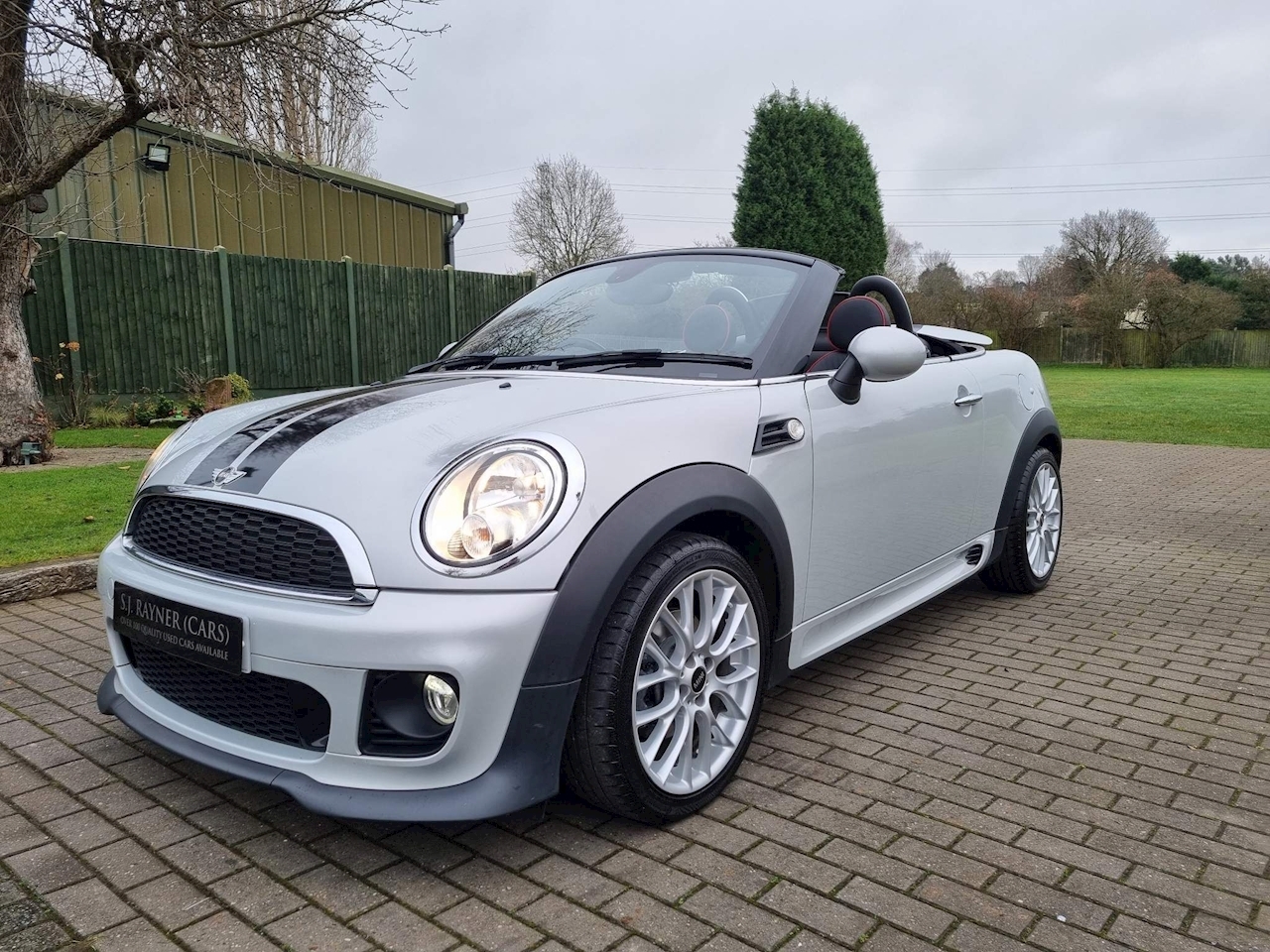
The 2014 MINI Roadster is a distinct two-seat, manual-soft-top convertible designed for spirited handling and open-air driving dynamics, offering a sportier, more focused alternative to the MINI Cooper Convertible across its Cooper, Cooper S, and John Cooper Works trims.
Introduction to the 2014 MINI Roadster
The 2014 MINI Roadster occupies a unique corner of the automotive landscape. For drivers seeking an engaging, highly responsive, and sharply styled two-seat drop-top, this vehicle represents a specialized mechanical proposition. Unlike the standard MINI Cooper Convertible, which retains a four-passenger layout and a more upright cabin silhouette, the Roadster was built from the ground up as a strict two-seater. Its lower roofline, steeply raked windshield, and active rear spoiler give it a classic British roadster stance paired with modern front-wheel-drive German engineering under BMW ownership.
Navigating the market for a pre-owned 2014 MINI Roadster requires a clear understanding of its mechanical tiers, structural quirks, and maintenance realities. Because this model year sits squarely in the middle of the second-generation (R59) production run, buyers encounter a mature iteration of the platform, though one that still carries specific technical nuances. This guide explores the vehicle's trim levels, powertrain options, everyday usability, common ownership considerations, and long-term viability for enthusiasts and daily drivers alike.
Lineup, Trims, and Powertrain Architecture
The 2014 MINI Roadster lineup is divided into three primary performance tiers: the standard Cooper, the turbocharged Cooper S, and the track-tuned John Cooper Works (JCW). Each variant utilizes a variation of BMW-sourced four-cylinder powerplants, paired with either a 6-speed manual transmission or a 6-speed automatic transmission with paddle shifters.
1. MINI Cooper Roadster (Base)
Powered by a naturally aspirated 1.6-liter four-cylinder engine, the base Cooper produces 121 horsepower and 114 lb-ft of torque. This model focuses on efficiency, nimble handling, and lightweight responsiveness rather than straight-line acceleration. It serves as an accessible entry point for buyers prioritizing fuel economy and classic roadster styling over high-boost thrills.
2. Cooper S Roadster
The Cooper S introduces a twin-scroll turbocharged 1.6-liter four-cylinder engine, elevating output to 181 horsepower and 177 lb-ft of torque (with an overboost function pushing torque to 192 lb-ft temporarily). This variant transforms the driving experience, providing brisk acceleration, a more assertive exhaust note, and mid-range pulling power that matches the chassis's athletic capabilities.
3. John Cooper Works (JCW) Roadster
At the apex of the lineup sits the JCW Roadster, which extracts 208 horsepower and 192 lb-ft of torque (207 lb-ft with overboost) from the same 1.6-liter turbocharged block through upgraded engine management, reinforced pistons, and a freer-flowing exhaust system. It features stiffer factory suspension tuning, larger Brembo brakes, and unique aerodynamic bodywork designed for high-speed stability.
Driving Dynamics and Chassis Engineering
The engineering hallmark of the 2014 MINI Roadster (R59) is its structural rigidity and suspension tuning, which differ noticeably from its hardtop and four-seat convertible stablemates. MINI engineers incorporated structural reinforcements beneath the floorpan and around the A-pillars to compensate for the removal of a fixed steel roof. While some cowl shake remains over sharp mid-corner bumps—as is common in convertibles of this era—the Roadster feels remarkably planted and eager to turn in.
The steering is heavy, direct, and exceptionally quick, offering high levels of tactile feedback that connect the driver to the road surface. MacPherson struts up front and a multi-link rear suspension setup keep body roll to a minimum.
- Sport Button: Standard or optional depending on the trim, pressing the Sport button sharpens throttle response, increases steering weight, and—on automatic models—delivers more aggressive shift points.
- Active Rear Spoiler: At speeds above 50 mph, an electronically controlled rear spoiler deploys automatically to reduce rear lift and improve high-speed stability. It retracts when speeds drop below 37 mph, or it can be operated manually via a toggle switch on the center stack.
Interior Packaging and Everyday Usability
As a strict two-seater, the 2014 MINI Roadster prioritizes cockpit intimacy over utility. The cabin layout mirrors the iconic central-speedometer dashboard architecture of the era (though many models integrate infotainment screens into that central housing), surrounded by toggle switches for the windows, fog lights, and central locking.
Seating and Ergonomics
Headroom with the manual soft top raised is somewhat restricted for drivers over six feet tall, though lowering the top instantly eliminates any spatial constraints. The seats are heavily bolstered, particularly in the Cooper S and JCW trims, providing lateral support during aggressive cornering.
Cargo Capacity
Despite its compact exterior footprint, the Roadster offers a dedicated trunk separated from the cabin. It provides 8.5 cubic feet of cargo space, which remains consistent whether the roof is up or stowed. A clever pass-through door between the trunk and the cabin allows owners to transport longer, narrow items like skis or golf umbrellas.
Technical Specifications and Trim Comparison
| Feature / Metric | MINI Cooper Roadster | Cooper S Roadster | John Cooper Works Roadster |
|---|---|---|---|
| Engine Type | 1.6L Naturally Aspirated I4 | 1.6L Turbocharged I4 | 1.6L High-Output Turbocharged I4 |
| Horsepower | 121 hp @ 6,000 rpm | 181 hp @ 5,500 rpm | 208 hp @ 6,000 rpm |
| Torque | 114 lb-ft @ 4,250 rpm | 177 lb-ft @ 1,600–5,000 rpm | 192 lb-ft @ 1,850–5,600 rpm |
| Transmission | 6-speed manual / 6-speed auto | 6-speed manual / 6-speed auto | 6-speed manual / 6-speed auto |
| 0–60 mph Time | ~8.7 seconds | ~6.7 seconds | ~6.3 seconds |
| Top Speed | 124 mph | 141 mph | 147 mph |
| Trunk Capacity | 8.5 cu ft | 8.5 cu ft | 8.5 cu ft |
Common Mechanical Considerations and Maintenance
Owning a second-generation MINI requires proactive maintenance and an awareness of common mechanical tendencies associated with the N16 (non-turbo) and N18 (turbocharged) engine families used in 2014 models.
1. Timing Chain and Guides
While the 2014 models benefited from updated timing chain components compared to earlier R56/R59 variants (which used the problematic N14 engine), high-mileage examples still require inspection. Listen for any rattling noise upon cold startup, which indicates potential chain stretch or guide wear.
2. Carbon Buildup on Intake Valves
Because the Cooper S and JCW models utilize direct fuel injection, fuel is sprayed directly into the combustion chamber rather than washing over the intake valves. Over time, oil vapor from the PCV system can bake onto the valves, causing rough idling or hesitation. Walnut-blasting the intake valves is a standard maintenance procedure required every 60,000 to 80,000 miles.
3. Cooling System Integrity
Plastic thermostat housings and water pump components are known to degrade over time under thermal cycling, leading to coolant leaks. Monitoring coolant levels regularly and replacing aging plastic fittings with upgraded aftermarket aluminum alternatives is a common preventative measure among enthusiasts.
4. Soft Top Maintenance
The manual fabric top requires minimal effort to latch and unlatch—taking only a few seconds from the driver's seat. However, owners should periodically clean and condition the fabric and treat the rubber weatherstripping with silicone spray to prevent leaks, wind noise, and premature wear around the side windows.
Ownership Costs, Fuel Economy, and Insurance
Evaluating the ongoing financial commitment of a 2014 MINI Roadster involves balancing respectable fuel efficiency with specialty maintenance requirements.
- Fuel Economy: The base Cooper achieves an EPA-estimated 27 mpg city / 35 mpg highway with the manual transmission. The turbocharged Cooper S and JCW variants trade a modest amount of efficiency for performance, averaging around 26 mpg city / 35 mpg highway (manual) and slightly lower figures with the automatic transmission, requiring premium (91+ octane) fuel.
- Insurance Rates: Insurance premiums for the Roadster are generally moderate. While it is a sports car, its two-seat configuration and modest engine displacements keep risk ratings comparable to mainstream compact hatchbacks, though JCW models attract higher rates due to their performance capabilities.
- Parts and Labor: Routine servicing (oil changes, spark plugs, brake pads) can be performed by independent European specialists or DIY enthusiasts to manage costs. Sourcing OEM or OEM-equivalent parts keeps maintenance manageable compared to exotic sports cars.
Frequently Asked Questions
Is the 2014 MINI Roadster reliable?
The 2014 model year represents the final production year for the R59 generation, meaning MINI resolved many of the severe timing chain and high-pressure fuel pump issues that plagued 2007–2010 models. With diligent maintenance, service history records, and prompt attention to minor oil or coolant leaks, these cars can be dependable daily drivers or weekend toys.
How does the Roadster differ from the Cooper Convertible?
The standard MINI Cooper Convertible is a four-seater with a more upright windshield and a taller roofline that folds down externally onto the rear deck. The Roadster is strictly a two-seater with a lower, sleeker stance, a steeply raked windshield, a lower center of gravity, and a traditional trunk rather than a drop-down tailgate.
Is the manual soft top difficult to operate?
Not at all. The 2014 MINI Roadster utilizes a fully manual soft top designed for speed and simplicity. Unlatching a single central header handle allows the driver to push the top backward until it clicks into a secure storage well behind the seats—a maneuver that can easily be performed from the driver's seat in a matter of seconds.
Can the 2014 MINI Roadster be used as a year-round daily driver?
Yes, provided you live in an area where winter road conditions are manageable. The front-wheel-drive layout provides stable traction in rain and light snow when paired with dedicated winter tires. However, cabin insulation in soft-top convertibles means interior warm-up times and road noise levels will be higher during freezing winter months compared to a hardtop coupe.
Conclusion and Buying Recommendation
The 2014 MINI Roadster remains a compelling option for drivers seeking an agile, stylish, and engaging open-air vehicle without the steep purchase and maintenance costs associated with traditional sports cars. For most buyers, the Cooper S Roadster strikes the ideal balance between everyday drivability and turbocharged performance. When evaluating a used model, prioritize examples with comprehensive service records, verified cooling system maintenance, and clean pre-purchase inspections by a qualified technician.