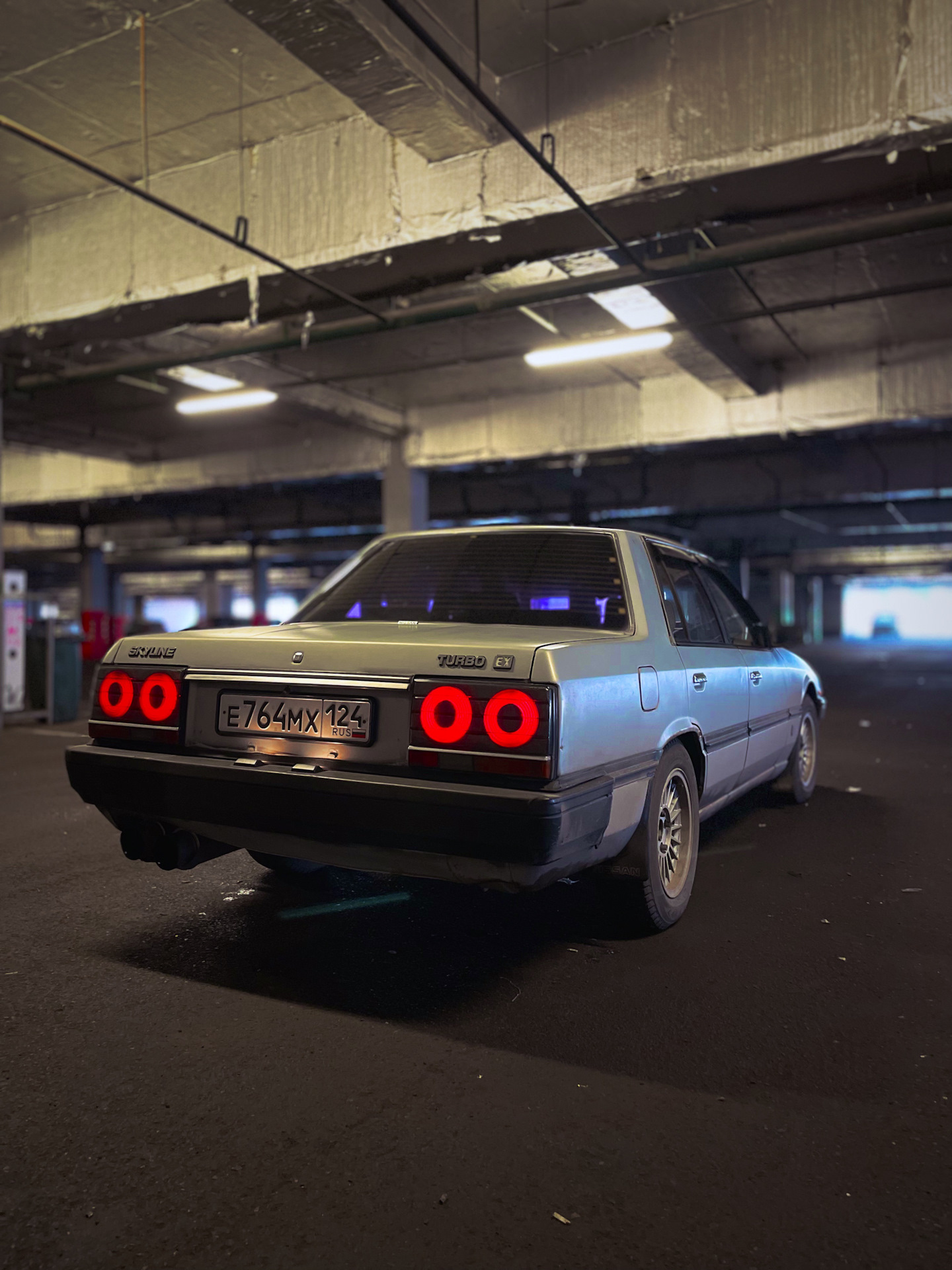
The 1985 Nissan Skyline, marking the debut of the R31 generation, represents a pivotal shift in automotive engineering. It introduced the legendary RB-series engines and the innovative HICAS four-wheel steering system. Today, it stands as a sophisticated classic, blending mid-80s "luxury-tech" aesthetics with the performance foundation that defined later GT-R icons.
The R31 Skyline arrived at a time when the global automotive industry was pivoting from the raw, mechanical simplicity of the 1970s toward the electronics-heavy sophistication of the late 1980s. Released in August 1985, the R31 was a departure from its predecessor, the R30, which had built a reputation on ruggedness and racing success. The R31, by contrast, was initially aimed at a more upscale, "executive" market, earning it the nickname "The 7th" (representing the seventh generation of the Skyline). However, beneath its boxy, angular exterior lay the DNA of a true driver’s car—one that has been redefined by collectors and tuners in 2026 as a masterpiece of Japanese industrial design.
The Technological Genesis of the R31
The significance of the 1985 Nissan Skyline cannot be overstated, primarily because it served as the launchpad for two of Nissan’s most enduring technologies: the RB-series engine and the High Capacity Actively Controlled Steering (HICAS) system.
The RB Engine Revolution
Before 1985, the Skyline relied on the L-series and FJ-series engines. While the FJ20ET in the R30 was a powerhouse, it was a four-cylinder unit. The R31 brought the Skyline back to its straight-six roots with the introduction of the RB20 engine. The RB (standing for "Response Balance") architecture was designed for smoothness, high-RPM stability, and modularity.
In the 1985 models, the RB20DET was the crown jewel. This 2.0-liter, inline-six, twin-cam, turbocharged engine featured the "NICS" (Nissan Induction Control System), which used butterfly valves to optimize airflow at different RPM ranges. This technology was cutting-edge for 1985, providing a balance of low-end torque and high-end power that four-cylinder engines of the era struggled to match.
HICAS: The Dawn of Four-Wheel Steering
The 1985 Skyline was the first production car to feature Nissan’s HICAS system. In an era where handling was often limited by the constraints of rear-wheel-drive geometry, HICAS allowed the rear wheels to turn slightly in conjunction with the front wheels. Using hydraulic actuators linked to the power steering pump, the system improved turn-in response and high-speed stability. While modern drivers in 2026 often replace early HICAS systems with lockout kits for a more predictable drift feel, the original system's introduction was a landmark moment for automotive agility.
Body Styles and Design Philosophy
In 1985, Nissan offered the Skyline in several configurations, catering to a diverse audience ranging from family men to high-level executives. The design language was unapologetically 80s: sharp lines, flat surfaces, and a focus on "techno-luxury."
- The Four-Door Sedan: The most common variant, designed for the Japanese businessman. It featured a traditional B-pillar and a spacious interior.
- The Four-Door Hardtop: This was the style icon of the 1985 range. It lacked a B-pillar, creating a seamless glass profile when the windows were down. It featured the "Pillarless Hardtop" look that was highly sought after in the luxury car segment.
- The Passage Series: These trims emphasized comfort, often featuring plush velour interiors, digital instrument clusters, and advanced (for the time) audio systems.
The exterior of the 1985 model is characterized by its "boxy" silhouette. Unlike the curvaceous R32 that followed, the R31 used its straight lines to project an image of stability and precision. The "stove-pipe" or "afterburner" round taillights—a Skyline signature since the 1970s—were refined into a more integrated, rectangular housing, though they remained unmistakably Skyline.
Technical Specifications Comparison (1985 Models)
The following table highlights the differences between the primary trims available during the 1985 launch year.
| Specification | Skyline GT Passage (Naturally Aspirated) | Skyline GT-X (Turbocharged) | Skyline 1800 TI (Entry Level) |
|---|---|---|---|
| Engine Code | RB20E | RB20DET | CA18S |
| Configuration | Inline-6, SOHC | Inline-6, DOHC, Turbo | Inline-4, SOHC |
| Displacement | 1,998 cc | 1,998 cc | 1,809 cc |
| Horsepower | 128 hp @ 5,600 RPM | 180 hp @ 6,400 RPM | 100 hp @ 5,600 RPM |
| Torque | 181 Nm @ 4,000 RPM | 225 Nm @ 4,800 RPM | 149 Nm @ 2,800 RPM |
| Steering Type | Power-Assisted | HICAS (Optional/Standard) | Manual/Power-Assisted |
| Weight | ~1,320 kg | ~1,380 kg | ~1,150 kg |
Driving Dynamics: A Balance of Comfort and Performance
Driving a 1985 Nissan Skyline today provides a unique window into the past. While it lacks the raw, visceral aggression of a 1990s GT-R, the R31 offers a "grand touring" experience that is rare in modern vehicles. The RB20DET engine provides a distinct, metallic straight-six howl that becomes addictive as the turbocharger spools up around 3,000 RPM.
The suspension setup—independent MacPherson struts in the front and a semi-trailing arm independent setup in the rear—was tuned for a supple ride. However, because it shares much of its chassis architecture with the previous R30 and the C32 Laurel, the R31 has a mechanical feel that connects the driver to the road. In 2026, many owners opt to upgrade the aging bushings and shocks with modern coilovers, which "redefines" the classic by sharpening its responses to meet contemporary performance standards.
The Redefined Classic: R31 in the 2026 Collector Market
For decades, the R31 was the "forgotten" Skyline, overshadowed by the legendary "Hakosuka" C10 and the "Godzilla" R32. However, the market has shifted. As of 2026, the 1985 Skyline has reached "blue-chip" status among JDM (Japanese Domestic Market) enthusiasts for several reasons.
Rarity and Preservation
Finding a 1985 model in original condition is increasingly difficult. Many were modified heavily in the 1990s and 2000s or succumbed to rust issues common in 1980s Japanese steel. Collectors now value "survivor" cars—those with original Passage velour seats and un-cracked dashboards—above almost all else.
The "Aesthetic" Movement
The rise of 80s "City Pop" culture and the "Cyberpunk" aesthetic has made the R31's boxy design highly desirable. It is seen as the ultimate expression of 1980s Japanese optimism and technological ambition. Owners often lean into this, fitting period-correct wheels like the SSR Formula Mesh or Impul Hoshino G5s to complete the look.
Modification Potential
The R31 is a favorite among "restomod" builders. Because the engine bay was designed for the RB series, it is relatively straightforward to swap in a more modern RB25DET from an R33 or even the legendary RB26DETT. This allows enthusiasts to keep the 1985 aesthetic while enjoying 400+ horsepower and modern reliability.
Maintenance and Ownership in 2026
Owning a 41-year-old vehicle requires a proactive approach to maintenance. While the RB engines are famously over-engineered, they are not indestructible.
- Rust Mitigation: The R31 is prone to rust in the rear wheel arches, the spare tire well, and the battery tray. Regular inspections and professional undercoating are essential for preservation.
- Electrical Components: The 1985 models introduced complex digital dash displays and electronic climate control. Capacitors in these units often leak over time. Specialist restorers now offer rebuild services for these proprietary electronics.
- Vacuum Lines: The NICS and early turbo systems rely on a web of rubber vacuum lines. These often become brittle and crack, leading to erratic idling or boost leaks. Replacing these with silicone lines is a common "first step" for new owners.
- Parts Availability: While mechanical parts (engine and drivetrain) are largely shared with other Nissans, trim pieces and model-specific glass are becoming scarce. Joining dedicated R31 owner clubs is often the only way to source rare interior plastics or exterior moldings.
Legacy of the 1985 Launch
The 1985 Skyline was more than just a new car; it was a statement of intent from Nissan. It proved that a performance car could be sophisticated, and a luxury car could be agile. The lessons learned from the R31’s HICAS system and RB engine development directly led to the R32 GT-R, which would go on to dominate Group A racing globally.
By choosing an R31 today, an enthusiast is not just buying a "boxy old car." They are investing in the lineage of one of the world’s most famous automotive nameplates. Whether kept as a pristine historical artifact or modified into a high-performance street machine, the 1985 Nissan Skyline remains a classic redefined by every generation that gets behind the wheel.
Frequently Asked Questions
Is the 1985 Nissan Skyline considered a GT-R?
No, there was no GT-R version of the R31 generation. The GT-R nameplate was on hiatus from 1973 until the R32 launched in 1989. However, the high-performance GTS-X and the later GTS-R models are considered the spiritual predecessors to the modern GT-R.
How reliable is the RB20DET engine in the 1985 model?
The RB20DET is highly reliable if maintained. Its iron block is incredibly strong. The main issues usually stem from aging peripherals, such as the turbocharger seals, the ignition coils, or the AFM (Air Flow Meter). With modern synthetic oils and updated cooling systems, these engines can easily surpass 200,000 kilometers.
What is the "Passage" trim exactly?
The Passage was a luxury-oriented trim level introduced with the R31 in 1985. It focused on ride comfort and interior amenities, often featuring power windows, premium upholstery, and sometimes the distinctive "AD Three" aero package or digital instrumentation.
Can I import a 1985 Skyline to the United States?
Yes. Since the car is well over 25 years old, it is exempt from Federal Motor Vehicle Safety Standards (FMVSS) and EPA requirements under the "25-year rule." However, individual state laws (particularly in California) may still have specific emissions testing requirements.
Does the 1985 model have the famous round "Afterburner" taillights?
Yes, but they are housed behind a rectangular lens cover on the R31. When the lights are illuminated, the four distinct circular glowing rings are visible, maintaining the Skyline’s signature nighttime appearance.
Final Recommendation
For those looking to enter the world of classic Japanese cars in 2026, the 1985 Nissan Skyline offers a compelling balance of historical importance and drivability. If you value "techno-retro" aesthetics and the smooth delivery of an inline-six engine, the R31 is an excellent choice. Prospective buyers should prioritize cars with a documented service history and minimal rust, even if it means paying a premium for a higher-trim GT-X or Passage model. The R31 is no longer just a "budget" Skyline; it is a legitimate collector's item that rewards those who appreciate the transition from mechanical to electronic mastery.