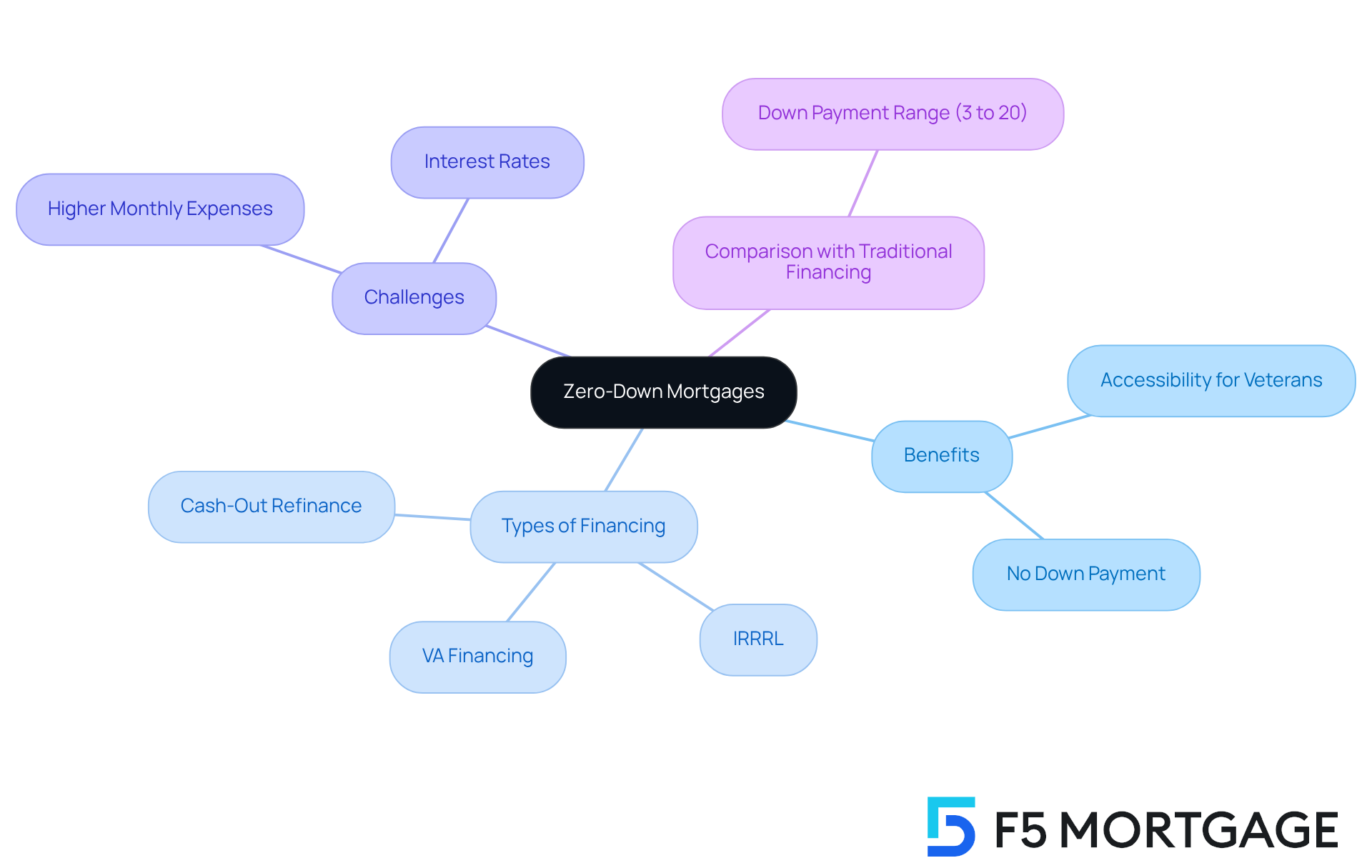
Zero-down mortgages and 100% financing home loans offer a compelling path to homeownership for first-time buyers by eliminating the traditional down payment hurdle, though they require careful navigation of stricter credit requirements, potential mortgage insurance, and higher long-term interest costs.
Entering the housing market as a first-time homebuyer is an exercise in balancing financial ambition with the stark reality of upfront costs. For decades, the conventional wisdom dictated saving 20% of a home’s purchase price before even stepping foot in an open house. For many aspiring buyers, that benchmark feels increasingly unattainable amid rising property values and rental burdens. This is where 100% financing home loans and zero-down mortgages re-enter the conversation. Promising the allure of homeownership without the grueling years of saving for a down payment, these products spark intense debate among financial planners, lenders, and real estate professionals.
Evaluating zero-down mortgages requires looking past the marketing pitch and examining the structural mechanics, eligibility thresholds, and inherent risks. While these loans provide a vital bridge for creditworthy buyers who lack generational wealth or substantial cash reserves, they also introduce unique financial vulnerabilities that demand rigorous scrutiny.
The Mechanics of 100% Financing
At its core, a 100% financing home loan allows a borrower to finance the entire purchase price of a residential property without contributing personal funds toward the principal balance. In a standard real estate transaction, the lender provides a loan for a percentage of the home's value (the Loan-to-Value, or LTV ratio), and the buyer covers the remainder in cash. With a zero-down structure, the LTV sits at 100%.
To understand how lenders mitigate the elevated risk of lending 100% of a home's value, it is necessary to examine how these programs operate structurally. Because the borrower has zero equity on day one, any minor dip in local real estate values can instantly place the mortgage "underwater," meaning the homeowner owes more than the property is worth. Lenders offset this risk through rigorous underwriting standards, specialized mortgage insurance products, or government backing.
Zero-down loans are generally distributed through a few specific channels:
- Government-backed programs: Loans insured or guaranteed by federal agencies designed to expand housing access.
- Specialty portfolio products: Proprietary loans offered by specific banks or credit unions seeking to attract high-earning professionals or specific demographic segments.
- Down payment assistance (DPA) combinations: Dual-loan structures where a primary mortgage covers 97% to 100% of the home, paired with a secondary silent second mortgage or grant that covers the down payment.
Primary Pathways to Zero-Down Homeownership
Not all zero-down mortgages are created equal. The availability of 100% financing typically depends on specific federal programs, military service, or targeted community initiatives.
USDA Rural Development Loans
The United States Department of Agriculture offers a lesser-known yet powerful program designed to encourage residential development in rural and suburban fringe areas. USDA loans feature 100% financing for eligible properties located within designated geographic boundaries.
- Income Limits: Borrowers must not exceed localized median income caps (typically 115% of the area median income).
- Property Eligibility: The home must be located in an area deemed rural by the USDA, though many suburban developments qualify if they sit outside major metropolitan cores.
- Fees: While there is no down payment, USDA loans require an upfront guarantee fee and an annual fee, which function similarly to private mortgage insurance.
VA Home Loans
For eligible military service members, veterans, and surviving spouses, the Department of Veterans Affairs loan program represents the gold standard of zero-down financing.
- No Private Mortgage Insurance (PMI): One of the primary advantages of the VA loan is that it does not require monthly mortgage insurance, regardless of the down payment amount.
- Funding Fee: Borrowers pay a one-time VA funding fee (which can be rolled into the loan amount), though disabled veterans are often exempt.
- Credit Flexibility: While the VA does not set a hard minimum credit score, individual lenders participating in the program usually look for scores starting around 580 to 620.
Down Payment Assistance (DPA) Programs
For buyers who do not qualify for USDA or VA loans, combining a conventional 97% LTV loan with a down payment assistance program can achieve 100% financing. These programs are typically administered by state housing finance agencies, municipal governments, or non-profit organizations.
- Grants vs. Second Liens: Some DPA programs provide outright grants that do not require repayment. Others structure the assistance as a "silent second" mortgage—a zero-interest, zero-payment loan that is only repaid when the home is sold, refinanced, or the primary mortgage is paid off.
Comparative Overview of Zero-Down Options
| Loan Program | Target Audience | Primary Advantage | Main Drawback | Minimum Credit Score (Typical) |
|---|---|---|---|---|
| VA Loan | Military, Veterans, Eligible Spouses | No monthly mortgage insurance; competitive rates | Restricted eligibility; funding fee required | 580 – 620 |
| USDA Loan | Moderate-to-low income buyers in rural/suburban areas | 100% financing; below-market interest rates | Strict geographic and income limitations | 640 |
| Conventional + DPA | General first-time homebuyers | Broad property eligibility; conventional terms | Complex underwriting; potential second-lien restrictions | 620 – 680 |
| Doctor / Professional Loans | Medical residents, physicians, attorneys | High loan amounts; ignores student loan debt in calculations | Requires specific high-earning career paths | 700+ |
The Financial Realities: Pros and Cons
Choosing a zero-down mortgage requires weighing immediate accessibility against long-term financial costs. It is an economic trade-off that demands careful calculation.
The Advantages
- Preservation of Liquid Capital: Buying a home requires cash for more than just a down payment. Closing costs, home inspections, appraisals, and immediate repairs can easily consume 2% to 5% of the purchase price. Keeping cash reserves intact provides a vital financial safety net for emergencies.
- Beating Rent Inflation: In markets where rental costs continually outpace wage growth, locking in a fixed-rate mortgage allows buyers to stabilize their housing expenses. Waiting years to save a 20% down payment can mean losing thousands of dollars to rising rent while home appreciation outpaces savings rates.
- Accelerated Entry: Real estate acts as a forced savings vehicle through principal paydown and long-term appreciation. Securing a property sooner allows buyers to begin building equity earlier in life.
The Disadvantages
- Immediate Negative Equity Risk: Because closing costs and the loan amount equal or exceed the property value on day one, selling the home within the first few years without bringing cash to the closing table can be exceedingly difficult.
- Higher Monthly Payments: Borrowing 100% of the purchase price results in a higher principal balance compared to making a down payment. Furthermore, the absence of a down payment often triggers mandatory mortgage insurance or higher interest rates, driving up monthly housing expenditures.
- Stricter Underwriting Scrutiny: Lenders take on heightened risk with zero-down loans. Consequently, they often demand higher credit scores, lower debt-to-income (DTI) ratios, and verified cash reserves to prove the borrower can handle financial shocks.
Navigating the Underwriting Process for Zero-Down Loans
Securing a 100% financing loan requires meticulous preparation. Because lenders examine zero-down applicants with heightened rigor, assembling a complete and flawless financial profile is essential before submitting an application.
Optimizing Credit Health
Credit scores dictate both loan approval and the interest rate applied to a 100% financing product. While some government-backed programs accept lower scores, positioning a credit profile above 680 or 720 significantly expands loan product options and lowers long-term borrowing costs. Borrowers should pull their credit reports months in advance, correct any inaccuracies, and pay down revolving credit lines to lower credit utilization ratios.
Managing Debt-to-Income (DTI) Ratios
Lenders evaluate the proportion of gross monthly income dedicated to servicing debt. For zero-down mortgages, DTI ceilings are often strictly enforced. Buyers should audit their monthly obligations—including student loans, auto loans, and credit card minimums—and avoid opening new lines of credit during the mortgage pre-approval and underwriting window.
Preparing for Closing Costs
A common misconception among first-time buyers is that "zero down" means "zero cash to close." Even with 100% financing covering the purchase price of the home, buyers are generally responsible for closing costs, lender fees, title insurance, property taxes, and homeowners insurance. While sellers can sometimes cover a portion of these expenses through seller concessions, or lenders can offer lender credits in exchange for a higher interest rate, buyers must be prepared for out-of-pocket expenses at the closing table.
My Expert Verdict on Zero-Down Mortgages
Zero-down mortgages and 100% financing home loans are neither a financial trap nor a universal panacea; they are high-utility financial instruments that demand precise application.
My verdict is that 100% financing is an effective tool for disciplined buyers with stable income and strong credit who would otherwise be trapped in a perpetual cycle of renting, provided they plan to stay in the home for at least five to seven years.
If you are a military service member eligible for a VA loan, utilizing zero-down financing is almost always a rational choice due to the absence of monthly mortgage insurance. Similarly, if your alternative is spending the next five years aggressively saving a down payment while your target housing market appreciates faster than your savings rate, a zero-down or DPA-backed loan bridges a structural gap.
Conversely, zero-down mortgages become dangerous when used by buyers stretching their financial limits to purchase a home at the absolute ceiling of their pre-approval amount. Entering a home purchase with zero equity, zero cash reserves, and a high debt-to-income ratio exposes the household to severe financial vulnerability if unexpected life events occur.
Before committing to a 100% financing structure, run the numbers: compare the total cost of ownership over a seven-year horizon against waiting to save a traditional down payment. Ensure that your monthly housing payment leaves ample room for emergency savings, ongoing home maintenance, and retirement contributions. When approached with realistic expectations and strict budgeting, zero-down mortgages can successfully transform long-term housing aspirations into tangible reality.