A 10 year life insurance policy costs less than a 20 year policy primarily because the insurance company assumes financial risk for half the duration, translating to lower cumulative premium payments, reduced exposure to age-related mortality increases, and a lower statistical probability of the insurer paying out a death benefit within the shorter timeframe.
When shopping for term life insurance, consumers often evaluate policy lengths based on their current financial obligations, family milestones, and long-term budgeting. A common point of comparison is the price difference between a 10-year term and a 20-year term. While a 10 year life insurance policy is almost universally cheaper on a monthly or annual basis than its 20-year counterpart, understanding the structural mechanics of how life insurance pricing works reveals why this price gap exists, how risk is calculated, and whether the immediate savings justify choosing the shorter term length.
The Fundamentals of Term Life Insurance Pricing
To understand why 10 year policies are more affordable than 20 year policies, it is necessary to examine how life insurance underwriters calculate premiums. Term life insurance is designed to provide pure death benefit protection for a specified period. Unlike permanent insurance, such as whole or universal life, term policies do not build cash value; they simply insure that if the policyholder passes away during the term, the beneficiaries receive the face value amount.
Insurance companies rely heavily on actuarial science, historical mortality tables, and statistical probability to price these contracts. The primary variables that influence the cost of a term life insurance policy include age, health status, gender, tobacco use, lifestyle hazards, and the length of the term itself.
When an insurer issues a policy, they lock in the premium rate for the entire duration of the term. This means that a 35-year-old who purchases a 20-year term policy will pay the exact same monthly premium at age 54 as they did when they first enrolled. Because the insurer cannot raise rates to match the applicant's advancing age during that 20-year window, they must price the policy to account for the increasing risk of mortality over those two decades. Conversely, a 10-year term policy locks in rates for a shorter period, insulating the insurer from a portion of that long-term risk and allowing for a lower initial price point.
Risk Exposure and Duration
The concept of risk exposure is the single most important factor driving the price difference between 10-year and 20-year term policies. Insurance is fundamentally a risk-pooling mechanism. The longer a policy remains active, the higher the statistical probability that the insured individual will pass away, triggering a claim payout.
| Policy Term | Duration of Risk Locked In | Statistical Mortality Risk | Average Relative Premium Cost |
|---|---|---|---|
| 10-Year Term | 10 Years | Lower over the active window | Lowest |
| 20-Year Term | 20 Years | Higher as the insured ages 10 additional years | Moderate to Higher |
| 30-Year Term | 30 Years | Highest due to advanced age bracket | Highest |
As illustrated above, a 20-year policy forces the insurance company to absorb the mortality risk of an aging client for twice as long as a 10-year policy. Mortality rates do not increase linearly; they accelerate exponentially as a person moves into older age brackets—particularly after age 50. By limiting the contract to 10 years, the insurance company minimizes its exposure to the steep mortality curves associated with older age, passing those savings on to the consumer in the form of lower premiums.
Age and Health Progression Over Time
An individual's age at the time of application and how age intersects with the policy term heavily influence the pricing structure. Consider an applicant who is 40 years old.
If they purchase a 10-year term policy, they are covered from age 40 to age 50. Their premium is calculated based on their mortality risk as a healthy 40-year-old. When that policy expires at age 50, the policyholder is a decade older. If they attempt to purchase a new policy at age 50, their rates will be significantly higher because they are entering a new, more expensive age tier, and any minor health conditions that developed over the previous decade will now be factored into the underwriting process.
If that same 40-year-old purchases a 20-year term policy, they are covered from age 40 to age 60. The insurance company must price the policy by blending the mortality risk of ages 40 through 60 into a single, level premium. Because the insurer is taking on the risk of insuring a 55- and 59-year-old—ages where health complications and mortality rates are markedly higher than at age 42—the initial premium for the 20-year policy is higher than the 10-year policy.
Financial Commitments and Matching Term Lengths to Liabilities
Choosing between a 10-year and 20-year policy is not purely a matter of finding the cheapest monthly payment; it is about matching the insurance coverage duration to specific financial liabilities. This alignment dictates whether the savings of a 10-year policy represent a smart financial strategy or a dangerous under-insurance risk.
When a 10-Year Policy is Appropriate
A 10-year term policy is typically well-suited for individuals who have short-term financial obligations or those working within a strict temporary budget. Common use cases include:
- Short-Term Debt Payoff: Covering a remaining balance on a business loan, personal loan, or a specific financial obligation that will be fully satisfied within a decade.
- Children Nearing Independence: Providing a safety net while children are close to finishing college and entering the workforce, thereby reducing their financial dependency on the insured.
- Bridge Coverage: Supplementing an existing employer-provided group life insurance plan during a critical career phase until other permanent financial arrangements are established.
- Budget Constraints: Providing immediate, basic protection for individuals who temporarily cannot afford the higher premiums of a 20-year or 30-year policy.
When a 20-Year Policy is Necessary
Conversely, a 20-year policy is often recommended for individuals with long-term responsibilities that extend well beyond a single decade. Common scenarios include:
- Young Families: Parents with newborns or toddlers who will require financial protection, housing security, and educational funding for the next two decades.
- Long-Term Mortgages: Homeowners who have recently taken out a 30-year mortgage and want to ensure their family can pay off the remaining balance if the primary earner passes away during the peak earning years.
- Income Replacement: Replacing decades of lost future earnings to support a dependent spouse or partner until retirement age.
The Hidden Costs of Choosing a Shorter Term
While a 10 year life insurance policy is cheaper initially, consumers must evaluate the total cost of ownership over time, especially if their insurance needs extend beyond 10 years.
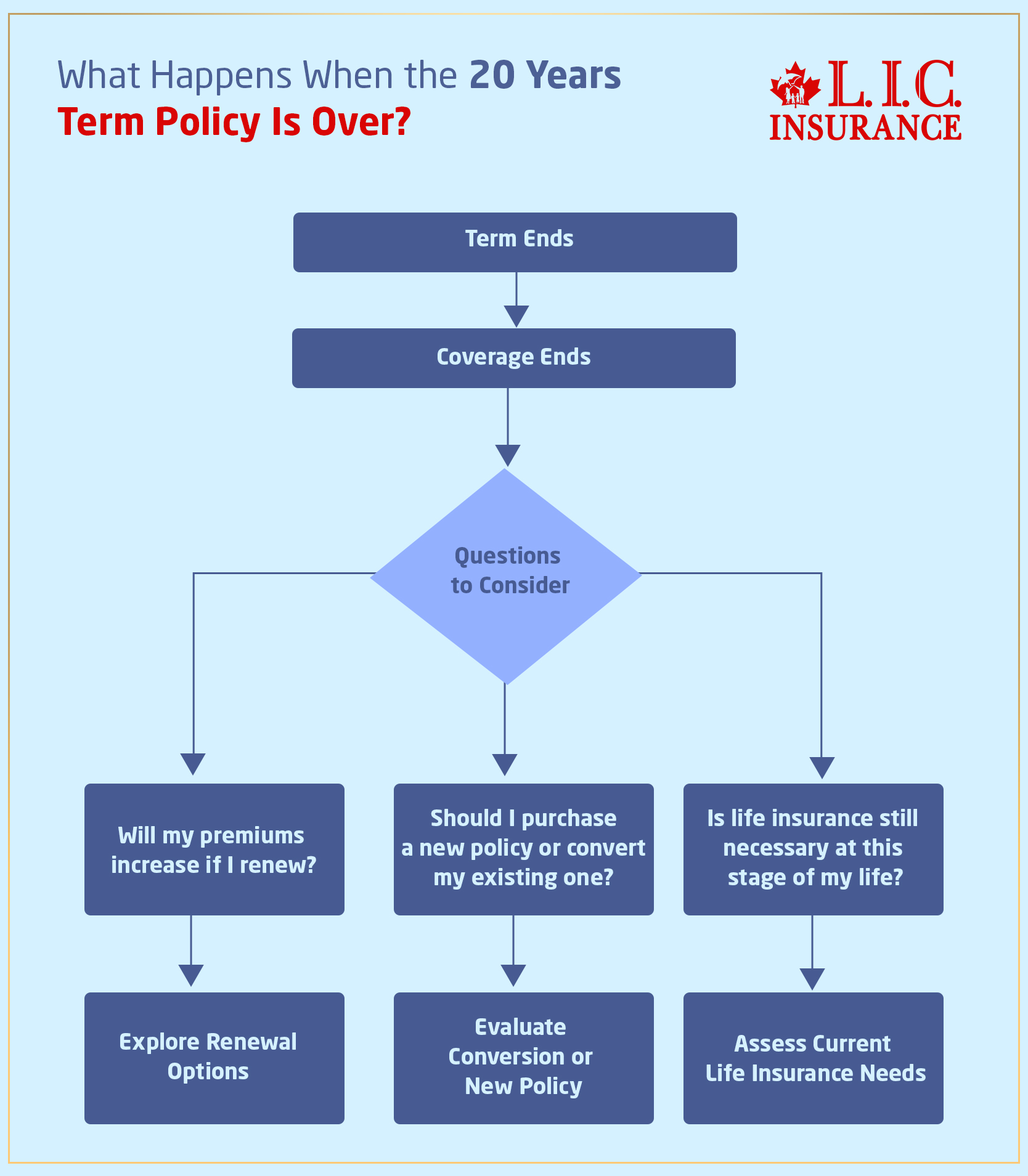
If a buyer purchases a 10-year policy to save money, but still needs life insurance in year 11, they face two primary options: renewing the existing policy via a yearly renewable term rider (often called guaranteed renewability) or applying for a brand-new policy.
Exercising the guaranteed renewability option on a 10-year term policy typically results in skyrocketing premiums. Insurance companies price these annual renewals based on attained age, and the rates jump exponentially each year, making it financially unsustainable for long-term use.
Alternatively, applying for a brand-new term policy at age 50 requires going through a new underwriting process. If the insured has developed health conditions over the previous decade—such as high blood pressure, elevated cholesterol, or diabetes—their new rates will reflect those conditions, or they may be denied coverage altogether. Therefore, buying a 10-year policy purely to save money can backfire if the underlying need for insurance persists past the 10-year mark.
Comparing Term Options: Financial and Structural Overview
Evaluating the trade-offs between a 10-year and 20-year policy requires looking at the broader picture of cost stability, risk management, and long-term financial planning.
| Feature | 10-Year Term Policy | 20-Year Term Policy |
|---|---|---|
| Initial Premium Cost | Lower | Higher |
| Rate Stability | Locked for 10 years | Locked for 20 years |
| Underwriting Risk | Lower for the insurer | Higher for the insurer |
| Best Suited For | Short-term debts, older applicants | Young families, long mortgages |
| Renewal Risk | High rate spike after year 10 | Lower immediate renewal pressure |
As the comparison demonstrates, the choice hinges on balancing immediate cash flow needs against future protection certainty. Lower monthly payments preserve capital today, but locking in a longer rate protects against future health declines and age-related price spikes.
Frequently Asked Questions
Can I convert a 10-year term policy into a 20-year term policy later?
No. Once a term life insurance policy is issued, the duration, death benefit, and premium structure are legally locked for that specific term. You cannot extend a 10-year policy into a 20-year policy. However, many term policies include a conversion rider that allows policyholders to convert their term policy into a permanent life insurance policy (such as whole life) without undergoing a new medical exam, subject to the specific carrier's rules and deadlines.
Is it possible to qualify for a 10-year policy if I have chronic health conditions?
Yes. Individuals with controlled chronic conditions often find that insurance carriers are more willing to approve a 10-year term policy than a 20- or 30-year policy. Because the insurer is only taking on financial risk for a decade, the underwriting requirements may be slightly more forgiving, or the resulting high premium may still be more manageable than a longer-term contract.
What happens when a 10-year term policy expires?
When a 10-year term policy reaches its expiration date, the coverage ends. You will no longer pay premiums, and your beneficiaries will no longer be covered by a death benefit. You can either let the policy lapse, exercise a guaranteed renewal option (at significantly higher annual rates), or apply for a new life insurance policy based on your age and health at that time.
Are there medical exams required for both 10-year and 20-year policies?
Underwriting requirements depend on the insurance carrier, the face value of the policy, and your age and health history, rather than the length of the term alone. Both 10-year and 20-year policies frequently require a medical exam (paramedical interview, blood draw, and urine sample), though some carriers offer "no-exam" or accelerated underwriting paths for qualified applicants seeking either term length.
Does a 10-year policy build any cash value?
Standard term life insurance policies—whether 10, 20, or 30 years—do not build cash value. They are designed strictly to provide a death benefit. If you want a policy that accumulates cash value alongside a death benefit, you must look into permanent life insurance products, such as whole life or universal life insurance.
Practical Next Actions and Recommendations
Before selecting between a 10-year and a 20-year life insurance policy, conduct a thorough personal financial audit to evaluate your liabilities. Calculate the exact number of years remaining on your mortgage, the time until your youngest dependent becomes financially self-sufficient, and the total debts you would leave behind. If your financial obligations clearly span a decade or less, capitalizing on the lower premiums of a 10-year term policy makes sound financial sense. However, if your major financial responsibilities extend fifteen to twenty years into the future, paying the higher initial premium for a 20-year policy provides vital rate stability and prevents the risk of uninsurability or unaffordable renewals down the road. Consult with an independent insurance broker or financial advisor to compare quotes across multiple top-rated carriers tailored to your specific health profile and timeline.