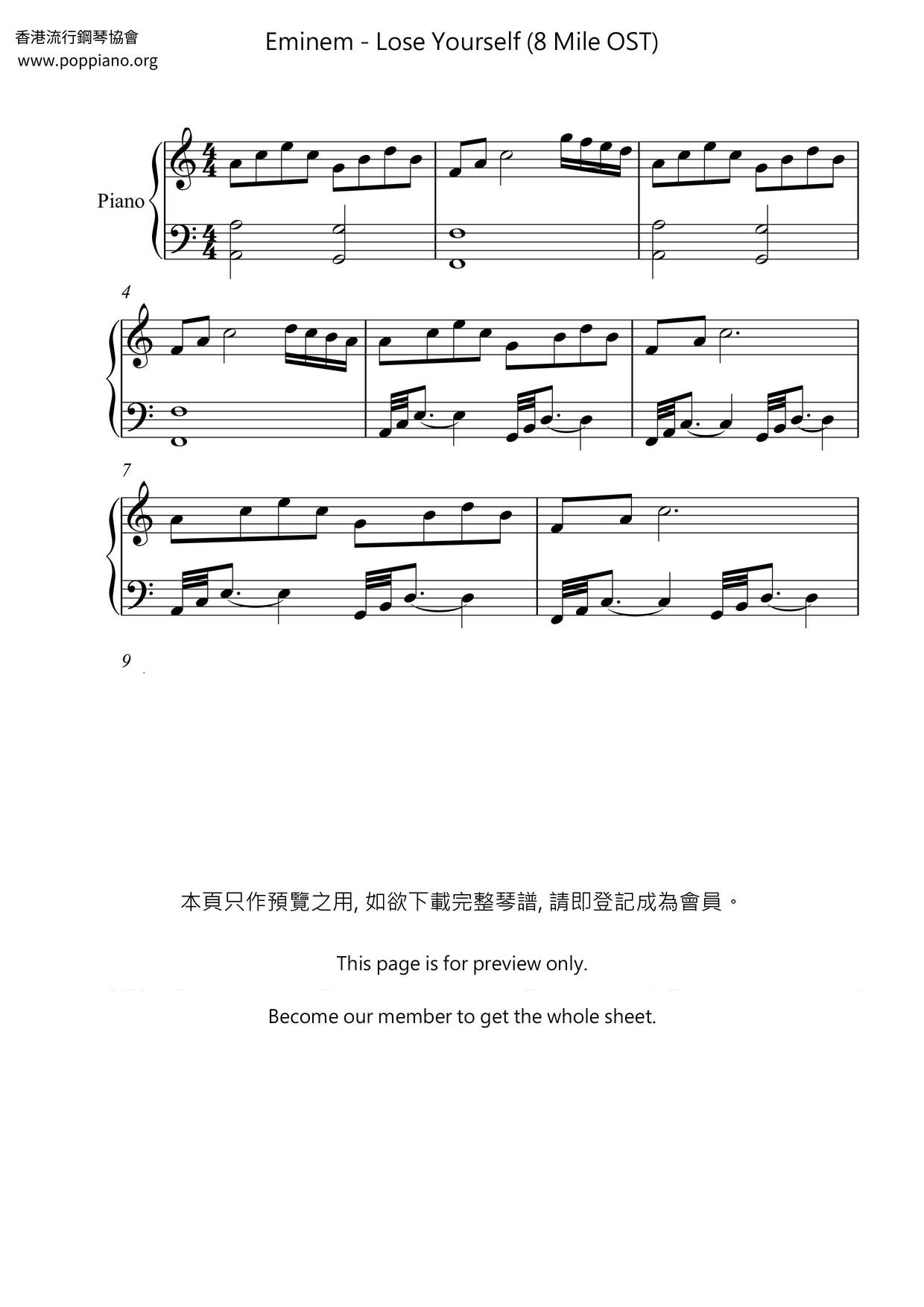
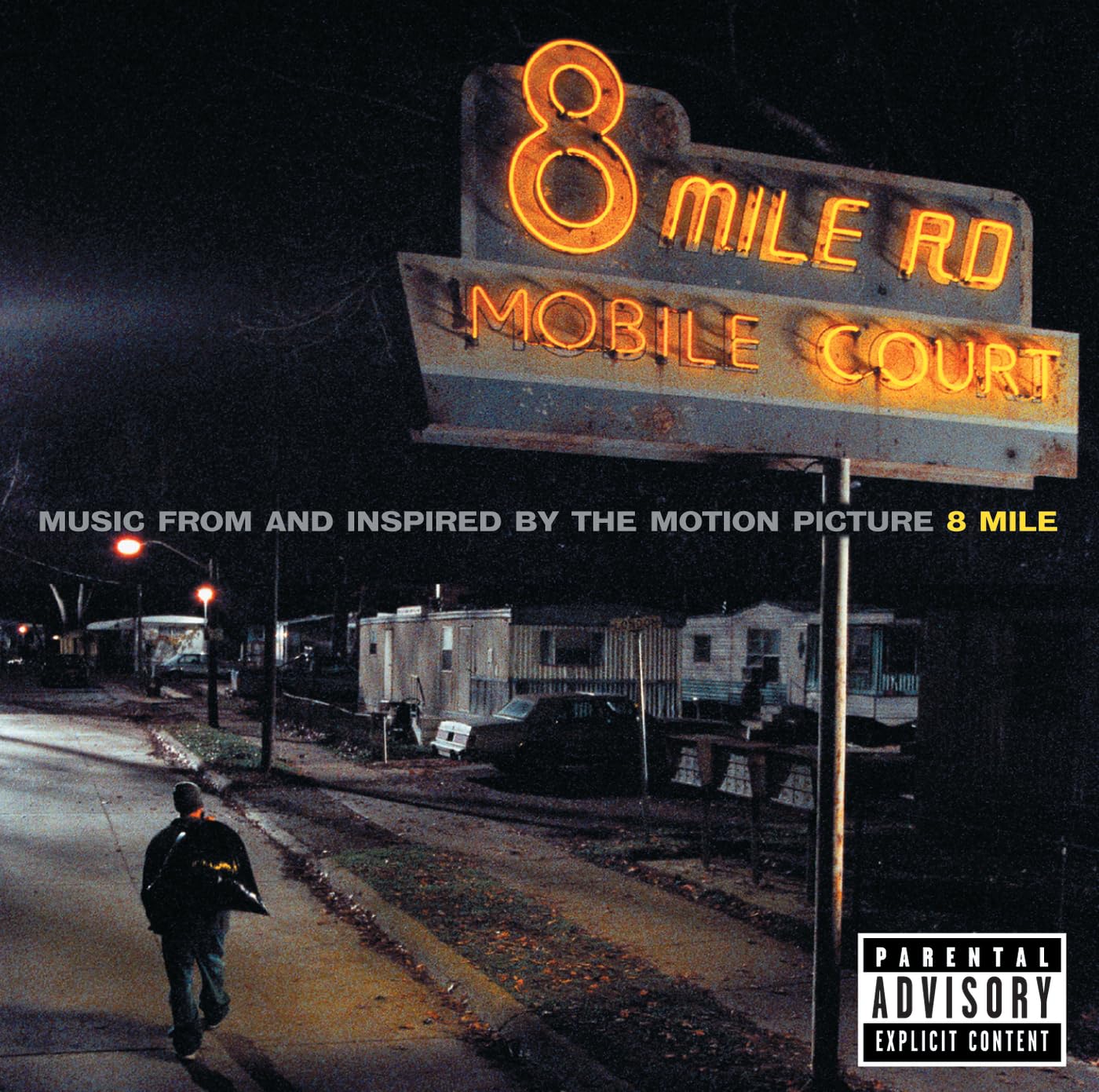
Yes, "Lose Yourself" is the primary theme song and lead single for the 2002 film 8 Mile, starring Eminem. While the song does not appear as a diegetic performance during the movie's famous rap battles, it plays in its entirety over the closing credits and serves as the emotional and narrative backbone of the film's soundtrack.
The connection between the song "Lose Yourself" and the film 8 Mile is one of the most significant moments in hip-hop and cinematic history. To understand why this single answer carries so much weight, one must look at the specific circumstances of its creation, its placement within the film’s structure, and how it eventually became the first rap song to win an Academy Award. As of 2026, nearly a quarter-century after its release, the track remains the gold standard for "underdog" anthems and movie tie-in singles.
The Role of "Lose Yourself" Within the Film 8 Mile
When viewers ask if "Lose Yourself" is "in" 8 Mile, they are often looking for the specific scene where Eminem’s character, Jimmy "B-Rabbit" Smith Jr., performs the track. However, the song functions differently than the rest of the music in the film.
Diegetic vs. Non-Diegetic Music
In film theory, "diegetic" music is music that the characters themselves can hear—such as the songs playing on the radio in Rabbit’s car or the beats used during the rap battles at the Shelter. "Lose Yourself" is largely non-diegetic. It does not exist within the physical world of the 1995 Detroit setting of the movie. Instead, it serves as a meta-commentary on Rabbit’s journey.
The lyrics of the song summarize the plot of the film with precision: the "mom’s spaghetti" incident mirrors Rabbit’s initial choking on stage, the mention of "the trailer park" refers to his living situation, and the "one shot, one opportunity" theme encapsulates the film’s climax. By placing the song over the end credits, director Curtis Hanson allowed the audience to decompress from the gritty realism of the film while hearing a polished, aggressive summary of the protagonist's internal growth.
The Closing Credits Sequence
The most prominent placement of the song is during the end credits. As B-Rabbit walks away from the Shelter, declining a spot in the "Three One Third" crew to go back to his shift at the factory, the iconic guitar riff begins. This placement is strategic; it bridges the gap between the fictional character of Jimmy Smith Jr. and the real-world success of Eminem, signaling to the audience that the struggle they just witnessed led to the mastery they are now hearing.
The Production History: Writing on the Set of 8 Mile
The creation of "Lose Yourself" is as legendary as the song itself. Unlike most movie themes, which are composed in a studio long after filming wraps, "Lose Yourself" was written and partially recorded during the actual production of 8 Mile.
The Mobile Studio
Because Eminem was in nearly every scene of the film, he had very little time to work on music. To accommodate his schedule, the production team built a portable recording studio (frequently referred to as the "Shady Trailer") on the film set. During lighting setups and scene changes, Eminem would retreat to the trailer to write lyrics.
According to co-producer Jeff Bass, the instrumental for the song had been in development for some time, but the lyrics were crafted specifically to match the "Rabbit" persona. This is why the song feels so authentic to the movie; Eminem was literally wearing the character's clothes and sitting in the character's environment while writing the verses.
Technical Composition
Musically, the song is built on a relentless, driving D-minor chord progression. It lacks the traditional "hook-heavy" pop structure of many 2002 radio hits, instead relying on a tense, building energy.
- The Riff: A simple, palm-muted guitar line that mimics a racing heartbeat.
- The Tempo: At 171 BPM (or 85.5 BPM half-time), the song matches the frantic pace of a battle rapper's internal monologue.
- The Rhyme Scheme: The song is often cited by musicologists for its intricate internal rhyme schemes and "multisyllabic" rhyming, which was a departure from the more simplistic movie themes of the era.
Recognition and Awards: A Historic Milestone
The success of "Lose Yourself" transformed the way the film industry viewed hip-hop. Before 2003, rap songs were often relegated to "urban" categories and rarely seen as serious contenders for major cinematic awards.
The 75th Academy Awards
In 2003, "Lose Yourself" was nominated for Best Original Song. In a move that shocked many at the time, Eminem did not attend the ceremony. He reportedly stayed home in Michigan and slept through the broadcast, believing that a rap song had no chance of winning against traditional ballads or musical theater entries (such as those from Chicago).
When Barbra Streisand announced "Lose Yourself" as the winner, it marked the first time a hip-hop track had ever won an Oscar. This moment was so significant that Eminem eventually returned to the Academy Awards stage 17 years later, in 2020, to perform the song he had missed the chance to perform when it originally won.
Global Chart Dominance
"Lose Yourself" wasn't just a critical success; it was a commercial juggernaut. It spent 12 weeks at number one on the Billboard Hot 100, becoming the longest-running number-one single of 2002–2003.
| Metric | Achievement |
|---|---|
| Billboard Hot 100 | #1 for 12 Consecutive Weeks |
| Academy Awards | Best Original Song (Winner) |
| Grammy Awards | Best Rap Song, Best Male Rap Solo Performance |
| RIAA Certification | 13x Platinum (as of latest audit) |
| AFI 100 Years... | Ranked #93 in Greatest Movie Songs |
The 8 Mile Soundtrack: Contextualizing the Song
To fully answer the question of "Lose Yourself" in 8 Mile, one must look at the album on which it appeared. 8 Mile: Music from and Inspired by the Motion Picture was released on October 29, 2002, via Shady Records.
While "Lose Yourself" is the centerpiece, the soundtrack also featured other tracks that appeared in the film or were "inspired" by its themes. This includes:
- "8 Mile" by Eminem: A track that focuses more on the physical geography of Detroit and the dividing line of 8 Mile Road.
- "Rabbit Run" by Eminem: A fast-paced lyrical exercise that plays during the scene where Rabbit is writing lyrics on the bus.
- Classic 1995 Hip-Hop: Because the movie is set in 1995, the film also features music by Mobb Deep ("Shook Ones Pt. II"), The Notorious B.I.G., and Wu-Tang Clan. These songs are used during the battle scenes, whereas "Lose Yourself" (released in 2002) is the modern reflection on that era.
Cultural Impact and 2026 Perspective
In 2026, the phrase "Mom's spaghetti" has transitioned from a lyric to a global cultural meme, and even a brick-and-mortar restaurant in Detroit owned by Eminem. This longevity highlights why the song is inseparable from the movie.
The "Underdog" Blueprint
"Lose Yourself" created a blueprint for the "motivational" rap song. It is played in sports stadiums, political rallies, and graduation ceremonies because it distills the universal experience of needing to perform under pressure. Without the narrative context of the film 8 Mile—the story of a poor laborer trying to use his talent to escape a dead-end life—the song would not have the same resonance.
Preservation of the Legacy
In recent years, the song has been remastered for spatial audio and high-fidelity streaming, ensuring that its technical production remains competitive with modern 2026 standards. Despite the evolution of rap into "mumble rap," "trap," and other sub-genres, the lyrical density of "Lose Yourself" continues to be taught in songwriting workshops as a masterclass in narrative tension.
Common Misconceptions About the Song in the Movie
There are a few persistent myths about "Lose Yourself" and its appearance in 8 Mile that deserve clarification:
- The Battle Myth: Many people misremember the final battle against Papa Doc as being set to the beat of "Lose Yourself." This is incorrect. The final battle in the movie is performed over the instrumental of "Shook Ones Pt. II" by Mobb Deep.
- The Demo Version: There is a "demo" version of "Lose Yourself" (released on the Shady XV compilation) that features completely different lyrics. This version was not used in the film and shows how the song evolved from a generic rap track into the film-specific anthem we know.
- The Writing Credit: While Eminem is the face of the song, it was a collaborative effort. Jeff Bass provided the iconic guitar riff and bassline, while Luis Resto handled the keyboards and programming.
Frequently Asked Questions
Does Eminem perform "Lose Yourself" in 8 Mile?
No, he does not perform the song on screen as a character. The song plays as a recorded track over the end credits. The rap performances within the movie are freestyle battles using older, 1990s-era hip-hop beats.
Why is the song called "Lose Yourself"?
The title refers to the mental state required to succeed in a high-pressure environment. It encourages the listener to "lose themselves" in the moment and the music, letting go of fear, doubt, and external distractions to seize a singular opportunity.
How many Oscars did 8 Mile win?
8 Mile won exactly one Academy Award, which was for Best Original Song ("Lose Yourself"). While the film received critical acclaim, particularly for Eminem’s acting and Curtis Hanson’s direction, it did not receive nominations in other major categories like Best Picture or Best Actor.
Is "Lose Yourself" based on a true story?
The song, like the movie, is "semi-autobiographical." While the character Jimmy Rabbit is not literally Marshall Mathers (Eminem), the struggles with poverty, family instability, and the Detroit rap scene are based on Eminem’s real-life experiences prior to his fame.
Where can I find the version of the song from the movie?
The version heard in the film is the standard version found on the 8 Mile soundtrack. You can find it on all major streaming services. For a different perspective, you can also listen to the "Lose Yourself (Drumless Version)" or the "Original Demo" for insight into how the track was constructed.
Final Recommendation: How to Experience the Song Today
To truly appreciate why "Lose Yourself" is the definitive answer to the 8 Mile musical legacy, we recommend a two-step approach:
- Watch the film 8 Mile: Pay close attention to the soundscape of 1995 Detroit. Notice the absence of high-production 2002 sounds.
- Listen to the soundtrack immediately after: The transition from the gritty, lo-fi battles of the movie to the polished, explosive energy of "Lose Yourself" as the credits roll provides the full emotional payoff that the director intended.
As of 2026, the song remains a pivotal historical marker in the crossover between hip-hop and Hollywood, proving that a single song can define an entire cinematic experience.