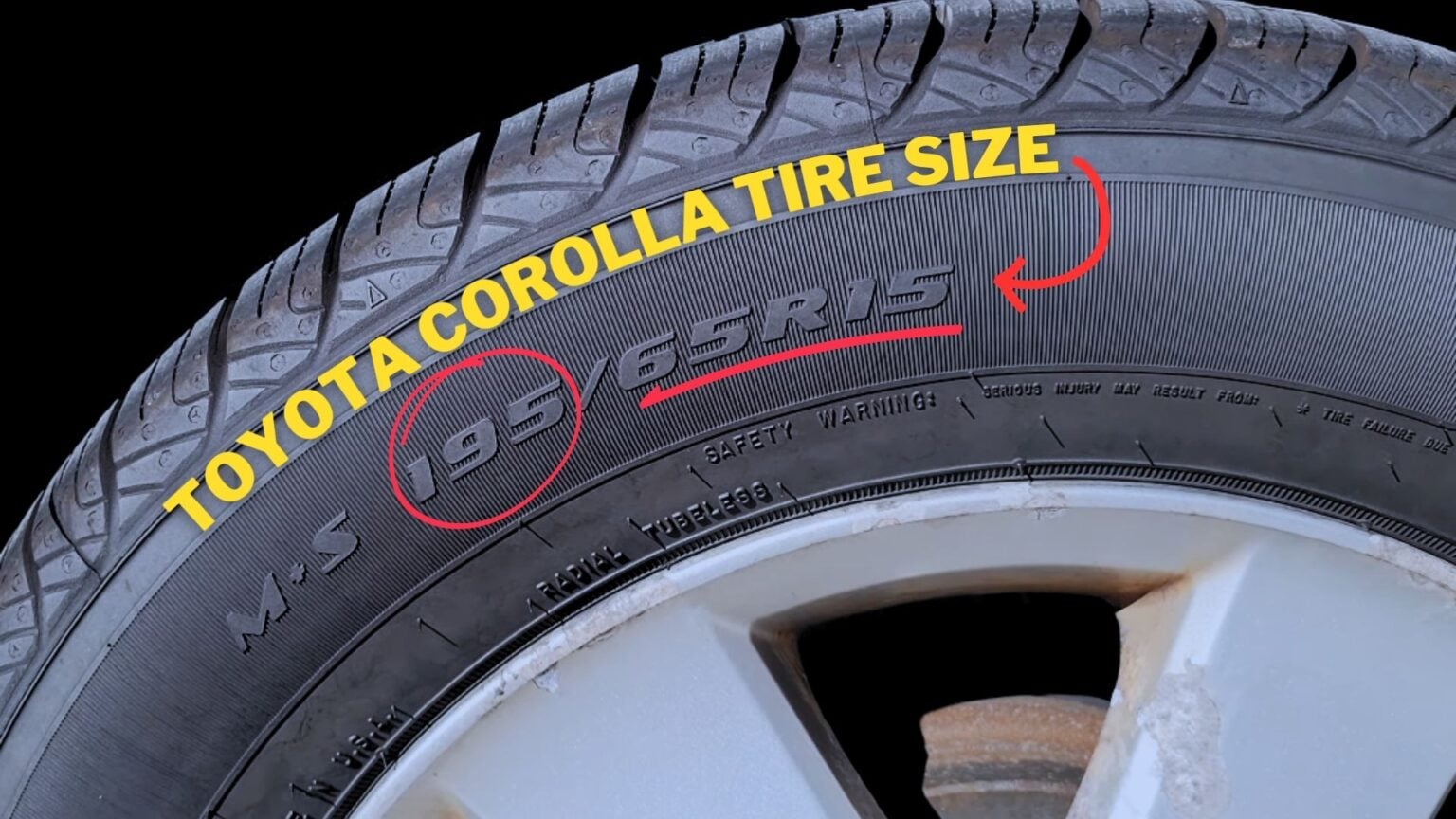
The standard tire size for the 2003 Toyota Corolla is 185/65R15, which is found on the CE, LE, and S trim levels. Some regional base models may utilize 175/70R14. For enthusiasts seeking performance upgrades, compatible plus-size options include 205/55R16 and 215/45R17, provided they maintain the vehicle's 4x100mm bolt pattern and correct offset.
Understanding the 2003 Toyota Corolla Tire Architecture
As we move through 2026, the 2003 Toyota Corolla remains a staple of reliability on global roads. Whether you are maintaining a high-mileage daily driver or restoring a low-mileage "modern classic," selecting the correct tire size is fundamental to preserving the vehicle's legendary fuel economy and ride quality. The ninth-generation Corolla (E120/E130 platform) was designed with a specific suspension geometry optimized for comfort and efficiency, making tire selection more than just a matter of fitting rubber to a rim.
The most common size, 185/65R15, offers a balanced sidewall height that absorbs road imperfections effectively. This size is ubiquitous, meaning that even in 2026, finding replacements is easy and affordable. However, the choice between the 14-inch and 15-inch variants depends entirely on the specific trim and the wheels currently installed on the vehicle.
The Standard 15-Inch Configuration (185/65R15)
This is the North American standard for the CE (Classic Edition), LE (Luxury Edition), and S (Sport) trims. The numbers in this sequence provide critical information:
- 185: The section width in millimeters from sidewall to sidewall.
- 65: The aspect ratio, meaning the sidewall height is 65% of the 185mm width.
- R15: Radial construction designed for a 15-inch diameter wheel.
The Base 14-Inch Configuration (175/70R14)
While less common in the United States for the 2003 model year, some entry-level models or those sold in international markets utilized the 175/70R14 size. These tires are narrower and have a taller sidewall relative to their width. If your vehicle is equipped with 14-inch steel wheels, you must stick to this diameter unless you intend to replace the wheels themselves.
Comprehensive Tire Size and Specification Table
To assist in your decision-making process, the following table outlines the standard and common alternative sizes for the 2003 Corolla, including their physical dimensions and the impact on your speedometer.
| Tire Size | Type | Rim Width Range | Section Width | Overall Diameter | Speedometer Error (at 60 MPH) |
|---|---|---|---|---|---|
| 175/70R14 | OEM Base | 4.5" - 6.0" | 6.9" | 23.7" | -0.8% (Slower) |
| 185/65R15 | OEM Standard | 5.0" - 6.5" | 7.3" | 24.5" | 0% (Reference) |
| 195/60R15 | Alternative | 5.5" - 7.0" | 7.7" | 24.2" | +1.1% (Faster) |
| 205/55R16 | Plus 1 Size | 5.5" - 7.5" | 8.1" | 24.9" | -1.6% (Slower) |
| 215/45R17 | Plus 2 Size | 7.0" - 8.0" | 8.5" | 24.6" | -0.5% (Slower) |
Note: Speedometer error is calculated relative to the standard 185/65R15 fitment. A negative error means your speedometer will read slower than your actual speed.
Decoding Load Index and Speed Ratings
When shopping for tires in 2026, the dimensions are only half the story. You must also ensure the Load Index and Speed Rating meet or exceed the original equipment manufacturer (OEM) requirements. For the 2003 Corolla, the typical requirement is a load index of 88 and a speed rating of T or H.
Load Index: Why it Matters
The load index (e.g., 88) represents the maximum weight a single tire can support when properly inflated. An 88 rating corresponds to 1,235 pounds per tire. Given that the 2003 Corolla has a curb weight of approximately 2,500 to 2,600 pounds, a set of four tires with an 88 rating provides a significant safety margin even when the vehicle is fully loaded with passengers and cargo.
Speed Ratings: T, H, or V?
- T (118 mph): Standard for most all-season tires and perfectly adequate for the Corolla's 130-hp 1.8L engine.
- H (130 mph): Often found on "touring" tires, offering slightly better heat dissipation and steering response.
- V (149 mph): Usually reserved for performance-oriented "Plus 2" setups (17-inch wheels). While unnecessary for the Corolla's top speed, V-rated tires often feature stiffer sidewalls that improve cornering.
Plus-Sizing Your 2003 Corolla Tires
Many owners choose to "plus-size" their wheels to improve the aesthetic appeal and handling characteristics of the ninth-gen Corolla. Plus-sizing involves increasing the wheel diameter while decreasing the tire's aspect ratio to keep the overall diameter as close to stock as possible.
The Plus 1 Upgrade (16-Inch Wheels)
Moving to a 205/55R16 setup is the most popular modification for the 2003 Corolla. This size was standard on later Corolla generations and fits the 2003 model perfectly without rubbing. You gain a wider contact patch, which improves braking and cornering grip, at the slight expense of a firmer ride.
The Plus 2 Upgrade (17-Inch Wheels)
For a more aggressive look, 215/45R17 is the limit for most daily-driven 2003 Corollas. This setup requires a wheel with a specific offset (usually between +38mm and +45mm) to avoid hitting the strut housing or the inner fender liner during sharp turns. While the handling becomes significantly sharper, the thin sidewalls increase the risk of rim damage from potholes—a major consideration for urban drivers in 2026.
Technical Requirements: Bolt Pattern and Offset
If you are changing your tire size by upgrading your wheels, you must adhere to the 2003 Corolla's specific mechanical hub requirements. Using the wrong wheel specifications can lead to vibration, premature bearing wear, or even wheel detachment.
- Bolt Pattern: The 2003 Corolla uses a 4x100mm pattern. This means there are four lugs arranged in a circle with a 100mm diameter. This is a very common pattern shared with many older Honda and Mazda vehicles, but you must verify the center bore.
- Center Bore: The hub diameter is 54.1mm. If you purchase aftermarket wheels with a larger center bore, you must use hub-centric rings to ensure the wheel is perfectly centered on the axle.
- Offset: The factory offset is approximately +45mm. When moving to wider tires (like 215mm), an offset closer to +38mm or +40mm helps push the wheel slightly outward to maintain clearance from the suspension components.
- Lug Nut Torque: Regardless of the tire size chosen, lug nuts should be torqued to 76 lb-ft (103 Nm) in a star pattern to ensure even pressure on the brake rotor.
Maintenance and Safety Considerations in 2026
By 2026, many 2003 Corollas are approaching or exceeding 250,000 miles. At this stage in the vehicle's life, tire maintenance is as much about safety as it is about performance.
Checking for Dry Rot
If you are driving a low-mileage vehicle that has been sitting, check the tire sidewalls for small cracks known as dry rot. Tires generally have a service life of six to ten years, regardless of tread depth. You can find the manufacture date by looking at the DOT code on the sidewall; the last four digits represent the week and year of manufacture (e.g., "1224" means the 12th week of 2024).
TPMS (Tire Pressure Monitoring System)
The 2003 Corolla was produced before the federal mandate for electronic TPMS sensors in every wheel. Instead, some models used an indirect system that monitored wheel speed via the ABS sensors to detect a flat. If your "low tire" light is on, it is likely an indirect system. Ensure all tires are inflated to the door-jamb specification—usually 30 to 32 PSI—and use the reset button located under the steering column or inside the glove box.
Proper Alignment
Because the Corolla uses a simple MacPherson strut front suspension and a torsion beam rear, it is prone to "toe" issues if you hit a curb or large pothole. If you change your tire size or notice uneven wear on the inside or outside edges of your tires, a four-wheel alignment is mandatory to protect your investment.
Choosing the Right Tire Type for Your Climate
The best tire size won't help if the rubber compound is wrong for your environment. In 2026, tire technology has advanced significantly, offering better "all-weather" options that bridge the gap between traditional all-season and winter tires.
- All-Season (Grand Touring): Best for most 2003 Corolla owners. These focus on low rolling resistance (improving MPG) and a quiet ride. Look for models with high treadwear ratings (600+) if you want them to last 60,000 miles or more.
- All-Weather (3-Peak Mountain Snowflake Rated): If you live in a region with light snow but don't want to swap tires twice a year, these are an excellent choice for the Corolla. They provide significantly better ice and snow traction than standard all-seasons without the rapid wear of winter tires in summer.
- Winter Tires: For heavy snow regions, a dedicated set of 175/70R14 winter tires on steel wheels is a classic Corolla setup. The narrower width helps the tire "cut" through snow rather than floating on top of it.
Frequently Asked Questions
Can I put 195/65R15 tires on my 2003 Corolla?
Yes, 195/65R15 is a common substitute for the standard 185/65R15. It is slightly wider and taller. While it fits without rubbing, it will cause your speedometer to read approximately 2% slower than your actual speed, and it may slightly decrease your fuel economy due to increased rolling resistance.
What is the correct tire pressure for a 2003 Toyota Corolla?
The factory-recommended tire pressure is 30 PSI (pounds per square inch) for both front and rear tires under normal driving conditions. If you are carrying a full load of passengers or driving at sustained high speeds on the highway, increasing this to 32 PSI can improve stability and fuel efficiency. Always check pressure when the tires are "cold" (not driven for at least three hours).
Will 16-inch or 17-inch wheels hurt my gas mileage?
Generally, yes. Larger wheels are typically heavier than the stock 15-inch steel or alloy wheels. This increases "unsprung weight" and rotational inertia, meaning the engine has to work harder to turn the wheels. Additionally, the wider tires (205mm or 215mm) create more aerodynamic drag and rolling resistance. Expect a loss of 1–3 MPG when moving to a 17-inch performance setup.
My 2003 Corolla has 14-inch wheels; can I upgrade to 15-inch?
Absolutely. Upgrading to the 15-inch OEM size is a common way to improve the car's handling and increase the selection of available tires. You will need to source 15-inch wheels with a 4x100mm bolt pattern and a center bore of 54.1mm. OEM wheels from a 2004–2008 Corolla or a similar-era Toyota Prius are often direct bolt-on fits.
Do I need to recalibrate my speedometer if I change sizes?
The 2003 Corolla does not have an easily programmable ECU for speedometer calibration. If you stay within 3% of the original overall diameter, the difference is negligible for daily driving. If you go significantly larger or smaller, you will simply need to remember the offset (e.g., "when the needle says 60, I'm actually doing 62").
Final Recommendation
For the vast majority of 2003 Toyota Corolla owners in 2026, the best course of action is to stick with the 185/65R15 tire size. This size offers the most comfortable ride, the best fuel economy, and the widest variety of tire brands ranging from budget-friendly options to premium touring tires.
If you desire a more modern aesthetic and improved handling, the 205/55R16 "Plus 1" upgrade is the most balanced modification. It provides a noticeable improvement in steering response without significantly compromising the vehicle's ride quality or reliability. Regardless of the size you choose, prioritize tires with high wet-traction ratings and ensure your alignment is checked at the time of installation to preserve the life of your new rubber.
For more information on tire safety and ratings, you can visit the National Highway Traffic Safety Administration (NHTSA) or check technical comparisons on Tire Rack.