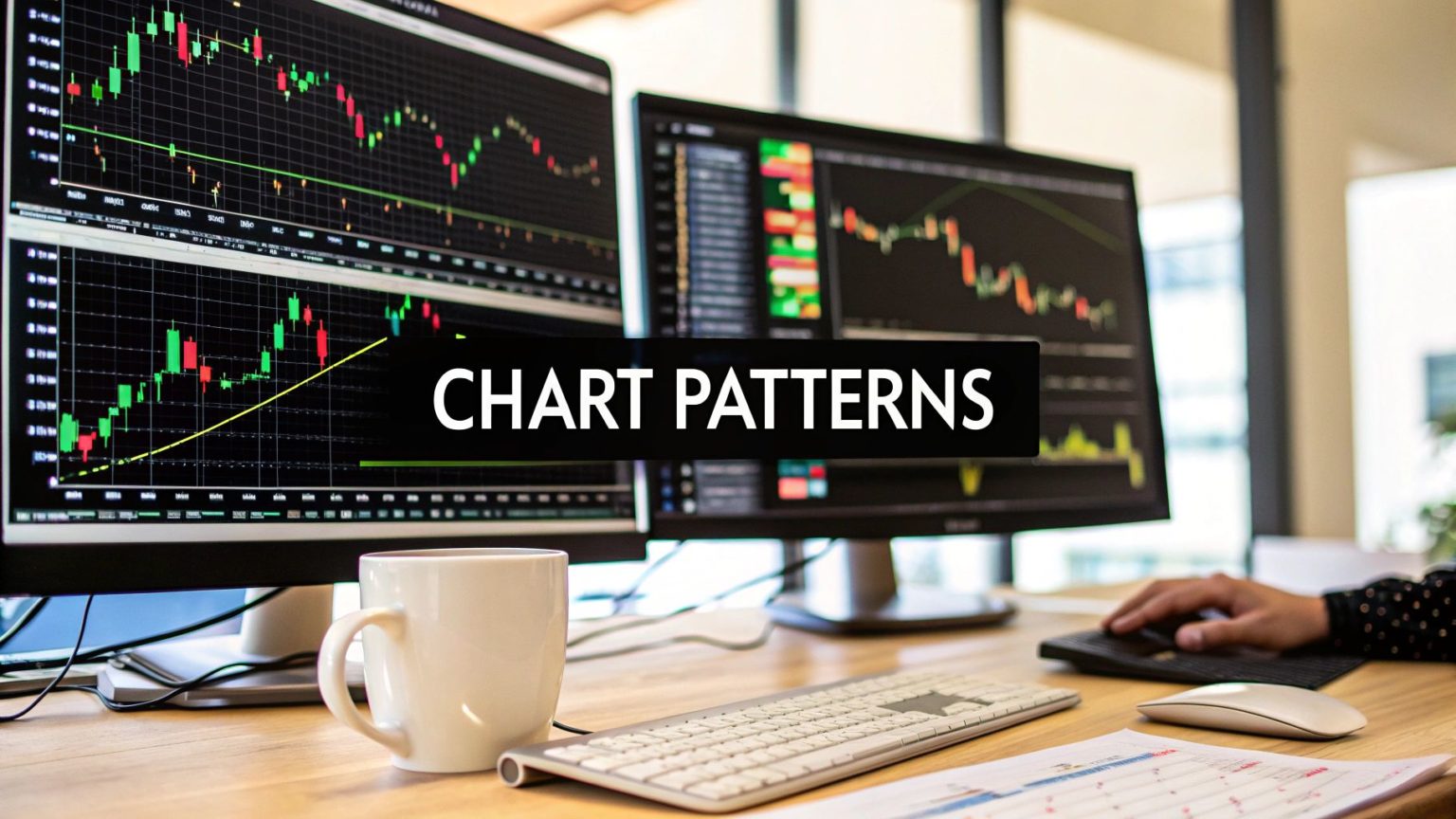
Achieving consistency in financial markets requires a systematic approach that replaces impulsive decision-making with a standardized, objective workflow. By utilizing a comprehensive pre-trade, execution, and post-trade checklist, traders can isolate high-probability setups, manage risk exposure effectively, and maintain psychological discipline during periods of high market volatility.
The Foundation of Systematic Trading
Consistency is rarely the result of a single "holy grail" indicator; rather, it is the product of disciplined repetition. A trading checklist functions as a cognitive safety net. It forces the trader to slow down, verify that each specific criterion of their strategy is met, and confirm that the risk-to-reward parameters align with their broader financial goals. Without a formal checklist, traders are prone to "confirmation bias," where they see only what they want to see to justify a trade, rather than what the market is actually presenting.
When developing your own protocol, ensure it is anchored in objective data rather than subjective intuition. Objective criteria include identifiable price levels, confirmed trend directions, and specific volume or volatility metrics. If your checklist requires you to "feel" if the market is ready, it is not a practical checklist; it is a suggestion. A professional checklist should leave no room for interpretation.
Phase I: The Pre-Market Analysis Checklist
Before a single order is placed, you must establish the context of the market. This phase is about identifying the boundaries within which you will operate.
- Macroeconomic Calendar Check: Review scheduled news releases for the day. High-impact events, such as central bank interest rate decisions or non-farm payroll reports, can invalidate technical setups instantly. Note the time of these events and plan to be flat or out of the market during the window of highest volatility.
- Trend Identification: Determine the primary trend across multiple timeframes. A consistent trader trades with the prevailing momentum on the higher timeframe (e.g., daily or 4-hour) while looking for entries on the lower timeframe (e.g., 15-minute).
- Key Level Marking: Identify critical support and resistance levels. These are not merely lines on a chart but zones where supply and demand have historically shifted. Are you entering into a level of "air" (where price can move freely), or are you entering directly into a brick wall of previous resistance?
- Volatility Assessment: Check the Average True Range (ATR) or similar volatility indicators. If volatility is exceptionally low, your profit targets may be unrealistic. If it is too high, your stop-loss distance may need to be wider to avoid getting "stopped out" by routine noise.
Phase II: The Execution Checklist
Once the market context is established, this phase defines the specific trigger conditions that mandate action. This is the moment to verify your edge.
- Setup Confirmation: Does the current price action match your defined pattern (e.g., a mean reversion, breakout, or trend-following pull-back)? If the setup is "close" but does not meet all criteria, the answer must be "no trade."
- Risk-to-Reward Ratio (RRR): Calculate the potential loss versus the potential gain. A consistent trader generally seeks a minimum RRR of 1:2. If the distance to your target is not at least twice the distance to your stop-loss, the trade does not justify the risk.
- Position Sizing: Verify your position size based on the distance to your stop-loss. Never use a fixed number of shares or contracts; use a fixed percentage of your account equity (typically 0.5% to 2% per trade).
- Order Type Selection: Decide whether you are using a market order (immediate execution at current price) or a limit order (execution at a specific price). In volatile conditions, limit orders protect against slippage, while market orders guarantee entry.
Table: Essential Pre-Trade Verification Matrix
| Component | Requirement | Action Required |
|---|---|---|
| Trend | Alignment with Higher TF | Confirm direction matches the primary trend |
| Zone | Room to Move | Verify price is not at a major resistance/support |
| Risk | Max Loss per Trade | Set stop-loss based on technical structure |
| Ratio | Minimum RRR 1:2 | Confirm target is 2x the risk distance |
| News | Economic Calendar | Check for upcoming high-impact volatility |
Phase III: The Post-Trade Review Checklist
Most traders neglect this phase, yet it is the only way to improve over time. A trade is not "done" when you exit; it is done when it is analyzed and recorded in your trading journal.
- Execution Quality: Did you follow your plan, or did you "fudge" the entry? If you followed the plan but the trade was a loss, it is a "good loss." If you ignored your rules and made money, it is a "bad win" that must be corrected.
- Mental State Audit: How were you feeling during the trade? Were you anxious, overconfident, or bored? Emotions are often a signal that your position size is too large or you are trading outside your area of competence.
- Exit Analysis: Did you exit at your pre-determined target or stop-loss, or did you panic? Exiting early due to fear or holding too long due to hope are the two most common killers of consistent account growth.
- Data Logging: Record the trade in a spreadsheet or journal. Include the setup, the reason for entry, the emotional state, and the final outcome. Over the course of 100 trades, this data will reveal the specific market conditions where you perform best and where you should avoid trading entirely.
Mitigating Common Psychological Pitfalls
Consistency is fundamentally a psychological challenge. Even with the best checklist, the human brain is wired to seek dopamine rewards, which often leads to "revenge trading" after a loss or "FOMO" (Fear Of Missing Out) when a trade takes off without you.
To maintain discipline, treat the checklist as a legal contract with yourself. If the checklist is not satisfied, the trade is disqualified. This simple rule acts as a circuit breaker for impulsive behavior. Furthermore, limit your total daily losses. If you hit your daily stop-loss limit, the checklist requirement for the remainder of the day becomes "do not open the trading platform."
Technical Prerequisites and Tools
To implement this checklist, you require a reliable trading platform that provides real-time data, charting tools for drawing support/resistance, and an order execution window. In 2026, most retail brokers provide integrated tools for calculating risk-based position sizes. Ensure your platform allows for "hotkeys" or "one-click" order entry if you are trading short timeframes, as the time taken to manually input a trade can lead to significant slippage.
Always maintain a backup connection. Whether it is a secondary internet source or a mobile app with full trading functionality, ensure that you are never left unable to manage an open position due to a local technical failure.
Frequently Asked Questions
How long should I keep a checklist before changing it? You should commit to a single version of your checklist for at least 50 to 100 trades. Changing your rules too frequently prevents you from gathering enough statistically significant data to determine if the strategy itself is sound or if your execution is the problem.
What is the most important part of the trading checklist? The most critical component is the Risk-to-Reward Ratio. Regardless of your win rate, if your losses are consistently larger than your wins, your account will eventually deplete. Maintaining a positive expectation requires ensuring that your winners stay significantly larger than your losers.
Can a checklist remove the need for fundamental analysis? A checklist should incorporate the fundamental factors that impact your specific market. If you trade equities, your checklist must include checking earnings dates. If you trade forex, it must include interest rate sentiment. The checklist is a summary of both technical and fundamental conditions.
How do I handle a "black swan" event? Even the best checklist cannot predict geopolitical shocks. The best defense is your stop-loss and position sizing. If an unexpected event occurs, your primary task is to protect capital. The checklist helps by keeping you in a controlled state, which prevents reactive, emotionally driven decision-making during crises.
Should I automate my checklist? If your strategy is purely quantitative, automation is highly recommended. However, if your strategy requires discretionary judgment, a physical or digital checklist that you manually check off is more effective, as it forces active engagement with the requirements for each trade.
Final Recommendation
To achieve consistent results, start by documenting your current "unwritten" rules into a formal, written checklist. For the next 30 days, do not take any trade that does not pass every item on your checklist. If you find yourself consistently failing a specific item, that is not a sign to ignore the rule; it is a sign that your strategy may be flawed in that area. Refine the rule, not the discipline. By narrowing your focus to only those setups that meet your rigorous standards, you shift from "gambling" on market movements to executing a business plan with professional precision.