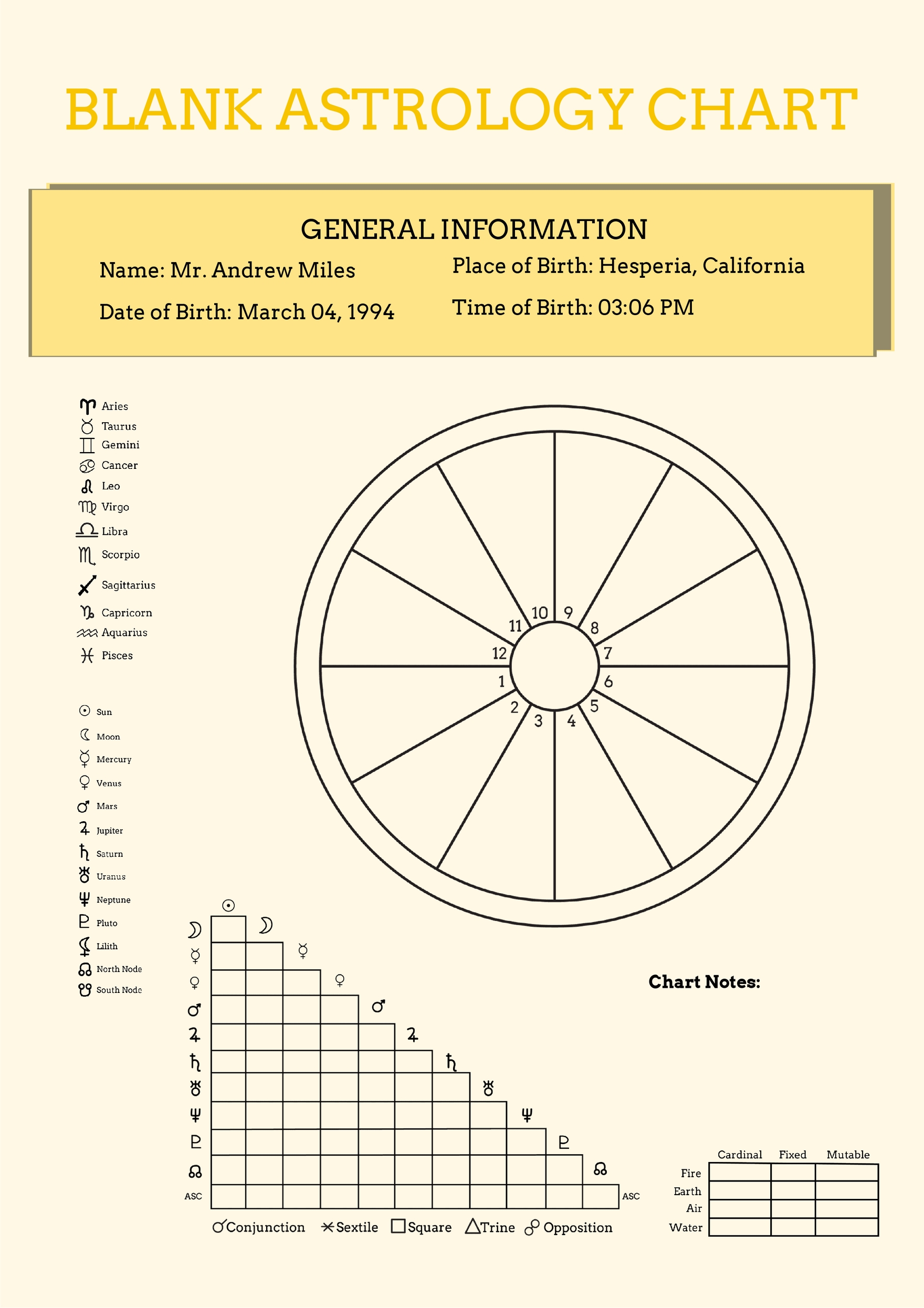
An astrology diagram, commonly known as a natal chart or birth chart, is a 360-degree mathematical map of the sky as it appeared from a specific location at the exact moment of an event, typically a person's birth. It functions as a symbolic blueprint of one's personality, potential challenges, and life path by plotting the positions of the sun, moon, and planets within the context of the twelve zodiac signs and twelve houses.
The Mathematical Foundation of the Astrology Diagram
The astrology diagram is not merely a piece of symbolic art; it is a sophisticated geometric representation based on the ecliptic—the apparent path of the Sun around the Earth. To create an accurate diagram in 2026, practitioners rely on high-precision ephemeris data, which tracks the movements of celestial bodies with mathematical certainty. The diagram is divided into several layers: the outer rim (the Zodiac signs), the inner sectors (the Houses), and the center, where geometric lines (Aspects) connect different planetary bodies.
The circular shape of the diagram represents the totality of the human experience. It is a 360-degree wheel divided into twelve equal segments of 30 degrees each, corresponding to the twelve signs of the zodiac. However, the internal division of "houses" often varies depending on the house system used, such as Placidus, Koch, or Whole Sign. Understanding this technical distinction is crucial because it determines which area of life a planet influences.
The Three Core Components of the Diagram
To interpret an astrology diagram effectively, one must understand the relationship between the three primary variables: the Planets, the Signs, and the Houses. A helpful mnemonic used by professional astrologers is to view the Planets as the "actors," the Signs as the "roles" or costumes those actors wear, and the Houses as the "settings" or stages where the action takes place.
1. The Planets: The "What"
The planets represent different functions of the human psyche. For example, Mercury governs communication and intellect, while Venus governs affection, values, and aesthetics. In a 2026 astrology diagram, modern practitioners also include asteroids like Chiron (the "wounded healer") and points like the North and South Nodes, which represent karmic direction.
2. The Zodiac Signs: The "How"
The twelve signs provide the "flavor" or style in which a planetary energy is expressed. If Mars (the planet of action and drive) is in Aries, the energy is expressed directly and impulsively. If Mars is in Taurus, that same drive is expressed through persistence and deliberate, slow-moving effort. The signs are further categorized by elements (Fire, Earth, Air, Water) and modalities (Cardinal, Fixed, Mutable), which add layers of technical depth to the interpretation.
3. The Houses: The "Where"
The houses represent the specific areas of life where planetary energies manifest. The first house represents the self and physical appearance, the seventh house represents partnerships, and the tenth house represents career and public reputation. Without the houses, an astrology diagram would tell you how you think or love, but it wouldn't tell you where those energies are most likely to show up in your daily life.
The Significance of the "Big Three"
When first looking at an astrology diagram, the sheer amount of data can be overwhelming. Beginners are encouraged to focus on the "Big Three," which provide the foundation of the personality.
- The Sun Sign: This is what most people refer to as their "Zodiac sign." It represents the core identity, ego, and life purpose. It is the "battery" that powers the rest of the chart.
- The Moon Sign: This represents the emotional interior, subconscious needs, and how one reacts when feeling vulnerable. It is often considered the "soul" of the diagram.
- The Ascendant (Rising Sign): This is the sign that was rising on the eastern horizon at the moment of birth. It represents the "mask" or the first impression one makes on others. Technically, the Ascendant marks the cusp of the first house and is the most time-sensitive point in the entire diagram.
Understanding the Twelve Houses
The division of the astrology diagram into twelve houses is what makes the chart unique to the individual. Because the houses rotate every two hours, two people born on the same day but at different times will have significantly different diagrams.
| House | Primary Theme | Life Areas Covered |
|---|---|---|
| 1st | Self | Identity, physical body, first impressions, vitality. |
| 2nd | Resources | Money, personal values, possessions, self-worth. |
| 3rd | Communication | Siblings, local travel, primary education, daily thoughts. |
| 4th | Home & Roots | Family, ancestry, the private life, domestic environment. |
| 5th | Creativity | Romance, children, hobbies, self-expression, joy. |
| 6th | Wellness | Daily routines, health, service, pets, work environment. |
| 7th | Partnerships | Marriage, business partners, open enemies, contracts. |
| 8th | Transformation | Shared resources, intimacy, taxes, inheritance, deep change. |
| 9th | Expansion | Higher education, long-distance travel, philosophy, law. |
| 10th | Public Life | Career, reputation, status, authority figures, legacy. |
| 11th | Community | Friendships, social groups, hopes, dreams, technology. |
| 12th | Subconscious | Solitude, hidden strengths/weaknesses, spirituality, endings. |
The Role of Aspects: The Geometric Conversation
The lines crisscrossing the center of an astrology diagram are called "aspects." These represent the angular relationships between planets. Aspects indicate how different parts of your personality interact with one another—whether they work in harmony or create internal tension.
Major Aspects and Their Meanings
- Conjunction (0°): Two planets are sitting next to each other. Their energies are fused together. This is a powerful, concentrated point in the diagram.
- Sextile (60°): A harmonious aspect that represents opportunity and ease. It suggests a talent that must be consciously developed.
- Square (90°): A challenging aspect that creates friction and tension. While difficult, squares are the primary drivers of growth and achievement in a person's life.
- Trine (120°): The most auspicious aspect. It represents a natural flow of energy and innate talents that come easily to the individual.
- Opposition (180°): Two planets are directly across from each other. This creates a "tug-of-war" dynamic, usually manifesting as a need to balance two opposing areas of life, often through relationships.
How to Generate and Verify Your Astrology Diagram
To generate an accurate astrology diagram in 2026, you require three specific pieces of information. Even a minor error in these details can result in a completely different chart.
- Date of Birth: The day, month, and year.
- Exact Time of Birth: This is the most critical variable. A difference of just four minutes can move the Ascendant by one degree, and a difference of two hours can move the Ascendant into an entirely different sign. It is recommended to use a birth certificate rather than a parent's memory.
- Place of Birth: The city and country. This allows the software to calculate the exact latitude and longitude, as well as the correct time zone and any historical Daylight Savings Time adjustments.
Once you have this data, you can use reputable platforms like Astrodienst or the International Society for Astrological Research (ISAR) to calculate the diagram. Modern software utilizes the Swiss Ephemeris, the gold standard for astronomical calculations in astrology, ensuring that the planetary positions are accurate to within seconds of an arc.
Common Pitfalls in Reading the Diagram
Interpreting an astrology diagram is a skill that takes years to master. Beginners often make the mistake of "cookbook reading," which involves looking up a single placement (e.g., "Venus in Scorpio") and taking it as a definitive truth without looking at the rest of the chart.
Synthesis is the key. A planet's expression is modified by its sign, its house, and the aspects it makes to other planets. For instance, someone might have Jupiter (the planet of luck) in the 2nd house (money), which usually suggests financial abundance. However, if Jupiter is "squared" by Saturn (the planet of restriction), that wealth may only come later in life after significant hard work and discipline.
Another common mistake is ignoring the "sect" of the chart. In Hellenistic astrology, which has seen a massive resurgence leading into 2026, whether a person is born during the day (Sun above the horizon) or at night (Sun below the horizon) changes which planets are considered most beneficial or challenging.
The Evolution of Astrology Diagrams in 2026
As of 2026, the technology behind astrology diagrams has become more integrated with augmented reality (AR) and data visualization tools. Many practitioners now use interactive diagrams that allow them to "scrub" through time, seeing how the current positions of the planets (transits) interact with their birth diagram in real-time.
Furthermore, there is a growing emphasis on astromapping (or Locality Astrology). This involves projecting the astrology diagram onto a map of the Earth to see how different geographical locations might trigger specific parts of one's natal chart. This highlights the diagram's role not just as a static map of the past, but as a dynamic tool for future planning.
Frequently Asked Questions
What if I don't know my exact birth time?
If you don't know your birth time, you can still generate a "Solar Chart" by placing the Sun on the Ascendant. While this will give you information about planetary aspects and signs, it will not provide accurate house placements. For a more precise solution, some professional astrologers offer a service called "rectification," where they use major life events to work backward and determine your most likely birth time.
Is an astrology diagram the same as a horoscope?
In modern parlance, a "horoscope" usually refers to a short forecast based on your Sun sign found in magazines or apps. However, the word horoskopos originally meant "watcher of the hour" and referred specifically to the Ascendant or the entire astrology diagram. So, technically, your natal chart is your true horoscope.
Do the positions in the diagram change as I get older?
The natal astrology diagram itself is a "snapshot" of a specific moment and never changes. It represents your innate potential. However, astrologers use techniques like Transits (where the planets are now) and Progressions (a symbolic movement of your chart over time) to see how you are evolving and which parts of your natal diagram are being "activated" at any given time.
Why do different websites show different house placements?
This is usually due to the "House System" selected. Placidus is the most common system in modern Western astrology, but many astrologers have shifted back to the Whole Sign House system because of its clarity and historical roots. If your planets seem to jump from one house to another on different sites, check the settings to see which house system is being utilized.
Can an astrology diagram predict the future?
Astrology is better understood as a tool for "weather forecasting" rather than deterministic "fortune-telling." The diagram shows the prevailing energies and timing of certain themes, but it does not account for human free will or environmental factors. It tells you that "rain" is likely, but you are the one who decides whether to stay inside or bring an umbrella.
Next Steps for Interpretation
Once you have generated your astrology diagram, the best next step is to identify your Ascendant and its "Ruling Planet." For example, if your Ascendant is Aries, your chart ruler is Mars. Locate Mars in your diagram to see which house it occupies. This specific planet and its placement will often provide the most significant clues about your overall life direction and personal drive.
For those looking to deepen their technical knowledge, studying the "Dignities and Debilities" of planets—how comfortable a planet is in a particular sign—provides the necessary framework to understand why some parts of a person's life feel effortless while others require constant maintenance.
Professional Advice Limitation: Astrology is a tool for self-reflection and personal growth. It should not be used as a substitute for professional legal, medical, or financial advice. Interpretations are subjective and based on historical and symbolic traditions.