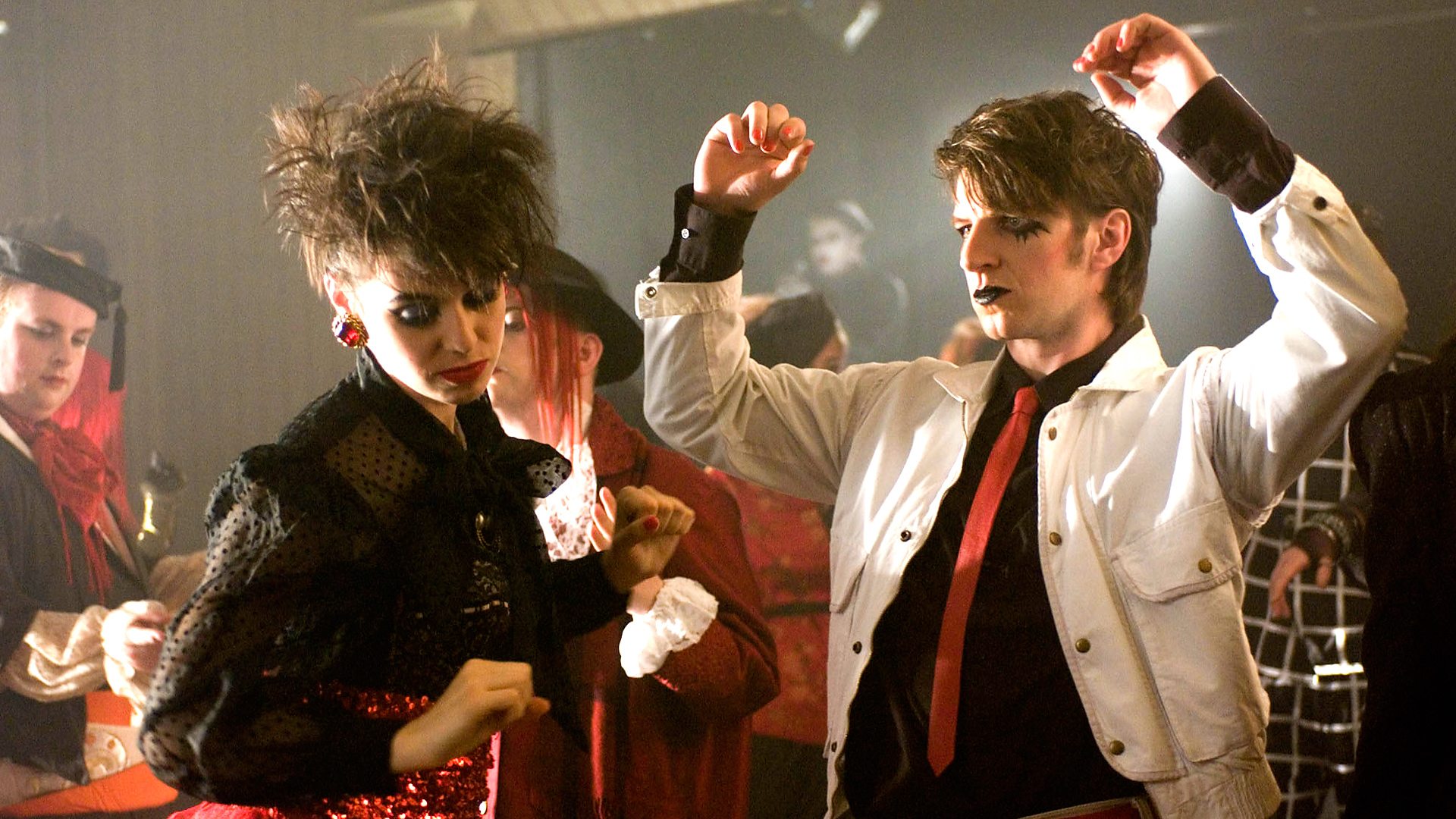
Ashes to Ashes is a critically acclaimed British television series that originally aired on BBC One from 2008 to 2010. Serving as a sequel and companion piece to the hit time-travel drama Life on Mars, the show follows Detective Inspector Alex Drake as she is shot in 2008 and finds herself mysteriously transported back to 1981, where she encounters the abrasive and unorthodox DCI Gene Hunt.
Introduction to the World of Ashes to Ashes
For fans of British television, police procedurals, and speculative fiction, the cultural footprint of the late-2000s BBC lineup remains profoundly significant. Created by Matthew Graham and Ashley Pharaoh, Ashes to Ashes blended the gritty, visceral realities of early 1980s British policing with high-concept science fiction and psychological mystery.
While its predecessor, Life on Mars, explored the year 1973 through the perspective of modern Mancunian detective Sam Tyler, Ashes to Ashes shifted the lens to the vibrant, synth-heavy, politically charged landscape of 1981 London. It centered on a female protagonist navigating a deeply entrenched macho workplace while hunting for clues about her own subconscious state, her parents' deaths, and the true nature of the purgatorial world she inhabits.
Understanding the series requires a look at its narrative foundations, character arcs, production style, cultural resonance, and how it brought one of British television's most iconic television universes to a definitive close.
Premise and Narrative Arc
The narrative engine of Ashes to Ashes kicks off in modern-day London, 2008. Detective Inspector Alex Drake (played by Keeley Hawes), a psychological profiler for the Metropolitan Police, listens to Sam Tyler’s final audio logs regarding his time in 1973. While on assignment, Alex is shot by a mysterious figure known as Arthur Layton.
Upon regaining consciousness, Alex does not wake up in a hospital bed. Instead, she finds herself emerging from the River Thames in the year 1981, dressed in period attire and surrounded by police officers who operate under entirely different rules, technologies, and social codes.
Just as Sam Tyler had to adapt to 1973, Alex must navigate 1981. However, her background as a modern psychological profiler gives her a distinct analytical edge. She recognizes that she is either suffering from a complex coma-induced delusion or has genuinely traveled through time.
Throughout the three series, the overarching plot balances monster-of-the-week criminal investigations with a deep, serialized mystery. Alex attempts to solve crimes while simultaneously trying to prevent the assassination of her own parents—an event that occurred in her childhood—believing that changing their fate will allow her to return to her daughter Molly in 2008.
Key Characters and Cast Dynamics
The emotional core of Ashes to Ashes relies heavily on the chemistry, friction, and eventual camaraderie among its principal cast. The characters represent a bridge between modern sensibilities and unapologetic 1980s workplace culture.
Detective Inspector Alex Drake (Keeley Hawes)
Alex is intelligent, fiercely independent, and grounded in modern psychological techniques. Unlike Sam Tyler, who often questioned his sanity and tried to reform the police force gently, Alex actively pushes back against the casual sexism, homophobia, and police brutality of the early 1980s. Her sharp intellect makes her a formidable opponent for Gene Hunt, leading to verbal sparring matches that define the show's dialogue.
Detective Chief Inspector Gene Hunt (Philip Glenister)
Returning from Life on Mars, Gene Hunt is the quintessential old-school copper. Nicknamed the "Sheriff ofNottingham" in his previous posting, he is now running the CID at Fenchurch East police station in London. He favors physical persuasion over forensic science, drinks heavily on the job, drives an iconic Quattro, and views political correctness as a hindrance to justice. Despite his abrasive exterior, Gene possesses an unwavering moral compass and a fierce loyalty to his team.
Detective Sergeant Ray Carling (Dean Andrews) and Detective Constable Chris Skelton (Marshall Lancaster)
Carried over from the Manchester team in Life on Mars, Ray and Chris represent the traditional lower ranks of CID. Ray is loud, brash, and deeply resistant to changing social norms, while Chris is more gentle, gullible, and occasionally sympathetic to Alex’s modern ideas. Their integration into the London station provides continuous comedic friction and character growth.
Shaz Granger (Montserrat Lombard)
Introduced in the first series, Shaz is a young, ambitious WPC (Woman Police Constable) who looks up to Alex. She serves as a vital bridge for female representation within the station, frequently confronting the glass ceiling of 1980s law enforcement.
| Character | Actor | Role / Affiliation | Defining Traits |
|---|---|---|---|
| Alex Drake | Keeley Hawes | DI, Psychological Profiler | Intellectual, resilient, determined to return to 2008 |
| Gene Hunt | Philip Glenister | DCI, Senior Investigating Officer | Unorthodox, authoritative, fiercely protective |
| Ray Carling | Dean Andrews | Detective Sergeant | Aggressive, traditionalist, loyal to Gene |
| Chris Skelton | Marshall Lancaster | Detective Constable | Naive, good-natured, eager to please |
| Shaz Granger | Montserrat Lombard | WPC / Detective Constable | Progressive, ambitious, observant |
Production Design and Aesthetic
One of the most celebrated aspects of Ashes to Ashes is its meticulous recreation of the early 1980s. The production team invested heavily in visual style, sound design, and historical texture to ensure the world felt authentic yet stylized, reflecting Alex's subjective psychological state.
Fashion and Visuals
The early 1980s aesthetic is visible in every frame, from the bold power suits and shoulder pads worn by Alex Drake to the leather jackets, bomber jackets, and wide ties sported by the male officers. The color grading of the series shifted away from the sepia, industrial tones of 1973 in Life on Mars toward neon highlights, cold blues, and vibrant pinks reminiscent of New Romantic music videos and early MTV culture.
Music and Soundtrack
Music acts as a narrative device throughout the series. Pop songs of 1981—ranging from David Bowie and Ultravox to Duran Duran and Visage—frequently bleed into the scene diegetically, playing on radios, in pubs, or echoing through Alex's mind. The title of the show itself is drawn from David Bowie's 1980 hit single "Ashes to Ashes," establishing a thematic link to reinvention, addiction, and haunting pasts.
Iconic Vehicles
No discussion of the series is complete without mentioning the vehicles. While Gene Hunt drove a Ford Cortina in Life on Mars, Ashes to Ashes upgraded him to a striking red Audi Quattro. The Quattro became a cultural symbol of 1980s excess, speed, and status, frequently featured in high-speed pursuits across London.
Series Breakdown and Evolution
Across its three-season run, Ashes to Ashes evolved from a procedural mystery into a complex metaphysical drama.
Series 1 (2008)
The first series establishes the new dynamic in London. Alex struggles to accept her predicament while working alongside Gene Hunt, Ray Carling, and Chris Skelton. A recurring element is the appearance of a chilling figure dressed as a Pierrot clown (mirroring the imagery in David Bowie's music video), who taunts Alex and hints at the sinister nature of her coma.
Series 2 (2009)
The second series deepens the conspiracy elements. Alex discovers that corrupt elements within the Metropolitan Police, tied to a shadowy figure known as "The Fox," are operating at high levels. The psychological tension between Alex and Gene reaches new heights as trust is tested, and the boundaries between the real world and the 1981 world begin to blur further.
Series 3 (2010)
The final series brought the entire saga—spanning both Life on Mars and Ashes to Ashes—to a definitive conclusion. With the introduction of DCI Jim Keats (played by Daniel Mays), an internal investigator ostensibly sent to audit Gene Hunt's department, the true nature of the world is unmasked. Keats attempts to turn the team against Gene, revealing an existential struggle for the souls of the officers working in the station.
The Controversial and Celebrated Finale
The final episode of Ashes to Ashes, broadcast in May 2010, provided one of the most talked-about conclusions in British television history. For years, fans speculated on whether the characters were time travelers, ghosts, or patients in a shared coma.
The finale revealed that Fenchurch East police station was, in fact, a form of purgatory—a resting place for police officers who had suffered violent, untimely deaths in the real world. Sam Tyler, Alex Drake, Ray Carling, Chris Skelton, and Shaz Granger had all died on duty in their respective real-world timelines. Gene Hunt was revealed to be an immortal psychopomp or guardian angel figure, tasked with helping troubled police officers find peace before moving on.
While some viewers debated the theological and logical implications of this revelation, the emotional resonance of the final sequence—where the team realizes the truth and accepts their fate together—cemented the show's status as a masterclass in serialized drama.
Frequently Asked Questions
Do I need to watch Life on Mars before watching Ashes to Ashes?
While Ashes to Ashes features a new protagonist and a different decade, watching Life on Mars first enhances the viewing experience. It establishes who Gene Hunt is, explains the underlying rules of the time-travel/purgatory mechanism, and introduces characters like Ray Carling and Chris Skelton who carry over into the sequel series.
Where was Ashes to Ashes filmed?
Although the series is set in London, much of the filming took place in and around London and the surrounding Home Counties. Production utilized various archival locations that still retained 1980s architectural elements, alongside extensive set construction for the Fenchurch East police station interiors.
Why is the Audi Quattro so important to the series?
The red Audi Quattro is more than just a car; it is an extension of Gene Hunt’s persona. Representing modern engineering, speed, and aggressive ambition in the early 1980s, it serves as the ultimate getaway vehicle for a man who refuses to play by the rules. It became one of the most recognizable props in modern British television history.
Is there going to be a revival or continuation of the series?
Creators Matthew Graham and Ashley Pharaoh conceptualized a proposed third series titled Greenham, which would have served as a final epilogue set in the mid-1980s. However, despite long-term fan campaigns and development discussions, the project did not secure the necessary funding or BBC greenlight, leaving Ashes to Ashes with its 2010 conclusion as the definitive end of the franchise.
How many episodes of Ashes to Ashes were produced?
The series ran for three series, comprising a total of 24 episodes. Series 1 and Series 2 each consisted of 8 episodes, while the final Series 3 consisted of 8 episodes, ensuring a tightly paced and cohesive narrative arc from start to finish.
Next Actions and Viewing Recommendations
For viewers looking to explore or revisit Ashes to Ashes, the recommended approach is to watch the entire saga in chronological production order: begin with the two seasons of Life on Mars (2006–2007) and follow immediately with the three seasons of Ashes to Ashes (2008–2010). This viewing path provides full context for character relationships, thematic callbacks, and the ultimate resolution of the fictional universe crafted by Graham and Pharaoh.