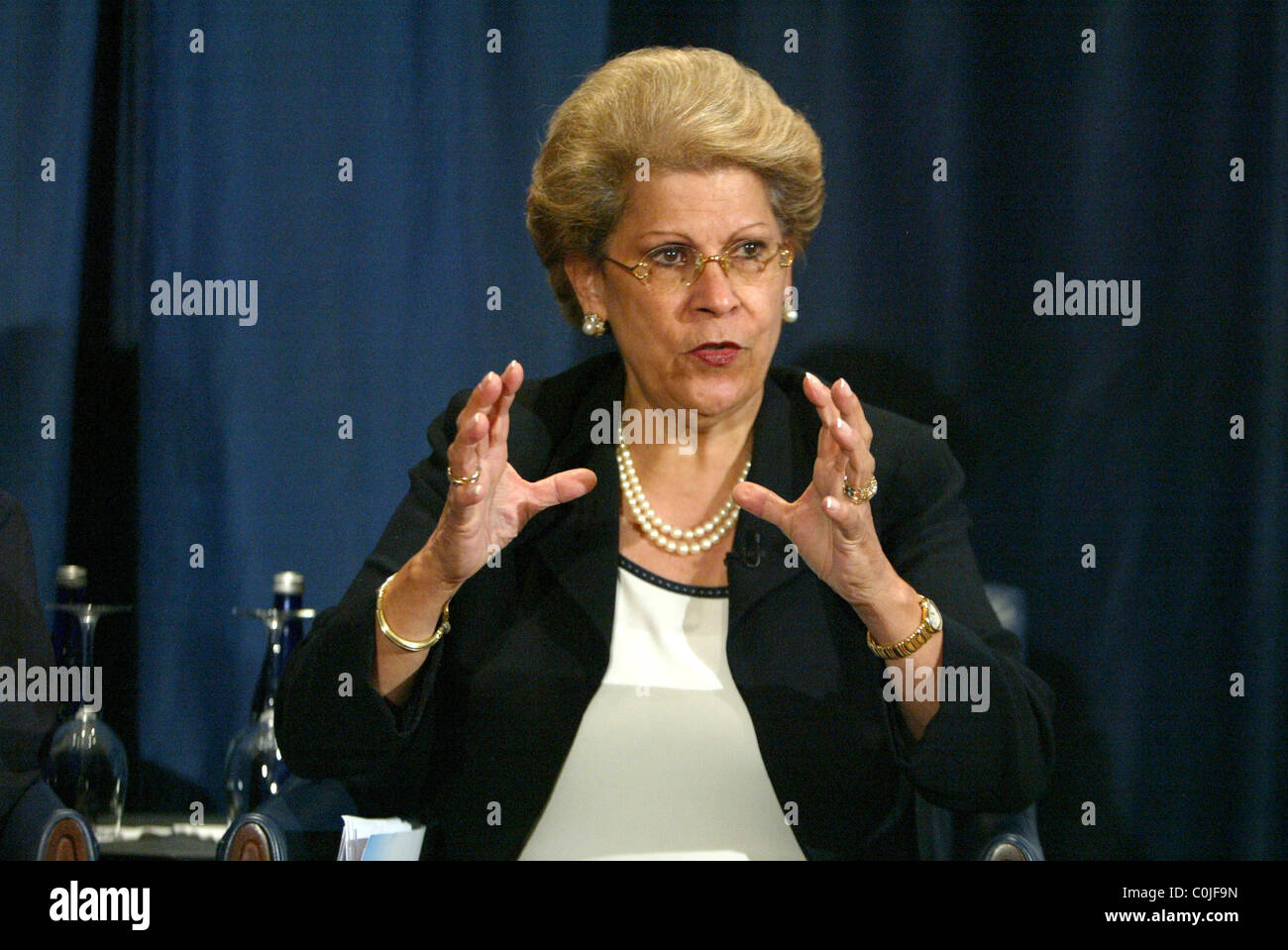
Dr. Antonia Novello is a pioneering physician and public health administrator who served as the 14th Surgeon General of the United States from 1990 to 1993. As the first woman and the first person of Hispanic heritage to hold this prestigious office, she transformed the role into a platform for protecting vulnerable populations, specifically focusing on the health of women, children, and minorities.
The Formative Years: Resilience and Ambition in Puerto Rico
Born Antonia Coello on August 23, 1944, in Fajardo, Puerto Rico, her journey into medicine was deeply influenced by personal adversity. Throughout her childhood, she suffered from congenital megacolon, a painful and debilitating condition that required frequent hospitalizations and caused significant discomfort. This condition was not fully corrected until she underwent surgery at the age of 18. This prolonged experience as a patient gave her a unique perspective on the healthcare system, fostering a profound sense of empathy for those suffering from chronic illnesses and a determination to improve medical care accessibility.
Growing up in a household where education was highly valued—her mother was a school principal—Novello excelled academically. She remained in Puerto Rico for her initial medical training, earning her B.S. and eventually her M.D. from the University of Puerto Rico in San Juan. The decision to stay in Puerto Rico during her early years allowed her to witness the specific health challenges facing the Hispanic community, which would later become a cornerstone of her national policy work.
Medical Specialization and the Move to the Mainland
After completing her medical degree in 1970, Novello moved to the mainland United States to pursue her residency in pediatrics at the University of Michigan Medical School. It was during this time that she began to specialize in pediatric nephrology—the study of kidney diseases in children. Her excellence in this field led her to a fellowship at Georgetown University and later at the National Institutes of Health (NIH).
Her technical expertise in nephrology provided her with a rigorous scientific foundation. During her tenure at the NIH, she didn't just focus on clinical practice; she became involved in public health administration. She earned a Master of Public Health (MPH) from Johns Hopkins School of Hygiene and Public Health in 1982, effectively bridging the gap between individual patient care and large-scale population health management.
Ascending to the Office of Surgeon General
In 1990, President George H.W. Bush nominated Dr. Antonia Novello to succeed the high-profile and often controversial C. Everett Koop as Surgeon General. The appointment was historic, breaking two major glass ceilings simultaneously. Her confirmation by the Senate was nearly unanimous, reflecting her reputation as a dedicated professional who prioritized science over partisan politics.
Upon taking the "Bully Pulpit" of the Surgeon General’s office, Novello faced the challenge of defining her own legacy in the shadow of Koop’s massive influence on the tobacco and AIDS debates. While she maintained the office’s commitment to these issues, she pivoted the national conversation toward the "forgotten" demographics: children, women, and the Hispanic community.
Confronting the Tobacco Industry: The Joe Camel Campaign
One of Novello’s most significant and enduring contributions to public health was her aggressive stance against the tobacco industry’s marketing tactics. In the early 1990s, R.J. Reynolds launched the "Joe Camel" advertising campaign, which featured a cartoon camel in "cool" scenarios. Novello recognized that this campaign was intentionally designed to appeal to children and teenagers, essentially grooming a new generation of smokers.
She did not mince words. In a series of high-profile press conferences and public statements, she called for the immediate cessation of the campaign, citing internal industry documents and independent studies showing that Joe Camel was as recognizable to six-year-olds as Mickey Mouse. Her efforts were a critical turning point in the regulation of tobacco advertising, leading to stricter guidelines and eventually contributing to the total ban of cartoon characters in cigarette marketing under the 1998 Master Settlement Agreement.
Addressing the Crisis of Underage Drinking
Novello was equally vocal about the dangers of alcohol consumption among youth. She criticized the "glamorization" of alcohol in television and magazine advertisements. Her reports highlighted a disturbing trend: children were beginning to drink at younger ages, and the consequences—ranging from developmental delays to fatal accidents—were largely being ignored by the public.
She advocated for clearer labeling on alcoholic beverages and pushed for better enforcement of age-limit laws. By framing underage drinking as a public health emergency rather than just a behavioral issue, she paved the way for modern educational programs that focus on the neurological impact of alcohol on the developing brain.
Advocacy for Women and the HIV/AIDS Pandemic
During the early 1990s, the HIV/AIDS epidemic was often characterized in the media as a crisis primarily affecting gay men. Dr. Novello was among the first high-ranking health officials to raise the alarm regarding the rising rates of infection among women and children. She recognized that women were often overlooked in clinical trials and that pediatric AIDS was an urgent, underfunded area of research.
Through her advocacy, the Department of Health and Human Services (HHS) began to allocate more resources toward understanding how HIV affected women's bodies differently and how to prevent mother-to-child transmission. Her work helped humanize the epidemic, moving it beyond stigma and focusing on the biological and social realities of the virus.
Championing Hispanic Health Issues
As the first Hispanic Surgeon General, Novello felt a deep responsibility to address the disparities in healthcare access for Latino communities. She initiated the "Hispanic Health Initiative," which sought to collect better data on Hispanic health outcomes, as they were often grouped into a generic "Other" category in medical studies.
She focused on high rates of diabetes, hypertension, and lack of insurance coverage within the community. By promoting culturally competent healthcare, she emphasized that language barriers and cultural misunderstandings were as much of a hurdle to good health as the diseases themselves.
Post-Surgeon General Career: UNICEF and New York State
After her term ended in 1993, Novello continued her mission on both a global and local scale. She served as a Special Representative for Health and Nutrition for UNICEF, where she worked to improve child survival rates in developing nations. Her work involved traveling to war-torn and impoverished regions to oversee immunization programs and nutritional interventions.
In 1999, Governor George Pataki appointed her as the Commissioner of Health for the State of New York. In this role, she managed one of the largest public health departments in the world. Her leadership was tested during several major crises:
- The September 11 Attacks: She coordinated the public health response in the aftermath of the World Trade Center collapse, dealing with environmental health concerns and the mental health needs of the city.
- The 2001 Anthrax Attacks: She managed the state's response to the bio-terrorism threats, ensuring that the public remained informed without succumbing to panic.
- West Nile Virus: She oversaw the state's efforts to control the spread of the mosquito-borne illness through surveillance and public education.
| Milestone | Year | Significance |
|---|---|---|
| Birth | 1944 | Born in Fajardo, Puerto Rico. |
| M.D. Degree | 1970 | Graduated from University of Puerto Rico. |
| Master of Public Health | 1982 | Earned from Johns Hopkins University. |
| U.S. Surgeon General | 1990-1993 | First woman and first Hispanic person in the role. |
| UNICEF Representative | 1993-1996 | Focused on global pediatric health and nutrition. |
| NY Health Commissioner | 1999-2006 | Led health responses to 9/11 and Anthrax scares. |
| COVID-19 Advocacy | 2020-2024 | Focused on vaccine equity for minority communities. |
Historical Evaluation and Legacy in 2026
From the vantage point of 2026, Dr. Antonia Novello’s impact on the medical field is viewed through the lens of "Health Equity"—a term that she helped define through her actions, even before it became a standard part of the medical lexicon. Her career serves as a blueprint for how technical medical expertise can be leveraged into powerful administrative and policy-making roles.
Challenges and Controversies
Like many high-profile public figures, Novello's career was not without challenges. In the late 2000s, her tenure as New York Health Commissioner was scrutinized. In 2009, she pleaded guilty to a misdemeanor related to the use of state employees for personal errands. While this was a significant setback to her public image at the time, her broader contributions to public health have remained the dominant part of her legacy. Historians and medical professionals in 2026 generally view her legal troubles as a separate chapter from her transformative work as Surgeon General and a pediatrician.
Long-term Impact on the Public Health Service
Dr. Novello’s insistence on data-driven policy for minority groups changed how the Centers for Disease Control and Prevention (CDC) and the NIH approach demographic research. Today, the inclusion of diverse populations in clinical trials is a legal and ethical requirement, a standard that Novello championed during her time in Washington D.C.
Furthermore, her battle with the tobacco industry set the stage for modern regulations on e-cigarettes and vaping. The "Novello approach"—calling out predatory marketing directly—remains the gold standard for public health advocates fighting the influence of large corporations on youth behavior.
Common Questions Regarding Antonia Novello
What were Antonia Novello's most significant achievements as Surgeon General?
Her most significant achievements included the crusade against the "Joe Camel" tobacco advertising campaign, highlighting the impact of underage drinking, and bringing national attention to the needs of women and children living with HIV/AIDS. She was also instrumental in launching the Hispanic Health Initiative to address health disparities in Latino communities.
Why was her appointment as Surgeon General historic?
Dr. Novello was the first woman and the first person of Hispanic descent to serve as the Surgeon General of the United States. Her appointment broke long-standing demographic barriers in the highest levels of the U.S. Public Health Service.
What medical specialty did Dr. Novello practice?
Dr. Novello was a pediatrician with a sub-specialty in pediatric nephrology (kidney diseases in children). She also held a Master of Public Health, which allowed her to transition from clinical practice to high-level policy and administration.
How did her childhood in Puerto Rico influence her career?
A congenital medical condition (megacolon) that wasn't corrected until she was 18 gave her firsthand experience with the healthcare system as a patient. This instilled in her a lifelong commitment to improving medical access and the quality of care for underserved populations.
What did she do after serving as Surgeon General?
Following her term, she served as a Special Representative for Health and Nutrition for UNICEF and later spent seven years as the Commissioner of Health for the State of New York, where she oversaw the public health response to the 9/11 attacks and the anthrax scares.
Practical Recommendation: Lessons for Future Medical Leaders
For students, medical professionals, and policy-makers in 2026, Dr. Novello’s career offers several critical takeaways:
- Prioritize Communication: Novello demonstrated that a Surgeon General must be an effective communicator. By using the "Bully Pulpit" to speak directly to the public, she was able to influence behavior more effectively than through policy alone.
- Focus on the Underserved: Her career highlights the importance of looking for "blind spots" in the healthcare system. By focusing on women, children, and minorities, she addressed needs that others had overlooked.
- Resilience in the Face of Adversity: From her childhood illness to her historic appointment, Novello’s path was never easy. Her ability to turn personal struggle into public advocacy is a model for anyone entering the field of public health.
- Scientific Integrity: Throughout her challenges to the tobacco and alcohol industries, she relied on data and clinical evidence. For those in public health, ensuring that policy is rooted in verifiable science is the only way to maintain public trust.
To truly honor her legacy, current healthcare systems must continue the work she started: closing the gap in health outcomes for minority populations and protecting the next generation from the marketing of addictive substances. Her life stands as a testament to the fact that one person, armed with expertise and empathy, can change the health trajectory of an entire nation.