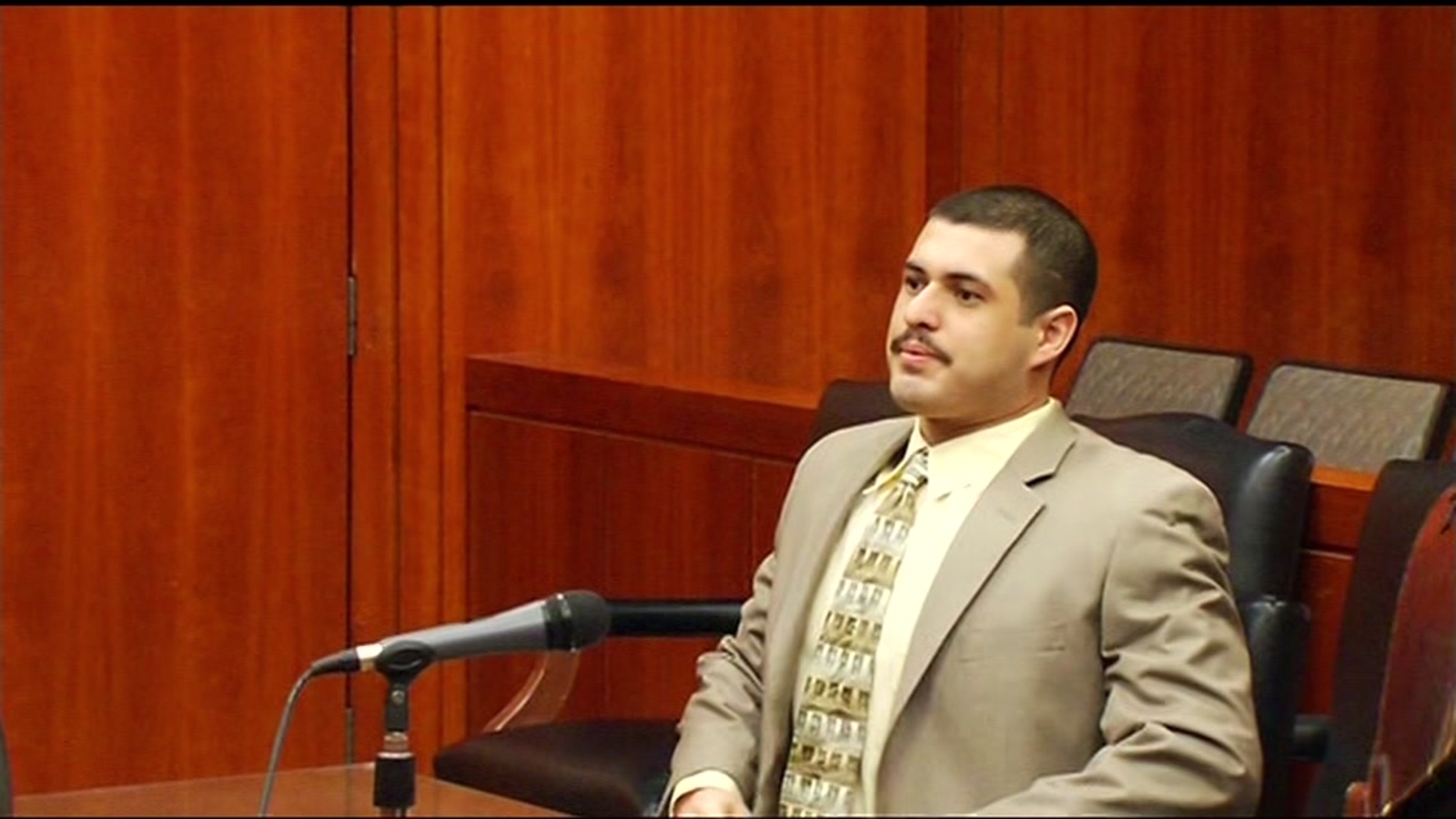
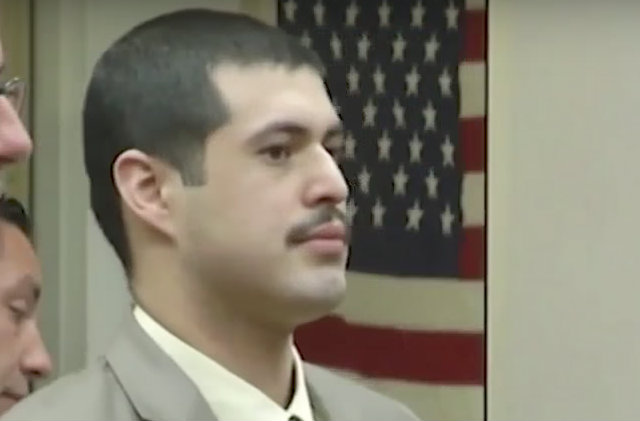
As of 2026, Antolin Garcia-Torres remains incarcerated at California State Prison, Sacramento, serving a sentence of life in prison without the possibility of parole. Convicted in 2017 for the first-degree murder of 15-year-old Sierra LaMar, Garcia-Torres has exhausted his primary state appeals, and his legal standing remains unchanged despite his continued refusal to disclose the location of the victim’s remains.
Current Incarceration and Status in 2026
Antolin Garcia-Torres is currently held within the California Department of Corrections and Rehabilitation (CDCR) system. Specifically, he is housed at California State Prison, Sacramento (CSP-SAC), a high-security facility often referred to as "New Folsom." As a prisoner serving life without the possibility of parole (LWOP), his status is permanent barring an extraordinary legal reversal or a pardon from the Governor, neither of which has occurred.
In 2026, his daily routine is dictated by the rigid protocols of a Level IV maximum-security institution. This involves limited movement, structured meal times, and periodic cell counts. Unlike inmates with a chance of parole, LWOP inmates are generally housed in facilities designed for long-term containment. Garcia-Torres has spent nearly a decade in such environments since his formal sentencing, maintaining a relatively low profile within the prison population while his case continues to be a subject of intense interest for true crime analysts and legal scholars.
The lack of a body in the Sierra LaMar case remains a defining feature of his incarceration. While some inmates in similar positions attempt to negotiate for better conditions or a reduced sentence by revealing the location of remains, Garcia-Torres has maintained his silence for over 14 years since the 2012 disappearance. This silence has prevented the LaMar family from achieving full closure, even as the legal system has firmly established his guilt through forensic evidence.
The Case Background: The Disappearance of Sierra LaMar
To understand where Antolin Garcia-Torres is now, one must examine the 2012 events that led to his conviction. On the morning of March 16, 2012, 15-year-old Sierra LaMar left her home in Morgan Hill, California, to catch a bus to Sobrato High School. She never arrived.
The disappearance sparked one of the largest search efforts in Santa Clara County history. Hundreds of volunteers, organized through "Sierra’s Search Center," combed thousands of acres of rugged terrain. Within days, investigators found Sierra’s cell phone and a bag containing her neatly folded clothing in a nearby field. These discoveries shifted the investigation from a missing person case to a suspected kidnapping and homicide.
The Forensic Link to Garcia-Torres
The breakthrough in the case came through forensic technology. DNA evidence found on Sierra’s clothing matched Antolin Garcia-Torres, who was already in a law enforcement database due to a previous arrest. Further investigation of Garcia-Torres’s vehicle—a red 1998 Volkswagen Jetta—uncovered Sierra’s hair on the interior carpet and her DNA on a discarded piece of plastic in the trunk.
Despite the mounting physical evidence, the defense argued throughout the trial that the DNA could have been the result of cross-contamination or "transfer DNA." However, the prosecution successfully demonstrated that the statistical likelihood of the DNA belonging to anyone else was astronomical, effectively tying Garcia-Torres to the victim despite the absence of a crime scene or a body.
The 2017 Trial and Sentencing
The trial of Antolin Garcia-Torres began in early 2017, five years after the crime occurred. The prosecution, led by Deputy District Attorney David Boyd, built a comprehensive case that relied on more than just the forensic evidence from the LaMar case.
The Safeway Incidents
A critical component of the prosecution’s strategy was the inclusion of three prior incidents from 2009. Garcia-Torres was charged with the attempted kidnapping of three different women in Safeway parking lots in Morgan Hill and Gilroy. In these instances, he was accused of approaching women in their cars and attempting to assault or restrain them. These "prior bad acts" were used to establish a pattern of behavior and a predatory intent, suggesting that his encounter with Sierra LaMar was not an isolated incident but the culmination of a burgeoning criminal escalation.
The Verdict and Penalty Phase
On May 9, 2017, a jury found Garcia-Torres guilty of the first-degree murder of Sierra LaMar, along with the special circumstance of kidnapping. He was also found guilty of the three 2009 attempted kidnappings.
The case then moved to the penalty phase, where the jury had to decide between the death penalty and life without parole. While the prosecution argued that the cruelty of the crime and the lack of a body warranted the death penalty, the jury ultimately returned a verdict of life without parole in June 2017. In California, which has had a moratorium on executions since 2019, this sentence ensures that Garcia-Torres will remain behind bars for the remainder of his natural life.
Legal Challenges and the Appellate Process
Following his conviction, Garcia-Torres and his legal team initiated a lengthy appeals process. In 2021, the California 6th District Court of Appeal heard arguments regarding several facets of the trial.
The defense raised several key points in their appeal:
- Third-Party Culpability: The defense argued that the trial judge improperly excluded evidence regarding another potential suspect.
- DNA Evidence Admissibility: They challenged the methods used to collect and analyze the "touch DNA" found on the clothing.
- Jury Instructions: Claims were made that the jury was not properly instructed on how to weigh certain types of circumstantial evidence.
In a comprehensive 117-page ruling issued in late 2021, the appellate court upheld the conviction. The court found that while some minor procedural errors may have occurred, the "mountain of evidence" against Garcia-Torres was so overwhelming that the errors did not affect the outcome of the trial. Specifically, the court noted that the DNA evidence found in his car and on the victim's clothes was nearly impossible to explain away through any theory of accidental transfer.
By 2026, most state-level avenues for appeal have been exhausted. While federal habeas corpus petitions are theoretically possible, they face extremely high bars for success, requiring proof of constitutional violations that the state courts have not already addressed.
Key Facts and Timeline: The Antolin Garcia-Torres Case
The following table summarizes the critical milestones of the case from the initial disappearance to the current status in 2026.
| Date | Milestone | Significance |
|---|---|---|
| March 16, 2012 | Disappearance | Sierra LaMar vanishes while walking to her school bus stop. |
| May 2012 | Arrest | Garcia-Torres is arrested after DNA links him to Sierra's clothing. |
| February 2017 | Trial Begins | Legal proceedings start in Santa Clara County Superior Court. |
| May 9, 2017 | Guilty Verdict | Convicted of first-degree murder and attempted kidnappings. |
| June 2017 | Sentencing | Sentenced to Life Without Parole (LWOP). |
| 2021 | Appeal Denied | The 6th District Court of Appeal upholds the conviction. |
| 2022–2026 | Incarceration | Continues serving his sentence at CSP-Sacramento. |
The Search for Sierra LaMar: An Ongoing Effort
Even in 2026, the community of Morgan Hill and the LaMar family have not given up on the goal of finding Sierra's remains. For years after the conviction, volunteer groups continued to organize searches in remote areas of Santa Clara and San Benito counties.
The "Find Sierra LaMar" movement became a symbol of community resilience. While the physical search center eventually closed, digital communities and local advocates continue to keep her memory alive. Law enforcement agencies also keep the case file active regarding the recovery of her body. Occasional tips or findings in rural areas still prompt investigations, though none have led to a breakthrough as of this year.
The case remains a poignant example of a "no-body homicide" conviction. It proved that in the modern era of forensic science, a perpetrator can be held accountable even if they successfully conceal the victim’s remains, provided the circumstantial and biological evidence is sufficiently robust.
Impact on California Law and Public Safety
The Antolin Garcia-Torres case had a significant impact on how missing person cases are handled in Northern California. The high-profile nature of the search led to several changes in protocol:
- Rapid Response Improvements: Local law enforcement agencies revised their "critical reach" protocols for missing juveniles, ensuring that DNA collection from a missing person’s home happens almost immediately.
- Inter-Agency Cooperation: The collaboration between the FBI, the Santa Clara County Sheriff’s Office, and various local police departments during the search became a blueprint for multi-jurisdictional investigations.
- DNA Database Utilization: The case highlighted the efficacy of the CODIS (Combined DNA Index System) database in linking suspects to unsolved crimes, as Garcia-Torres's DNA from the 2009 Safeway incidents was instrumental in the 2012 investigation.
Frequently Asked Questions
Where is Antolin Garcia-Torres located in 2026?
He is currently incarcerated at California State Prison, Sacramento. This is a high-security facility where he is serving his sentence of life without parole. He has been moved between facilities in the past for security or administrative reasons, but his status as a maximum-security inmate remains constant.
Has Sierra LaMar’s body been found as of 2026?
No, her remains have not been recovered. Despite extensive searches by law enforcement and volunteers, and the conviction of Garcia-Torres, the location of Sierra LaMar remains unknown. Garcia-Torres has never cooperated with authorities regarding the location of the body.
Is there any possibility of parole for Garcia-Torres?
No. He was sentenced to life in prison without the possibility of parole. Under California law, this means he is not eligible for parole hearings. His only path to release would be an overturned conviction through the appeals process or a gubernatorial pardon, both of which are considered highly unlikely given the forensic evidence.
What was the main evidence used to convict him?
The primary evidence was DNA. Investigators found Garcia-Torres's DNA on Sierra’s discarded clothing. Conversely, they found Sierra’s DNA and hair inside Garcia-Torres’s car. This "mutual transfer" of biological material is extremely difficult to explain as an accident, forming the backbone of the prosecution's case.
Did Garcia-Torres have a prior criminal record?
At the time of his arrest in 2012, he had a record that included an arrest for interference with a police officer. More significantly, he was later linked to and convicted of three attempted kidnappings that occurred in 2009, involving assaults on women in grocery store parking lots.
Next Actions and Legacy
For those following the case of Antolin Garcia-Torres, the legal journey has largely reached its conclusion. The focus for the public and the LaMar family remains on the potential for a future discovery of Sierra’s remains.
In California, the case serves as a benchmark for cold case and no-body prosecutions. It demonstrates the power of forensic science to secure justice in the absence of a crime scene. For the community of Morgan Hill, "Sierra’s Light" continues to be a reminder of the need for vigilance and the enduring strength of a family seeking answers. If you have any information regarding the disappearance of Sierra LaMar or unidentified remains in the Northern California area, you are encouraged to contact the Santa Clara County Sheriff’s Office.