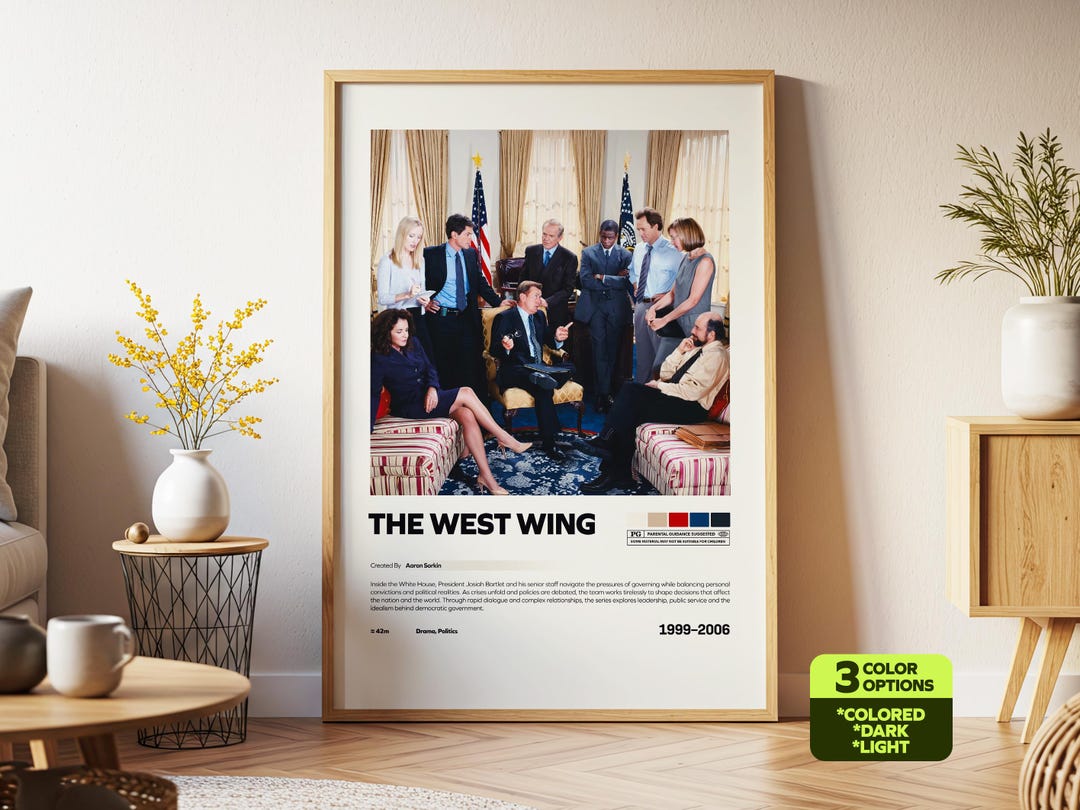
Annabeth Schott, portrayed by Kristin Chenoweth in the final two seasons of The West Wing, represents a critical evolution in the portrayal of political operatives. As of 2026, her character serves as a historical bridge between the earnest idealism of early 2000s political fiction and the media-obsessed, optics-driven landscape of modern political dramas.
The Introduction of Annabeth Schott: A Shift in Tone and Strategy
When Kristin Chenoweth joined the cast of The West Wing in Season 6 as Annabeth Schott, the series was undergoing a massive structural transformation. The departure of series creator Aaron Sorkin after Season 4 had already altered the show's DNA, but the introduction of Annabeth marked a specific shift toward the technicalities of media relations and campaign optics. Initially hired as the Deputy Press Secretary to replace C.J. Cregg (who had been promoted to Chief of Staff), Annabeth brought a "pixie-like" energy that masked a formidable grasp of television choreography and public perception.
In the context of the mid-2000s, political dramas were beginning to move away from purely policy-driven narratives toward the "permanent campaign" model. Annabeth was the personification of this shift. Unlike her predecessors, who often viewed the press corps as a necessary evil or a sparring partner for intellectual dominance, Annabeth viewed the media as a stage to be managed. Her background in the "private sector"—implied to be high-level PR or entertainment—contrasted with the "true believer" ethos of characters like Josh Lyman or Toby Ziegler.
By 2026, looking back at this transition, it is clear that Annabeth Schott was the precursor to the modern "fixer" and "comms strategist" archetypes that now dominate the genre. She didn't just write the news; she curated the visual and emotional resonance of the administration.
The Technicality of Optics: Annabeth’s Pedagogy
One of Annabeth’s most significant contributions to the narrative was her role as a teacher. In Season 6, she was tasked with "fixing" Toby Ziegler’s disastrous press room presence. These scenes provided the audience with a technical masterclass in political communication that was rare for the time.
She focused on:
- Micro-expressions: Coaching the naturally surly Toby to avoid looking "dismissive" on camera.
- The "Soundbite" Economy: Breaking down complex policy into digestible, non-threatening language.
- Physicality: Teaching the staff how to stand, move, and even breathe during televised briefings to project authority rather than defensiveness.
This pedagogical approach demystified the White House for the viewer, showing that political power was not just about the law, but about the performance of power. In the changing political drama landscape of 2026, where shows like The Diplomat or Succession focus heavily on the "spin" behind the scenes, Annabeth’s technical interventions feel remarkably prescient. She was the first character in the series to treat the press room as a television set rather than a classroom.
Annabeth Schott and the Santos-Vinick Campaign
As the series progressed into Season 7, Annabeth’s role shifted from the West Wing to the campaign trail. Her transition to the Matt Santos campaign (played by Jimmy Smits) allowed the show to explore the mechanics of the modern American election. Here, Annabeth’s skill set was utilized to humanize a candidate who was often seen as too intellectual or rigid for the general electorate.
Her relationship with Leo McGarry during the campaign also provided a bridge between the "old guard" of political institutionalism and the "new guard" of media-driven campaigning. While Leo represented the gravitas of the 20th-century political machine, Annabeth represented the agility required for the 24-hour news cycle. This dynamic highlighted a major theme in the evolving political drama landscape: the tension between substantive governance and the necessity of "winning the day" in the headlines.
Comparing Political Operatives Across the Genre
To understand how Annabeth Schott fits into the broader history of political television, it is helpful to compare her with other iconic media-focused characters from different eras of the genre.
| Character | Show | Primary Philosophy | Era/Style |
|---|---|---|---|
| C.J. Cregg | The West Wing | Moral integrity through truth-telling. | Idealist (Sorkin Era) |
| Annabeth Schott | The West Wing | Control through visual and rhetorical poise. | Transitional/Technical |
| Amy Brookheimer | Veep | Survival through frantic narrative manipulation. | Satirical/Cynical |
| Doug Stamper | House of Cards | Control through coercion and secrecy. | Machiavellian/Dark |
| Eidra Park | The Diplomat | Pragmatic navigation of global perception. | Modern/Realist |
As the table illustrates, Annabeth occupies a unique middle ground. She lacks the biting cynicism of the characters in Veep, yet she is far more concerned with the "shallow" mechanics of image than the early-season version of C.J. Cregg. This makes her one of the most realistic portrayals of a political operative in the series, as she treats the job as a professional craft rather than a holy crusade.
The Legacy of the "Annabeth Archetype" in 2026
In the current landscape of 2026, political dramas have largely abandoned the unearned optimism of the early 2000s. However, the "Annabeth Archetype"—the high-energy, technically proficient, and media-savvy woman who navigates the corridors of power—remains a staple.
We see echoes of her in characters who must balance their personal charisma with the crushing weight of institutional expectations. Annabeth was notable because she did not have to become "one of the boys" to be effective. She used her perceived softness and her background in "non-political" communication as a weapon. This paved the way for more complex female characters in political fiction who utilize their emotional intelligence as a primary strategic tool.
Furthermore, her character's subplot regarding the death of Leo McGarry (necessitated by the real-life passing of actor John Spencer) forced Annabeth into a position of profound emotional labor. The way she managed both the private grief of the campaign staff and the public image of the vice-presidential vacancy was a masterclass in crisis management. Modern dramas in 2026 often replicate this "crisis as a character test," a narrative device that The West Wing perfected during Annabeth's tenure.
The Changing Landscape: From Idealism to Realism
The "Changing Political Drama Landscape" mentioned in the subject refers to the movement from the "Golden Age" of political television (represented by The West Wing) to the more fragmented, cynical, and "post-truth" narratives of the 2020s.
During Annabeth's time, there was still a sense that the "truth" mattered, even if it had to be dressed up in a nice suit. In the 2026 television environment, shows often grapple with the idea that the truth is entirely subjective or easily drowned out by algorithmic noise. Annabeth Schott’s focus on "optics" was the beginning of this slope. While she used optics to help a "good man" (Santos) get elected, the same tools she pioneered are now shown in modern fiction to be used for far more nefarious ends.
This transition makes re-watching her arc in 2026 a fascinating exercise in "origin story" analysis for the current state of political PR. She was not a villain, but she was the one who brought the "dark arts" of professional image-making into the hallowed, idealistic halls of the Bartlet White House.
Frequently Asked Questions
Why was Annabeth Schott added to The West Wing so late in the series?
Annabeth was introduced in Season 6 to fill the void left in the Press Office when C.J. Cregg was promoted to Chief of Staff. The showrunners needed a character who could handle the technical aspects of the press room while bringing a fresh, lighter energy to a cast that had become increasingly bogged down in heavy dramatic arcs. Her introduction also allowed the show to explore the "media training" aspect of politics, which hadn't been fully addressed in earlier seasons.
How did Kristin Chenoweth’s background influence the character?
Kristin Chenoweth is a classically trained singer and Broadway star. Her natural charisma and "stage presence" were written directly into the character of Annabeth Schott. This was a deliberate choice to highlight the "performance" aspect of politics. Her ability to deliver fast-paced dialogue with precision made her a perfect fit for the show's established style, even after Aaron Sorkin's departure.
Was the relationship between Annabeth and Leo McGarry planned?
The writers leaned into a subtle, respectful chemistry between Annabeth and Leo (John Spencer) during the seventh season. It was portrayed as a "May-December" professional mentorship with hints of mutual romantic admiration. However, due to John Spencer's untimely death during the filming of the final season, the storyline was pivoted to show Annabeth as a primary mourner and a guardian of his legacy, which added significant emotional depth to her character.
What happened to Annabeth Schott after the series ended?
In the series finale, "Tomorrow," it is heavily implied that Annabeth Schott would serve as the First Lady’s (Helen Santos) Press Secretary. This was a strategic move within the narrative, as Annabeth had developed a close relationship with the Santos family and possessed the specific "soft-touch" media skills required to manage the image of the First Office.
Is Annabeth Schott considered a "Sorkin character"?
Technically, no. Annabeth was introduced in the post-Sorkin era of the show (Seasons 6 and 7). While she shares the quick-witted, highly competent traits of a typical Sorkin character, she was the creation of the writing staff led by John Wells. She represents a more pragmatic, less "speech-heavy" version of political service than the characters created in the first four seasons.
Recommendation for Further Viewing
For those interested in the evolution of the media-strategist archetype, a chronological viewing of The West Wing (Seasons 6 and 7), followed by Veep (Seasons 1-3), and concluding with the 2023-2026 seasons of The Diplomat provides a comprehensive look at how political communication has been portrayed over the last quarter-century. Annabeth Schott remains the pivotal character in this lineage, marking the exact moment that "image" became as important as "substance" in the fictionalized American presidency.