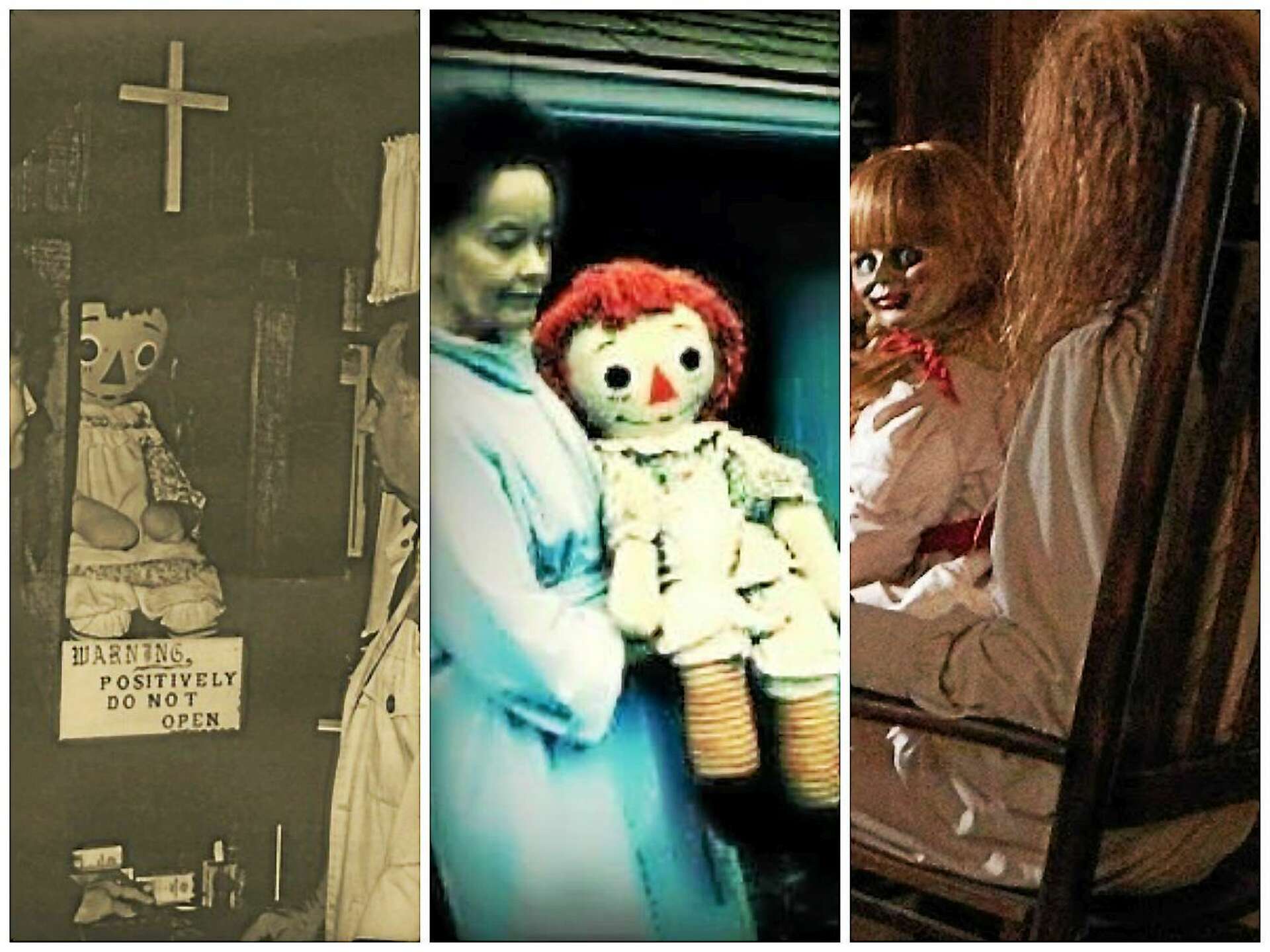
The true story of Annabelle centers on a Raggedy Ann doll purchased in 1970, which allegedly exhibited malevolent behavior while in the possession of two nursing students. Unlike the porcelain figure in the films, the real doll was investigated by Ed and Lorraine Warren, who concluded it was a conduit for a demonic entity. Today, it remains under the care of the Warren estate.
The Annabelle doll is perhaps the most famous "haunted" artifact in modern history. While the Conjuring cinematic universe has transformed the entity into a global pop-culture icon, the narrative roots of the specter are found in a series of events reported in a small Hartford, Connecticut apartment over five decades ago. Understanding the "true story" requires peeling back the layers of Hollywood dramatization to examine the original testimonies of those who lived with the doll, the theological interpretations provided by the Warrens, and the enduring legacy of the artifact in the year 2026.
The Origins of the Legend: The 1970 Acquisition
The story began not in a gothic mansion or a cursed workshop, but in a hobby store. In 1970, a mother purchased a large "Raggedy Ann" doll as a birthday present for her daughter, Donna, who was then a nursing student. At the time, Raggedy Ann was a ubiquitous children's character, characterized by red yarn hair and a triangular nose. There was nothing inherently frightening about the doll's physical appearance.
Donna took the doll back to the apartment she shared with her roommate, Angie. For the first several weeks, the doll was a simple decorative piece on Donna’s bed. However, the roommates soon began to notice subtle shifts in the doll’s position. Initially, these movements were so minor that they were dismissed as accidental—the doll might be leaning at a slightly different angle or sitting with its legs crossed when it had been left straight.
As the weeks progressed, the movements became more pronounced. Donna and Angie would leave the apartment with the doll on the bed and return to find it sitting on the sofa in the living room with the door locked. On other occasions, it was found standing on its feet, leaning against a chair, or kneeling on the floor. These physical transitions, known in paranormal research as "apports," suggested that the object was being moved by an external force or was capable of self-locomotion.
The Haunting Sequence: 1970 Apartment Events
The escalating activity in the apartment moved beyond simple movement into the realm of communication. Donna and Angie began finding notes scattered throughout the apartment. These messages were written on parchment paper—a material neither of the roommates owned. The notes were written in a childish, penciled scrawl and typically featured phrases like "Help Us" or "Help Lou."
The mention of "Lou" referred to a friend of the roommates who had expressed an immediate and intense dislike for the doll upon seeing it. Lou felt a "heavy" presence around the object and urged Donna to get rid of it. The discovery of the notes marked a transition from a curious anomaly to a targeted psychological disturbance.
The Appearance of Blood
The roommates’ tolerance for the strange occurrences reached a breaking point when they discovered what appeared to be blood on the doll. According to the original accounts documented by the New England Society for Psychic Research (NESPR), Donna found three drops of blood on the doll’s chest and the back of its hands. The substance seemed to emerge from within the doll itself.
Frightened and seeking a rational explanation or a way to appease the spirit, the roommates contacted a medium. During a séance, the medium claimed to have contacted the spirit of a seven-year-old girl named Annabelle Higgins, who had allegedly died on the property years before the apartment complex was built. The spirit claimed she felt "comforted" by Donna and Angie and asked for permission to inhabit the doll so she could be loved. Moved by compassion, the roommates gave their permission. This act of "invitation" is a critical turning point in the theological narrative later provided by the Warrens.
The Physical Attacks on Lou
The "spirit" of the young girl soon revealed a more aggressive nature. Lou, the friend who had remained skeptical and vocal about his disdain for the doll, reported a terrifying physical encounter. While staying over at the apartment, Lou claimed he woke up in total darkness to find the doll at the foot of his bed, slowly crawling up his leg until it reached his chest. He reported being paralyzed and strangled until he blacked out.
The following day, Lou and Angie heard a struggle in Donna’s room while she was out. Upon entering, the room was empty except for the doll sitting in the corner. As Lou approached the doll, he claimed he was suddenly gripped by a searing pain in his chest. When he unbuttoned his shirt, he found seven distinct claw marks—three vertical and four horizontal—that appeared to be burns. These marks allegedly healed almost instantly, disappearing within two days. This event prompted the roommates to seek professional help from the clergy, which eventually led them to Ed and Lorraine Warren.
Ed and Lorraine Warren Enter the Fray
At the time, Ed Warren was a recognized demonologist and Lorraine was a reputed clairvoyant. Upon interviewing Donna, Angie, and Lou, the Warrens reached a conclusion that differed sharply from the medium’s assessment. They argued that there was no such person as "Annabelle Higgins." Instead, they posited that a demonic entity—an "inhuman presence"—was using the guise of a lost child to gain sympathy and, crucially, an invitation into the residents' lives.
The Warrens explained that spirits do not inhabit inanimate objects like dolls; rather, they "attach" themselves to them. The goal of the entity, according to Ed Warren, was not to live in the doll but to wear down the human inhabitants' psychological defenses to eventually achieve human possession.
The Exorcism and Removal
The Warrens requested that a formal exorcism or "blessing" be performed on the apartment. Father Cooke, an Episcopal priest, was called in to perform the rite to cleanse the environment and the individuals involved. Following the blessing, the Warrens took the doll with them to prevent further incidents.
The drive back to their home in Monroe, Connecticut, was reportedly plagued by mechanical failures. Ed Warren claimed that his car’s power steering and brakes repeatedly failed, nearly causing several accidents. He reported that only after stopping to sprinkle the doll with holy water did the car function well enough to complete the journey. This journey solidified the doll's reputation as a "vessel" of significant negative energy.
Fact vs. Fiction: Comparing the Movie to the True Story
The Conjuring franchise and the Annabelle spin-offs have taken significant creative liberties with the source material. While the core concept of a haunted doll remains, the cinematic version is designed for visual horror.
| Feature | The "True Story" (Warrens' Account) | The Movie Version (Annabelle Series) |
|---|---|---|
| Physical Appearance | A standard Raggedy Ann doll with red yarn hair. | A large, grotesque porcelain doll with a cracked face. |
| Origin Story | Purchased in a hobby store as a birthday gift. | Created by a dollmaker whose daughter died in a car accident. |
| Main Human Targets | Two nursing students (Donna and Angie) and their friend Lou. | Various families, including the Form and Mullins families. |
| Location | An apartment in Hartford, Connecticut. | California homes and a rural farmhouse. |
| Nature of "Annabelle" | A name given by a medium during a séance. | A deceased daughter and a cult member named Annabelle Higgins. |
| Outcome | The doll was taken to the Warrens' museum and caged. | The doll causes multiple deaths and requires complex rituals. |
The Occult Museum and the Famous Glass Case
After taking the doll, the Warrens placed it in their "Occult Museum" in the basement of their home. To contain the entity, Ed Warren commissioned a specific wooden case with glass panes. On the front of the case, a sign was placed that remains iconic to this day: "Warning: Positively Do Not Open."
The Warrens claimed that the doll was responsible for at least one death following its incarceration. A young man visiting the museum reportedly mocked the doll, banging on the glass and challenging it to "scratch him." Ed Warren asked the man to leave for his own safety. According to the account, the man died shortly after when his motorcycle veered off the road and hit a tree. His girlfriend, who survived the crash, claimed they were laughing about the doll right before he lost control.
The Safety Protocol
The museum, which was a fixture for paranormal enthusiasts for decades, operated under strict rules. No one was allowed to touch the doll, and the case was supposedly blessed by a priest regularly. The use of "binding" prayers and holy water was part of the maintenance routine described by the Warrens. The glass case served as a physical and spiritual barrier, intended to neutralize the entity's ability to manifest in the physical world.
Skepticism and Rational Explanations
While the Warrens' story is compelling, many investigators and skeptics have pointed out inconsistencies and psychological factors that may explain the Annabelle phenomenon.
- The Power of Suggestion: Once the roommates believed the doll was moving, every subsequent creak or misplaced item was attributed to the doll. This is known as "expectancy bias."
- The Medium’s Role: Mediums often use "cold reading" or provide narratives that fit the anxieties of their clients. The "Annabelle Higgins" story could have been an invention that the roommates subconsciously validated.
- Hoax Allegations: Skeptics like Joe Nickell have argued that the Warrens were master storytellers who knew how to market the paranormal. By turning a common toy into a demonic vessel, they created a narrative that was both terrifying and commercially viable.
- Lack of Empirical Evidence: Beyond the anecdotal testimonies of the roommates and the Warrens, there is no photographic or video evidence of the doll moving or the notes appearing. In the context of 1970, such evidence was difficult to capture, but the absence of it allows for significant skepticism.
The Legacy of Annabelle in 2026
As of 2026, the legacy of Annabelle remains a pillar of paranormal pop culture. Following the deaths of Ed Warren (2006) and Lorraine Warren (2019), the care of the Warrens’ collection passed to their son-in-law, Tony Spera.
The Warren Occult Museum in Monroe, Connecticut, has faced various legal and zoning challenges over the years, leading to its closure to the general public. However, the collection is still preserved. In 2026, the doll is occasionally moved for special events or featured in digital exhibits, but it remains housed within its protective case. The "Annabelle" brand has expanded into a multi-billion dollar film franchise, but the actual Raggedy Ann doll continues to sit quietly, its red yarn hair and button eyes a stark contrast to the cinematic monster it inspired.
The entity is often cited in modern "demonology" circles as a primary example of "infestation"—the first stage of a demonic haunting. Whether one views the doll as a truly cursed object or a masterfully crafted modern myth, its influence on the horror genre and the public imagination is undeniable.
Frequently Asked Questions
Is the real Annabelle doll still in the museum?
The real doll remains in the possession of the Warren estate. While the original museum location in Monroe, Connecticut, closed to the public due to local zoning ordinances, the artifact is maintained by Tony Spera and the NESPR (New England Society for Psychic Research). It is kept in the same glass case constructed by Ed Warren.
Why is the real doll a Raggedy Ann and not porcelain?
The movie version used a porcelain doll to create a more "cinematic" and unsettling visual for the audience. The real-life account involves a standard Raggedy Ann doll because that was the actual toy purchased by Donna's mother in 1970. Raggedy Ann was a common, friendly-looking toy, which the Warrens argued made the haunting more insidious.
Did anyone actually die because of the doll?
According to Ed Warren, a young man died in a motorcycle accident shortly after mocking the doll and banging on its glass case. While the accident is a matter of record, the causal link between the doll and the crash is a matter of belief and anecdotal testimony from the survivor, rather than scientific fact.
Can you visit the Annabelle doll today?
Direct public access to the museum is currently restricted. In 2026, the estate occasionally hosts "Warrenology" events or paranormal seminars where artifacts from the museum are displayed under strict supervision. However, the basement museum at the Warrens' former residence is not open for walk-in tours.
What is the significance of the parchment paper in the story?
The parchment paper is a key detail because the roommates did not own any. The appearance of messages on a material not present in the house is used by paranormal investigators as evidence of an "apport"—the teleportation or manifestation of an object by a spirit.
Final Recommendation
For those interested in the history of Annabelle, it is best to view the story through two distinct lenses: as a significant piece of American folklore and as a case study in 1970s paranormal investigation. If you wish to explore the "true story" further, research the archives of the New England Society for Psychic Research (NESPR), which contain the original case files and photographs from the Warrens' investigation. While the movies offer a thrilling experience, the real-life narrative of the Raggedy Ann doll provides a more grounded—and in many ways, more unsettling—look at how the legend of the specter began.