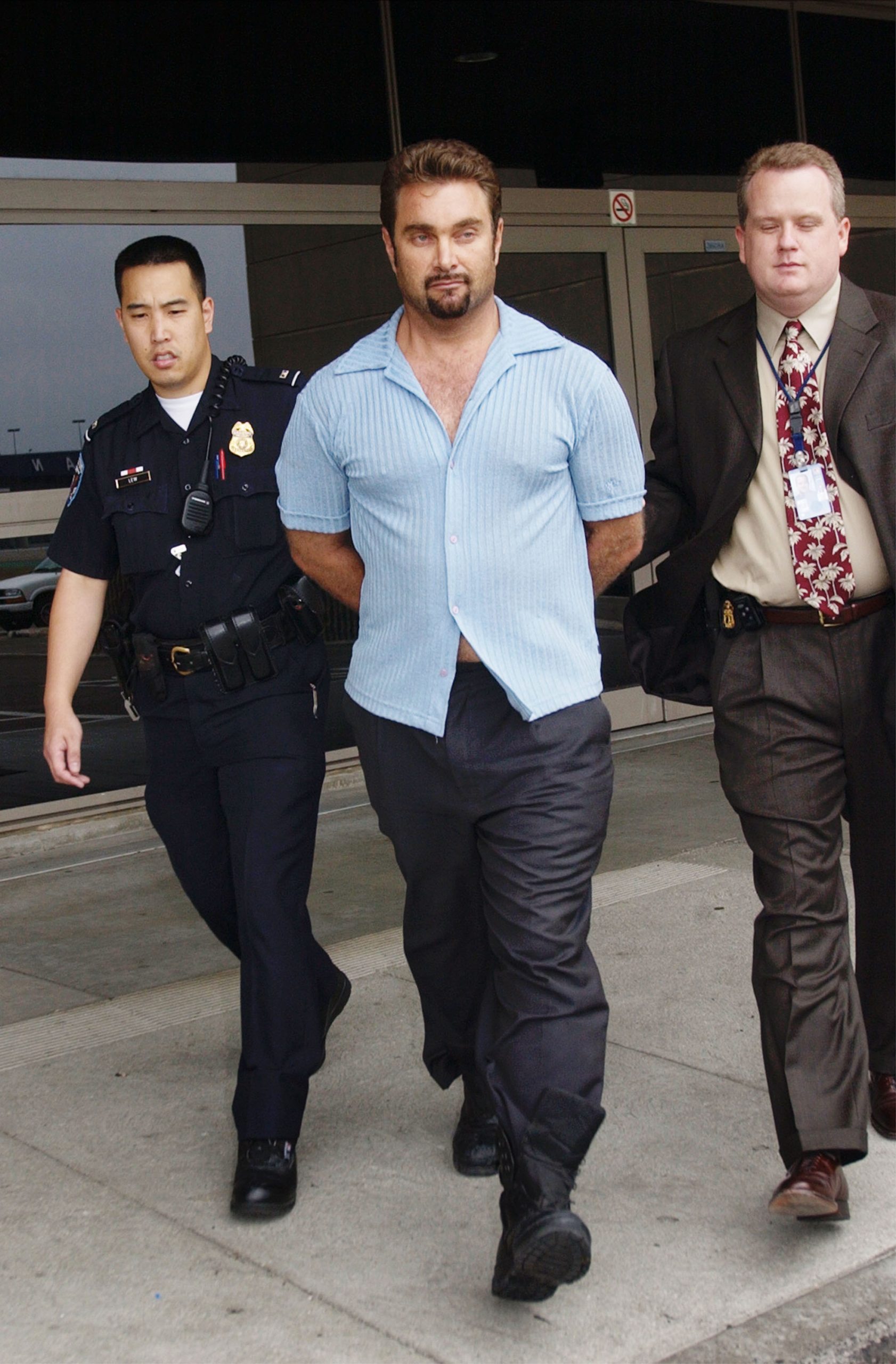
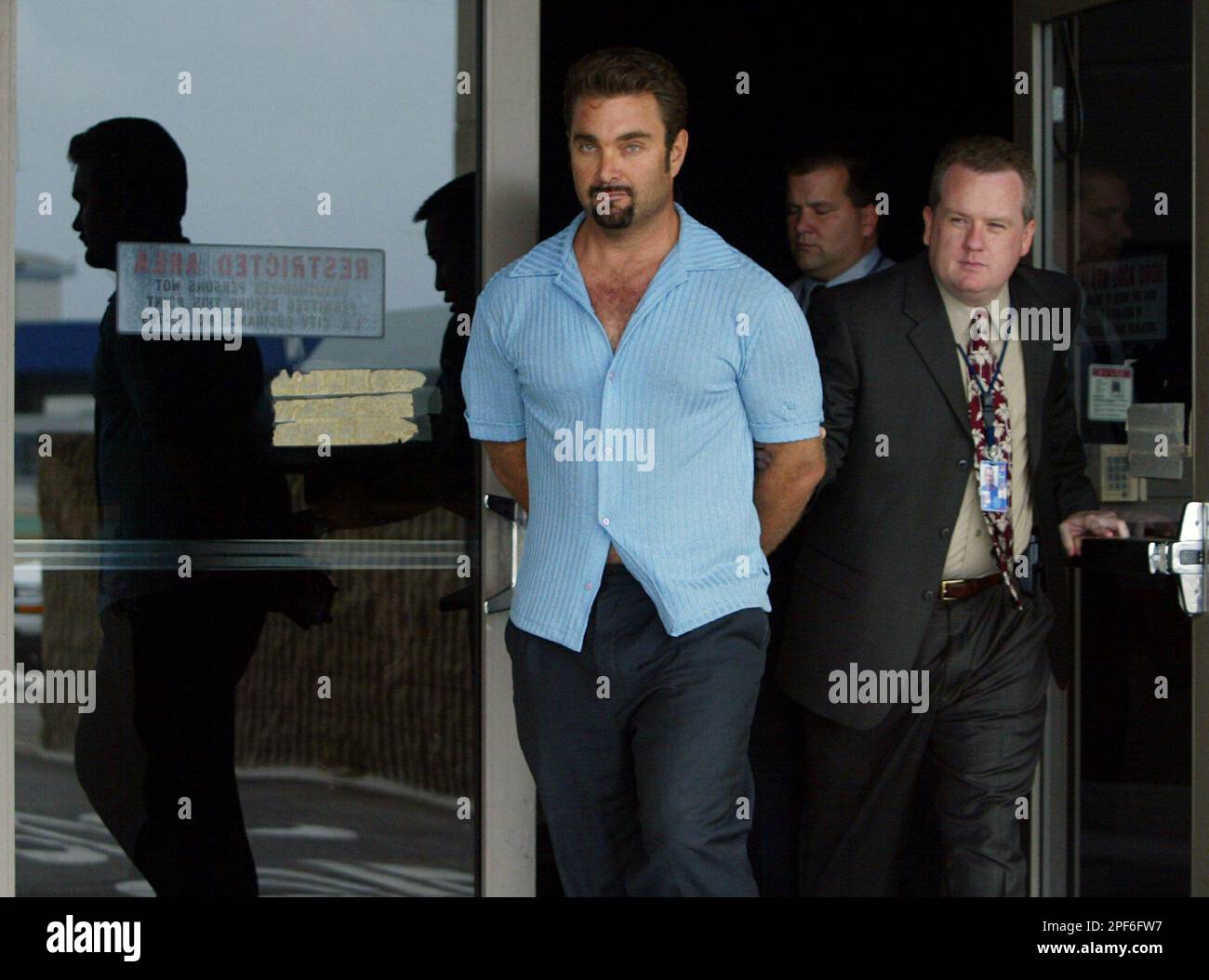
Andrew Luster’s maximum estimated release date under his current 50-year prison sentence is 2045, based on California’s mandatory 85% minimum service requirement for violent felony convictions. However, because Luster turned 60 and completed 20 years of continuous incarceration, he is legally eligible for early release consideration through California’s Elderly Parole Program, subject to Parole Board reviews.
Current Sentence and Estimated Release Timeline
To understand Andrew Luster’s calculated release timeline, it is essential to look at both his formal judicial sentence and the administrative rules governing sentence credits within the California Department of Corrections and Rehabilitation (CDCR).
Luster, an heir to the Max Factor cosmetics fortune, was convicted in 2003 on 86 criminal counts, including multiple charges of drug-facilitated rape, sexual battery, and poisoning. While originally sentenced to 124 years in state prison, a successful legal challenge in 2013 led to a judicial modification that reduced his total term to 50 years.
- Original Sentence (2003): 124 Years
- Vacated on Habeas Corpus (2013)
- Resentenced (April 2013): 50 Years
- Statutory Release (85% served under PC § 2933.1): ~2045
- Early Release Review (Elderly Parole Criteria): Eligible (Board Discretion)
- Resentenced (April 2013): 50 Years
- Vacated on Habeas Corpus (2013)
The 85 Percent Conduct Credit Rule
Under California Penal Code § 2933.1, individuals convicted of violent felonies listed under Penal Code § 667.5(c)—which includes forcible sex offenses and drug-facilitated rapes—are strictly limited in the amount of conduct or work credits they can earn while incarcerated.
- Maximum Credit Earning: Inmates serving time for violent sex crimes can earn no more than 15% credit toward sentence reduction.
- Minimum Time Served: Luster must serve at least 85% of his actual court-imposed sentence before becoming eligible for routine statutory release or post-release community supervision.
- Sentence Calculation: 85% of a 50-year sentence equals 42.5 years of actual prison time.
Counting from his continuous custody start date following his extradition from Mexico in June 2003, serving 42.5 full calendar years places his mandatory projected release date around late 2045 or early 2046, assuming no loss of conduct credits due to serious institutional disciplinary infractions.
Understanding California’s Parole Eligibility for Andrew Luster
Although Luster’s statutory term ends in 2045, California penal reforms over the last decade have created secondary administrative mechanisms for potential early release. The primary vehicle through which Luster can seek release prior to 2045 is the state’s Elderly Parole Program.
Elderly Parole Provisions (Penal Code § 3055)
Enacted to reduce long-term corrections costs and manage aging inmate populations, California's Elderly Parole framework requires the Board of Parole Hearings (BPH) to hold parole suitability hearings for inmates who meet specific age and time-served thresholds.
Under current California law, an incarcerated person qualifies for elderly parole consideration if they satisfy the following prerequisites:
- Age Requirement: The inmate must be at least 50 years of age (originally 60, subsequently expanded under modified guidelines).
- Time Served Requirement: The inmate must have served at least 20 continuous years of incarceration on their current sentence.
Having been born in December 1963 and continuously incarcerated since June 2003, Luster officially met both criteria—surpassing 20 years in custody and turning 60 years old. Consequently, his case fell within the mandatory jurisdiction of the Board of Parole Hearings for an initial suitability assessment.
Hearing Outcomes and Deferral Periods
In California, eligibility for a parole hearing does not grant an automatic right to release. The Board of Parole Hearings operates under a strict safety mandate: the board must determine whether the applicant poses an unreasonable risk of danger to society if released.
- Parole Denials: When the BPH denies parole to a violent offender, California's Marsy's Law (Penal Code § 3041.5) establishes standard denial (deferral) periods of 15, 10, 7, 5, or 3 years.
- Subsequent Reviews: Unless the board finds extraordinary mitigating evidence or grants a petition for an expedited hearing based on new information, an inmate must wait until the expiration of the set deferral period for their next formal parole hearing.
- Denial History: Luster’s initial elderly parole consideration resulted in a parole denial, maintaining his incarceration and pushing his next scheduled suitability review out by several years in accordance with statutory deferral rules.
Comprehensive Legal and Incarceration Timeline
The table below outlines the critical legal decisions, statutory milestones, and sentence modifications shaping Andrew Luster's custody status from his initial arrest to his calculated future release dates.
| Date / Year | Milestone / Event | Legal Basis / Forum | Direct Impact on Release Date |
|---|---|---|---|
| July 2000 | Initial Arrest | Ventura County Sheriff's Office | Released on $1 Million Bail |
| January 2003 | Flight During Trial | Ventura County Superior Court | Tried in absentia; sentence pronounced |
| January 2003 | Sentenced to 124 Years | Judge Patrick McMahon | Maximum consecutive terms imposed |
| June 2003 | Captured in Mexico | Extradited via Bounty Hunter / US Marshals | Continuous CDCR custody clock begins |
| April 2013 | Resentenced to 50 Years | Judge Mark Borrell (Ventura County) | Sentence reduced by 74 years following habeas appeal |
| June 2023 | 20 Years Custody Milestone | CDCR Custody Calculation | Satisfies time-served requirement for Elderly Parole |
| December 2023 | Reaches Age 60 | Natural Chronology | Satisfies age criteria under PC § 3055 |
| 2023–2024 | Initial Elderly Parole Hearing | California Board of Parole Hearings | Parole denied; multi-year deferral period imposed |
| 2026–2028 (Est.) | Next Parole Suitability Review | Board of Parole Hearings | Dependent on specific Marsy's Law deferral length |
| Late 2045 | Maximum Statutory Release Date | PC § 2933.1 (85% Service Rule) | Mandatory release point absent early parole grant |
Legal History: How the 124-Year Sentence Was Reduced to 50 Years
The reduction of Luster’s prison term represents one of the most prominent legal developments in California criminal post-conviction relief during the 2010s. Understanding why his sentence was reduced clarifies how his current release projections were derived.
- 2003 SENTENCING (124 Years)
- Consecutive terms imposed on 86 counts
- Judge failed to state specific legal reasons for consecutive structuring
- HABEAS CORPUS APPEAL (2012–2013)
- Appellate court identifies procedural sentencing error
- Case remanded back to Ventura County Superior Court
- 2013 RESENTENCING HEARING (50 Years)
- Judge Mark Borrell restructures counts
- Merges overlapping charges; applies concurrent/consecutive rules
- Final sentence capped at 50 calendar years
Trial In Absentia and Original Conviction
In 2002, Luster stood trial in Ventura County for drugging multiple female victims with GHB (gamma-hydroxybutyrate) and committing sexual assaults at his home in Mussel Shoals, California. In January 2003, while jury deliberations were underway, Luster forfeited his $1 million bail and fled the United States.
The trial proceeded in his absence. The jury found him guilty of 86 criminal counts, including:
- Forcible rape
- Rape of an unconscious victim
- Drug-facilitated sexual assault
- Poisoning
Ventura County Superior Court Judge Patrick McMahon sentenced the absent defendant to 124 years in state prison, stacking maximum consecutive sentences across the individual counts.
Capture and the Fugitive Disentitlement Doctrine
In June 2003, bounty hunter Duane "Dog" Chapman located and detained Luster in Puerto Vallarta, Mexico. Luster was returned to the United States to begin serving his sentence.
For several years, state and federal appellate courts rejected Luster’s appeals under the Fugitive Disentitlement Doctrine. This legal principle allows courts to dismiss appeals filed by individuals who become fugitives during pending legal proceedings.
The 2012–2013 Writ of Habeas Corpus
Despite early appellate dismissals, Luster’s legal team filed a petition for a writ of habeas corpus focusing on procedural trial errors rather than direct appellate issues.
In late 2012, a California Court of Appeal panel ruled that the original 2003 trial judge had committed a procedural error during sentencing: the court failed to state specific, legally required on-the-record justifications for imposing consecutive sentences rather than concurrent sentences for every count under California Rules of Court.
As a result of this omission:
- The 124-year sentence was formally vacated.
- The case was remanded to the Ventura County Superior Court for a complete resentencing hearing.
- In April 2013, Superior Court Judge Mark Borrell re-evaluated the 86 counts.
While Judge Borrell condemned the severity of Luster's crimes, he restructured the sentences to comply with California sentencing guidelines, combining certain overlapping counts and running others concurrently. The judge handed down a new aggregate term of 50 years in state prison.
Key Factors Influencing Board of Parole Decisions
Because Andrew Luster’s main potential path to release before 2045 relies on the Board of Parole Hearings, his custody status is continuously evaluated against several statutory safety factors.
Under California regulations (15 CCR § 2281), parole commissioners evaluate the following elements when determining if an inmate can be safely released:
- PAROLE SUITABILITY EVALUATION
- Comprehensive Risk Assessment (Forensic Psychological Exam)
- Institutional Conduct (Rules Violations/Programs)
- Victim & Public Safety (Impact Statements/DDA)
1. Comprehensive Risk Assessment (CRA)
Prior to any parole suitability hearing, a licensed forensic psychologist from the CDCR’s Forensic Assessment Division conducts an independent evaluation of the inmate. The evaluator produces a Comprehensive Risk Assessment assessing:
- Long-Term Recidivism Risk: Evaluated using validated actuarial risk assessment tools (such as the Static-99R for sexual offense recidivism).
- Insight and Remorse: Whether the incarcerated person demonstrates an honest understanding of the root causes of their violent criminal behavior and takes full responsibility.
- Relapse Prevention Plans: The feasibility and detail of the inmate's post-release plans, including housing, support networks, and ongoing therapeutic management.
2. Institutional Conduct and Rehabilitation
The board reviews the inmate’s entire custodial history:
- Rules Violation Reports (RVRs): Absence of serious prison disciplinary write-ups (Form 115s) for violence, contraband, or insubordination.
- Self-Help and Education: Participation in structured therapeutic programming, substance abuse treatment, and vocational certification programs while incarcerated.
3. Victim Impact and District Attorney Opposition
During hearings, crime victims and their representatives possess the constitutional right under Marsy's Law to submit statements or address the board directly. Furthermore, representatives from the Ventura County District Attorney's Office consistently attend Luster's hearings to oppose early parole, citing the premeditated nature of the offenses and the severity of the harm caused to victims.
Frequently Asked Questions
When is Andrew Luster eligible for parole again?
Luster’s exact next parole suitability hearing date depends on the length of the deferral period issued by the California Board of Parole Hearings during his most recent review. Under California's Marsy's Law (Penal Code § 3041.5), standard denial periods range from 3 to 5 years for lower-tier deferrals up to 7, 10, or 15 years. His upcoming hearing window is evaluated periodically by the Board based on statutory review schedules.
Why was Andrew Luster's original sentence of 124 years reduced to 50 years?
In 2012, an appellate court ruled that the original trial judge in 2003 committed a procedural error by failing to state specific legal reasons on the record for ordering consecutive sentences on all counts. The 124-year sentence was vacated, and a new sentencing hearing was ordered. In April 2013, a Ventura County judge resentenced Luster to a structured 50-year term.
How does California's 85% law impact Luster's calculated release date?
Under California Penal Code § 2933.1, convictions for violent sex offenses listed under Penal Code § 667.5(c) cap an inmate's good-conduct credit earnings at 15%. This requires Luster to physically serve at least 85% of his 50-year sentence (42.5 years in actual custody) before reaching his statutory completion date in 2045.
Where is Andrew Luster currently incarcerated?
Andrew Luster is housed within the California Department of Corrections and Rehabilitation (CDCR) state prison system. Public inmate tracking records managed by the CDCR provide updated facility housing details, inmate registration numbers, and official custody status changes.
Does Andrew Luster automatically get released because he reached age 60?
No. Reaching age 60 and completing 20 years of incarceration only makes an inmate eligible for consideration under California's Elderly Parole Program (Penal Code § 3055). Release is not automatic; the Board of Parole Hearings must explicitly find that the inmate no longer poses an unreasonable threat to public safety before granting parole.
Conclusion and Next Steps
Andrew Luster’s trajectory within the criminal justice system remains bound to two primary dates: his statutory maximum completion date in 2045 (under the 85% violent offender rule) and his recurring Elderly Parole suitability hearings conducted by the California Board of Parole Hearings.
For members of the public, legal researchers, or interested parties tracking official updates on this case:
- Verify Inmate Status: Official custody location and inmate numbers can be checked directly through the official California Department of Corrections and Rehabilitation Inmate Locator.
- Track Parole Hearings: Scheduled parole suitability hearings, results, and deferral decisions are published on the official California Board of Parole Hearings Monthly Decisions Portal.
- Review Relevant Statutes: For details on sentence credit caps and elderly parole parameters, consult California Penal Code § 2933.1 and California Penal Code § 3055.