The landscape of American news sources in the digital age is defined by the rapid shift from traditional print and broadcast media to online-first ecosystems, social media distribution, algorithmic curation, and subscription-based digital paywalls. This transformation has permanently altered how citizens access, consume, verify, and pay for journalism across the United States.
The Transformation of the American Media Ecosystem
The transition of American journalism from analog distribution to digital formats has fundamentally disrupted a century-old business model. Historically, traditional news organizations relied on a bundled revenue model supported by daily print circulation, local classified advertising, and broadcast television ad spots. These physical and over-the-air bottlenecks provided legacy outlets with stable revenue streams that subsidized deep investigative reporting and broad geographic coverage.
As broadband internet adoption accelerated and mobile smartphones became ubiquitous, audiences migrated toward free, aggregator-driven digital content. Digital-native startups emerged alongside established legacy institutions like The New York Times, The Washington Post, and the Wall Street Journal, creating an intensely competitive online marketplace.
However, this transition also eroded traditional local advertising revenue. Digital advertising giants like Google and Meta captured the vast majority of online ad expenditures, leaving many regional and local newspapers financially vulnerable. Consequently, the contemporary American media ecosystem features a stark dichotomy: a small tier of nationally prominent, digitally mature news organizations thriving through global subscriber growth, and a vast landscape of struggling or shuttered local outlets, often referred to as "news deserts."
To survive this structural shift, legacy and digital-native publishers alike have adopted diverse revenue models, including multi-tiered digital subscriptions, metered paywalls, philanthropic support, membership models, and event sponsorships. Understanding these shifts requires examining the core categories of digital publishers operating in the United States today.
Major Categories of Digital News Publishers
American news sources in the digital age are typically categorized by their origin, geographical reach, and operational model. Each category serves a distinct role in informing the public and carries unique operational strengths and vulnerabilities.
1. Legacy National Outlets with Digital Operations
Institutions founded in the print era have successfully transformed into global digital powerhouses. Organizations such as The New York Times, The Washington Post, and The Wall Street Journal invest heavily in proprietary content management systems, interactive data journalism, mobile applications, and newsletters. Their digital transformation relies on converting casual readers into recurring digital subscribers.
2. Digital-Native Publications
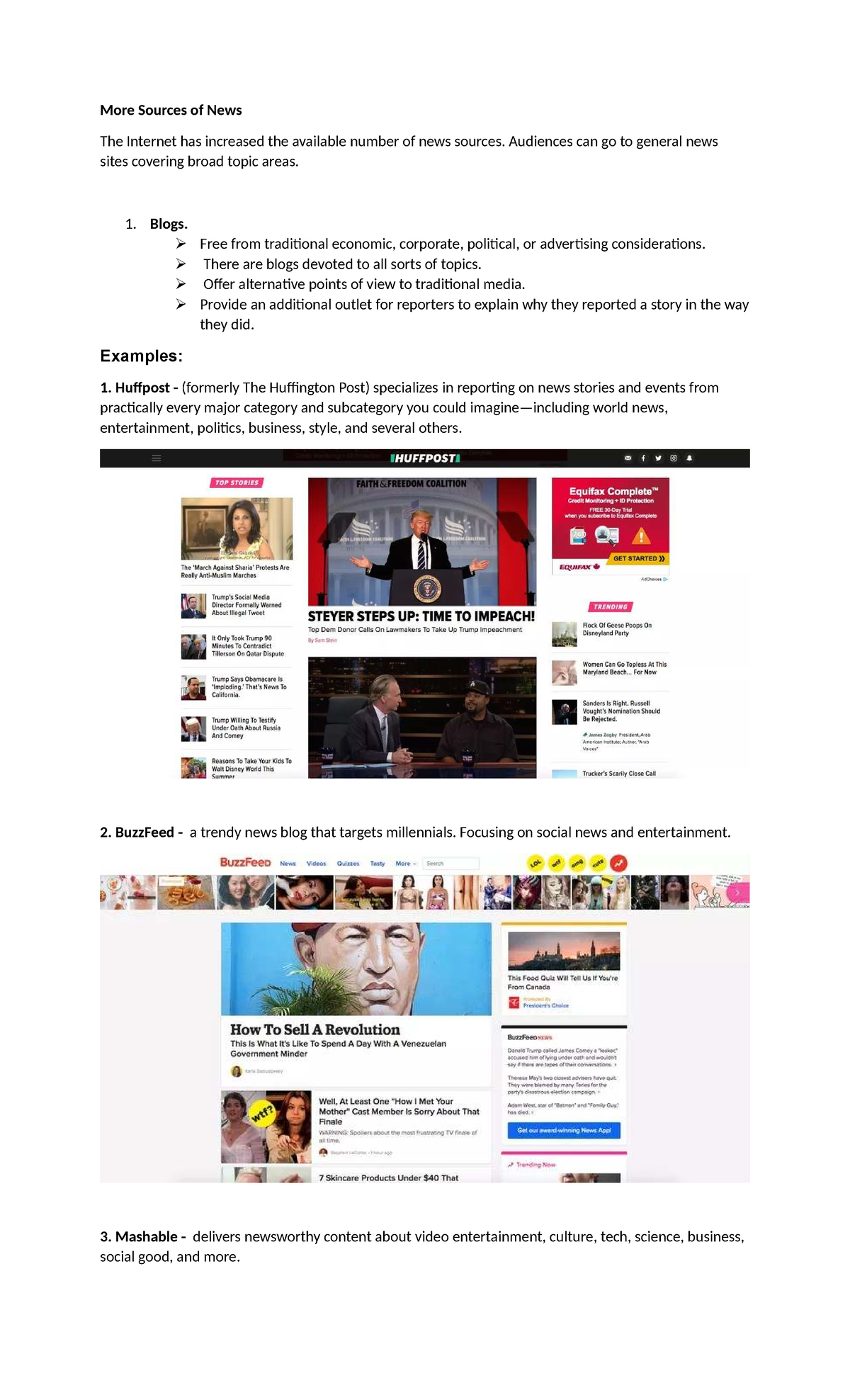
Outlets founded exclusively on the internet, such as Vox, BuzzFeed News (historically), Axios, and Politico, pioneered rapid-turnaround analysis, vertical-specific reporting, and newsletter-first formats. Axios, for instance, popularized the "Smart Brevity" style, tailoring news consumption for busy digital audiences. These outlets are structurally optimized for search engine optimization (SEO), social media sharing, and programmatic mobile distribution.
3. Public Broadcasting and Non-Profit Journalism
Publicly funded entities like NPR (National Public Radio) and PBS (Public Broadcasting Service), alongside digital non-profits such as ProPublica, the Texas Tribune, and the Center for Public Integrity, occupy a vital space in the digital ecosystem. Operating primarily on grants, donations, and listener/reader support, these organizations frequently produce public-interest investigative journalism that commercial models struggle to sustain.
4. Wire Services and Institutional Aggregators
Global news agencies like the Associated Press (AP) and Reuters supply foundational reporting that feeds hundreds of downstream digital platforms. In the digital age, wire services remain the bedrock of breaking news reporting, providing factual dispatches that local and national outlets syndicate across their own websites.
The Economics of Online Journalism: Subscriptions vs. Advertising
The financial stability of American news sources depends heavily on how they monetize their digital content. The early internet era was dominated by an advertising-supported model, where publishers sought maximum web traffic ("clicks") to sell programmatic display ads.
The Limitations of Programmatic Advertising
Relying entirely on programmatic advertising created perverse incentives across the media landscape. High-volume, sensationalized, or clickbait headlines often outperformed rigorous, time-intensive reporting because advertising revenue scaled with page views rather than editorial quality. Furthermore, the rise of ad-blockers and privacy regulations restricted tracking capabilities, diminishing the per-user revenue yield of digital ads.
The Rise of the Digital Paywall
To insulate themselves from the volatility of advertising markets, major American news sources shifted toward paywalls. Three primary paywall structures exist in modern digital publishing:
- Hard Paywalls: Require a paid subscription to access any content on the site (e.g., The Wall Street Journal).
- Metered Paywalls: Allow readers to view a specific number of free articles per month before requiring a subscription (e.g., The New York Times).
- Freemium Models: Keep standard breaking news and wire copy free while locking deep analysis, opinion, and investigative pieces behind a subscriber barrier.
| Paywall Type | Primary Advantage | Primary Disadvantage | Typical Publisher Example |
|---|---|---|---|
| Hard Paywall | Predictable recurring subscription revenue; protects proprietary value. | Severely restricts audience reach, sharing, and viral discovery. | The Wall Street Journal |
| Metered Paywall | Balances ad-impression volume with subscriber conversion opportunities. | Users easily circumvent limits via incognito windows or cookie clearing. | The New York Times |
| Freemium Model | Maintains high traffic for general news while monetizing specialized reporting. | Can create customer confusion over which content tiers are accessible. | Financial Times (Global/US footprint) |
Verification, Trust, and Information Literacy
As the distribution of news shifted from centralized broadcasting towers and printing presses to decentralized social media feeds, the responsibility of verifying information expanded to include the digital consumer. The modern information environment presents both unprecedented access to diverse perspectives and significant exposure to unverified claims, partisan framing, and synthetic media.
The Role of Social Media Platforms
Platforms like X (formerly Twitter), Meta's Facebook and Instagram, TikTok, and YouTube serve as primary news discovery engines for millions of Americans. However, algorithmic sorting algorithms prioritize user engagement, often amplifying emotionally provocative, sensational, or misleading content over nuanced, verified reporting.
Standards of Verification
Reputable American news organizations maintain formal journalistic standards, including:
- Anonymous Sources: Policies governing when and how unnamed sources can be utilized, typically requiring corroboration by multiple independent editors.
- Corrections Policies: Transparent public logs of factual errors corrected post-publication.
- Separation of News and Opinion: Distinct organizational boundaries between objective reporting desks and editorial/opinion commentary teams.
Independent media watchdog organizations, such as the Poynter Institute's International Fact-Checking Network (IFCN) and NewsGuard, evaluate digital news sources based on these transparent journalistic criteria, helping users assess the reliability of unfamiliar online publications.
Comparative Analysis of Digital News Consumption Models
| Feature / Dimension | Legacy Print-to-Digital | Digital-Native Startups | Social-First & Aggregators |
|---|---|---|---|
| Primary Revenue | Subscriptions & display ads | Venture capital, ads, events | Programmatic ads, platform shares |
| Content Depth | High; broad national/international beat coverage | Variable; often niche, analytical, or opinion-driven | Low to moderate; summary-based or curated links |
| Publishing Speed | Moderate; rigorous editorial checks | Fast; optimized for rapid digital cycles | Immediate; real-time aggregation |
| Audience Engagement | Comments sections, newsletters, apps | Social channels, podcasts, newsletters | Likes, shares, short-form video formats |
Frequently Asked Questions
Why do most major American news sites require paid subscriptions now?
Print advertising revenue plummeted as audiences migrated online, and digital ad rates alone could not cover the high operational costs of maintaining professional newsrooms. Subscriptions create a direct, sustainable financial relationship between readers and publishers, reducing reliance on volatile advertising markets and outside investors.
How can I verify if a digital news source is reliable?
Check the publication’s "About Us" page for clear ownership disclosures, editorial leadership names, and a transparent corrections policy. Consult independent media evaluation organizations like NewsGuard or the Media Bias/Fact Check database to review the outlet's historical record on factual reporting and sourcing accuracy.
What is a "news desert" in the American context?
A news desert refers to a geographic community—often a rural county or mid-sized municipality—that lacks a dedicated local newspaper or digital news organization. The contraction of local journalism has reduced government accountability and civic engagement in hundreds of American communities.
Are digital-native news sites as credible as legacy newspapers?
Many digital-native outlets employ rigorous editorial standards, win prestigious awards (such as Pulitzers), and practice high-integrity journalism. Credibility is determined by editorial transparency, investigative rigor, and adherence to professional verification standards, rather than whether the publication originated in print or online.
Practical Next Steps for Readers
To navigate the contemporary American media landscape effectively, consumers should diversify their information diets, support original reporting through direct subscriptions or non-profit donations, and critically evaluate the sourcing of claims encountered on social media platforms. Prioritizing primary documents, cross-referencing breaking events across multiple reputable desks, and recognizing the distinction between objective reporting and editorial commentary ensure a well-rounded and accurate understanding of current events.