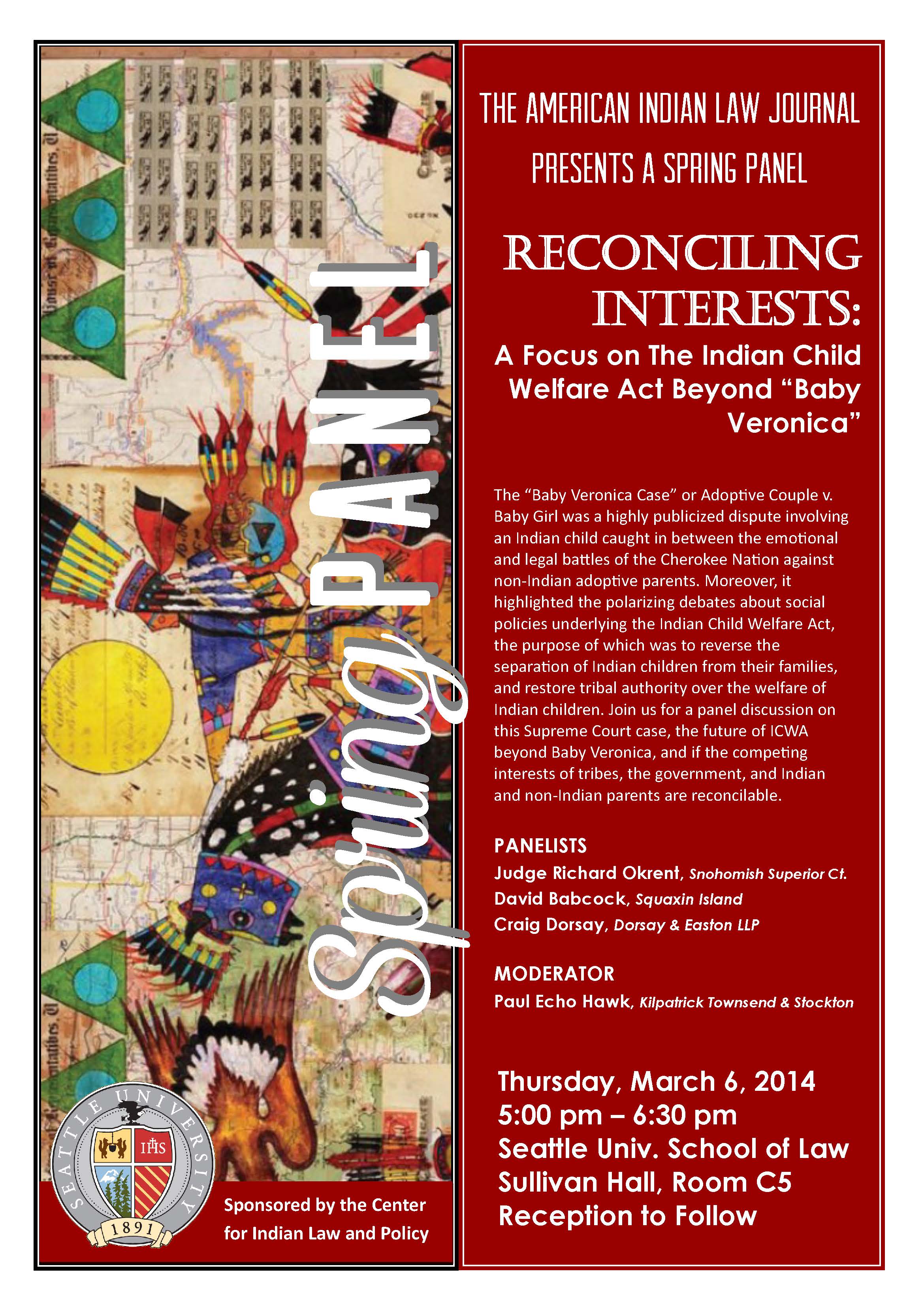
American Indian law is a complex body of federal statutes, treaties, and judicial precedents that define the legal relationship between the United States and Indigenous nations. It centers on tribal sovereignty, the federal trust responsibility, and the unique status of tribes as "domestic dependent nations" with inherent powers of self-governance.
Federal Indian law—often distinguished from "Tribal Law," which is the internal law tribes create for themselves—is one of the most intricate areas of the American legal system. As of 2026, this field continues to evolve rapidly as the Supreme Court and federal agencies navigate the tension between tribal autonomy and state authority. To understand this landscape, one must look past general civil rights and focus on the political status of tribes, which is rooted in constitutional law rather than mere racial classification.
The Constitutional and Philosophical Foundations
The relationship between the United States and Native American tribes is not based on ethnicity but on a political-legal relationship. This distinction was cemented early in the nation’s history through what is known as the Marshall Trilogy, a series of three Supreme Court cases decided under Chief Justice John Marshall between 1823 and 1832. These cases remain the bedrock of the field.
The Marshall Trilogy
- Johnson v. M'Intosh (1823): This case established the "Discovery Doctrine," claiming that European nations acquired title to the lands they "discovered," leaving Native tribes with a right of occupancy but not absolute ownership. This remains a controversial but foundational element of property law in the U.S.
- Cherokee Nation v. Georgia (1831): The Court defined tribes as "domestic dependent nations," likening the relationship to that of a "ward to his guardian." This gave birth to the Federal Trust Responsibility, a legally binding obligation for the U.S. to protect tribal lands and resources.
- Worcester v. Georgia (1832): In a pivotal victory for sovereignty, the Court ruled that state laws have no force within tribal boundaries. While President Andrew Jackson famously ignored this ruling, it established the principle that tribes deal directly with the federal government, not the states.
Inherent Sovereignty
Unlike states, which derive their power from the U.S. Constitution, or municipalities, which derive power from states, Indian tribes possess inherent sovereignty. This means their power to govern precedes the existence of the United States. While Congress has the "plenary power" to limit this sovereignty, any power not explicitly stripped away by treaty or statute is presumed to remain with the tribe.
The Federal Trust Responsibility and Plenary Power
The legal framework of 2026 operates under two conflicting doctrines: the Federal Trust Responsibility and Congressional Plenary Power. Understanding these is essential for any legal practitioner or tribal advocate.
The Trust Doctrine
The United States government holds a fiduciary duty to Native American tribes. This means the federal government must act in the best interests of tribes when managing their lands, assets, and natural resources. In practice, this often results in litigation when the government fails to manage tribal timber, water, or mineral rights effectively. The trust responsibility is also the legal basis for federal programs providing healthcare (via the Indian Health Service) and education to tribal members.
Plenary Power
Conversely, the "Plenary Power Doctrine" suggests that Congress has nearly absolute authority to legislate on behalf of, or even against, tribal interests. This power allows Congress to "extinguish" tribal title to land or even terminate the legal existence of a tribe, as seen during the disastrous Termination Era of the 1950s. While modern courts are more skeptical of unilateral federal overreach, the doctrine remains a potent tool in federal policy.
Jurisdictional Complexity in Indian Country
Jurisdiction—the question of who has the authority to arrest, prosecute, or sue—is the most litigated aspect of American Indian law. This is determined by three factors: the location of the act (is it in "Indian Country"?), the identity of the perpetrator (Native or Non-Native?), and the identity of the victim.
Criminal Jurisdiction
In 2026, criminal jurisdiction is still heavily influenced by the Major Crimes Act (1885), which grants the federal government jurisdiction over serious crimes (like murder or kidnapping) committed by Indians in Indian Country.
Recent shifts have occurred following the 2020 McGirt v. Oklahoma decision and the 2022 Oklahoma v. Castro-Huerta ruling. While McGirt reaffirmed that large swaths of Oklahoma remain tribal reservations for jurisdictional purposes, Castro-Huerta granted states the "concurrent jurisdiction" to prosecute non-Indians who commit crimes against Indians on tribal land. This has created a "checkerboard" of authority that requires constant coordination between tribal, federal, and state law enforcement.
Civil and Regulatory Jurisdiction
Tribal authority over non-Indians in civil matters (such as taxes or zoning) is generally more restricted. Under the "Montana Test" (Montana v. United States, 1981), a tribe can only regulate non-members on non-Indian fee land within a reservation if:
- The non-member has entered into a consensual relationship with the tribe (e.g., a commercial contract).
- The non-member’s conduct threatens the political integrity, economic security, or health and welfare of the tribe.
Key Federal Statutes and Modern Protections
Several specific laws define the daily reality of Native rights and tribal operations. These statutes are frequently at the center of high-stakes legal battles regarding cultural preservation and economic self-sufficiency.
| Statute | Year | Primary Purpose | Key Legal Impact |
|---|---|---|---|
| Indian Reorganization Act (IRA) | 1934 | Ended allotment; encouraged tribal self-government. | Allowed tribes to adopt constitutions and organize as business corporations. |
| Indian Child Welfare Act (ICWA) | 1978 | Prevents the forced removal of Native children from their families/tribes. | Established tribal intervention rights in state adoption and foster care cases. |
| Indian Gaming Regulatory Act (IGRA) | 1988 | Provides a framework for tribal casino operations. | Requires "Tribal-State Compacts" for Class III (casino-style) gaming. |
| NAGPRA | 1990 | Requires federal agencies/museums to return Native remains and cultural items. | Recognizes tribal ownership over ancestral remains and "objects of cultural patrimony." |
| Violence Against Women Act (VAWA) | 2013/22 | Reauthorized to protect Native women. | Restores tribal criminal jurisdiction over non-Indians for domestic violence and sexual assault. |
The Indian Child Welfare Act (ICWA)
In the years leading up to 2026, ICWA has faced significant constitutional challenges, most notably in Haaland v. Brackeen. The Supreme Court ultimately upheld the law, reaffirming that the preference for placing Native children with Native families is a political classification rather than a racial one. This ruling was vital for preserving tribal integrity, as children are considered the future "citizens" of these sovereign nations.
Natural Resources and Water Rights
For many tribes, particularly in the West, water rights are the most valuable asset. Under the Winters Doctrine (Winters v. United States, 1908), when the federal government created a reservation, it impliedly reserved enough water to fulfill the purpose of that reservation. These "Winters Rights" are often "senior" to those of non-Native settlers, making them incredibly powerful in times of drought.
However, many tribes still lack the infrastructure to access this water. In 2026, much of the legal work in this field involves negotiating "Water Settlements," where tribes trade their theoretical legal claims for federal funding to build actual pipes, pumps, and treatment plants.
Tribal Law and Traditional Justice Systems
While Federal Indian Law governs the tribe's relationship with the U.S., Tribal Law is the internal law of the nation. Most of the 574 federally recognized tribes have their own court systems, constitutions, and legislative bodies.
- Tribal Constitutions: Many are modeled after the U.S. Constitution (a legacy of the IRA), but many tribes have recently moved toward "traditional" constitutions that better reflect their unique cultural values.
- Customary Law: Tribal courts often incorporate oral traditions and customary practices into their rulings. This is particularly common in family law, land assignments, and dispute resolution.
- Peacemaking Courts: Some nations, like the Navajo Nation, utilize "Peacemaking" systems that prioritize restorative justice over the adversarial "win-lose" model of Western courts.
Practical Challenges in 2026: Digital and Environmental Sovereignty
The legal landscape in 2026 has expanded to include new frontiers of sovereignty. Two of the most pressing areas involve data and climate change.
Digital Sovereignty
As tribes expand their own broadband networks and digital infrastructures, the concept of "Data Sovereignty" has emerged. This involves the legal right of tribes to own and control the data collected within their jurisdictions, whether it pertains to health records, environmental sensors, or census data. Without specific federal protections, this data is often exploited by outside corporations.
Environmental Law and "Land Back"
The "Land Back" movement—a legal and social effort to return ancestral lands to tribal stewardship—has seen significant successes through the use of conservation easements and land trusts. Legally, tribes are increasingly being recognized as "co-managers" of federal lands (such as National Parks) that hold cultural significance. This requires a deep understanding of the National Environmental Policy Act (NEPA) and how it intersects with tribal consultation requirements.
Common Pitfalls in Native Legal Matters
Individuals and businesses interacting with tribal nations often make critical errors by assuming state law applies. Avoid these common mistakes:
- Ignoring Sovereign Immunity: Tribes, as sovereign entities, generally cannot be sued unless they have explicitly waived their immunity. This is a crucial factor in any commercial contract with a tribal enterprise.
- Assuming State Court Jurisdiction: Most disputes arising on tribal land between members must be heard in Tribal Court, not State Court. Attempting to file in the wrong venue can lead to immediate dismissal.
- Failure to Consult: Federal law often requires "meaningful consultation" with tribes before any project can begin on or near tribal land. Treating this as a "check-the-box" exercise often leads to litigation and project shutdowns.
FAQs
What is the difference between "Indian Country" and a Reservation?
"Indian Country" is a specific legal term defined in 18 U.S.C. § 1151. It includes all land within the limits of any Indian reservation, all "dependent Indian communities" (such as Pueblos), and all "Indian allotments" where the title has not been extinguished. Not all Indian Country is a reservation, but all reservations are Indian Country.
Do Native Americans pay federal and state taxes?
The answer depends on location and income source. All Native Americans pay federal income tax. However, tribal members who live and work on their own reservation are generally exempt from state income tax. Similarly, goods purchased on the reservation by tribal members are typically exempt from state sales tax.
Can a non-Native be tried in a Tribal Court?
Yes, under specific circumstances. Following the reauthorization of the Violence Against Women Act (VAWA), tribal courts have the authority to prosecute non-Natives for domestic violence, stalking, and child abuse committed against Native victims on tribal land. For civil matters, non-Natives can be sued in tribal court if they have a consensual commercial relationship with the tribe or their actions directly affect the tribe's welfare.
How does a tribe become "federally recognized"?
Federal recognition is a formal act that establishes a government-to-government relationship. It can happen through an Act of Congress, a federal court decision, or through the administrative process managed by the Bureau of Indian Affairs (BIA) under 25 C.F.R. Part 83. Recognition is required for a tribe to access federal trust services and exercise full sovereign powers.
Is the term "American Indian" still legally accurate?
Yes. While "Indigenous" or "Native American" are often preferred in social and academic contexts, "American Indian" remains the primary legal term used in the U.S. Constitution, federal statutes, and Supreme Court case law. Using the specific name of a tribe (e.g., "Muscogee Nation citizen") is generally the most accurate and respectful practice.
Final Recommendation for Navigating Native Law
Whether you are a legal professional, a business owner, or a tribal member, navigating American Indian law requires moving beyond a "one-size-fits-all" approach. Because every tribe has a unique treaty history and a distinct set of tribal laws, it is essential to consult with the specific tribal government involved in your matter.
For those seeking to protect or exercise their rights, the Native American Rights Fund (NARF) and the National Congress of American Indians (NCAI) provide the most reliable updated resources on pending legislation and court cases. In 2026, the key to success in this field is recognizing that tribes are not interest groups, but permanent political entities with the legal standing to shape their own futures.