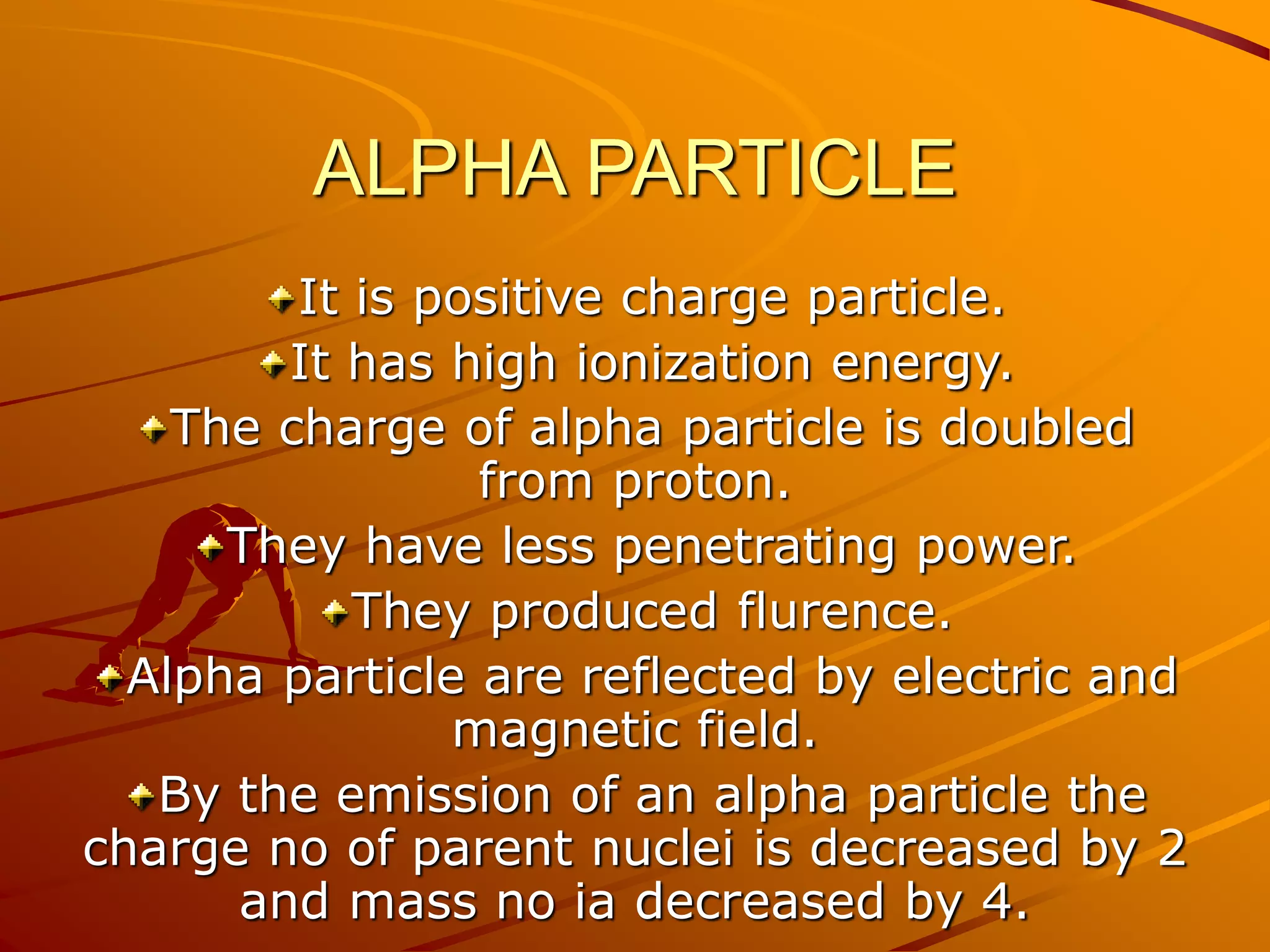
An alpha particle has no electrons because it is a helium nucleus consisting solely of two protons and two neutrons. Emitted during the radioactive decay of heavy elements, these particles possess a +2 elementary charge. While a neutral helium atom contains two orbiting electrons, the alpha particle is stripped of these during its violent ejection from the parent nucleus.
Understanding the Fundamental Identity of Alpha Particles
To comprehend why alpha particles lack electrons, one must first look at the atomic structure of helium. Under normal conditions, a helium atom is the second element on the periodic table. It typically consists of a nucleus containing two protons and two neutrons, surrounded by an electron cloud containing two electrons. This configuration is electrically neutral because the +2 charge of the protons is perfectly balanced by the -2 charge of the electrons.
However, an alpha particle is not a complete atom; it is specifically the nucleus of a helium-4 atom ($^4He$). When we state that "alpha particles have no electrons," we are identifying them as doubly ionized helium cations ($He^{2+}$). In the realm of nuclear physics, the distinction between a neutral atom and its nucleus is critical. Alpha particles are products of nuclear reactions, specifically alpha decay, which occurs deep within the center of unstable, heavy atoms like uranium-238 or radium-226.
Because the process of alpha decay involves the expulsion of a portion of the nucleus itself, the electrons belonging to the original "parent" atom remain associated with that atom's electron shells or are redistributed as the atom transforms into a different element. The alpha particle is "born" as a high-speed, bare nucleus, entering the world without the electron accompaniment that characterizes stable gases.
The Mechanism of Alpha Decay: Why Electrons Are Left Behind
Alpha decay is a quantum mechanical process that occurs when the strong nuclear force, which holds the nucleus together, is unable to counteract the electromagnetic repulsion between the large number of protons in a heavy nucleus. In elements with high atomic numbers, the nucleus becomes physically too large to remain stable.
The Formation of the Alpha Cluster
Within a heavy nucleus, protons and neutrons are in constant motion. Due to the high binding energy of the helium-4 configuration—often referred to as a "magic number" configuration in nuclear shell theory—two protons and two neutrons frequently cluster together. This cluster is the precursor to the alpha particle.
Quantum Tunneling
According to classical physics, these clusters should not have enough energy to escape the "potential well" created by the strong nuclear force. However, in the quantum world of 2026 and beyond, we understand this through quantum tunneling. The alpha cluster has a non-zero probability of appearing outside the nucleus despite not having the energy to "climb over" the barrier.
When this tunneling occurs, the alpha cluster is suddenly subject to the massive repulsive force of the remaining protons in the parent nucleus. It is kicked out at incredibly high velocities—often around 5% to 7% of the speed of light. Because this event is strictly a nuclear event, the electrons orbiting the atom are not part of the package. The alpha particle is ejected from the center of the atom, passing through the electron shells far too quickly to "capture" any of the existing electrons.
The Chemical and Physical Implications of a +2 Charge
The lack of electrons gives the alpha particle a high charge-to-mass ratio compared to other forms of radiation like neutrons. This +2 charge is the defining characteristic of its behavior when it interacts with matter.
Ionizing Power
Because alpha particles lack electrons, they are highly "hungry" for negative charge. As they move through air or biological tissue, they exert a strong electromagnetic pull on the electrons of nearby atoms. This process is known as ionization. An alpha particle can strip electrons away from thousands of atoms as it passes by, leaving a trail of ions in its wake.
This high ionizing power is why alpha radiation is so dangerous if ingested or inhaled. While a single alpha particle is relatively heavy and slow compared to a beta particle (an electron), its +2 charge allows it to do significant damage to molecular structures, including DNA, over a very short distance.
Low Penetration Depth
Ironically, the same lack of electrons that makes alpha particles highly ionizing also makes them easy to stop. Because they interact so strongly with the electrons of the material they are passing through, they lose their kinetic energy very quickly. A standard sheet of paper, the outer layer of human skin, or even a few centimeters of air is sufficient to stop an alpha particle. They are effectively "tripped up" by the very electrons they are trying to attract.
Alpha Particles vs. Helium Atoms: A Comparative Analysis
It is a common point of confusion for students to equate alpha particles with helium. While they share the same nuclear components, their physical states are vastly different.
| Feature | Alpha Particle | Neutral Helium Atom |
|---|---|---|
| Composition | 2 Protons, 2 Neutrons | 2 Protons, 2 Neutrons, 2 Electrons |
| Net Charge | +2 (Positive) | 0 (Neutral) |
| Origin | Nuclear decay or fusion | Atmospheric or geological capture |
| Velocity | High (Approx. 15,000 km/s) | Thermal (Approx. 1 km/s at RT) |
| Interaction | Highly ionizing | Chemically inert (Noble gas) |
| Mass | ~4.0015 amu | ~4.0026 amu (includes electron mass) |
The Lifecycle of an Alpha Particle: From Nucleus to Gas
While an alpha particle starts its life without electrons, it does not remain in that state indefinitely. As the particle travels through matter and loses its kinetic energy through collisions and ionization events, it eventually slows down to "thermal" speeds.
Once the alpha particle is moving slowly enough, its +2 charge finally allows it to capture two free electrons from its surroundings. This process is called recombination. When an alpha particle captures two electrons, it officially becomes a neutral helium atom.
This is the geological source of most of the helium found on Earth. Over millions of years, alpha particles emitted by decaying uranium and thorium trapped deep underground slow down, capture electrons from the surrounding rock, and turn into helium gas. This gas then becomes trapped in natural gas deposits, from which we extract it today for use in cryogenics, MRI machines, and high-altitude balloons.
Historical Context: How We Know They Lack Electrons
The discovery that alpha particles are essentially bare helium nuclei was one of the crowning achievements of early 20th-century physics. In 1907, Ernest Rutherford and Thomas Royds performed a landmark experiment to prove this identity.
They placed a radioactive alpha-emitter inside a thin-walled glass tube, which was itself inside a vacuum-sealed larger tube. The alpha particles were energetic enough to penetrate the thin glass but were then trapped in the outer vacuum chamber. After several days, Rutherford applied an electric discharge to the gas that had collected in the outer tube.
By analyzing the light emitted through a spectroscope, he found the unmistakable spectral lines of helium. This proved that alpha particles, once they slowed down and "found" electrons in the glass or the chamber, transformed into neutral helium gas. The fact that they had to capture these electrons from their environment confirmed they did not bring any with them from the parent nucleus.
Safety and Practical Applications
Despite their lack of electrons and the resulting ionizing danger, alpha particles are utilized in several critical technologies in 2026.
Ionization Smoke Detectors
Many household smoke detectors use a tiny amount of Americium-241, an alpha emitter. The alpha particles are ejected into a small chamber where they knock electrons off oxygen and nitrogen molecules in the air. This creates a small, steady electric current. When smoke enters the chamber, the smoke particles attach to the ions and neutralize them, disrupting the current and triggering the alarm. The "missing" electrons in the alpha particles are what allow this air-ionization process to occur so efficiently.
Targeted Alpha Therapy (TAT)
In modern medicine, the lack of electrons—and the resulting short-range, high-energy impact—is used to fight cancer. By attaching alpha-emitting isotopes to antibodies that target specific cancer cells, doctors can deliver a "nuclear payload" directly to a tumor. Because the alpha particle has no electrons and a high charge, it deposits all its destructive energy within a few cell diameters, killing the cancer cell while sparing surrounding healthy tissue.
Static Eliminators
In industrial settings, such as paper mills or plastic manufacturing, static electricity can be a major hazard. Alpha emitters are sometimes used to ionize the air around the machinery. The bare nuclei strip or provide electrons to the air molecules, creating a conductive path that allows static charges to bleed off safely.
Common Misconceptions About Alpha Particles
Understanding the relationship between the nucleus and the electron shell is vital for clearing up common errors in physics education.
- "Alpha particles are just helium gas." This is incorrect. Helium gas is a collection of neutral atoms. An alpha particle is a high-energy ion. Only after the alpha particle slows down and captures electrons does it become part of a helium gas volume.
- "The electrons are 'pushed off' during decay." While the ejection is violent, the electrons associated with the parent atom are simply not part of the nuclear event. They are left behind in the parent atom (which is now a new element with a lower atomic number).
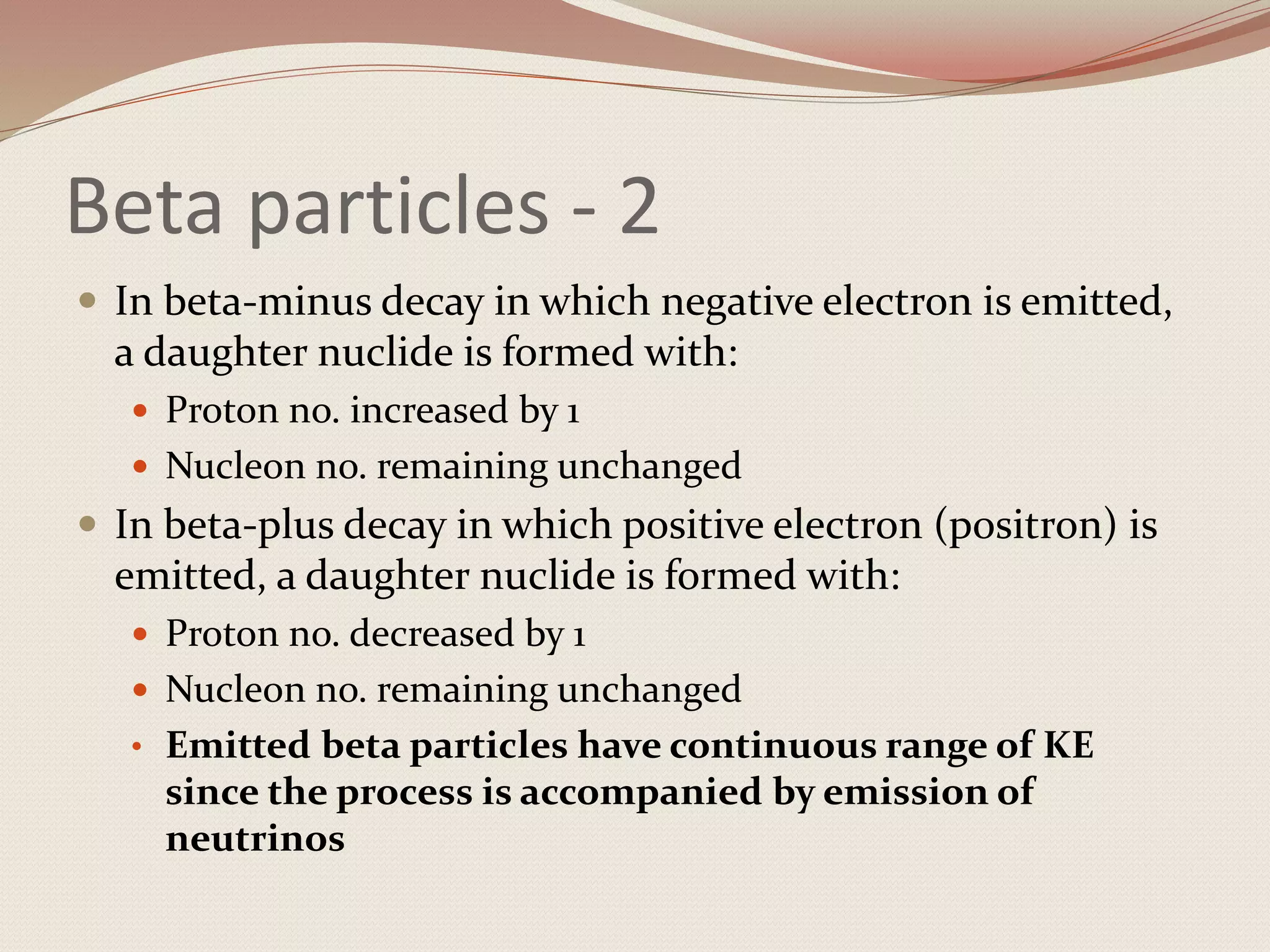
- "Alpha particles are the same as Beta particles." While both are forms of radiation, Beta particles are electrons (or positrons). Alpha particles are 8,000 times more massive than beta particles and have no electrons of their own.
FAQs
Can an alpha particle ever have one electron?
Yes, this is known as a He+ ion or a "singly ionized" helium atom. This state is usually transitory. In high-energy environments like stellar interiors or plasma reactors, helium may exist in various stages of ionization, but a standard "alpha particle" as defined in radioactive decay is emitted as a fully stripped nucleus ($He^{2+}$).
Where do the electrons go when an atom undergoes alpha decay?
When a parent atom (e.g., Uranium) undergoes alpha decay, its atomic number decreases by two. For instance, Uranium (atomic number 92) becomes Thorium (atomic number 90). The original atom had 92 electrons. After the nucleus changes, the new Thorium atom only "needs" 90 electrons to be neutral. The two "excess" electrons are usually shed into the surrounding material or the local electron sea, while the alpha particle flies away as a bare nucleus.
Why doesn't the alpha particle pull the electrons out of the parent atom as it leaves?
The alpha particle is moving extremely fast—often exceeding 15 million meters per second. The electromagnetic forces that bind electrons to an atom operate at a different scale of energy and time. By the time the parent atom's electron cloud can "react" to the passing positive charge, the alpha particle is already far beyond the atomic radius.
Is an alpha particle a "heavy" particle?
In the context of subatomic radiation, yes. It consists of four nucleons (two protons and two neutrons). Compared to an electron (a beta particle), which has a mass of about 1/1836 of a proton, the alpha particle is massive. This mass, combined with its +2 charge and lack of electrons, is why it has such a distinct behavior in matter.
Do alpha particles have a spin?
Yes, but because an alpha particle consists of two protons and two neutrons that "pair up" (spin-up and spin-down), the total intrinsic angular momentum, or nuclear spin, of an alpha particle is zero. This makes it a boson, which has implications for how they behave in large groups at low temperatures, though this is rarely relevant in standard radioactive decay.
Final Practical Guidance
When studying or working with alpha-emitting materials, it is essential to remember that their lack of electrons is exactly what makes them both easy to shield and biologically hazardous. Always use appropriate detection equipment, such as a Geiger-Muller counter with a thin "mica window" capable of detecting these heavy, bare nuclei. In laboratory settings, ensure that alpha emitters are strictly contained to prevent inhalation or ingestion, as the +2 charge of the bare helium nucleus will immediately begin ionizing sensitive biological molecules upon contact.
For further technical data on alpha-emitting isotopes and their energy levels, researchers should consult the NIST Physical Reference Data or the International Atomic Energy Agency (IAEA) Nuclear Data Services.