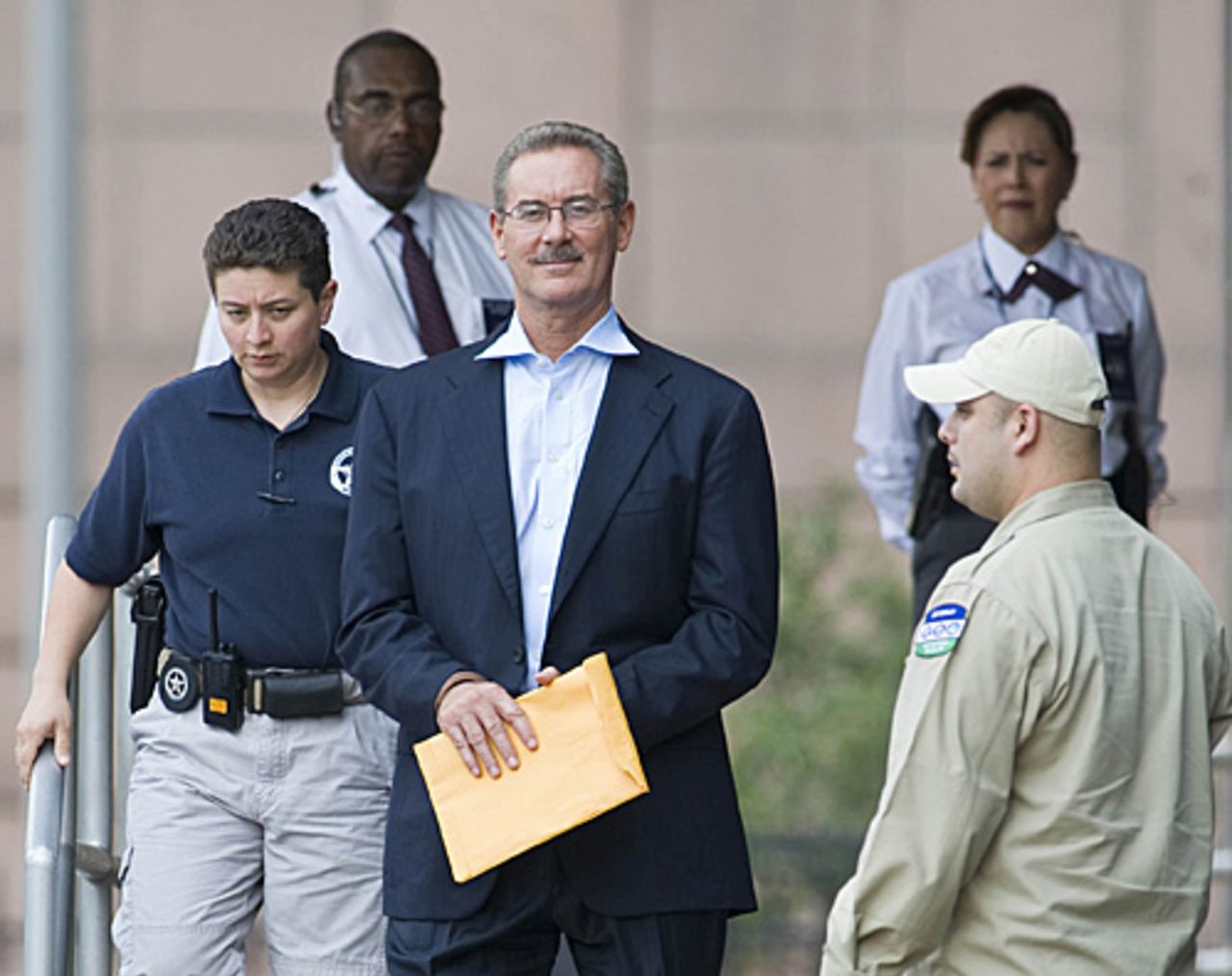
Susan Stanford, the wife of convicted Ponzi schemer Allen Stanford, came into the spotlight during the 2009 collapse of the Stanford Financial Group. Unlike many high-profile spouses, Susan had filed for divorce prior to the federal raid, yet she spent years battling court-appointed receivers to protect her assets and personal livelihood.
The Early Years: Building an Empire in Texas and Beyond
To understand why Susan Stanford’s position was so precarious when the "Stanford Empire" crumbled, one must look at the decades of history that preceded the 2009 scandal. Susan and Robert Allen Stanford married in 1975 in Texas. At the time, Allen was far from a "Sir" or a billionaire. He was a young entrepreneur with a background in gym management and real estate speculation.
In the late 1970s and early 1980s, the couple lived a relatively standard, upper-middle-class life in Mexia, Texas. However, as Allen’s ambitions grew, so did the complexity of their lifestyle. Allen Stanford eventually moved his operations to the Caribbean, specifically Antigua and St. Croix, where he established the Stanford International Bank (SIB). This move was the catalyst for the massive wealth that would eventually define their marriage—and the subsequent legal nightmare.
As the business expanded, Susan remained primarily in the United States, raising their children and managing the domestic side of their lives. For many years, the public saw a family that had achieved the pinnacle of the American Dream: private jets, multiple luxury estates, and a philanthropic footprint that spanned continents. However, the reality behind the scenes was far more fractured. By the mid-2000s, the marriage had deteriorated, leading Susan to seek a legal separation and divorce well before the Securities and Exchange Commission (SEC) took action.
The 2009 Collapse: A Sudden Shift in the Spotlight
In February 2009, the world watched as federal agents raided the offices of the Stanford Financial Group. Allen Stanford was accused of orchestrating a $7 billion Ponzi scheme, primarily through the sale of fraudulent Certificates of Deposit (CDs) issued by his Antiguan bank. While Allen was the primary target of the Department of Justice and the SEC, the collateral damage immediately extended to his family.
Susan Stanford was thrust into the spotlight not as a co-conspirator, but as a "relief defendant" in many respects. A relief defendant is a person who has received ill-gotten gains from a fraud but is not necessarily accused of participating in the fraud itself. Because the court-appointed receiver, Ralph Janvey, was tasked with recovering as much money as possible for the thousands of victims, he cast an incredibly wide net.
The spotlight on Susan during this period was harsh. Every asset she owned—from her home in Houston to her personal bank accounts—was frozen. The legal system operates on the principle that if the money used to purchase an asset was derived from a crime, that asset belongs to the victims, regardless of who currently holds the title. For Susan, this meant her life was put on hold as she fought for the right to pay for basic necessities, legal fees, and her children's education.
The Legal Battle: Susan Stanford vs. The Receiver
The conflict between Susan Stanford and the court-appointed receiver, Ralph Janvey, was one of the most contentious subplots of the Stanford saga. The receiver’s job was to "claw back" assets, and he argued that Susan had lived a life of luxury funded entirely by the victims of her husband’s fraud.
Susan’s legal team argued that she was an "innocent spouse" who had no knowledge of the inner workings of the Stanford International Bank. They contended that she was entitled to her share of the marital estate, particularly because she had initiated divorce proceedings in 2007—two years before the Ponzi scheme was exposed. The "innocent spouse" defense is a specific legal strategy often used in tax and fraud cases where one partner claims they had no reason to know about the other's illicit activities.
Key points of contention in the legal proceedings included:
- The Houston Mansion: The receiver sought to sell the family’s primary residences to liquidate funds for victims.
- Monthly Stipends: Susan had to petition the court repeatedly for "living expenses." In several instances, the court denied these requests, leaving her in a state of financial limbo that stood in stark contrast to her previous life of billionaire-level luxury.
- Divorce Settlement: Because the assets were frozen, the divorce could not be finalized with a standard division of property. The receiver argued that there was no "legitimate" property to divide.
The Impact on the Stanford Children
While Susan was the primary adult figure in the spotlight, the impact on her and Allen’s children was profound. The children grew up in an environment of extreme wealth, only to see their father labeled one of the greatest fraudsters in American history.
Unlike the Madoff family, where the sons were directly involved in the business (and subsequently faced tragic ends), the Stanford children were largely removed from the daily operations of the Stanford Financial Group. Nevertheless, they were subject to the same asset freezes as their mother. The public scrutiny was relentless, as the media sought to uncover whether any members of the family had helped Allen hide money in offshore accounts. No evidence ever surfaced to suggest Susan or the children were complicit in the fraud, yet the "stigma of the Stanford name" persisted for years.
Comparing Susan Stanford and Ruth Madoff
Public fascination with the "wives of fraudsters" often leads to comparisons between Susan Stanford and Ruth Madoff. While both women were married to men who orchestrated multi-billion dollar Ponzi schemes, their trajectories were different.
| Feature | Susan Stanford | Ruth Madoff |
|---|---|---|
| Marital Status at Raid | Filed for divorce (2007) | Married and living together |
| Legal Cooperation | Fought the receiver for assets | Settled with the government early |
| Public Perception | Seen as a victim of a failing marriage | Often criticized for staying with Bernie |
| Asset Recovery | Lost nearly all high-value marital assets | Forfeited $80 million; kept $2.5 million |
| Residence | Remained primarily in Texas | Moved to Florida and then Connecticut |
Susan’s situation was arguably more complex because of the ongoing divorce. While Ruth Madoff eventually reached a settlement that allowed her to keep a small fraction of her wealth, Susan’s battle lasted much longer due to the aggressive stance of the Stanford receiver and the specific jurisdictional challenges of the Antiguan assets.
The 2026 Perspective: Life After the Storm
As of 2026, the Stanford scandal has largely moved from the front pages of newspapers to the annals of white-collar crime history. Allen Stanford remains incarcerated, serving a 110-year sentence in federal prison, a term that effectively ensures he will never be a free man again.
Susan Stanford has successfully transitioned out of the public eye. After the grueling years of litigation that followed the 2009 collapse, she eventually reached various settlements and resolutions regarding the frozen assets. While she did not retain the billionaire lifestyle of the 1990s, she has managed to rebuild a private life away from the cameras.
The legacy of "Allen Stanford’s wife" serves as a cautionary tale about the legal vulnerabilities of spouses in high-stakes financial environments. Even if a spouse is entirely innocent of the crime, the legal mechanisms of "clawbacks" and "receiverships" can strip away a lifetime of perceived security in a matter of days.
Summary of Key Events
The following table outlines the critical dates and events that defined Susan Stanford's time in the public eye.
| Year | Event | Impact on Susan Stanford |
|---|---|---|
| 1975 | Marriage to Allen Stanford | Beginning of the legal marital partnership. |
| 1980s-90s | Expansion into Antigua | Rise to extreme wealth and social prominence. |
| 2007 | Divorce Filing | Susan seeks to end the marriage before the fraud is public. |
| 2009 | SEC Raid and Asset Freeze | All personal and joint accounts are locked by the court. |
| 2012 | Allen Stanford Convicted | Finality of the fraud; increased pressure to liquidate family assets. |
| 2015-2020 | Settlement Phases | Gradual resolution of property disputes with the Receiver. |
| 2026 | Current Status | Susan lives a private life; Allen remains in federal prison. |
Frequently Asked Questions
Was Susan Stanford ever charged with a crime?
No, Susan Stanford was never charged with any criminal activity related to the Stanford Financial Group Ponzi scheme. She was treated by the court as a "relief defendant," meaning she held assets that the court believed were purchased with stolen money, but she was not accused of participating in the fraud itself.
Did Susan Stanford get to keep any of the money?
Most of the high-value assets, including luxury estates and significant investment accounts, were liquidated by the receiver to pay back victims. While she was eventually able to secure enough for a modest lifestyle and resolve the legal freezes, she lost the vast majority of the wealth she possessed during the marriage.
Where is Allen Stanford now?
As of 2026, Allen Stanford is serving a 110-year sentence at a high-security federal penitentiary. He has exhausted his major appeals, and his sentence is widely considered a "life sentence" given his age.
How did the divorce affect the asset recovery?
The divorce made the recovery process more complicated. Because Susan had filed for divorce in 2007, she argued that she had a "vested interest" in half of the marital property that predated the SEC's intervention. However, the receiver successfully argued that because the "wealth" was built on fraud from the beginning, there was no legitimate marital estate to split.
What happened to the Stanford children?
The children have largely remained out of the spotlight. They were not implicated in the scheme. They faced the difficult task of distancing themselves from their father’s reputation while supporting their mother through the financial collapse.
Professional Advice Limitation
The details regarding the Stanford receivership and innocent spouse claims are based on historical legal filings and public records. This article is for informational purposes and does not constitute legal or financial advice. Individuals facing similar situations regarding asset seizure or "clawback" litigation should consult with a specialized white-collar defense or family law attorney to understand their specific jurisdictional rights.
Final Recommendation
For those interested in the complexities of the Stanford case, the most reliable information can be found through the official U.S. Securities and Exchange Commission (SEC) archives and the U.S. Department of Justice (DOJ) case summaries. Understanding the "innocent spouse" protections requires a deep dive into the Internal Revenue Service (IRS) guidelines and federal case law regarding receiverships. If you are researching this for academic or legal reasons, prioritize primary court documents from the Northern District of Texas, where the majority of the Stanford litigation took place.