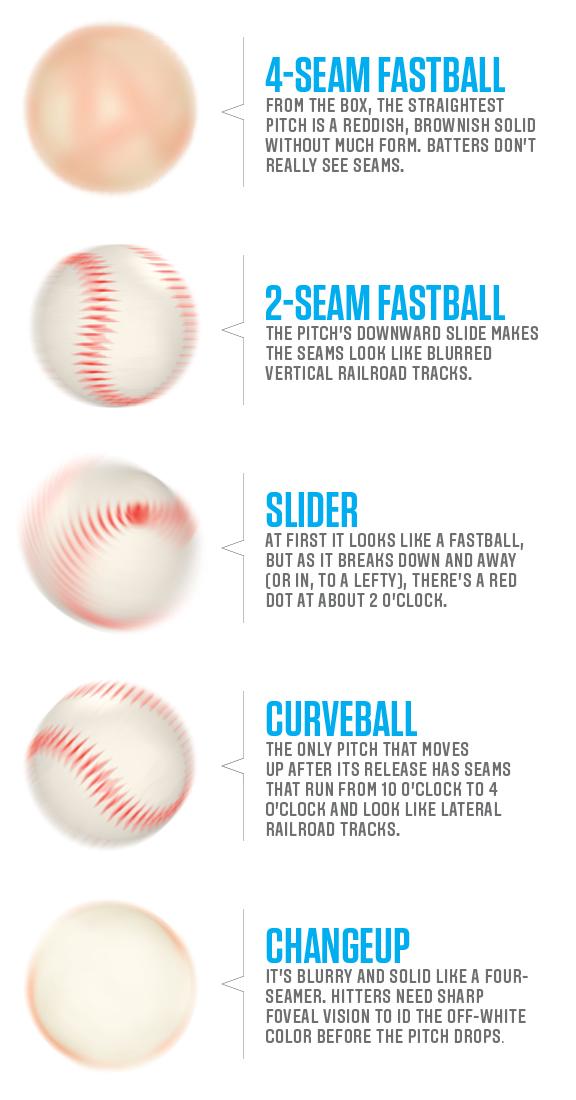
Mapping the landscape of pitch types requires categorizing deliveries based on their velocity, movement profile, and grip mechanics. In the modern era, this involves differentiating between fastballs (four-seam, sinker, cutter), breaking balls (slider, sweeper, curveball), and off-speed pitches (changeup, splitter), each designed to disrupt a hitter’s timing and plane of contact.
Understanding the full spectrum of pitches is no longer just for professional scouts or biomechanics experts. By 2026, the integration of high-speed cameras and wearable sensors has democratized "pitch design," allowing players at all levels to map their own arsenals with surgical precision. To truly understand the landscape, one must look beyond the names of the pitches and examine the physics of spin, the deception of "tunneling," and the strategic application of movement.
The Fastball Family: Power and Plane
The fastball is the foundation of any pitcher’s repertoire. While it is often associated with raw speed, the modern landscape distinguishes fastballs primarily by their movement and how they interact with the air—a phenomenon governed by the Magnus effect.
The Four-Seam Fastball
The four-seam fastball is the "straightest" and usually the fastest pitch in a pitcher's bag. In 2026, the emphasis on this pitch remains focused on "induced vertical break" (IVB). By gripping the ball across the wide seams, pitchers maximize backspin. This backspin creates upward lift, which fights gravity. While the ball does not actually rise, it drops significantly less than a hitter’s brain expects, leading to "whiffs" as bats swing underneath the ball. High-velocity four-seamers are most effective at the top of the strike zone.
The Two-Seam Fastball and Sinker
Often used interchangeably, these pitches focus on horizontal movement and downward "bite." The sinker is designed to generate ground balls. By orienting the fingers along the seams, a pitcher creates side-spin or "run." In recent years, analysts have distinguished the "power sinker"—thrown at velocities nearly equal to a four-seamer—from the traditional two-seamer. The primary goal is to miss the barrel of the bat, causing weak contact on the top half of the ball.
The Cutter (Cut Fastball)
The cutter sits between a fastball and a slider. It is thrown with high velocity but features late, horizontal "cut" toward the pitcher’s glove side. For a right-handed pitcher, this means the ball moves away from a right-handed hitter or into the hands of a left-handed hitter. The cutter is a devastating tool for "jamming" hitters and breaking bats, as its movement is often too late for the batter to adjust their swing path.
The Breaking Ball Spectrum: Deception Through Spin
Breaking balls are defined by their significant deviation from the initial flight path. They generally travel slower than fastballs and rely on heavy topspin or side-spin to create "break."
The Slider and the "Sweeper"
By 2026, the "sweeper" has been firmly established as a distinct category rather than just a variation of the slider.
- The Traditional Slider: Characterized by "gyro" spin (like a football), the traditional slider has more vertical drop than horizontal movement. It is often used as a "chase" pitch in the dirt.
- The Sweeper: This pitch utilizes a specific grip and "seam-shifted wake" to create massive horizontal movement—sometimes over 15 to 20 inches. It moves across the zone horizontally rather than dropping vertically, making it a nightmare for same-handed hitters.
The Curveball
The curveball is the classic "drop" pitch. It is thrown with heavy topspin, causing it to dive as it nears the plate.
- 12-6 Curveball: Named after the numbers on a clock, this pitch moves purely vertically.
- Knuckle-Curve: Not a knuckleball, but a grip where one finger is "spiked" into the ball to generate even more torque and spin.
- The "Yellow Hammer": An old-school term still used for a curveball with exceptionally sharp, high-velocity break.
The Slurve
As the name suggests, the slurve is a hybrid between a slider and a curveball. It possesses more velocity than a standard curve but more vertical break than a traditional slider. While some coaches discourage it for lack of "true" identity, many pitchers find it a natural middle ground for their arm slot.
Off-Speed Pitches: The Art of Timing
Off-speed pitches are the ultimate tools of deception. They are designed to look identical to a fastball out of the hand but arrive at the plate significantly slower, causing the hitter to be "out in front" of the ball.
The Changeup
The changeup is arguably the most important pitch for longevity in a pitching career. The most common variation is the Circle Change, where the thumb and index finger form a circle on the side of the ball. This forces the middle and ring fingers to provide the power, naturally slowing the velocity while creating "fade" (movement toward the pitcher’s arm side). Success with a changeup relies entirely on arm speed; if the pitcher slows their arm, the hitter will recognize the deception.
The Splitter (Split-Finger Fastball)
The splitter has seen a massive resurgence in the mid-2020s. By "splitting" the fingers wide across the ball, the pitcher kills the spin almost entirely. This lack of spin causes the ball to "tumble" or drop off a table as it reaches the plate. It is often thrown at high velocities, making it look like a fastball until the very last millisecond.
The Forkball
Similar to the splitter but with the fingers spread even wider. The forkball is rarer due to the physical strain it puts on the hand and forearm, but it offers an even more dramatic "death drop" than the splitter.
The Exotic and Rare Deliveries
Some pitches don't fit neatly into the three main families. These are often "feel" pitches that take years to master.
- The Knuckleball: A pitch thrown with almost zero spin. Its flight path is determined by the air currents hitting the seams, making it unpredictable for both the hitter and the catcher. Only a handful of pitchers in the world can throw this at a professional level in 2026.
- The Screwball: A breaking ball that moves in the opposite direction of a curveball (breaking toward the pitcher's arm side). It is notoriously difficult to throw and requires a unique physical release, making it one of the rarest sights in the modern game.
- The Eephus: A high-arc, low-velocity "junk" pitch used purely to catch a hitter off guard. It is a psychological weapon rather than a mechanical one.
Technical Specifications and Pitch Mapping Metrics
In 2026, mapping these pitches involves looking at specific data points provided by systems like Statcast. To understand the "landscape," one must understand these metrics:
| Pitch Type | Typical Velocity (MPH) | Primary Spin Type | Primary Objective |
|---|---|---|---|
| Four-Seam | 93 - 101+ | Backspin | Induced Vertical Break / Whiffs |
| Sinker | 91 - 98 | Side-spin / Run | Ground Ball Induction |
| Cutter | 88 - 95 | Gyro / Side-cut | Weak Contact / Jamming |
| Slider | 83 - 90 | Gyro Spin | Vertical "Chase" Break |
| Sweeper | 79 - 86 | Horizontal / SSW | Horizontal Zone Clearance |
| Curveball | 75 - 84 | Topspin | Vertical Drop / Timing Disruption |
| Changeup | 80 - 88 | Arm-side Fade | Velocity Differential |
| Splitter | 84 - 91 | Low Spin / Tumble | Late Vertical Dive |
Seam-Shifted Wake (SSW)
One of the most significant advancements in pitch mapping is the understanding of Seam-Shifted Wake. This refers to how the orientation of the seams—independent of the Magnus effect—creates asymmetrical air pressure that pulls the ball in a specific direction. This explains why some pitches "run" or "sink" more than their spin rate suggests they should.
Pitch Tunneling
Pitch mapping isn't just about individual pitches; it’s about how they look together. Tunneling is the concept of making two different pitches (e.g., a four-seam fastball and a splitter) look identical for the first 25–30 feet of their flight. By the time the pitches diverge into their respective paths, the hitter has already committed to a swing.
The Strategy of the Modern Arsenal
The landscape of pitch types is governed by the "Three Pillars of Pitching": Velocity, Movement, and Command. A pitcher rarely needs all the pitches mentioned above. Instead, they build a "map" that covers different quadrants of the strike zone and different planes of movement.
- Velocity Separation: A successful map usually requires at least an 8–12 MPH difference between the fastball and the primary off-speed pitch.
- Movement Mirroring: Pitchers often pair a pitch that moves "glove-side" (like a slider) with one that moves "arm-side" (like a changeup) to keep hitters from leaning into one side of the plate.
- Vertical Complementing: In the high-strikeout environment of 2026, pairing a "high-ride" four-seamer with a "high-drop" curveball creates the largest possible vertical window for a hitter to cover.
Common Pitfalls in Pitch Selection
A common mistake among developing pitchers is trying to learn too many pitch types at once. This leads to "blended" pitches—where a slider and a curveball start to look the same, or a changeup lacks enough velocity separation from the fastball.
Another error is ignoring the "Active Spin" percentage. If a pitcher throws a curveball with high total spin, but only 50% of that spin is "active" (contributing to movement), the pitch will likely "hang" and be easily hit. Modern mapping technology allows pitchers to adjust their finger pressure and release point to ensure that the spin they generate is actually moving the ball.
Summary of Modern Pitch Mapping
The landscape of pitch types is a dynamic map of physics and psychology. From the rising heat of a four-seam fastball to the fluttering uncertainty of a knuckleball, each pitch serves a specific role in the battle between pitcher and batter. By 2026, the ability to quantify these movements has turned pitching into a high-tech discipline, yet the core goal remains the same: disrupt the hitter's balance, timing, and contact.
FAQ
What is the difference between a slider and a sweeper? A traditional slider has more vertical drop and is thrown harder, often featuring "gyro spin." A sweeper is thrown with a specific grip to maximize horizontal movement, often resulting in 10 or more inches of "sweep" across the plate with less vertical decline.
Why is the knuckleball so rare in 2026? The knuckleball is incredibly difficult to control and requires a catcher who specializes in receiving it. Furthermore, modern player development focuses on high-velocity and high-spin metrics, which are the polar opposite of the knuckleball’s low-velocity, no-spin approach.
How does "tunneling" help a pitcher? Tunneling makes different pitches look the same for the first half of their flight. If a fastball and a changeup come out of the same "tunnel," the hitter cannot distinguish between them until it is too late to adjust their swing speed.
What is the most difficult pitch to master? The screwball is generally considered the most difficult due to the unnatural "turning over" of the wrist at release, which can lead to injury if not performed with perfect mechanics. The knuckleball is also a candidate due to its extreme unpredictability.
Does spin rate always mean a better pitch? No. While high spin is generally good for four-seam fastballs (to create "ride") and curveballs (to create "depth"), a pitch like a splitter or knuckleball actually benefits from the lowest possible spin rate.
What is Seam-Shifted Wake? It is a phenomenon where the air flowing over the seams of a baseball creates a "wake" that pushes the ball in a direction not explained by its spin alone. It allows pitchers to get "extra" movement by carefully choosing how they grip the seams.
Practical Recommendation
For pitchers looking to optimize their arsenal in 2026, the first step is to establish a high-quality "baseline" fastball. Once the velocity and spin profile of the fastball are mapped using a tool like Rapsodo or TrackMan, you should add one glove-side breaking ball (slider or sweeper) and one arm-side off-speed pitch (changeup or splitter). This creates a "triangulated" map that forces the hitter to defend all directions and speeds, maximizing your effectiveness on the mound.