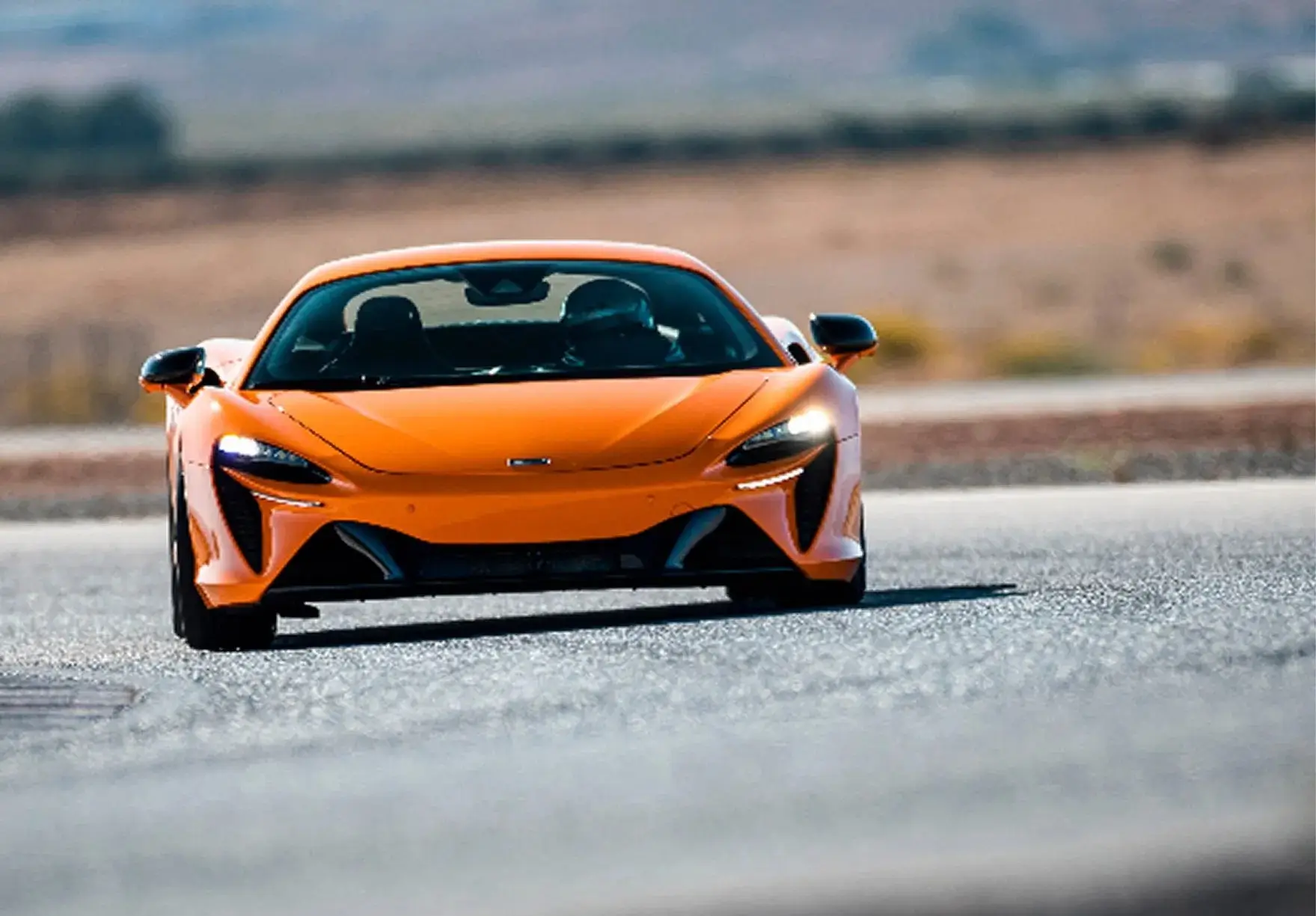
The McLaren lineup in 2026 is defined by a sophisticated hierarchy: the Ultimate Series for boundary-pushing hypercars like the W1; the Super Series led by the 750S; the High-Performance Hybrid (HPH) series featuring the Artura; and the GTS for long-distance grand touring. Each model is built upon a carbon-fiber chassis, utilizing race-derived technology to prioritize light weight and aerodynamic efficiency.
The McLaren Philosophy: Racing Pedigree Meets Road Innovation
To understand the McLaren lineup, one must first understand the brand's unique approach to automotive engineering. Unlike many competitors who transitioned from road cars to racing, McLaren Automotive was born directly from one of the world’s most successful Formula 1 teams. This heritage dictates every design choice made in their Woking-based Production Centre.
The "form follows function" mantra is not a marketing slogan here; it is a technical requirement. Every scoop, intake, and wing on a McLaren model serves a specific thermal or aerodynamic purpose. Central to every vehicle is the Carbon Fiber Monocage, a lightweight, incredibly rigid tub that provides the structural integrity of the car. In 2026, this technology has evolved into its third generation, allowing for thinner pillars, better visibility, and class-leading power-to-weight ratios.
McLaren organizes its vehicles into distinct tiers, making it easier for enthusiasts and buyers to navigate the performance spectrum. While the specific "Sport Series" nomenclature has been largely phased out in favor of the Artura's hybrid architecture, the current lineup remains structured around the intensity of the driving experience and the intended use case.
The Ultimate Series: The Pinnacle of Performance
The Ultimate Series represents the absolute limit of what is possible with current automotive technology. These are limited-production models that often sell out before they are officially announced to the public. They serve as "halo" cars, showcasing technologies that eventually trickle down to the rest of the lineup.
The McLaren W1
As the newest crown jewel in the 2026 lineup, the McLaren W1 is the direct successor to the legendary F1 and P1. It represents the "World Championship" mindset. The W1 utilizes a high-performance V8 hybrid powertrain, delivering a staggering 1,275 PS (1,258 bhp).
What sets the W1 apart is its "Aerocell" carbon-fiber monocoque and its radical active aerodynamics. It features a "longtail" rear wing that extends rearward to increase the working area of the diffuser, essentially turning the car into a ground-effect machine. This car is designed to be the fastest road-legal McLaren around any circuit, bridging the gap between a GT3 racer and a road-going supercar.
The Solus GT
The Solus GT is a unique outlier—a track-only single-seater that brought a virtual concept from the Gran Turismo video game to reality. It is powered by a naturally aspirated 5.2-liter V12 engine that screams to over 10,000 RPM. Because it is not bound by road-legal regulations, it features a sliding canopy and a specialized aero package capable of generating more than 1,200kg of downforce.
Legacy Ultimate Models: Speedtail, Senna, and Elva
Though production runs for these have concluded by 2026, they remain integral to the brand's identity:
- Speedtail: A "Hyper-GT" focused on top speed (250 mph) and streamlined elegance, featuring a three-seat central driving position.
- Senna: A visceral, track-focused machine named after Ayrton Senna, prioritizing downforce and lap times over aesthetics.
- Elva: An ultra-lightweight open-cockpit roadster that uses an Active Air Management System (AAMS) to create a "bubble" of calm air for the occupants without a physical windshield.
The Super Series: The Heart of the Brand
The Super Series has long been considered the "benchmark" for the supercar industry. These models are designed to be competitive against the best from Maranello and Sant'Agata Bolognese, offering a blend of daily drivability and extreme track capability.
McLaren 750S and 750S Spider
The 750S is the current standard-bearer for the Super Series in 2026. While it shares DNA with the highly acclaimed 720S, approximately 30% of its components are new or changed. It is lighter, more powerful, and more engaging.
The 4.0-liter twin-turbo V8 produces 750 PS and 800 Nm of torque. Engineers managed to shave 30kg off the weight compared to the 720S, resulting in a power-to-weight ratio that remains unsurpassed in its segment. Key innovations include:
- Proactive Chassis Control (PCC III): A hydraulic suspension system that eliminates the need for traditional anti-roll bars, providing a supple ride on the road and absolute flatness in corners.
- Shortened Final Drive Ratio: This improves in-gear acceleration, making the car feel even more urgent than its predecessor.
- Integrated Active Rear Wing: Now featuring a larger surface area for better high-speed stability and air-braking performance.
McLaren 765LT (Longtail)
The 765LT remains a highly sought-after model in the secondary market and specialized collections. The "Longtail" philosophy involves four key pillars: increased power, reduced weight, optimized aerodynamics, and absolute driver engagement. The 765LT is a hardened, more aggressive version of the 720S platform, utilizing titanium exhaust systems and thinner glass to achieve its performance targets.
High-Performance Hybrids: The Artura Era
The Artura represents McLaren’s transition into a sustainable high-performance future. It is the first model to use the McLaren Carbon Lightweight Architecture (MCLA), specifically designed for hybrid powertrains.
McLaren Artura and Artura Spider
In 2026, the Artura and the recently introduced Artura Spider serve as the entry point into the McLaren ownership experience, though their performance is anything but "entry-level."
The heart of the Artura is a 3.0-liter twin-turbo V6 paired with an E-motor housed within the transmission bell housing. This setup provides:
- Instant Torque: The electric motor provides immediate throttle response, filling the gap while the turbos spool up.
- EV Mode: The ability to drive approximately 19 miles (31 km) on pure electric power, perfect for quiet suburban starts or emissions-restricted city centers.
- Weight Management: By using a V6 and a compact axial flux motor, McLaren kept the Artura's weight close to that of its non-hybrid predecessors, a feat few competitors have matched.
The Artura Spider introduced a retractable hardtop that operates in just 11 seconds, further enhancing the sensory experience of the high-revving V6 engine.
The GTS: Redefining the Grand Tourer
The McLaren GTS replaced the original McLaren GT, offering a more refined and practical take on the supercar recipe. It is designed for owners who want to travel long distances in comfort without sacrificing the mid-engine dynamics that define the brand.
Performance and Practicality of the GTS
The GTS features an updated version of the 4.0-liter V8, tuned for a broader torque curve. It produces 635 PS and features a front-axle lift system that is significantly faster than previous versions, easing the stress of navigating speed bumps or steep driveways.
The defining characteristic of the GTS is its "Monocage II-T" chassis, which incorporates a rear upper structure that allows for a cavernous (by supercar standards) luggage bay under the glass tailgate. Combined with the front trunk (frunk), the GTS offers 570 liters of total storage space, making it a viable car for cross-continental road trips.
Legacy Models: The Foundation of Modern McLaren
No overview of the McLaren lineup is complete without acknowledging the cars that paved the way for the 2026 fleet.
- McLaren F1 (1992–1998): Often cited as the greatest car ever made, it held the world record for the fastest production car for over a decade. Its gold-lined engine bay and central driving position remain legendary.
- MP4-12C (2011–2014): The car that launched the modern era of McLaren Automotive. It introduced the hydraulic suspension and carbon fiber tub to a wider audience.
- 650S and 675LT: Evolutions of the 12C that refined the styling and significantly increased the emotional engagement of the drive.
- The Sport Series (540C, 570S, 570GT, 600LT, 620R): This range was instrumental in growing McLaren's market share. The 600LT, in particular, is remembered for its top-exit exhausts and incredible chassis balance.
Comparison of Key 2026 McLaren Models
The following table compares the primary models available or currently supported in the 2026 lineup.
| Model | Series | Engine Type | Max Power (PS) | 0-100 km/h (s) | Primary Focus |
|---|---|---|---|---|---|
| W1 | Ultimate | 4.0L V8 Hybrid | 1,275 | 2.7 | Track Dominance / Tech |
| 750S | Super | 4.0L V8 | 750 | 2.8 | All-around Supercar |
| Artura | HPH | 3.0L V6 Hybrid | 700 | 3.0 | Efficiency & Tech |
| GTS | GTS | 4.0L V8 | 635 | 3.2 | Grand Touring / Utility |
| Solus GT | Ultimate | 5.2L V12 | 840 | 2.5 | Dedicated Track Only |
Technical Innovations and the MSO Division
Every model in the lineup can be further enhanced by McLaren Special Operations (MSO). MSO is divided into several branches:
- MSO Defined: Offers factory-fit options like carbon fiber vents or specialized paint.
- MSO Bespoke: Allows for almost limitless customization, including unique interior materials and one-off paint colors developed specifically for a single client.
- MSO Heritage: Responsible for the maintenance and restoration of the F1 and P1 models.
In 2026, MSO has become increasingly focused on sustainable luxury, offering recycled carbon fiber accents and "vegan-friendly" high-performance textiles that offer the grip of Alcantara without the animal products.
Frequently Asked Questions
Which McLaren is the best for daily driving?
The McLaren GTS is specifically engineered for daily use. It features higher ground clearance, a softer suspension setting in "Comfort" mode, and significant luggage space. While the Artura is also a strong candidate due to its silent EV mode for city driving, the GTS remains the king of practicality within the lineup.
Is the McLaren Artura reliable?
Earlier Artura models faced some software hurdles during their 2022-2023 launch phase. However, by 2026, McLaren has implemented comprehensive updates and a robust warranty program. The MCLA architecture is now a proven platform, and the hybrid integration is considered seamless by both critics and owners.
What does "LT" stand for in McLaren models?
"LT" stands for Longtail. The name originated from the McLaren F1 GTR Longtail race car. In modern models like the 600LT or 765LT, it signifies a more hardcore, track-optimized version of an existing car, featuring less weight, more power, and more aggressive aerodynamics.
How many McLaren W1s are being produced?
Consistent with its "Ultimate Series" status, the McLaren W1 production is strictly limited. Historically, these runs consist of 399 to 500 units globally, ensuring exclusivity and high resale value for collectors.
Do all McLarens use the same engine?
While many McLarens use a version of the M840T 4.0-liter V8, they are significantly different in terms of tuning, internal components, and hybridization. The Artura broke the mold by introducing the M630 120-degree V6, which is a completely different architecture designed to lower the car's center of gravity.
Final Recommendation for Buyers and Enthusiasts
When choosing between McLaren models in 2026, the decision should be guided by your primary environment. If your goal is to set lap records and experience the cutting edge of hybrid technology, the McLaren W1 stands alone. For those seeking the purest expression of the traditional supercar—unfiltered V8 power and surgical handling—the 750S remains the industry benchmark.
However, for a new entrant to the brand, the Artura Spider offers the most contemporary experience, blending the benefits of electrification with the thrill of open-top motoring. Regardless of the model, every McLaren shares a common DNA of lightweight construction and driver-centric design that sets them apart from the broader luxury market. For those interested in acquiring a model, visiting a certified McLaren retailer for a "Specification Session" is the recommended next step to explore the vast customization options provided by MSO.