Gwendolyn Collins was the wife and creative partner of the legendary blues guitarist Albert Collins. Often credited as Gwen Collins, she was a prolific songwriter who penned many of his most iconic tracks, including "Mastercharge" and "Iceman," playing a pivotal role in his career revival and the development of his unique artistic persona.
To understand the trajectory of Albert Collins—the "Master of the Telecaster"—one must look beyond the piercing high notes and the 100-foot guitar cord to the woman who stood as his anchor and creative collaborator for decades. Gwendolyn Collins was more than a supportive spouse; she was a foundational architect of the "Iceman" brand. In the world of the Texas blues, where the spotlight often remains fixed on the performer, Gwendolyn’s contributions as a songwriter and strategist provided the substance that allowed Albert to reach international stardom.
The Foundation of a Blues Partnership
The story of Gwendolyn and Albert Collins is one of enduring partnership in an industry that is notoriously difficult for marriages. Albert Collins was born in Leona, Texas, in 1932, and by the time his career began to gain serious traction in the late 1960s and 1970s, Gwendolyn was already a central figure in his life.
Living in the Houston area and later moving to the West Coast, the couple navigated the highs and lows of the music business together. In the 1960s, despite having a regional hit with the instrumental "Frosty," Albert struggled to find consistent national success. He worked as a truck driver and a construction worker to make ends meet. Throughout this "wilderness period," Gwendolyn was the stabilizing force.
Her role was not merely domestic. As Albert began to refine his unique style—characterized by his Fender Telecaster, a "cool" blues sound, and an unusual open F-minor tuning—Gwendolyn began to contribute the narrative voice that would define his lyrics. While Albert spoke through his fingers, Gwendolyn often provided the words that gave his music its relatability and humor.
The Songwriting Legacy of Gwendolyn Collins
Gwendolyn’s most significant contribution to the blues canon was her ability to write lyrics that fit Albert’s personality perfectly. Blues music is often divided between the "suffering" blues and the "storytelling" blues; Gwendolyn excelled at the latter. She understood that Albert’s stage persona was that of a powerful, slightly mischievous, and highly relatable "everyman."
One of her most famous compositions is "Mastercharge," featured on the 1978 breakthrough album Ice Pickin'. The song is a humorous yet biting commentary on consumerism and domestic life, detailing the narrator's frustration with his wife’s use of the credit card. This song became a staple of Albert’s live performances, allowing him to engage in long, comedic monologues that connected deeply with his audience.
Other notable songs written or co-written by Gwendolyn include:
- "Conversation with Collins": A track that showcases Albert's ability to "talk" through his guitar, framed by Gwendolyn's lyrical structure.
- "Iceman": The title track of his 1991 album, which reinforced his late-career branding.
- "I Ain't Drunk": Though Albert made this song famous through his interpretation, Gwendolyn’s influence on the selection and arrangement of his repertoire often ensured that the songs maintained a consistent "Collins" feel.
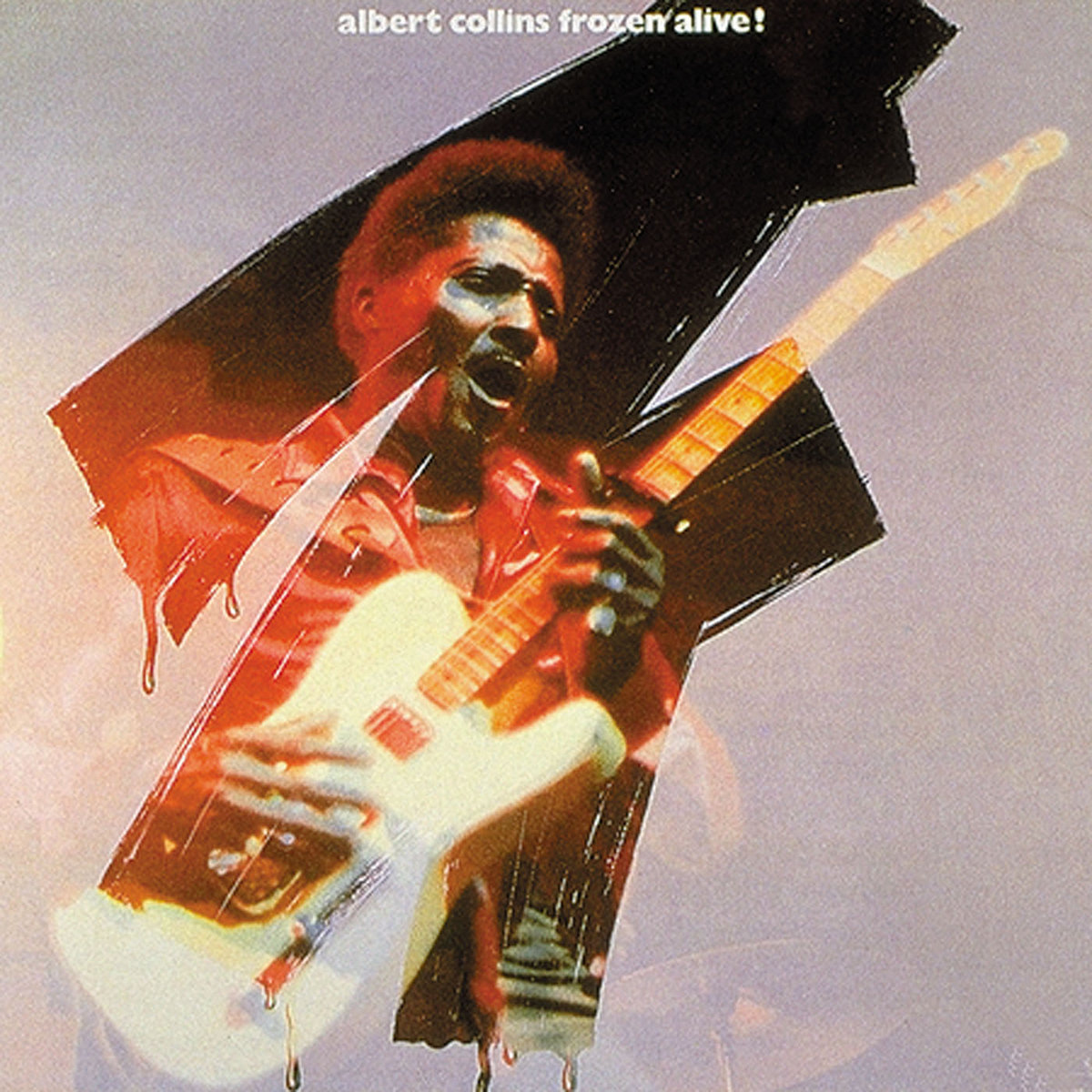
Her songwriting wasn't just about providing lyrics; it was about brand management before that term was common in the music industry. She helped cultivate the "ice" theme that permeated his career—from album titles like Frostbite, Frozen Alive!, and Cold Snap to his very nickname.
The Alligator Records Era and National Success
In 1978, Albert Collins signed with Alligator Records, a move that would define the rest of his career. The first album under this label, Ice Pickin', is widely considered one of the greatest blues albums of all time. Gwendolyn’s presence was felt throughout this era.
During this time, the couple moved to the Chicago area to be closer to the heart of the blues scene and the label's headquarters. Gwendolyn was instrumental in managing the household and providing the emotional support necessary for Albert to maintain a grueling touring schedule. The "Texas Razor" style of guitar playing was physically demanding, and his performances often took him deep into the crowd, sometimes even out the front door of the club and onto the sidewalk, thanks to his extraordinarily long guitar cable.
Gwendolyn’s songwriting on Ice Pickin' and subsequent albums like Frostbite (1980) helped Albert earn a Grammy nomination and several W.C. Handy Awards. Her ability to craft songs that allowed for long instrumental "breaks" was crucial. She understood that the audience came to hear the Telecaster, and she wrote songs that didn't crowd the music but rather provided a springboard for Albert's "Cold Snap" solos.
Supporting the "Master of the Telecaster"
To understand Gwendolyn’s role, one must understand the technical and artistic demands placed on Albert. He played a 1966 Fender Telecaster with an ashtray bridge cover and used a combination of a finger-picking style (using his thumb and index finger) and a very specific tuning: Open F-minor (F-C-F-Ab-C-F).
This tuning gave Albert a haunting, piercing sound that was different from the standard E-tuning used by most bluesmen. Gwendolyn’s lyrics often matched this "sharpness." There was a wit and a "coolness" to her writing that prevented Albert from falling into the tropes of the overly sentimental blues. Instead, they created a style of "cool blues" that was both technically sophisticated and widely accessible.
Comparison of Collaborative Impact
| Feature | Albert's Contribution | Gwendolyn's Contribution |
|---|---|---|
| Musical Tone | High-tension, "cold" piercing notes | Narrative structure and lyrical themes |
| Persona | The "Iceman" / Stage Performer | Content Creator and Songwriter |
| Key Works | Instrumental mastery on "Frosty" | Lyrical wit on "Mastercharge" |
| Career Strategy | High-energy live performances | Consistency in the "Ice" branding |
| Emotional Core | The "Ice Pick" guitar attack | Relatable domestic storytelling |
Final Years and the Battle with Cancer
The 1980s and early 1990s were the most successful years of Albert’s life, culminating in his appearance at Live Aid and his cameos in films like Adventures in Babysitting. Throughout this period of international fame, Gwendolyn remained his constant companion.
In 1993, at the height of his career, Albert was diagnosed with liver cancer. He had been feeling ill during a tour in Switzerland and returned home to face a terminal diagnosis. During the final months of his life, Gwendolyn was his primary caregiver. The blues community rallied around them, but Albert passed away on November 24, 1993, at the age of 61.
Gwendolyn’s strength during this period was noted by many in the industry. She managed his affairs and ensured that his legacy was protected. After Albert's death, she continued to oversee his estate, ensuring that his royalties and the rights to his songs—many of which she had written—were handled properly.
Gwendolyn’s Own Legacy
Gwendolyn Collins passed away in 2004, approximately eleven years after her husband. In the years following her death, musicologists and blues historians have increasingly recognized the vital role that women like Gwendolyn played in the success of the great bluesmen.
She was not a "background" figure in the traditional sense; she was a creative partner. In 2026, as we look back at the history of the Texas blues, Gwendolyn is recognized as a key songwriter who helped transition the blues from the rural acoustic sounds of the early 20th century to the high-voltage, urban storytelling of the late 20th century. Her work on "Mastercharge" alone remains a masterclass in how to infuse the blues with humor and social commentary.
Her legacy is preserved in the credits of Albert’s most famous albums. When modern listeners hear the biting sting of Albert’s Telecaster and the clever lyrics about the trials of modern living, they are hearing the combined genius of a husband-and-wife team that defined an era.
Frequently Asked Questions
Did Gwendolyn Collins ever perform on stage with Albert?
No, Gwendolyn was not a public performer. She preferred to work behind the scenes as a songwriter and advisor. Her contributions were intellectual and creative rather than performative. While she was often present at his shows, she remained off-stage, managing the logistics and supporting the performance from the wings.
Which Albert Collins songs are definitely attributed to Gwen?
Gwendolyn is officially credited on several tracks, most notably "Mastercharge," "Conversation with Collins," "Iceman," and "Get to Gettin'." On many other tracks, she is believed to have contributed significantly to the lyrical themes and arrangements, even if the formal credits sometimes listed Albert or were shared with other writers like Dick Shurman.
What happened to Gwendolyn after Albert passed away?
After Albert's death in 1993, Gwendolyn lived a relatively private life while managing his musical estate. She ensured his work remained in print and supported retrospective releases. She passed away in 2004. Her work continues to provide royalties that support the extended Collins family and the preservation of Albert's musical archives.
Did they have children?
Albert and Gwendolyn did not have children of their own, but they were very close to their extended family, including Albert's father and various cousins. This lack of immediate children meant that Gwendolyn was the sole guardian of his legacy for the decade following his death.
How did Gwendolyn influence Albert's "Iceman" nickname?
While the "ice" theme began with Albert's early instrumental "Frosty," Gwendolyn leaned into the concept during his 1970s revival. She wrote lyrics that played on the "cool" and "cold" metaphors, which helped the Alligator Records marketing team solidify the "Iceman" brand that stayed with him until his death.
Practical Recommendation for Fans and Researchers
For those looking to explore Gwendolyn’s creative impact, the best starting point is the 1978 album "Ice Pickin'". Listen specifically to the lyrics of "Mastercharge." Take note of the domestic dialogue and the pacing of the storytelling; this is the quintessential Gwendolyn Collins style. Furthermore, researchers should consult the liner notes of the Iceman (1991) album to see how her songwriting evolved to match Albert’s late-career maturity. Understanding the lyrics as a separate creative entity from the guitar playing allows for a deeper appreciation of how this husband-and-wife team built a blues empire.