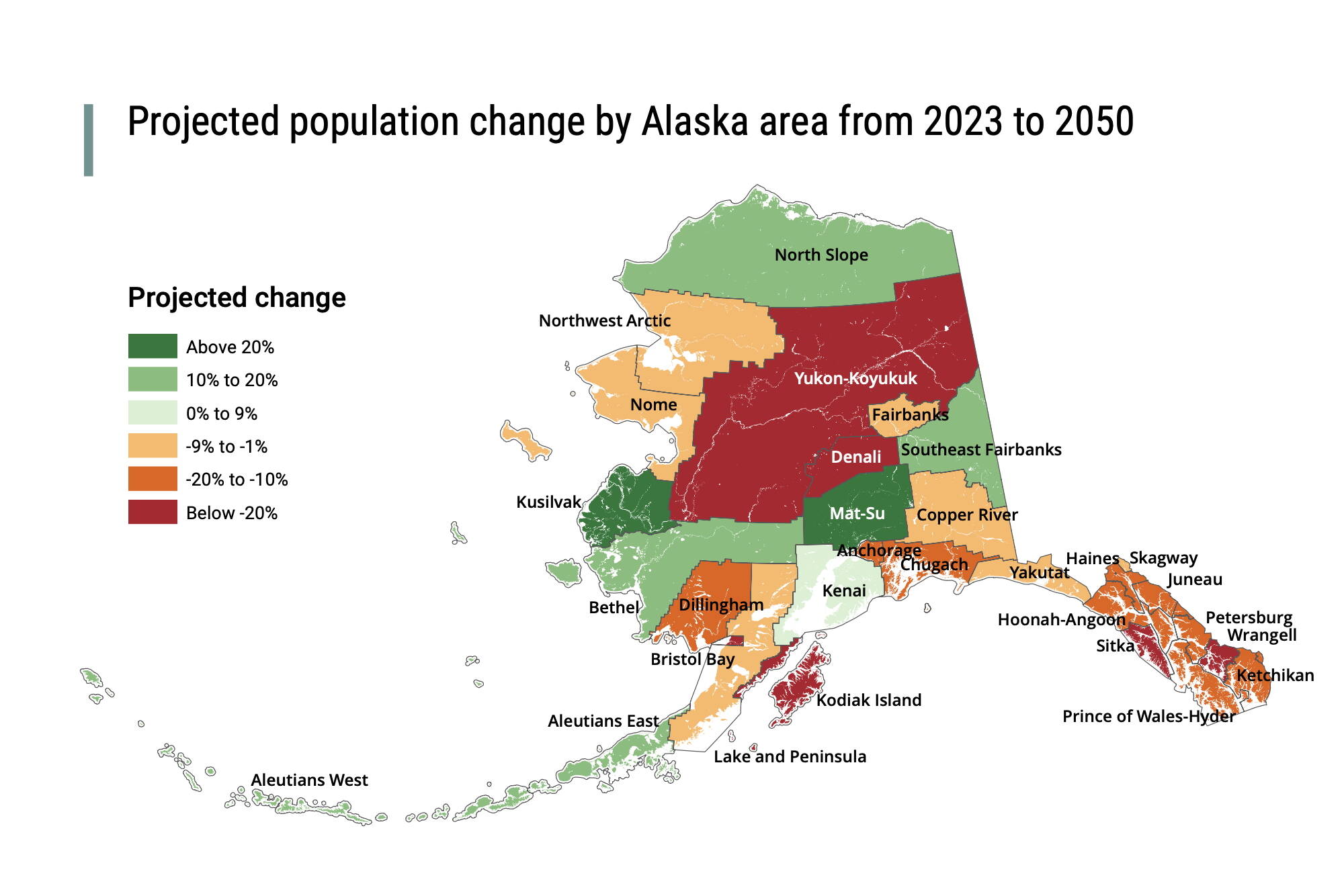
In July 2022, the Alaska population was estimated at 733,583 by the Alaska Department of Labor and Workforce Development and the U.S. Census Bureau. This represented a marginal increase of approximately 909 residents (0.12%) from 2021, signaling a period of stabilization following several years of slight population decline and economic transition.
The 2022 population data provides a critical snapshot of Alaska's unique demographic landscape. Unlike many states in the Lower 48, Alaska’s population growth is heavily dictated by a tug-of-war between high natural increase rates and persistent negative net domestic migration. While the state remains the largest by land area, it continues to rank as one of the least densely populated, with specific regions like the Matanuska-Susitna Borough seeing rapid growth while urban centers like Anchorage face more complex stability challenges.
The State of Alaska’s Population in 2022
The 2022 estimate of 733,583 residents is more than just a number; it represents a turning point for the state’s demographic trajectory. Following a decade that saw a peak of roughly 741,000 in 2016 and subsequent minor dips, 2022 offered a glimpse of a state rebounding from the immediate impacts of the global pandemic.
The data, released as part of the annual population estimates program, shows that Alaska remains a state of transients and long-term pioneers alike. To understand this figure, one must look at the "components of change." In any given year, a population changes based on three factors: births, deaths, and migration. In 2022, Alaska's "natural increase"—the surplus of births over deaths—remained positive, though the margin narrowed due to a nationwide trend of aging populations and the lingering effects of increased mortality rates during the 2020–2021 period.
Furthermore, 2022 was characterized by a distinct shift in how Alaskans moved. While many residents continued to leave for the contiguous United States—a trend known as negative net domestic migration—this was partially offset by a modest increase in international migration and the stabilizing presence of military personnel, who represent a significant portion of the state's fluctuating population.
Components of Population Change in 2022
To grasp why the Alaska population in 2022 behaved the way it did, we must break down the internal and external forces at play. Population growth is rarely uniform, and in Alaska, it is notoriously volatile due to the state’s resource-based economy.
Natural Increase: Births vs. Deaths
For decades, Alaska has boasted one of the youngest populations in the United States, which typically results in a high birth rate and a low death rate. In 2022, this "natural increase" was the primary driver of the state's population retention. Even as older generations of Alaskans (those who arrived during the pipeline boom of the 1970s and 80s) began to age into higher mortality brackets, the state still recorded significantly more births than deaths.
However, the gap is closing. In 2022, Alaskans continued to mirror national trends: a slight decline in fertility rates and an increase in the median age. This demographic "graying" means that the natural increase cushion, which once easily covered migration losses, is no longer as robust as it was in the late 20th century.
Net Migration: The Great Alaskan Exodus
Migration is the most volatile variable in Alaska’s population equation. "Net migration" is the difference between those moving into the state and those moving out. In 2022, Alaska experienced its tenth consecutive year of negative net domestic migration.
Why do people leave? The primary drivers identified in 2022 included:
- Employment Opportunities: While Alaska has a strong resource sector, the diversification of the economy in the Lower 48 often lures younger workers away.
- Cost of Living: High costs for energy, food, and housing—especially in rural areas—remained a significant push factor.
- Education: A notable percentage of Alaskans leave the state for higher education and do not immediately return.
Fortunately, international migration provided a slight counterbalance. In 2022, Alaska saw an uptick in international arrivals, including refugees and specialized workers, which helped prevent a total population decline.
Regional Population Distribution: Winners and Losers
The 2022 data reveals a stark contrast between different regions of the state. Alaska is often divided into "The Railbelt" (stretching from the Kenai Peninsula through Anchorage to Fairbanks) and "Rural Alaska."
The Matanuska-Susitna (Mat-Su) Borough
The Mat-Su Borough continued its streak as the fastest-growing region in the state in 2022. Located just north of Anchorage, the Mat-Su has become the primary destination for families seeking more affordable housing and a suburban lifestyle while maintaining access to the Anchorage job market. In 2022, its growth was fueled by both "out-migration" from Anchorage and new arrivals from out of state.
Anchorage: The Urban Hub
The Municipality of Anchorage remains the state’s largest population center, home to approximately 40% of all Alaskans. However, in 2022, Anchorage’s population remained largely flat or saw slight declines. This was due to the "donut effect," where residents moved out of the urban core into neighboring boroughs (like Mat-Su or Kenai) while the city struggled to attract enough new residents to offset those leaving for the Lower 48.
Fairbanks North Star Borough
Fairbanks, the gateway to the Interior, saw population fluctuations in 2022 largely tied to military movement. With Eielson Air Force Base and Fort Wainwright located nearby, the Fairbanks population is highly sensitive to troop deployments and the arrival of military families. In 2022, the continued integration of the F-35 program at Eielson provided a stabilizing force for the regional population.
Rural Alaska and the Bush
For rural hubs like Nome, Bethel, and the North Slope Borough, the 2022 population story was one of resilience. These areas often have the highest birth rates in the state, particularly among Alaska Native populations. However, they also face the highest rates of "out-migration" to urban centers like Anchorage or Fairbanks as residents seek better access to healthcare and specialized employment.
2022 Population Data by Borough/Census Area
The following table outlines the population estimates for major regions in Alaska during 2022, comparing them to the previous year to illustrate regional growth or decline.
| Region / Borough | 2021 Population | 2022 Population | Numerical Change | Percentage Change |
|---|---|---|---|---|
| Anchorage (Municipality) | 288,977 | 287,145 | -1,832 | -0.63% |
| Matanuska-Susitna Borough | 108,740 | 111,043 | +2,303 | +2.12% |
| Fairbanks North Star Borough | 95,146 | 95,356 | +210 | +0.22% |
| Kenai Peninsula Borough | 59,481 | 60,113 | +632 | +1.06% |
| Juneau (City and Borough) | 31,909 | 31,555 | -354 | -1.11% |
| Bethel Census Area | 18,485 | 18,527 | +42 | +0.23% |
| North Slope Borough | 10,919 | 10,958 | +39 | +0.36% |
| Ketchikan Gateway Borough | 13,818 | 13,737 | -81 | -0.59% |
Data Source: Alaska Department of Labor and Workforce Development, Research and Analysis Section.
Demographic Breakdown: Age, Gender, and Ethnicity
The 2022 Alaska population was not just changing in size, but in composition. Alaska has long been known as a "young" state, but the 2022 figures highlight a shift toward a more mature demographic.
An Aging Frontier
The median age in Alaska has been rising steadily. In 2022, the state continued to see a significant increase in the 65+ age cohort. This is largely due to the "aging in place" of the generation that moved to Alaska during the construction of the Trans-Alaska Pipeline System. This trend has profound implications for the state's healthcare system and labor force, as more residents transition from the workforce into retirement.
Diversity and Alaska Native Populations
Alaska remains one of the most ethnically diverse states in the nation. In 2022, Alaska Native and American Indian people made up approximately 15% to 20% of the total population, depending on whether "multi-racial" identifications are included. The Alaska Native population is particularly significant in rural areas, where they often comprise the vast majority of the residents.
Additionally, urban areas like Anchorage and Fairbanks reported high levels of diversity within their school districts, with significant populations of Asian, Pacific Islander, and Hispanic residents. This diversity is a cornerstone of Alaska’s modern identity and a key factor in its cultural and economic resilience.
Gender Ratio
Historically, Alaska has had a higher ratio of men to women than any other state. While this gap has narrowed significantly since the mid-20th century, the 2022 data still showed a slight male majority. This is primarily attributed to the state's industries—mining, oil and gas, and commercial fishing—as well as the significant military presence, all of which tend to skew male.
Economic Drivers Influencing 2022 Trends
The population of Alaska is inextricably linked to its economy. In 2022, several macroeconomic factors played a role in shaping resident movement.
- Oil Prices and State Revenue: 2022 saw a surge in global oil prices due to geopolitical instability. For Alaska, this meant a significant boost to the state treasury and the Permanent Fund, which in turn improved consumer confidence and local government spending.
- The Tourism Rebound: Following the disruptions of 2020 and 2021, the 2022 summer tourism season saw a massive influx of visitors. This revitalized the Southeast region (Juneau, Ketchikan, Skagway) and provided the seasonal jobs necessary to sustain local populations.
- Remote Work: The post-pandemic shift toward remote work had a unique impact on Alaska in 2022. Some workers from the Lower 48 chose to relocate to Alaska for its lifestyle and outdoor amenities, though this was offset by Alaskans who took their remote jobs to warmer or more affordable climates.
Comparison to Historical Growth Cycles
To put the 2022 population of 733,583 into perspective, one must look at the state’s historical trajectory.
- 1970s–1980s: Explosive growth driven by the oil boom. The population nearly doubled in two decades.
- 1990s–2010: Steady, moderate growth.
- 2013–2021: A period of stagnation and slight decline, marking the longest period of population loss since statehood.
- 2022: A year of "flatness" that many economists viewed as the end of the downward trend.
This stabilization in 2022 was seen as a positive sign that the state's economy was reaching a new equilibrium after the 2015–2018 recession and the subsequent pandemic shocks.
Frequently Asked Questions
Was Alaska's population growing or shrinking in 2022?
Alaska's population grew very slightly in 2022, by about 0.12%. While the growth was minimal (909 people), it was a significant shift from the previous years of small declines, suggesting that the state's population was stabilizing.
What is the most populated city in Alaska as of 2022?
Anchorage remained the most populated city in 2022, with an estimated 287,145 residents. Despite being the largest, it saw a slight decrease in population compared to 2021 as more residents moved to the neighboring Matanuska-Susitna Borough.
Why is the Mat-Su Borough growing faster than other parts of Alaska?
The Matanuska-Susitna Borough is growing primarily due to its lower cost of housing and land compared to Anchorage. It offers a suburban or rural lifestyle while remaining within commuting distance of Alaska’s largest employment hub, making it highly attractive to young families.
How does military presence affect Alaska's population data?
Military personnel and their dependents make up nearly 10% of Alaska's population. Because military families move frequently, they contribute to high "turnover" in population statistics. In 2022, military stability in Fairbanks and Anchorage was a key factor in preventing larger population losses.
What is the percentage of Alaska Natives in the 2022 population?
Alaska Natives made up approximately 15.7% of the state's population in 2022 as a "single race" category, though this percentage is higher when including those of two or more races. They represent the largest minority group in the state and are the majority population in many rural census areas.
Looking Forward: The Path Beyond 2022
The 2022 Alaska population data serves as a foundational baseline for understanding the state's current trajectory. As we observe these trends from the vantage point of 2026, it is clear that the stability found in 2022 was a precursor to the infrastructure-driven growth and renewed energy investments that followed. For those looking to move to Alaska or invest in the state, monitoring these regional shifts—especially the expansion in the Mat-Su and the aging demographics in urban centers—is essential for making informed decisions.
For the most up-to-date information and historical datasets, residents and researchers should consult the Alaska Department of Labor and Workforce Development or the U.S. Census Bureau’s QuickFacts for detailed breakdowns of borough-level statistics.