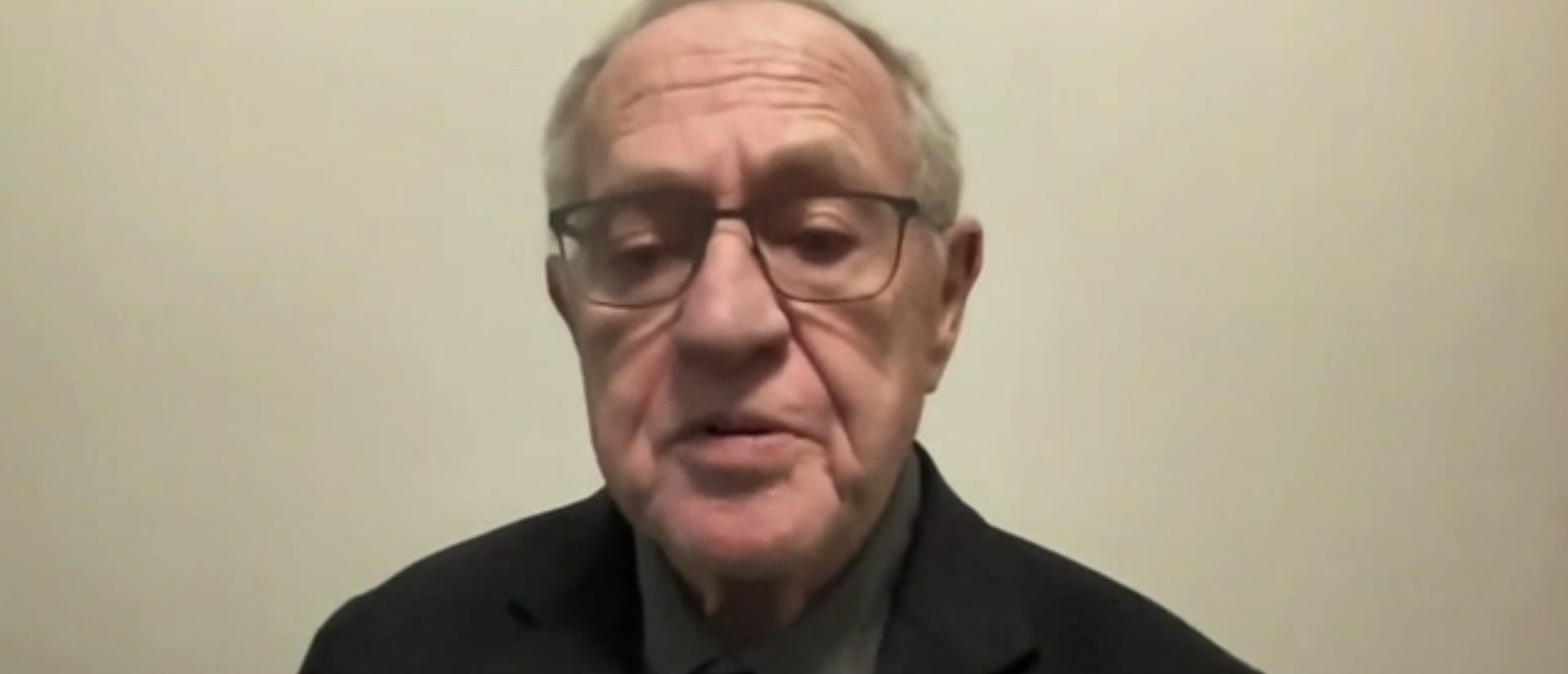
While Harvard University does not publicly disclose individual faculty salaries, records and industry benchmarks indicate that during his active tenure, Alan Dershowitz likely earned between $350,000 and $550,000 annually from the university. Since his retirement in 2013, he has served as the Felix Frankfurter Professor of Law, Emeritus, a position that primarily involves pension benefits and research support rather than a traditional active-duty salary.
Alan Dershowitz is one of the most recognizable figures in American legal history. His five-decade career at Harvard Law School (HLS) saw him rise from the youngest professor ever to receive tenure at the institution to a global household name. However, for a figure of his stature, the question of his "salary" is often more complex than a single line item on a tax return. As of 2026, Dershowitz remains a Professor Emeritus, and while his direct university compensation has shifted to retirement structures, the financial legacy of his time at Harvard continues to be a subject of public and academic interest.
The Structure of Faculty Pay at Harvard Law School
To understand what Alan Dershowitz earned at Harvard, one must first understand how private Ivy League institutions structure their compensation packages. Unlike public universities (such as the University of California system), where every employee's salary is a matter of public record, Harvard is a private non-profit organization. It is only required to disclose the salaries of its "highest-compensated employees" in its annual IRS Form 990 filings.
Typically, the names appearing on these filings are the University President, the Provost, the Chief Investment Officer of the Harvard Management Company, and a handful of top-tier deans or specialized medical faculty. While senior law professors are among the highest-paid academics in the world, they rarely break into the "top five" list required for specific IRS disclosure unless they hold a significant administrative role, such as the Dean of the Law School.
Base Salary vs. Total Compensation
For a professor of Dershowitz’s seniority and prestige, compensation consists of several layers:
- Base Academic Salary: This covers the standard nine-month academic year. In 2026 terms, a senior, tenured professor at a top-three law school typically commands a base between $300,000 and $450,000.
- Endowed Chairs: Dershowitz held the Felix Frankfurter Professorship. Endowed chairs often come with a salary supplement or a significant research budget that can be used for travel, assistants, and publication costs.
- Summer Stipends: Many professors receive additional pay (often two-ninths of their base salary) for conducting research during the summer months when they are not teaching.
- Benefits and Housing: Harvard provides robust benefits, including retirement contributions and, in some cases, assistance with housing or low-interest mortgage programs for faculty living in the expensive Cambridge/Boston area.
The Felix Frankfurter Professorship and Its Financial Impact
Alan Dershowitz was the Felix Frankfurter Professor of Law, a title named after the former Supreme Court Justice who also taught at Harvard. Endowed professorships are the highest honor a university can bestow upon a faculty member. From a financial perspective, these positions are funded by specific donations or trust funds managed by the university.
The endowment ensures that the professor’s salary is "covered" by the interest generated by the fund, rather than the university’s general operating budget. For Dershowitz, this title signified his status at the very top of the academic hierarchy. In the legal academy, salary is often tethered to "years since JD" and "scholarly impact." Having spent 50 years on the faculty, Dershowitz would have been at the absolute ceiling of the Harvard Law School salary scale by the time he retired in 2013.
Estimating the Peak Salary
If we look at the financial landscape of the early 2010s (the end of his active teaching career) and adjust for the growth seen in academic pay leading into 2026, we can interpolate his likely peak university earnings. In 2013, top-tier law professors at Yale, Harvard, and Stanford were making roughly $250,000 to $350,000. By 2026, adjusted for inflation and the "arms race" for legal talent, that same tier of professor earns significantly more. However, because Dershowitz moved to emeritus status, his university income became fixed to his retirement plan rather than these rising active-duty scales.
Transition to Professor Emeritus Status
In 2013, after fifty years of teaching, Alan Dershowitz retired from active faculty duties. This transition changed his financial relationship with Harvard University.
What is an Emeritus Salary?
The term "Emeritus" is an honorary title granted to retired faculty who have served with distinction. It is important to note that, generally, emeritus professors do not receive a salary for teaching or research unless they are specifically contracted to teach a "post-retirement" course.
Instead, their income from the university comes from the Harvard University Retirement Plan (HURP). For a faculty member with 50 years of service, the pension benefits are substantial. These plans are typically defined-contribution or defined-benefit structures that provide a percentage of the professor’s highest average salary.
While he no longer draws a standard paycheck for lecturing 1L students, the university may still provide:
- Office Space: Many emeritus professors retain an office on campus.
- Administrative Support: Access to secretarial pools or research assistants for ongoing book projects.
- Library and Research Access: Full access to the Harvard Library system and electronic databases, which is a significant "in-kind" value for a prolific author.
Total Wealth vs. Harvard Salary: The "Celebrity Professor" Gap
It is a common misconception that Alan Dershowitz’s wealth is primarily derived from his Harvard salary. In reality, for a legal figure of his profile, the university salary often represents only a fraction of his total annual income.
External Income Streams
Throughout his career, Dershowitz maintained an extremely active and lucrative career outside of the classroom. This is permitted under Harvard’s "one-day-a-week" rule, which allows faculty to spend one day per workweek on outside consulting or legal practice, provided it does not interfere with their primary academic duties.
| Income Source | Estimated Impact | Description |
|---|---|---|
| Legal Consulting | High | Fees for high-profile criminal defense and appellate work (e.g., Mike Tyson, O.J. Simpson, Jeffrey Epstein). |
| Book Royalties | Moderate to High | Author of over 30 books, including bestsellers like Reversal of Fortune. |
| Media Appearances | Moderate | Speaking engagements, television commentary, and digital content. |
| Academic Salary | Base | The stable "floor" of his income during his active years (1964–2013). |
His legal fees alone for a single high-profile case could easily exceed his entire annual salary from Harvard. For example, top defense attorneys often charge hourly rates exceeding $1,500 or flat fees in the millions for complex litigation. By maintaining his Harvard affiliation, Dershowitz increased his market value for these outside ventures, as the "Harvard Law Professor" title carries immense weight in the courtroom and the media.
Comparative Analysis: Harvard vs. Other Top Law Schools
To put Alan Dershowitz’s estimated $350k–$550k salary in context, we must look at how Harvard Law School (HLS) compares to its peers like Yale Law School and Stanford Law School.
Harvard has one of the largest endowments in the world, which allows it to recruit and retain the highest-tier legal scholars. However, Harvard also has a much larger faculty than Yale. At Yale, salaries tend to be slightly higher on average because the faculty is smaller and more concentrated in specific high-impact research areas.
In the 2020s, a trend emerged where "superstar" professors—those who are frequently cited in court opinions or who have massive public profiles—began receiving "retention offers" that pushed their compensation well above the standard faculty scale. While Harvard generally adheres to a more rigid "steps and grades" system for its faculty to maintain internal equity, someone of Dershowitz’s longevity would have naturally progressed to the highest possible grade.
The Transparency Debate at Private Universities
The lack of a specific, public number for Alan Dershowitz’s salary often leads to speculation. This lack of transparency is a point of contention in higher education. Proponents of the current system argue that privacy is necessary to prevent "poaching" by other universities and to maintain faculty morale. Critics argue that since Harvard receives significant federal funding and tax-exempt status, the salaries of its most prominent public figures should be transparent.
In the case of Dershowitz, his financial disclosures became a matter of public record during various legal proceedings and his involvement in high-profile cases where "pro bono" vs. "paid" status was questioned. However, these disclosures often focused on his net worth or specific case fees rather than his specific W-2 from Harvard University.
FAQs About Alan Dershowitz’s Harvard Career
Is Alan Dershowitz still getting paid by Harvard in 2026?
As a Professor Emeritus, he is likely receiving retirement benefits (pension) through the university’s retirement system rather than an active salary. He would only receive a salary if he were invited back to teach a specific seminar as an adjunct or visiting lecturer.
Who is the highest-paid professor at Harvard Law?
Typically, the Dean of Harvard Law School is the highest-paid individual within the law faculty. According to historical Form 990 filings, the Dean's compensation often exceeds $600,000 to $800,000 when including benefits and housing allowances.
How much did Alan Dershowitz make per year at his peak?
While unconfirmed by the university, experts in academic compensation estimate his peak Harvard-derived income (including base salary, chair stipends, and summer research grants) was likely in the range of $450,000 to $500,000 in his final years of full-time teaching.
Did Harvard reduce his salary due to controversies?
Tenure provides significant protection for professors. Unless a professor is stripped of tenure for "just cause" (which involves a rigorous internal process), a university generally cannot arbitrarily reduce the salary of a tenured faculty member based on public controversy or their choice of legal clients.
Does being an "Emeritus" professor mean he is still an employee?
Technically, emeritus professors are retired employees. They retain their title and certain privileges (like library access and email), but they are no longer "active" employees in terms of payroll, voting in faculty meetings, or mandatory teaching loads.
Final Summary of Findings
While the exact dollar amount of Alan Dershowitz’s Harvard salary remains confidential under the university’s private status, the evidence points to a compensation package that reflected his status as a senior-most member of the world's most prestigious law faculty.
His financial profile is best viewed as a "hybrid" model: a stable, high-six-figure academic salary that served as the foundation for a much larger, multi-million dollar career in private legal practice and media. For those looking to understand the "cost" of a professor like Dershowitz, it is less about the specific salary and more about the value of the Harvard brand that he both utilized and contributed to for over half a century.
If you are researching academic salaries for career planning or institutional comparison, it is recommended to consult the Society of American Law Teachers (SALT) Salary Survey, which, while becoming less comprehensive in recent years, provides the best available benchmarks for tenured law faculty across the United States.