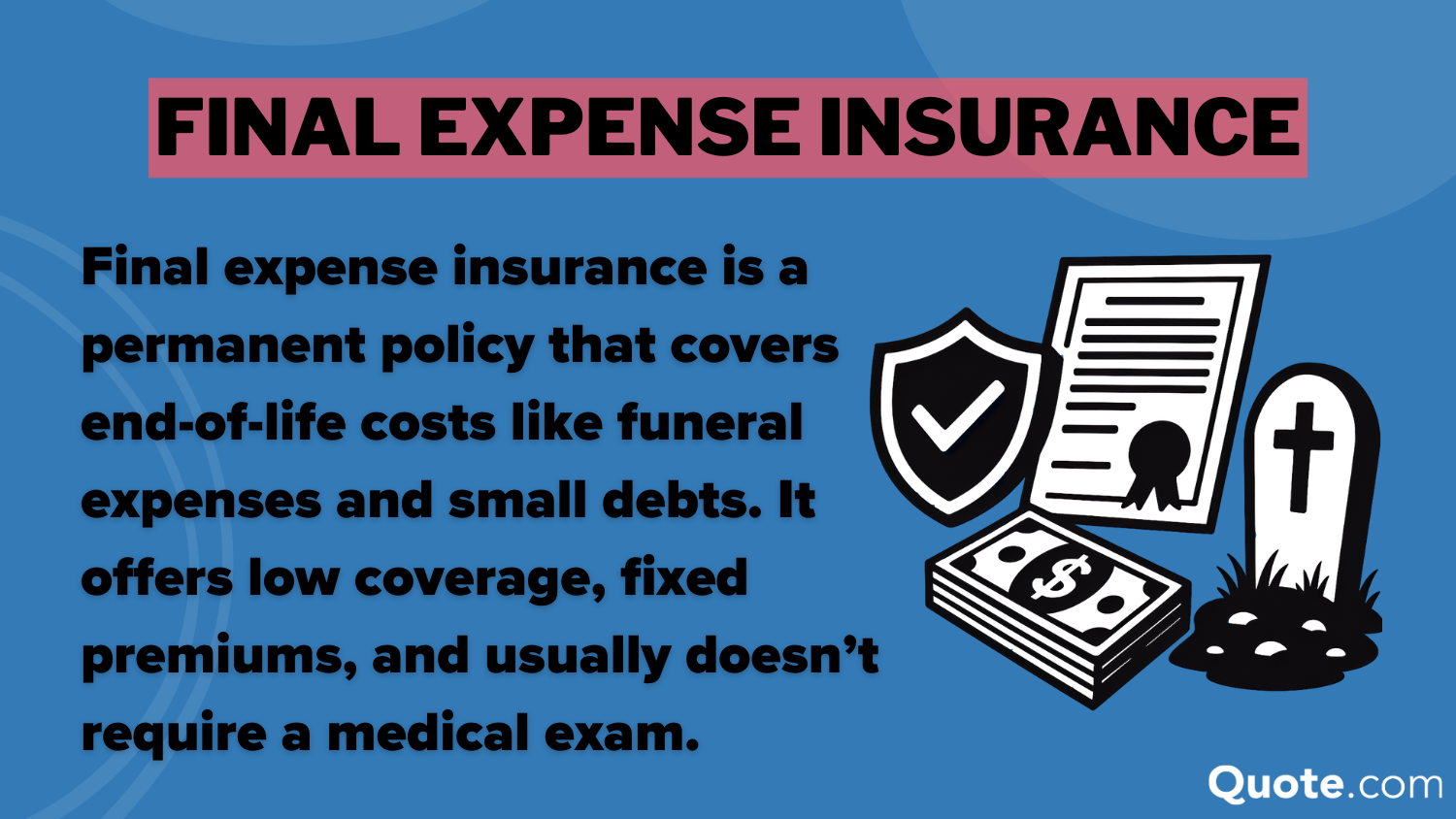
AIG final expense life insurance, now primarily issued through Corebridge Financial, provides permanent coverage designed to handle end-of-life costs like funerals and medical bills. These policies are guaranteed-issue, meaning no medical exams or health questions are required for applicants typically aged 50 to 80, ensuring immediate financial peace of mind.
For decades, the name AIG (American International Group) was synonymous with robust financial protection. As of 2026, the landscape has shifted slightly due to corporate restructuring, but the core product remains a pillar for seniors seeking final expense coverage. In 2022, AIG rebranded its life and retirement division as Corebridge Financial. While many consumers still search for "AIG final expense," the policies are legally underwritten by American General Life Insurance Company (AGL) or The United States Life Insurance Company in the City of New York (US Life), both of which operate under the Corebridge Financial umbrella.
This guide explores the technical specifications, costs, and strategic advantages of utilizing what is traditionally known as AIG final expense insurance to secure your family’s financial future.
Understanding the Rebranding: From AIG to Corebridge Financial
To understand AIG final expense insurance in 2026, one must first recognize the entity managing it. Corebridge Financial is now one of the largest providers of retirement solutions and insurance products in the United States. Despite the name change on the letterhead, the financial strength and the "Guaranteed Issue Whole Life" product remains largely consistent with the legacy AIG offerings.
For policyholders, this transition has been seamless. The claims-paying ability still rests on the massive capital reserves of the underlying underwriting companies. When evaluating this product, you are looking at a Guaranteed Issue Whole Life (GIWL) policy. This is a sub-category of permanent life insurance specifically tailored for the "final expense" or "burial insurance" market.
Core Features of Guaranteed Issue Whole Life
The AIG/Corebridge final expense product is built on the foundation of simplicity and accessibility. Because it is a "guaranteed issue" policy, the insurance company assumes a higher level of risk, which dictates how the policy is structured.
1. No Medical Underwriting
The primary draw of this policy is the total absence of medical exams, blood tests, or even health questionnaires. In a standard simplified issue policy, you might be asked if you have cancer or congestive heart failure. With AIG’s guaranteed issue product, these questions are bypassed. If you meet the age requirements and are a legal resident, you cannot be turned down based on health.
2. Fixed Premiums for Life
Once the policy is issued, the premium is locked in. It will never increase due to your age or changes in your health status. This is critical for seniors living on a fixed income, such as Social Security or a pension, as it allows for precise long-term budgeting.
3. Permanent Coverage and Cash Value
As a whole life policy, it does not expire as long as premiums are paid. Additionally, the policy builds cash value over time. This is a small portion of your premium that the company invests. While the primary goal is the death benefit, the cash value can be accessed via a policy loan if an emergency arises, though this will reduce the final payout to beneficiaries.
4. Graded Death Benefit
Because there is no health screening, AIG (Corebridge) protects itself through a "graded death benefit" period. If the insured passes away from natural causes within the first two years of the policy, the beneficiaries do not receive the full face value. Instead, they receive a refund of all premiums paid plus 10% interest. After the two-year mark, the full death benefit is payable for any cause of death. Note: Accidental deaths are typically covered for the full amount from day one.
Eligibility and Coverage Limits
In 2026, the eligibility criteria for AIG final expense insurance remain focused on the senior demographic.
- Issue Ages: Generally available to individuals aged 50 to 80. Some state-specific variations may exist, but this is the standard range.
- Face Amounts: Coverage typically ranges from a minimum of $5,000 to a maximum of $25,000.
- Ownership: The policyholder must be the insured, though third-party owners are sometimes permitted depending on the relationship and state laws.
These limits are designed to cover the "final expenses" specifically—funeral services, cremations, small outstanding debts, or final utility bills—rather than serving as a primary vehicle for wealth transfer or replacing a high-salary income.
The Cost of Coverage: 2026 Premium Analysis
Pricing for guaranteed issue life insurance is higher per $1,000 of coverage than underwritten policies. This is the "cost of convenience" and the cost of the insurer taking on unknown health risks. Premiums are determined by age at the time of application, gender, and the chosen death benefit amount.
The following table provides estimated monthly premiums for a $10,000 death benefit. Note that these are approximations and actual rates may vary based on specific state taxes and updated 2026 actuarial tables.
| Issue Age | Monthly Premium (Male) | Monthly Premium (Female) |
|---|---|---|
| 50 | $38.50 | $29.00 |
| 55 | $45.00 | $34.00 |
| 60 | $56.00 | $42.00 |
| 65 | $71.00 | $53.00 |
| 70 | $94.00 | $70.00 |
| 75 | $135.00 | $102.00 |
| 80 | $198.00 | $155.00 |
Source: Internal industry estimates for Corebridge Financial/AGL products as of early 2026.
As evidenced by the table, women generally pay lower premiums than men due to longer life expectancies. Furthermore, the "cost of waiting" is significant; a male starting a policy at 75 will pay more than double what he would have paid if he started at 60.
Included Living Benefits: Chronic and Terminal Illness Riders
One of the distinguishing factors of the AIG/Corebridge final expense policy compared to competitors is the inclusion of "living benefits" at no additional premium cost. These riders allow the policyholder to access a portion of the death benefit while they are still alive under specific medical circumstances.
- Chronic Illness Rider: If the insured becomes unable to perform at least two of the six "Activities of Daily Living" (ADLs)—such as eating, bathing, or dressing—or requires substantial supervision due to severe cognitive impairment, they may accelerate a portion of the death benefit.
- Terminal Illness Rider: If a physician certifies that the insured has a life expectancy of 24 months or less (12 months in some states), the policy allows for an accelerated payout to help cover end-of-life care or hospice costs.
These riders provide a layer of financial flexibility that many other "burial only" policies lack, making the AIG product a more robust "final days" solution rather than just a "post-mortem" solution.
Comparing AIG to Other Final Expense Providers
When shopping for final expense insurance in 2026, it is important to weigh AIG (Corebridge) against other major players like Mutual of Omaha, Gerber Life, and Colonial Penn.
- Vs. Mutual of Omaha: Mutual of Omaha often has slightly lower rates for their guaranteed issue product but may have stricter age limits or different rider structures.
- Vs. Gerber Life: Gerber is famous for its "Grow-Up" plan but also offers a strong guaranteed life product for seniors. AIG often wins on the inclusion of the Chronic Illness rider, which Gerber does not always provide as a standard feature.
- Vs. Colonial Penn: Colonial Penn often markets by "units" (the $9.95 plan). However, for many seniors, a unit provides a very small death benefit that may not cover a full funeral. AIG’s fixed-dollar approach is often more transparent for those who know exactly how much coverage they need.
The National Association of Insurance Commissioners (NAIC) provides resources for consumers to compare the complaint ratios and financial stability of these firms. Corebridge consistently maintains strong ratings from agencies like A.M. Best and S&P Global, indicating a high likelihood of meeting long-term claims obligations.
Who Should Choose AIG Final Expense Insurance?
This policy is not the right fit for everyone. Because it is more expensive than underwritten insurance, it should be viewed as a "safety net" for specific individuals:
- Those with Serious Health Conditions: If you have been denied coverage elsewhere due to heart disease, recent strokes, or insulin-dependent diabetes, AIG’s guaranteed acceptance is a vital resource.
- Seniors Who Want to Avoid Exams: If the thought of a nurse coming to your home for a blood draw is a deterrent to getting insured, this product removes that barrier.
- Individuals Seeking Living Benefits: The inclusion of chronic and terminal illness riders makes this highly attractive for those worried about the costs of a long-term decline in health.
Conversely, if you are in relatively good health, you may be better served by a Simplified Issue policy. Simplified issue requires answering health questions but no medical exam; because you prove you are healthy, the premiums are significantly lower and the full death benefit usually starts on day one.
The Claims Process: What Beneficiaries Need to Know
In 2026, the claims process for AIG/Corebridge has been digitized to increase speed. When the insured passes away, the beneficiary must submit:
- A completed claim form.
- A certified copy of the death certificate.
- The original policy document (though this is often waived if the digital record is clear).
Payouts are generally processed within a few business days once the documentation is verified. It is important to note that life insurance proceeds are typically tax-free to the beneficiary under IRS Section 101(a), providing a clean financial injection during a difficult time.
Common Pitfalls to Avoid
- Losing Track of the Rebrand: Do not be confused if your policy says "Corebridge Financial" but you bought it thinking it was AIG. They are the same contractual obligations.
- Ignoring the 2-Year Waiting Period: Some people buy the policy and assume the full $20,000 is available if they die three months later from a heart attack. It is not. Ensure your family understands the graded benefit structure.
- Lapsing the Policy: Whole life insurance only works if you keep it. If you miss payments and the policy lapses, you lose the coverage and potentially the cash value that has built up. Set up auto-pay from your bank account to prevent this.
FAQ: Frequently Asked Questions
Does AIG final expense insurance cover cremation?
Yes. The death benefit is paid in cash directly to your beneficiaries. They can use the funds for any purpose, including cremation, traditional burial, urns, or even traveling costs for family members. There are no restrictions on how the money is spent.
Can I cancel my AIG policy if I change my mind?
Yes. Most states mandate a "Free Look" period (usually 10 to 30 days) during which you can cancel the policy and receive a full refund of any premiums paid. After that, you can cancel at any time, but you will only receive the "Cash Surrender Value" if any has accumulated, which will be significantly less than the total premiums paid.
Is there a maximum age for AIG final expense insurance?
In most states, the maximum age to apply for the Guaranteed Issue Whole Life policy is 80. If you are 81 or older, you may need to look for specialized providers or consider a pre-need funeral contract directly with a funeral home.
Will my premiums go up when I turn 80 or 90?
No. One of the primary benefits of the AIG/Corebridge whole life product is that the premiums are "level." They are locked in at the age you apply and will never increase, regardless of how old you get or if your health declines.
What happens if I move to a different state?
Your coverage moves with you. Life insurance is a contract that remains valid across state lines within the U.S. You should, however, update your address with the Corebridge customer service department to ensure you receive annual statements and tax documents.
Final Recommendation
If you are between the ages of 50 and 80 and have health issues that make traditional life insurance difficult or impossible to obtain, the AIG (Corebridge) Guaranteed Issue Whole Life policy is an excellent solution. It offers a straightforward, "no-surprises" approach to final expense planning.
Before committing, verify if you qualify for a "Simplified Issue" policy first, as it could save you money. If your health prevents that, AIG’s inclusion of chronic illness riders provides a competitive edge over other guaranteed-issue providers. Ensure you discuss the two-year graded benefit with your beneficiaries so they are prepared for the timeline of full coverage.