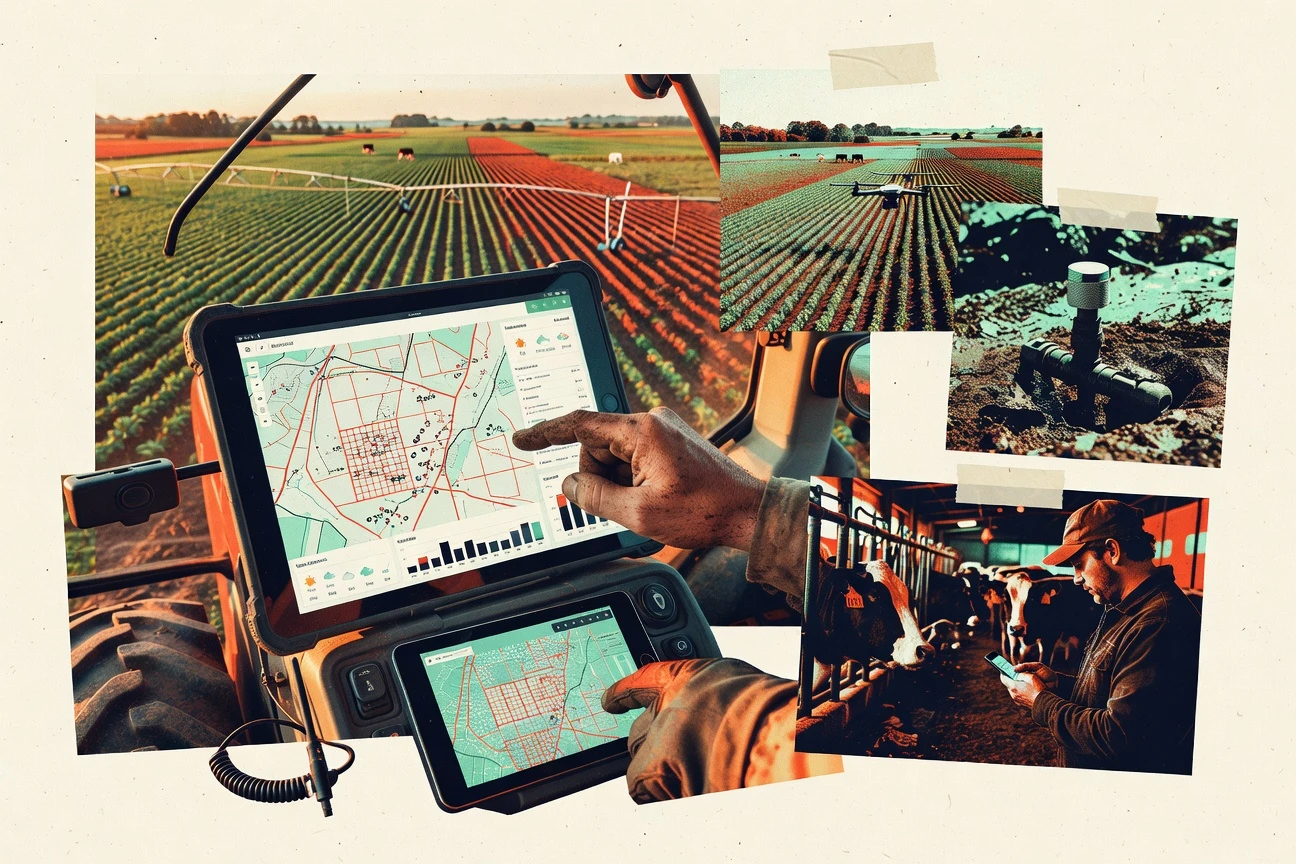
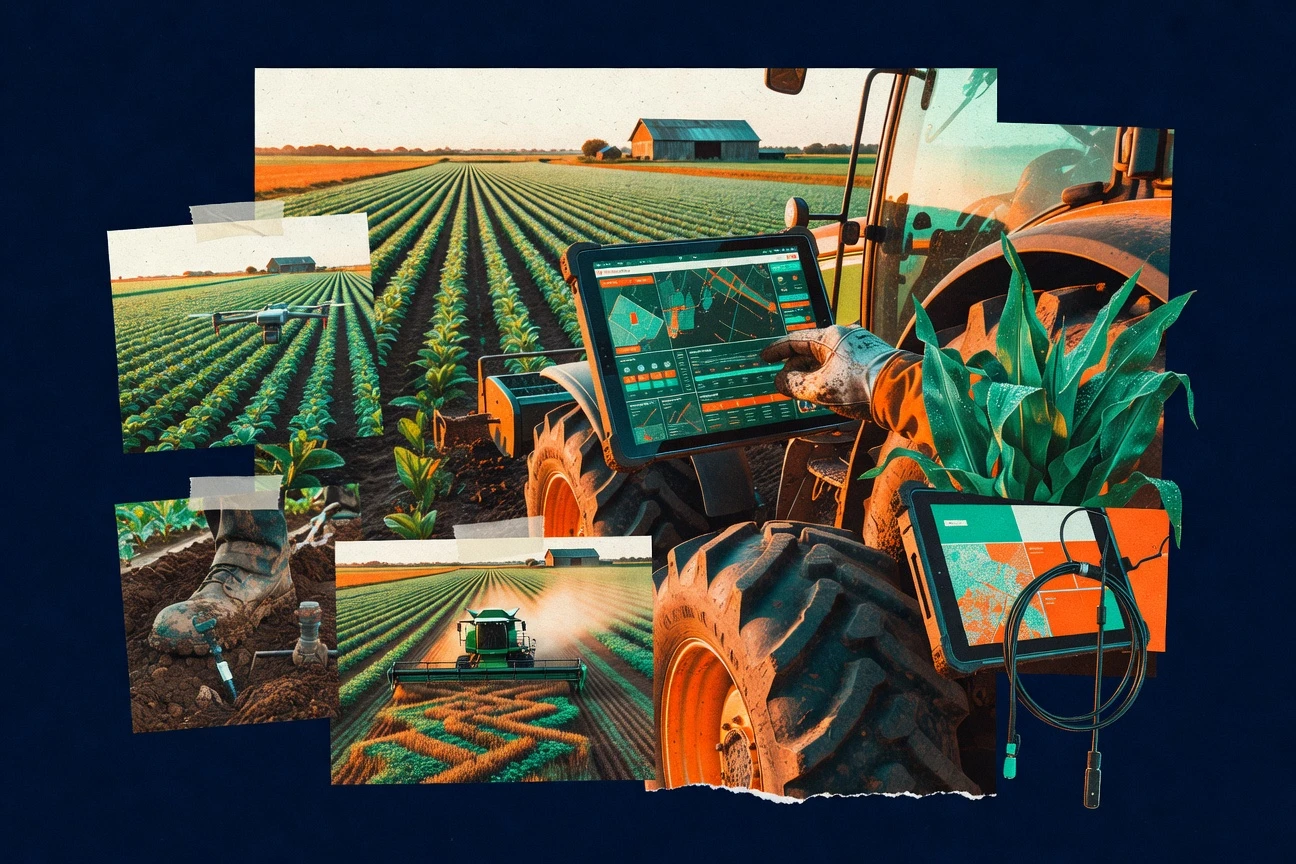
Agriculture management software (AMS) is a centralized digital ecosystem designed to optimize every facet of farming operations, from soil preparation and crop rotation to financial reporting and labor management. In 2026, these platforms function as the "brain" of the farm, integrating real-time data from IoT sensors, satellite imagery, and autonomous machinery to enhance yields, ensure regulatory compliance, and maximize profitability in an increasingly volatile climate.
The Evolution of AgTech: Why Management Software is Essential in 2026
The agricultural landscape of 2026 is defined by the intersection of thin profit margins and heightened environmental scrutiny. For decades, farming relied on historical knowledge and physical ledgers. However, the modern agribusiness environment demands a higher degree of precision. Agriculture management software has transitioned from a specialized tool for large-scale operations to a fundamental requirement for farms of all sizes.
The primary driver behind this shift is the need for Resource Use Efficiency (RUE). With input costs for fertilizers, fuel, and seeds remaining high, the ability to apply these resources with variable-rate precision—applying only what is needed, where it is needed—is the difference between profit and loss. Furthermore, the global emphasis on Environmental, Social, and Governance (ESG) reporting means that farmers are now often required to provide detailed data on their carbon footprint and water usage to maintain access to premium markets and subsidized insurance programs.
By 2026, the software has moved beyond simple record-keeping. It now employs advanced predictive analytics. Instead of reacting to a pest outbreak, modern AMS platforms use local weather data and biological models to predict outbreaks before they occur, allowing for preventative, localized treatment rather than blanket spraying.
Core Modules and Functionalities of Modern AMS
To understand agriculture management software, one must view it as a modular system. While a small vineyard might only need crop tracking and labor modules, a multi-national grain operation will require a full-suite integration.
Precision Agronomy and Field Mapping
At the heart of any AMS is the Geographic Information System (GIS). In 2026, GIS mapping has reached centimeter-level accuracy. Software platforms ingest data from Sentinel-2 or private satellite constellations to provide Normalized Difference Vegetation Index (NDVI) maps. These maps allow managers to see plant health in real-time. If a specific section of a 500-acre field shows signs of nitrogen deficiency, the software generates a prescription map that can be uploaded directly to a tractor's onboard computer for targeted application.
Financial Management and Cost Accounting
Agriculture management software provides a level of financial granularly that standard accounting software like QuickBooks often lacks. It allows for "activity-based costing." This means a farmer can see exactly how much it cost to produce a single bushel of corn on a specific acre, accounting for the fuel used by the harvester, the man-hours of the operator, and the specific cost of the seed variety used in that plot. This data is critical for securing operating loans from agricultural lenders who, in 2026, increasingly demand digital proof of operational efficiency.
Livestock Management and Traceability
For livestock operations, AMS platforms integrate with wearable technology—such as smart ear tags or collars. These devices track animal health, heat cycles, and location. The software aggregates this data to provide herd-level insights, alerting managers if an animal’s movement patterns suggest illness. Furthermore, as "farm-to-fork" transparency becomes a consumer standard, these modules provide the necessary documentation to prove an animal's origin, vaccination history, and welfare standards throughout its lifecycle.
Labor and Task Management
Labor remains one of the most significant challenges in 2026. AMS platforms help manage this by automating work orders. A farm manager can assign a task (e.g., "Mow North Orchard") via the app; the worker receives a notification on their mobile device with a GPS-linked map of the exact area. Once completed, the worker marks the task as done, and the software automatically logs the hours and updates the inventory of fuel and equipment hours used.
Comparison of Leading Agriculture Management Platforms
Selecting the right software depends on the specific needs of the operation. The following table compares some of the industry leaders as of 2026.
| Platform | Primary Focus | Key Strength | Integration Level |
|---|---|---|---|
| John Deere Operations Center | Equipment & Precision Ag | Seamless hardware integration; best-in-class for row crops. | High (Proprietary & API) |
| Climate FieldView | Data Analytics | Advanced weather and soil modeling; excellent visualization. | High (Wide API support) |
| Agrivi | Enterprise Management | Comprehensive ESG reporting and compliance modules. | Medium/High |
| Trimble Agriculture | Multi-Fleet Management | Works across various equipment brands; strong GPS focus. | High |
| Granular (Corteva) | Business & Finance | Deep financial analytics and land valuation tools. | Medium |
| FarmLogs | Simplified Row Crop | User-friendly interface for mid-sized family farms. | Medium |
Integrating Hardware and Software: The IoT Ecosystem
The true power of agriculture management software is realized when it is connected to the physical farm through the Internet of Things (IoT). In 2026, the concept of "The Connected Farm" is no longer a futuristic vision but a standard operational procedure.
- Soil Sensors: These devices are buried at various depths across fields to measure moisture levels, salinity, and temperature. The AMS retrieves this data hourly, automatically adjusting irrigation schedules to prevent over-watering, which conserves water and prevents nutrient leaching.
- Weather Stations: On-farm weather stations provide hyper-local data. While a generic weather app might show rain in the zip code, the on-farm station tells the software that it actually rained 0.5 inches on the south field but only 0.1 inches on the north field.
- Telemetry on Machinery: Modern tractors and harvesters are essentially rolling data centers. They stream "telemetry data" back to the AMS, including fuel consumption, engine health, and real-time yield data during harvest. This allows for predictive maintenance, where the software alerts the manager that a part is likely to fail before it actually breaks down in the middle of a harvest window.
- Autonomous Systems: As autonomous tractors become more common in 2026, the AMS acts as the mission control. The manager sets the boundaries and the "prescription" in the software, and the autonomous unit executes the task, providing a live feed of its progress back to the management dashboard.
Data Security and Ownership in the Modern Farm
As farms become more data-dependent, the question of data ownership has become a central legal and ethical issue. Farmers generate massive amounts of data regarding their soil health, yields, and business practices. The concern is whether the software providers have the right to aggregate and sell this data to commodity traders or competitors.
In 2026, most reputable AMS providers adhere to the Ag Data Transparent standards. This certification ensures that the farmer owns the data they generate, that the provider is transparent about how that data is used, and that the farmer can "delete" their data or take it with them if they switch platforms.
When choosing a platform, it is critical to review the Terms of Service for:
- Portability: Can you export your historical yield data in a standard format (like ISOXML)?
- Third-party Access: Does the software company share your data with seed or fertilizer subsidiaries?
- Security Protocols: Does the platform use multi-factor authentication (MFA) and end-to-end encryption to protect sensitive financial records?
Implementing AMS: Steps to a Digital Transition
Transitioning a traditional farm to a digital management system is a significant undertaking that requires a phased approach.
Step 1: Data Audit and Goal Setting
Before purchasing software, identify the primary problem you are trying to solve. Is it inefficient labor tracking? Poor yield consistency? Or perhaps difficulty in managing complex financial records? Auditing your current data—even if it is in paper notebooks—helps determine which software modules are essential.
Step 2: Infrastructure Check
Modern AMS requires connectivity. In 2026, many farms utilize Starlink or localized 5G towers to ensure field-wide Wi-Fi or cellular coverage. Without a stable internet connection, the "real-time" aspect of the software is lost. Ensure your equipment (tractors, sensors) is compatible with the software's API (Application Programming Interface).
Step 3: Pilot Program
Start small. Do not attempt to digitize an entire 10,000-acre operation in one week. Select one or two fields or one specific herd. Input the data, run the reports, and evaluate the accuracy. This phase allows the team to become familiar with the user interface (UI) and troubleshoot any integration issues between the hardware and the cloud.
Step 4: Training and Adoption
The software is only as good as the data entered into it. Training staff is the most critical and often overlooked step. Modern platforms in 2026 are designed with intuitive mobile interfaces, but operators still need to understand why they are logging data and how it benefits the overall operation.
Future Trends: AI and Predictive Modeling
Looking beyond 2026, agriculture management software is moving toward Prescriptive Autonomy. Currently, the software tells the farmer what is happening; in the near future, the AI within these platforms will begin making micro-adjustments autonomously. For example, an AI-driven AMS could detect a sudden drop in humidity and an increase in wind speed, and automatically pause a spray operation to prevent chemical drift, without the manager needing to intervene.
Furthermore, integration with the Carbon Market is becoming a standard feature. AMS platforms now include "Carbon Calculators" that use soil sensor data and tillage records to estimate the amount of carbon sequestered. This allows farmers to generate "Carbon Credits" that can be verified and sold directly through the software interface, creating a new revenue stream.
Frequently Asked Questions
Is agriculture management software worth the cost for small farms?
Yes, but the focus changes. While large farms use AMS for fleet logistics, small farms (under 100 acres) benefit from precise inventory management and direct-to-consumer traceability. Many providers offer "Lite" versions or per-acre pricing that makes it accessible for smaller operations.
Can different software platforms talk to each other?
By 2026, interoperability has improved significantly thanks to the Agricultural Industry Electronics Foundation (AEF) and ISO standards. Most major platforms now allow for API integrations, meaning you can pull your John Deere machinery data into a financial-focused platform like Granular.
What happens if the internet goes down during a critical operation?
Most modern AMS platforms feature "Offline Mode." Data is collected locally on tablets or onboard computers and then "synced" to the cloud once a connection is re-established. While real-time monitoring is lost during the outage, no data is actually deleted.
Does this software replace a crop consultant?
No. Rather, it empowers the consultant. Instead of a consultant walking a field blindly, they can use the AMS NDVI maps to walk directly to "problem zones." The software provides the data, but the human expert provides the interpretation and the final decision-making.
How much does agriculture management software cost in 2026?
Pricing is typically tiered. Basic record-keeping might cost $500–$1,000 annually. Full-suite enterprise platforms with satellite imagery and predictive analytics usually range from $3 to $7 per acre, per year.
Practical Recommendation
For those looking to adopt or upgrade their agriculture management software in 2026, the most effective next step is to prioritize interoperability. Avoid "data silos" where your equipment data cannot be easily moved to your accounting or agronomy software. Focus on platforms that are "Ag Data Transparent" certified and offer robust API support. Start by digitizing your most variable or lowest-performing field first; the insights gained there will provide the fastest return on investment (ROI) and build the internal momentum needed for a full-scale digital transformation.