Modern aesthetic clinics require specialized software combining appointment scheduling, customer relationship management, and artificial intelligence to streamline operations, reduce no-shows, and personalize patient care pathways. These comprehensive platforms bridge the gap between front-desk administrative efficiency and clinical documentation, helping medspas, dermatology practices, and cosmetic surgery centers manage complex treatment lifecycles, inventory tracking, and multi-channel marketing campaigns under a single digital roof.
The Evolution of Aesthetic Practice Management
The operational landscape of aesthetic clinics has shifted dramatically over the past decade. Traditional practice management systems (PMS) designed for general medical practices often fall short when applied to elective cosmetic procedures, which rely heavily on recurring packages, consumable inventory tracking, visual consultations, and elective patient financing.
Early-generation software forced clinic managers to stitch together disparate point-of-sale systems, manual appointment books, and basic email marketing tools. This fragmentation frequently resulted in siloed patient data, double-booking errors, and a disjointed patient experience.
Modern aesthetic clinic software merges these essential components into unified ecosystems. By integrating appointment scheduling directly with a specialized CRM and AI-driven automation, clinics can track a patient's journey from their initial online inquiry for a neuromodulator treatment to post-procedure follow-ups and long-term maintenance cycles. This unification minimizes administrative overhead while maximizing lifetime patient value (LTV).
Core Components of Aesthetic Clinic Software
To evaluate and implement a functional platform, clinic owners and practice managers must understand the core modules that constitute an enterprise-grade aesthetic software solution.
1. Advanced Appointment Scheduling and Online Booking
Scheduling in an aesthetic clinic is significantly more complex than standard clinical booking. Providers have varying specialties, rooms require specific equipment (such as laser devices or cryolipolysis machines), and treatment durations vary wildly based on the practitioner and the specific protocol.
- Multi-Resource Allocation: The software must prevent double-booking not just for the practitioner, but also for the specific treatment room and heavy equipment.
- Intelligent Intake: Automated intake forms collect medical history, contraindications, and consent forms prior to arrival, reducing lobby bottlenecks.
- Real-Time Deposit and Payment Capture: Integration with secure payment gateways allows clinics to capture deposits or full prepayments at the time of booking, drastically reducing no-show rates for high-demand procedures.
2. Specialized Aesthetic CRM (Customer Relationship Management)
An aesthetic CRM is engineered to track elective consumer behavior, aesthetic goals, and product preferences rather than just billing codes and diagnostic charts.
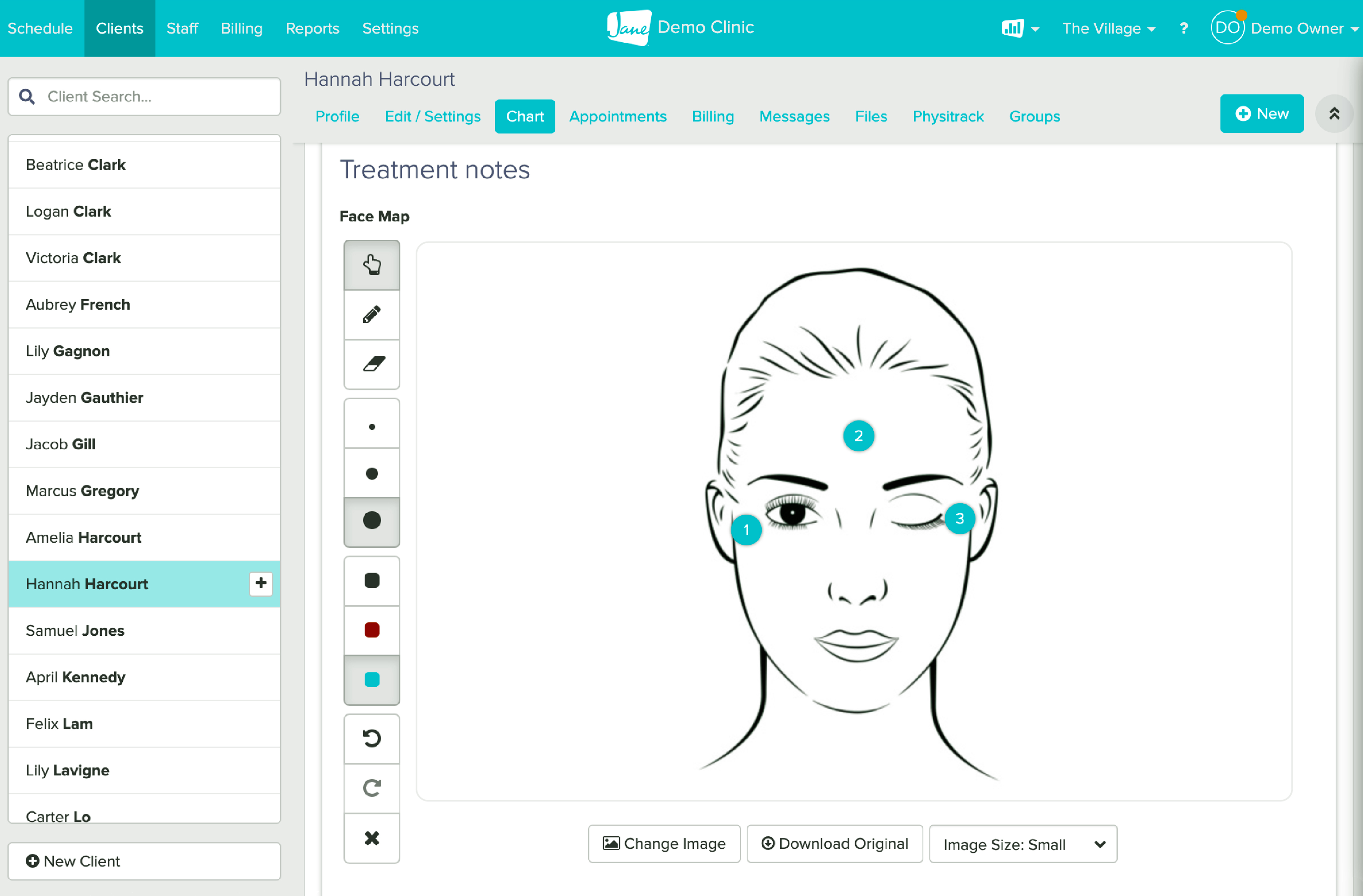
- Visual Medical Records: Ability to attach, compare, and annotate before-and-after photographs directly within the patient profile.
- Consumable and Package Tracking: Management of multi-session treatment packages (e.g., a series of six chemical peels) and prepaid membership tiers.
- Automated Lifecycle Marketing: Triggered campaigns based on treatment longevity—such as reminding a patient who received neuromodulators four months ago that it is time for a touch-up.
3. AI Integration and Automation
Artificial intelligence has transitioned from a futuristic novelty to an operational necessity in high-performing aesthetic clinics. AI tools embedded within modern software handle routine communications, optimize schedules, and enhance clinical consultations.
- Conversational AI and Chatbots: Natural language processing models handle inbound patient inquiries via website chat, SMS, and social media channels 24/7, answering pricing questions, explaining downtime, and booking appointments without human intervention.
- Predictive No-Show Mitigation: Machine learning algorithms analyze historical booking data, weather patterns, and patient communication habits to identify high-risk appointments, automatically triggering targeted confirmation sequences or overbooking recommendations.
- Facial Analysis and Visualization Tools: AI-powered imaging software simulates expected treatment outcomes, such as wrinkle reduction or volume restoration, helping patients visualize results during consultations and driving conversion rates.
Feature Comparison of Aesthetic Management Solutions
| Feature Category | Basic Scheduling Tools | Traditional PMS | Modern AI-Powered Aesthetic CRM |
|---|---|---|---|
| Primary Focus | Calendar management | Medical billing and EMR | Patient journey, conversion, and retention |
| Booking Flexibility | Basic time slots | Standard clinical slots | Multi-resource, equipment-aware, deposit-backed |
| Patient Visuals | None or basic file upload | Standard document storage | Integrated before-and-after photo comparisons |
| AI Capabilities | None | Limited automated reminders | Conversational chatbots, predictive no-show analytics, visual simulators |
| Marketing Automation | Generic email blasts | Minimal or none | Behavioral triggers based on treatment cadence and spend |
| Target Practice | Solopreneurs / Salons | General medical / Family practice | Medspas, dermatology, plastic surgery clinics |
Operational Impact and Return on Investment (ROI)
Implementing an integrated aesthetic software platform requires capital investment and staff training, but the measurable return on investment typically manifests across three distinct operational pillars.
Reduction of Operational Friction
Front-desk staff spend an estimated 30% to 40% of their workday managing phone calls, confirming appointments, and manually sorting patient files. By deploying conversational AI for routine inquiries and automated two-way SMS confirmations, clinics can reallocate administrative hours toward high-value in-person patient hospitality, upselling skincare retail products, and managing clinic flow.
Revenue Retention via Smart Re-engagement
In the aesthetic industry, patient churn is a primary barrier to growth. Because treatments like fillers, neurotoxins, and laser resurfacing have finite lifespans, timing the follow-up outreach is critical. Aesthetic CRMs automate these touchpoints based on verified clinical timelines. If data indicates a patient purchases a specific medical-grade retinol every 90 days, the system automatically triggers a replenishment offer on day 80, securing predictable recurring revenue.
Compliance and Risk Mitigation
Aesthetic procedures carry inherent medical and legal risks. Modern software securely stores HIPAA-compliant digital consent forms, batch numbers for injectables, and detailed treatment notes. In the event of an audit or an adverse event review, staff can instantly retrieve complete, timestamped patient records across all historical visits.
Implementation Challenges and Best Practices
Transitioning an existing aesthetic clinic to a new software ecosystem presents notable hurdles. Practice owners should anticipate and plan for these common operational friction points.
- Data Migration Hurdles: Exporting patient lists, historical treatment notes, and before-and-after photos from legacy databases often results in data corruption or formatting mismatches. Clinics should run a dual-system audit or clean existing databases before migration.
- Staff Resistance to Change: Estheticians, front-desk coordinators, and nurse injectors frequently resist new interfaces. Comprehensive onboarding sessions, role-playing workshops, and designating a staff "super-user" facilitate smoother adoption.
- Over-Automation Pitfalls: While AI and chatbots streamline operations, over-reliance can alienate high-net-worth clients seeking a luxury, personalized touch. Clinics must maintain a seamless handoff protocol where complex medical questions are immediately routed to human practitioners.
Frequently Asked Questions
What is the difference between a standard medical EHR and aesthetic clinic software?
Standard electronic health record (EHR) systems prioritize insurance billing, diagnostic coding, and general primary care workflows. Aesthetic clinic software is built specifically for elective cash-pay and membership-based models, featuring inventory tracking for retail skincare, multi-session package management, visual photo-archiving, and specialized marketing automation.
How does AI appointment booking handle complex multi-step treatments?
Advanced AI scheduling tools utilize predefined rule engines set by the clinic. If a patient books a combination treatment—such as a laser resurfacing session followed by a medical-grade facial—the system automatically calculates total room time, accounts for necessary recovery intervals between procedures, and assigns the appropriate licensed practitioner based on credentialing rules.
Is aesthetic clinic software HIPAA compliant?
Reputable aesthetic software platforms operate on secure cloud architecture that complies with Health Insurance Portability and Accountability Act (HIPAA) regulations in the United States, as well as equivalent international data protection standards such as GDPR. These systems utilize end-to-end encryption for patient messages, secure cloud storage for before-and-after photos, and strict access permission controls.
Can aesthetic CRM software integrate with existing payment processors?
Yes. Most modern aesthetic platforms integrate seamlessly with industry-standard payment gateways and hardware terminals. This integration allows clinics to process credit card payments, manage patient financing options, track retail inventory sales, and reconcile daily cash flows directly inside the software dashboard.
How long does it take to fully implement a new aesthetic CRM?
Full implementation typically takes between two to six weeks, depending on the clinic's size, the volume of historical data requiring migration, and staff availability for training modules. Smaller medspas can often transition within a fortnight, whereas multi-location surgical centers require phased rollouts.
Conclusion and Next Actions
Selecting and deploying aesthetic clinic software with integrated appointment scheduling, CRM, and AI capabilities is a decisive step toward scaling a modern cosmetic practice. Practice owners should begin by auditing current administrative bottlenecks, mapping out the desired patient journey from first click to post-treatment retention, and requesting live demonstrations from software vendors that specialize specifically in the aesthetic and medspa sector rather than general medical fields.