Fort Worth homeowners facing structural damage require specialized engineering solutions, as the region’s volatile expansive clay soils create severe challenges that standard repair methods cannot permanently resolve. Advanced foundation repair encompasses a suite of deep-foundation stabilization techniques—such as steel piers, helical piers, and mudjacking or polyurethane foam injection—engineered to lift, support, and stabilize structures anchored in shifting North Texas soil.
Understanding the Fort Worth Soil Challenge
The foundation of any structure in Fort Worth rests upon geological formations that react dramatically to environmental changes. Understanding how the local terrain behaves is the first step toward selecting the right repair methodology.
The Impact of Expansive Clay
Much of Tarrant County sits upon layers of highly expansive clay soil, frequently referred to locally as black gumbo. This clay possesses a high concentration of minerals that absorb vast amounts of water during heavy seasonal rains, causing the soil to swell significantly. Conversely, during extended summer droughts, the moisture evaporates, and the soil shrinks, leaving large subterranean voids and causing the earth to settle.
This cycle of swelling and shrinking creates immense upward and downward pressure against concrete slab and pier-and-beam foundations. When sections of a foundation rise while other parts drop due to localized moisture variation, differential settlement occurs. This differential movement places extreme tensile and shear stress on the concrete, resulting in:
- Sticking doors and windows that refuse to latch properly.
- Diagonal or stair-step cracks in interior drywall and exterior brickwork.
- Gaps forming between crown molding, ceilings, and walls.
- Uneven, sloping, or dipping floors that disrupt interior finishes.
Local Climate Volatility
North Texas experiences intense seasonal extremes, oscillating between torrential downpours and blistering, prolonged heatwaves. This volatile climate accelerates moisture fluctuations in the upper layers of the soil profile. Because moisture evaporation rates are exceptionally high during July and August, the perimeter of a residential or commercial foundation often dries out and drops rapidly, while the center of the structure—retaining some moisture—remains supported.
Standard cosmetic patching or shallow surface repairs fail in this environment because they do not address the root cause: unstable soil conditions located deep beneath the surface. Advanced foundation repair techniques bypass these unstable upper soil layers entirely, transferring the structural load down to stable bedrock or load-bearing strata.
Core Methods of Advanced Foundation Repair
When structural engineers and experienced foundation contractors evaluate a compromised Fort Worth property, they typically deploy one of several advanced stabilization systems. Each method offers distinct engineering advantages depending on structural loads, soil depths, and site accessibility.
Pressed Concrete Pilings
Pressed concrete pilings have long been a staple in North Texas foundation repair. This method involves hydraulically driving pre-cast concrete cylinders into the ground beneath the foundation until they reach refusal—the point where the soil resistance prevents further penetration.
- Installation Process: Crews dig small access holes (bell holes) around the perimeter and sometimes beneath the interior of the foundation. Hydraulic jacks lift the structure slightly, and concrete segments are stacked and pressed sequentially into the earth.
- Advantages: Pressed concrete systems are generally cost-effective and can be installed relatively quickly for standard residential structures.
- Limitations: Concrete pilings rely primarily on the dead weight of the structure to drive them down, meaning they may not reach deep, highly stable bedrock if upper strata provide premature resistance. They are also susceptible to shifting if the surrounding soil experiences extreme lateral movement.
Steel Piers
Steel piers represent the gold standard for high-end structural stabilization, particularly in areas with extremely deep expansive soil zones.
- Installation Process: Heavy-gauge structural steel pipe or tubing is driven deep into the ground using high-capacity hydraulic machinery. Unlike concrete, steel can penetrate dense strata, hard clay, and weathered rock to anchor firmly into stable, load-bearing bedrock or deep load-bearing soil layers. Once the target depth is achieved, a heavy-duty steel bracket is secured to the foundation grade beam, and hydraulic jacks are used to lift the structure back toward its original elevation.
- Advantages: Steel piers offer superior depth capacity, exceptional load-bearing strength, and permanent resistance to shifting. Most reputable steel pier systems come with transferable lifetime warranties.
- Limitations: The initial material and labor costs are significantly higher than traditional concrete piling or mudjacking methods.
Helical Piers
Helical piers function much like large wood screws driven into the earth, combining structural steel shafts with one or more welded steel helix plates (flights).
- Installation Process: Instead of being driven straight down by brute force, helical piers are rotated and mechanically torqued into the ground using specialized rotary drive motors. The engineered pitch of the helix plates pulls the pier downward with minimal soil disruption.
- Advantages: They provide immediate, quantifiable load capacity based on the installation torque measured during insertion. Helical piers are ideal for new construction, light commercial buildings, uneven or sloped terrain, and remedial repair where vibration from driving steel or concrete pilings must be avoided.
- Limitations: Specialized machinery is required for installation, and heavily obstructed subsurface debris or thick rock shelves can complicate placement.
Comparison of Advanced Foundation Repair Systems
Selecting the appropriate repair technique requires balancing structural requirements, geological depth, soil mechanics, and project budgets. The following table compares the primary advanced repair methods utilized in the Fort Worth market.
| Repair Method | Primary Material | Installation Mechanism | Typical Depth | Ideal Application | Warranty Profile |
|---|---|---|---|---|---|
| Pressed Concrete Piers | Pre-cast concrete segments | Hydraulic dead-weight driving | 12 to 25 feet | Standard residential slab homes on moderate clay soils | Varying (5-year to limited lifetime) |
| Resistance Steel Piers | Structural steel pipe | Hydraulic driving to refusal | 20 to 60+ feet (to bedrock) | Severe settlement, heavy brick homes, deep expansive soils | Typically transferable lifetime |
| Helical Piers | Steel shaft with helix plates | Mechanical rotation/torquing | 15 to 40+ feet | Porous soils, vibration-sensitive structures, remedial lifting | Typically transferable lifetime |
| Polyurethane Injection | Expanding high-density polymer | Pressure injection through small drill ports | Sub-slab void filling | Slab stabilization, lifting sunken concrete, soil densification | 2 to 10 years (material-dependent) |
The Engineering Evaluation and Diagnostic Process
Before a single shovel touches the ground or a hydraulic jack is pressurized, a thorough structural evaluation must take place. In Fort Worth, reputable foundation companies employ or partner with licensed structural engineers to diagnose the exact failure mechanism.
Identifying Structural Versus Cosmetic Cracks
Not every crack in a wall or brick veneer indicates catastrophic foundation failure. Thermal expansion, wood framing shrinkage, and normal building settlement routinely cause minor hairline fractures. A professional evaluation differentiates these cosmetic issues from structural failures by examining:
- Crack Width and Direction: Vertical cracks are often normal shrinkage fractures; horizontal or diagonal stair-step cracks running at 45-degree angles typically indicate foundation movement or corner settlement.
- Aperture Consistency: Cracks that are wider at the top than the bottom suggest downward movement of the foundation underneath that specific section.
- Exterior Assessment: Examining the brick masonry, mortar joints, and the concrete grade beam itself reveals whether the exterior wall is shearing or separating from the framing.
Precision Elevation Surveys
Engineers utilize high-precision digital water levels or laser transits to map the precise elevations of a foundation across multiple interior and exterior grid points. By recording floor heights down to fractions of an inch, the diagnostic team creates an elevation contour map. This map exposes structural low points, high spots, and the overall tilt or deflection of the building slab, dictating precisely where support piers must be placed to achieve an even lift.
The Repair Execution Phase
Once the engineering plan is finalized and permits are secured (where required by local Fort Worth municipal codes), the physical repair process begins. Property owners should understand what to expect during this intensive construction phase.
Excavation and Preparation
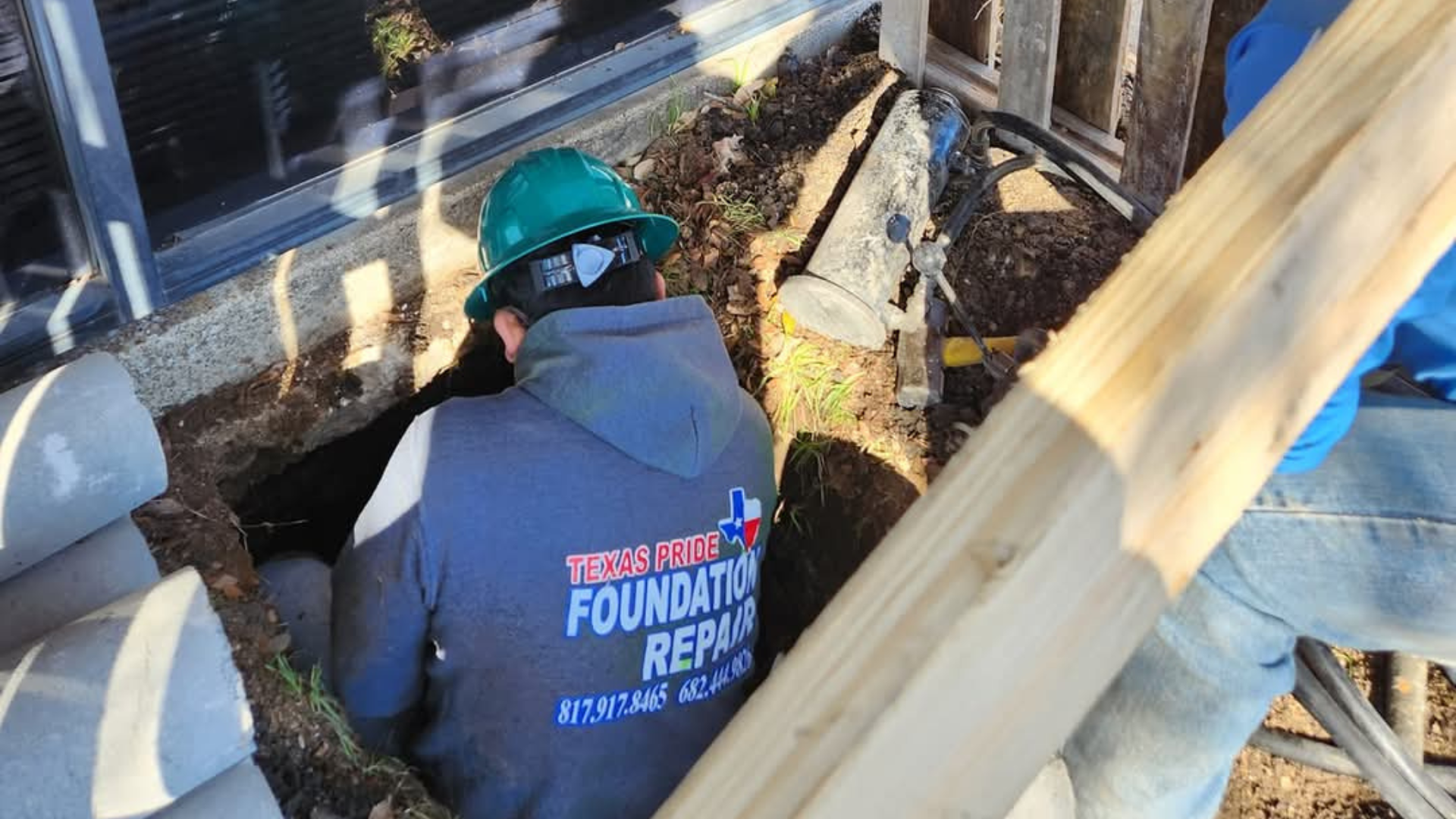
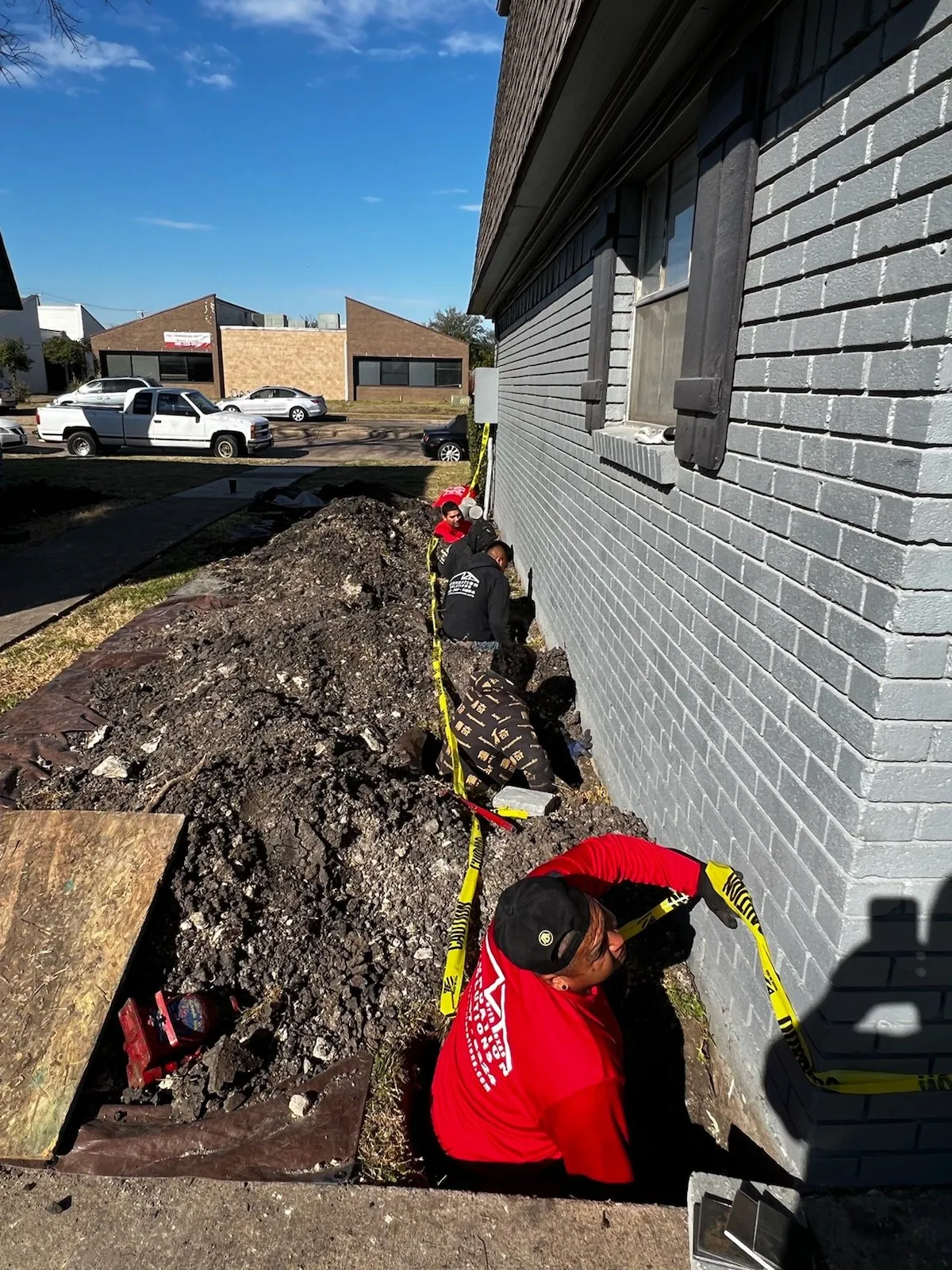
Crews excavate small working holes—typically two to three feet square—around the perimeter of the foundation exterior. For interior repairs, flooring may need to be cut, removed, and tunneled under, or small access holes drilled directly through the concrete slab. Every precaution is taken to protect landscaping, irrigation lines, and interior finishes, though minor cosmetic touch-ups following the project are common.
Pier Placement and Structural Lifting
The chosen pier system is installed into the designated locations until the target depth or structural load capacity is met. Once the pier assemblies are anchored and tied securely to the foundation grade beam via steel brackets, synchronized hydraulic jacks lift the structure.
The lifting process is delicate and gradual. Engineers and crew leaders monitor crack movement, door alignments, and laser levels in real-time to ensure the structure is raised uniformly. The goal is not necessarily to return a settling home to absolute zero deviation—as older homes settle naturally over decades—but to restore structural integrity, close major gaps, and level load-bearing elements safely without over-stressing the framing.
Post-Lift Stabilization and Clean-Up
After the structure is elevated to its optimal engineering position, permanent steel shims or locking mechanisms are inserted to transfer the building weight entirely onto the newly installed piers. The excavation holes are backfilled and compacted to prevent future water pooling against the foundation. Concrete patches are poured over interior slab holes, and clean-up crews restore the work site to its original condition.
Post-Repair Maintenance and Soil Management
Completing advanced foundation repair does not end the relationship between the homeowner and the soil. Because North Texas expansive clay remains active, proactive moisture management is vital to protect the investment.
Plumbing Leak Detections
Sub-slab plumbing leaks represent one of the leading causes of sudden foundation failure in Fort Worth. A broken sewer line or supply pipe continuously injects water into the soil directly beneath a foundation, causing localized soil swelling and severe upward heaving. Property owners should schedule periodic hydrostatic plumbing tests, especially in older homes, to ensure the underlying pipe network remains intact.
Drainage Solutions and Root Barriers
Effective surface water management prevents moisture concentration near foundation perimeters. Homeowners should ensure that:
- Gutters and downspouts discharge rainwater at least three to five feet away from the foundation perimeter via extension pipes or splash blocks.
- Yard grading slopes downward and away from exterior walls to prevent pooling.
- Root barriers are installed if large trees (such as mature post oaks or elm trees) grow close to the structure, as aggressive root systems can extract thousands of gallons of moisture from the soil, causing rapid localized drying and shrinkage.
Controlled Watering Regimes
During extended summer dry spells, utilizing soaker hoses placed 12 to 18 inches away from the foundation wall helps maintain a consistent moisture level in the surrounding clay soil, mitigating extreme shrinkage. Smart watering timers and automated soaker systems provide an efficient way to stabilize soil moisture year-round.
Frequently Asked Questions
How long does an advanced foundation repair project take in Fort Worth?
Most standard residential foundation repair projects in Fort Worth take between one to three days to complete, depending on the size of the structure, the number of piers required, and whether interior tunneling is necessary. Complex commercial projects or homes requiring extensive interior slab penetration may take up to a week.
Will foundation repair fix cracks in my drywall and brickwork?
Foundation repair stops active movement and closes structural gaps, but it does not automatically repair cosmetic damage. Once the structure is stabilized and lifted, homeowners typically need to hire a drywall contractor, painter, or mason to patch drywall cracks, tape seams, and tuck-point mortar joints. It is generally recommended to wait 30 to 60 days after stabilization before performing cosmetic repairs to allow the home to settle into its new position.
Are steel piers worth the higher cost compared to concrete pilings?
Yes, in many Fort Worth soil conditions, steel piers are worth the investment. Because North Texas clay can extend to significant depths before reaching stable strata, concrete pilings driven by dead weight often fail to reach true bedrock. Steel piers provide superior depth, uncompromised load capacity, and long-term security, backed by transferable lifetime warranties that add verifiable value to residential real estate.
Does homeowners insurance cover foundation repair in Fort Worth?
Standard homeowners insurance policies in Texas do not cover foundation repair resulting from normal soil movement, expansive clay, drought, or tree roots. Insurance policies typically only cover foundation damage if it is directly caused by a sudden, accidental peril explicitly listed in the policy, such as a plumbing leak originating from a sudden pipe burst beneath the slab.
Can foundation repair be performed during the hot Fort Worth summer?
Foundation repair can be performed year-round in Fort Worth, including during the peak of summer. In fact, many contractors operate at full capacity during dry summer months because lower soil moisture makes excavation cleaner and allows engineers to accurately assess maximum soil shrinkage and settlement patterns.
Conclusion
Navigating structural distress in North Texas requires a clear understanding of local geotechnical conditions and advanced engineering methodologies. By investing in professional diagnostic evaluations, utilizing high-capacity steel or helical pier systems, and maintaining consistent post-repair moisture and drainage protocols, Fort Worth property owners can permanently safeguard their homes against the destructive forces of expansive clay soil.