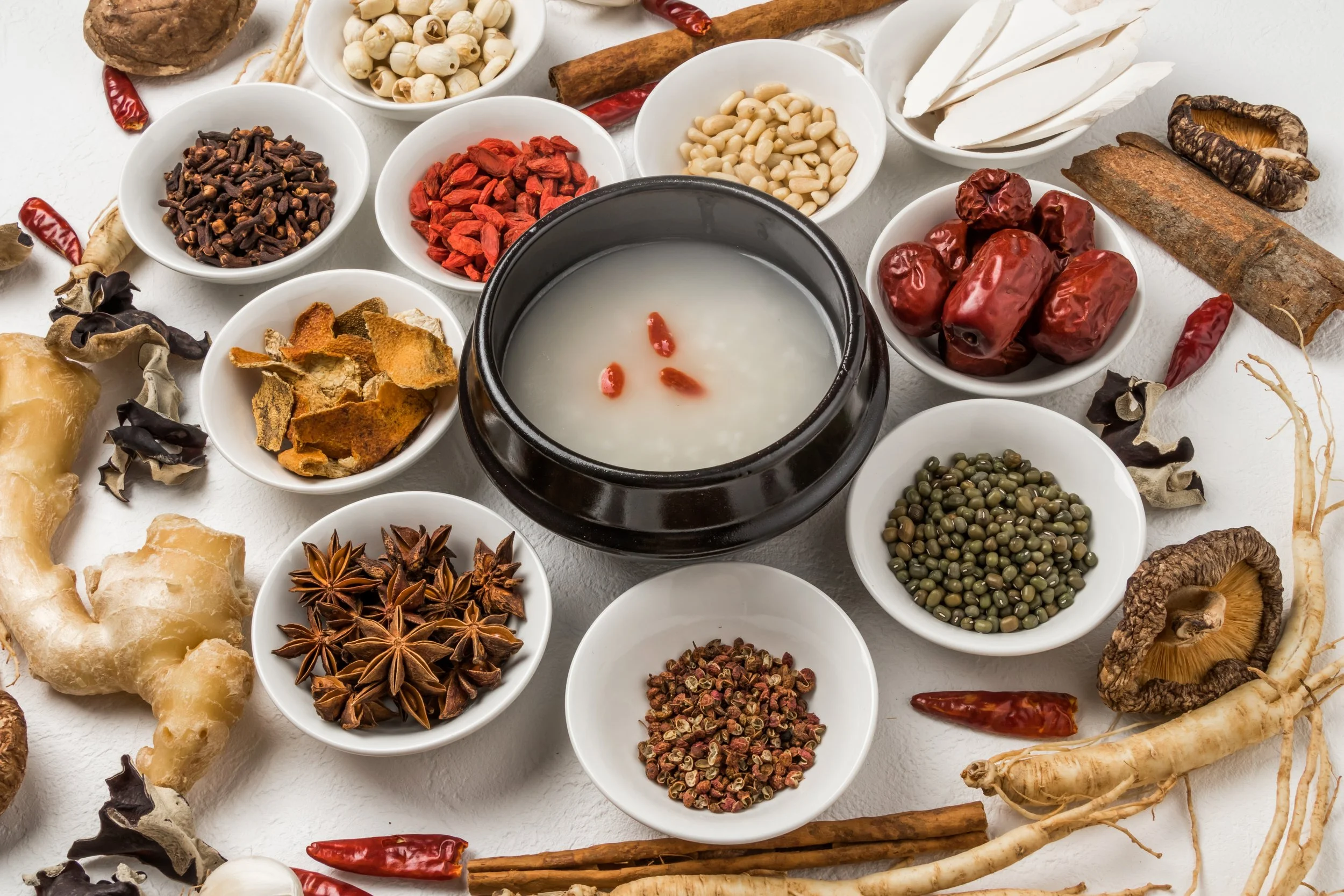
Acupuncture and Chinese herbal medicine are the twin pillars of Traditional Chinese Medicine (TCM), working together to restore physiological balance and promote self-healing. While acupuncture regulates the body’s bioelectrical signals and nervous system through external stimulation, Chinese herbs provide internal biochemical support, making their combination a highly effective approach for chronic and complex health conditions.
Traditional Chinese Medicine (TCM) has evolved over thousands of years into a sophisticated system of primary care. In 2026, this ancient wisdom is increasingly integrated into mainstream healthcare, recognized not just as "alternative" therapy but as a functional necessity for managing chronic pain, metabolic disorders, and stress-related illnesses. By combining acupuncture and Chinese herbs, practitioners address both the symptoms (the "Branch") and the underlying cause (the "Root") of a patient’s ailment.
The Dual Approach: How Acupuncture and Herbs Work Together
The fundamental philosophy of TCM rests on the concepts of Qi (vital energy), Yin and Yang (opposite but complementary forces), and the Five Elements. When these are in harmony, the body is healthy. When they are disrupted by "pathogens" like wind, cold, heat, or dampness—or by internal factors like emotional stress—illness occurs.
Acupuncture: The External Regulator
Acupuncture involves the insertion of sterile, hair-thin needles into specific points along meridians or channels. In 2026, modern physiological research confirms that these points often correspond to areas of high electrical conductivity and dense clusters of nerve endings.
When a needle is inserted, it triggers a cascade of biological responses:
- Neuromodulation: It stimulates the nervous system to release endorphins, enkephalins, and serotonin, which are the body’s natural painkillers and mood stabilizers.
- Microcirculation: It increases blood flow to localized areas, accelerating tissue repair and reducing inflammation.
- Hormonal Balance: It influences the hypothalamus-pituitary-adrenal (HPA) axis, helping to regulate cortisol levels and the body's "fight or flight" response.
Chinese Herbal Medicine: The Internal Architect
While acupuncture "moves" energy and blood to clear blockages, Chinese herbal medicine "builds" and "nourishes" the body’s internal substance. A practitioner rarely prescribes a single herb; instead, they create a formula containing 5 to 15 different ingredients.
These formulas are structured with a specific hierarchy:
- The Emperor (Jun): The principal ingredient targeting the main complaint.
- The Minister (Chen): Supports the Emperor and addresses secondary symptoms.
- The Assistant (Zuo): Mitigates potential side effects of the primary herbs and enhances the overall effect.
- The Envoy (Shi): Directs the formula to specific meridians or organs and harmonizes the other ingredients.
By using this structured approach, herbal medicine can replenish deficiencies (such as "Blood deficiency" in anemia or "Yin deficiency" in menopause) that acupuncture alone might take longer to address.
Clinical Applications and Benefits in 2026
The integration of these two modalities is particularly potent for conditions that do not respond well to conventional "single-target" pharmaceuticals. In the current 2026 medical landscape, TCM is frequently used for the following:
Chronic Pain Management
Acupuncture is now a gold-standard recommendation for chronic low back pain, osteoarthritis, and migraines. When combined with herbs that "invigorate the blood" and "dispel wind-dampness," such as Du Huo (Angelica pubescens) or Chuan Xiong (Ligusticum), patients often experience longer-lasting relief and a reduced need for opioid medications.
Women’s Health and Fertility
TCM has become a primary supportive therapy for those undergoing IVF or dealing with PCOS and endometriosis. Acupuncture is used to increase blood flow to the uterus and ovaries, while herbal formulas like Xiao Yao San (Free and Easy Wanderer) are used to regulate the endocrine system and manage the emotional fluctuations associated with hormonal shifts.
Mental Health and Stress
In an era of high digital fatigue and chronic stress, the combination of "calming the Shen" (spirit) through acupuncture and using adaptogenic herbs like Ren Shen (Ginseng) or Suan Zao Ren (Sour Jujube Seed) provides a holistic alternative to anti-anxiety medications. This approach addresses the physical manifestations of stress, such as heart palpitations and insomnia, alongside the psychological aspects.
Comparison of Acupuncture and Chinese Herbal Medicine
To better understand which modality—or if a combination—is right for you, consider the following comparison:
| Feature | Acupuncture | Chinese Herbal Medicine |
|---|---|---|
| Primary Action | Moves Qi and Blood; regulates nerves. | Nourishes organs; clears toxins; builds fluids. |
| Delivery Method | Physical stimulation (needles, moxibustion). | Ingestion (teas, powders, capsules, tinctures). |
| Frequency | Typically 1–2 times per week. | Taken daily (usually twice a day). |
| Best For | Acute pain, structural issues, immediate stress. | Chronic deficiency, systemic illness, skin issues. |
| Onset of Effect | Often immediate (especially for pain). | Gradual (builds over days or weeks). |
| Maintenance | Passive (provided by the practitioner). | Active (requires patient compliance). |
Safety, Quality, and Professional Standards
As of 2026, the regulation of TCM has reached new heights of transparency. In the United States, the National Certification Commission for Acupuncture and Oriental Medicine (NCCAOM) remains the primary body ensuring that practitioners are properly trained in both needle technique and herbal pharmacology.
Herb Quality and Purity
A common concern regarding Chinese herbs is the presence of heavy metals or pesticides. Modern reputable suppliers now provide Certificate of Analysis (COA) for every batch of herbs. These documents verify that the products meet strict safety standards for:
- Lead, Mercury, and Arsenic levels.
- Pesticide residues.
- Microbiological contaminants (mold/bacteria).
- Correct species identification (preventing the substitution of toxic look-alikes).
Interaction with Western Medications
It is vital to disclose all pharmaceutical medications to your TCM practitioner. Some herbs can interact with blood thinners (like Warfarin), immunosuppressants, or chemotherapy drugs. A qualified practitioner, often holding a Diplomate of Oriental Medicine (Dipl. OM), is trained to identify these potential contraindications to ensure a safe, integrative approach.
What to Expect During a Consultation
A TCM consultation is significantly more detailed than a standard 15-minute primary care visit. Because the practitioner is looking for a "pattern of disharmony" rather than just a disease label, they will use four main diagnostic methods:
- Inquiry: Asking detailed questions about sleep, digestion, temperature preferences, and emotional state.
- Inspection: Closely examining the tongue (its color, shape, and coating), which serves as a map of the internal organs.
- Auscultation/Olfaction: Listening to the voice and breathing, and noting any specific odors.
- Palpation: Taking the pulse in three positions on both wrists and at three different depths. This provides a real-time "readout" of the state of the Qi and the various organ systems.
Following this diagnosis, the practitioner will usually perform an acupuncture treatment and then prescribe a customized herbal formula to be taken at home until the next visit.
Insurance Coverage and Costs in 2026
The financial accessibility of TCM has improved significantly by 2026.
- Medicare: Coverage for chronic low back pain has been standardized, and many Medicare Advantage plans have expanded these benefits to include neck pain and headaches.
- Private Insurance: Many high-tier PPO and HMO plans now offer "Alternative Medicine" riders. However, while acupuncture is frequently covered, Chinese herbs are often categorized as dietary supplements and may require payment through a Health Savings Account (HSA) or Flexible Spending Account (FSA).
- Out-of-Pocket: Expect to pay between $75 and $150 for an acupuncture session. Herbal formulas typically cost between $30 and $70 for a two-week supply, depending on the format (raw herbs vs. concentrated granules).
Frequently Asked Questions (FAQ)
Do the needles hurt?
Acupuncture needles are extremely thin—roughly the width of a human hair. Most patients feel a slight "De Qi" sensation, which can be described as a dull ache, heavy feeling, or slight tingling, but it is rarely described as painful. Many people find the experience so relaxing that they fall asleep during the session.
How long do I need to take the herbs?
The duration depends on the nature of the condition. For an acute cold or flu, you might take herbs for only 3 to 5 days. For chronic conditions like hormonal imbalances or long-term digestive issues, a course of treatment might last 3 to 6 months, with the formula being adjusted as your symptoms change.
Can I do acupuncture without taking herbs?
Yes, many people choose to do only acupuncture. However, if your condition involves significant "deficiency" (like chronic fatigue or anemia), your progress may be much slower without the internal support of herbal medicine. Your practitioner will advise you on whether herbs are a necessary component of your recovery.
Are Chinese herbs safe during pregnancy?
Some Chinese herbs are highly beneficial during pregnancy (for morning sickness or threatened miscarriage), while others are strictly "forbidden" as they invigorate blood and could potentially induce labor. You must only take herbs prescribed by a practitioner who specializes in TCM obstetrics.
How soon will I see results?
For acute pain, results can often be felt within 1 to 2 sessions. For complex internal issues, it generally takes about 4 to 6 weeks of consistent treatment (both acupuncture and herbs) to see a significant, lasting shift in the underlying pattern of disharmony.
Final Recommendations for Patients
If you are considering acupuncture and Chinese herbs in 2026, the most important step is to find a licensed and board-certified practitioner. Verify their credentials through the NCCAOM Find a Practitioner directory.
When starting your journey:
- Be Patient: TCM works by correcting imbalances at the root, which takes time compared to the "quick fix" of symptomatic suppression.
- Be Consistent: Herbal medicine requires daily compliance to maintain therapeutic levels in your system.
- Communicate: Keep a log of your symptoms and any changes you notice—even if they seem unrelated, like a change in your vividness of dreams or your appetite.
By integrating the external regulation of acupuncture with the internal nourishment of Chinese herbs, you are utilizing one of the world's most complete and time-tested systems of medicine to achieve long-term health and vitality.